A few months ago, my “yesteryear” e-mail abruptly stopped showing in my electronic mailbox. I began to realize something was wrong. Fortunately, after the problem was corrected, I received all of my undelivered mail. I apologize to my readers for not responding to your much-appreciated notes. Today’s column excerpts some of this correspondence.

1. Glenn Stroup – Carl “Cocky” Cox Wreck: “Carl was my first cousin – son of my Mom's sister, Narcissus Adams. I was in high school when the horrible accident happened and I remember looking at the remains of the car after it was picked up for storage. It is amazing that the driver lived for even a few hours. Carl was very popular in Johnson City and was a big contributor to charities. There was a large crowd at his funeral.”

2. Louise Odom – Authors Card Game: “You mentioned Ray Reaves. I called him several times about two or three years ago. My grandfather, Frank Davis, was married (second wife) to Delia Sneed. When he passed away, Delia married Ferd Reaves. They had a small neighborhood store and raised rabbits. Mr. Reaves passed away in 1963 and was buried in Highland Cemetery in Elizabethton. When Delia remarried, the Reaves children had their father's grave moved beside their mother. I always enjoyed talking to Ray Reaves. He was very alert and I considered him a friend.” (Sadly, Ray passed away in July 2011.)

3. Jimmy Staten – Tip Top Restaurant: “I saw your article about Earl Brown. Earl and my daddy worked for years at the Railroad Express. Jim and I would spent Sundays at the depot playing ball along the tracks. I spent a lot of time at their house on E. Fairview. They lived right by the tracks.”

4. Doyle Ollis – Local Orphanage Fire: “Do you know of an orphanage burning in the Johnson City area around 1940? I would like to know the name of the orphanage, the date it burned and where the children were sent?” (Doyle, this one also stumps me. Hopefully, a reader will know.)

5. Theresa Billings – SHHS Memorial: “Bob, I am in the early stages of planning a memorial at SHHS to honor those students there who gave their lives in the major conflicts.  Jenny Brock and I are working together on it and have gotten the approval of Science Hill and the School Board.  Since so many people read your articles in the JC Press, I would really appreciate your including this on the heritage page.”

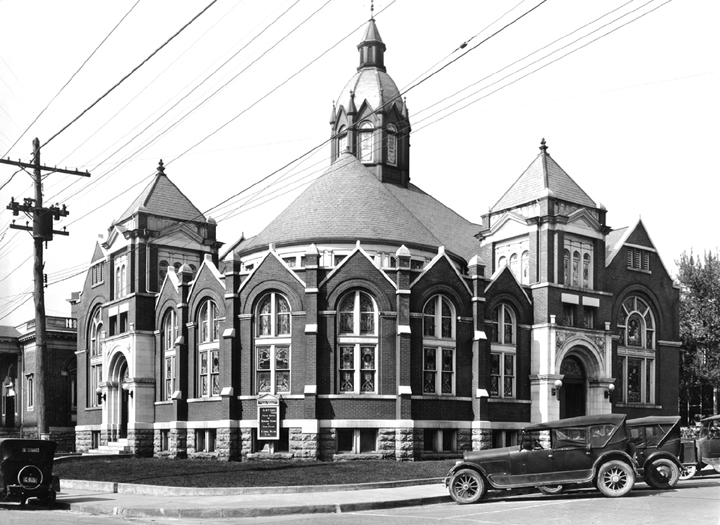
6. Katy Rosolowski – Munsey Swimming Pool: “By the 1940's, Munsey needed more room for its growing congregation and expanding programs. World War II delayed construction of the education building, but it was finally realized in 1949, also containing a swimming pool. The church was forced to close the pool in 2001 because of structural issues. In the fall of 2007, a renovation to the pool floor occurred to provide additional meeting space.”

7. Fred Waage – Munsey Swimming Pool: “I don’t know if it’s the same space as in your article today, but in the early 1980’s I was the only ‘daddy’ in a swimming program called ‘Mommy and Me’ for extremely little kids at Munsey pool.  In fact, there was a picture in the Press of me with my daughter Melissa (1981, I think) in the pool.”

 8. Jane Doe – Bluff City Pioneer Plant: “One error in your article caught my eye. As far as I know, B.L. Dulaney was not a forefather of Mrs. Jay Gump (Sara Adelaide (Miller) Gump). I suspect your source had this wrong.”

9. Bridget D. Forrester – The Busy Bee Restaurant: “I was so surprised to open the paper and find a photo of my Uncle Mike Dimma, the owner of the Busy Bee. It was open 24 hours a day and was a very popular destination. My Uncle Mike and Aunt Stella Dimma lived at 200 East Eighth Ave. in a house built by my great grandfather's construction company, J.K. Jaynes and Company. Mike loved the restaurant business and after The Busy Bee closed he went on to own and operate The Varsity Grill.”

10. Becky Lewis – Busy Bee Restaurant: “I was so excited to see your article in Sunday’s JC Press. My mother has been looking for a picture of the Busy Bee for years. My grandmother, Pauline Young Cox, worked there as a cashier. Thanks for the article.”

 11. Kathleen Belew – Belew-Carr Wedding: “You wrote an article on April 25 about my great-grandmother's (and namesake's) engagement and wedding. It was a pleasure to read.” 
  

Read more

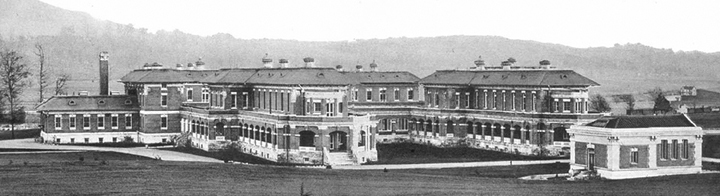
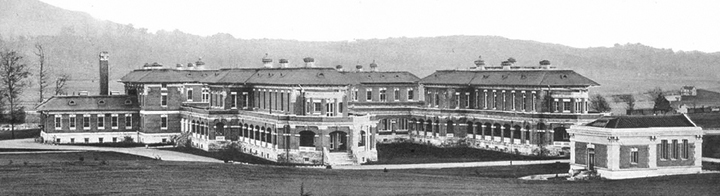
In November 1901, newspapers across the country touted the beautiful new National Home for Disabled Volunteer Soldiers (N.H.D.V.S.). The heading of one newspaper was “A Great Soldiers’ Home.” The facility was also commonly referred to as Mountain Home.

Another publication stated that when it was finished, it would be one of the most notable groups of buildings in the state. The existing homes and soldiers' retreats that had been built across the country were exclusively for Union or Confederate veterans, but not both. The Johnson City one provided a shelter for men who volunteered in Union or Confederate Civil War service and in the war with Spain. However, Confederate soldiers were required to sign papers of allegiance back to the United States.

After fierce competition with six architects, the lucrative contract for erecting buildings and laying out grounds was awarded to J.H. Freedlander, whose design scheme encompassed 37 buildings. The plan called for eight barracks, theatre, mess hall, chapel, canteen, powerhouse, infirmary, jail, administration building, laundry, icehouse, morgue and even a fine hotel. Other structures were added later that included a library, zoo and baseball recreational area.

The site that comprised a tract of land 1.75 miles long and 0.75 miles wide was situated with a stunning view to the south of the Tennessee Mountains. The grounds were laid out in parks, groves and driveways and the landscape features added to the picturesque appearance of the home. The place was so delightfully situated it was believed that it would eventually become a popular health resort attracting people from all over the world.

General John T. Richards of Maine was appointed superintendent of construction. The plan included a large parade ground and a group of 12 barrack buildings. These structures were in a semi-ellipse arrangement and were within easy walking distance of the mess hall. Each barrack building had its own park and everything about the place was arranged so residents could spend their days in perfect comfort amid surroundings that were naturally beautiful.

The new home was obviously impressive to the masses, but what did the veterans who lived there think about it? One opinion came from Francis McClendon, a disabled veteran of the Spanish-American War from Florida who spent time there and penned a letter on Jan. 28, 1905 that summarized his feelings about the place:

“I send these lines to you to state that I am at present a member of the mountain branch of the National Mountain Home for Disabled Volunteer Soldiers at Johnson City, Tennessee. Will you have the kindness to send my paper to the above address? I am at present in the hospital receiving every attention I could reasonably ask for. We are having some extremely cold weather – four degrees below zero this morning. At the present writing, it has moderated considerably. This is something unusual for this section as it very seldom reaches zero.

“Well, this is a beautiful place costing in the vicinity of about $5,000,000. All the buildings are constructed on the most modern plans fitted up with every convenience. As for the hospital department, it can’t be beat. The capacity of this home is 2500. It now contains about 1150 or 1200. Some future time I will give you a more detailed account of it. With kind regards and best wishes I remain, yours truly, Francis McClendon.”

While the note speaks well for the expansive military facility, we can only wish that Mr. McClendon had given us a more detailed account of what it was like to reside there soon after the turn-of-the-century. Perhaps he did and we just need to locate the information. 

Read more

The completion of the Carolina, Clinchfield & Ohio (CC&O) Railroad from Dante, Virginia to Spartanburg, South Carolina occurred on Friday, October 29, 1909. Festive celebrations were observed in Johnson City and Spartanburg.

The excitement was the fulfillment of a new railroad that would transport coal from a rich coalfield. It was built at an enormous cost brought about by engineering challenges associated with the rough terrain. The CC&O became known as “one of the greatest little railroads in the United States.”

The Virginian railroad that was built under similar difficulties and with a comparable stated purpose was the pet project of H. H. Rogers. The new line was the favorite enterprise of Thomas Fortune Ryan. The road was built over and through the Blue Ridge Mountains, rising from 1,500 feet to more than 3,000 feet above sea level within a few miles and still maintaining a maximum grade of one-half of one per cent. A single engine could pull a train of 60 heavily loaded freight cars across a rarely seen beautiful mountain region.

Numerous tunnels were built, including two that were almost a mile each in length; one of them cost $500,000. Across a difficult stretch of many miles in the mountains, the road cost totaled as much as $200,000 a mile.

When the economic panic came along two years prior to completion, work was suspended almost everywhere with two exceptions – the CC&O Railroad and the Panama Canal. Uncle Sam continued to dig the canal while Mr. Carter methodically drilled through a great chain of tunnels, which included 17 within a distance of 18 miles. A low grade was arbitrarily maintained regardless of cost. Occasionally, money was wasted when afterward if was determined that the work did not achieve the required grade. That section of track was abruptly abandoned.

Not far from the CC&O road was George W. Vanderbilt’s immense Biltmore estate built at the unheard of cost of $1,000,000. It was said that the altitude of the region was the greatest in the East and the scenery was unsurpassed anywhere in the world. Ultimately the new railroad became a link in a trunk line from the Great Lakes to the south Atlantic seaboard.

The Johnson City celebration, one of the most elaborate gatherings in the City's history, took place at Hotel Carnegie on E. Fairview with the presidents of Johnson City's three railroads attending. Congressman Walter P. Brownlow served as master of ceremonies with speeches, toasts, a banquet meal and fine cigars smoked long into the night. The city’s most prominent business leaders attended as well as one special guest, General John T. Wilder, who started the great railroad but failed to complete it. He fittingly was honored and then given the floor for a speech.

In Spartanburg, thousands of people attended the event with over 1,500 persons treated to a barbecue celebrating the first train to arrive on the CC&O Railway.

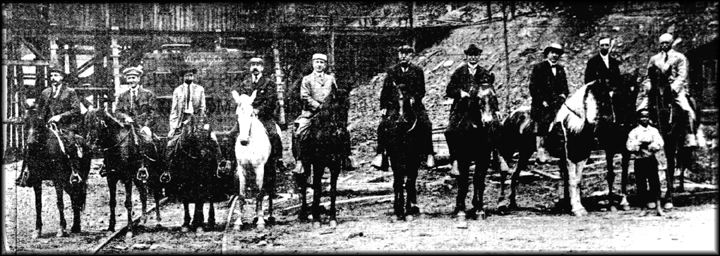
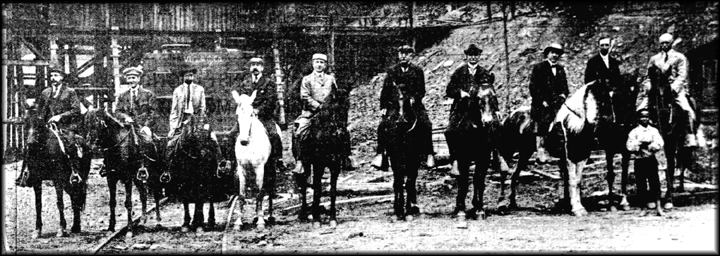
My column photo shows Thomas F. Ryan and a party of associates in the mountains, not far from Bristol, Tennessee, preparing for a ride through the wilderness along the route of the new railroad.

Left to right are George L. Carter (president, CC&O Railway), Isaac T. Mann (mineral operator, owner of many Southern banks), George A. Kent (former chief engineer, CC&O), John B. Dennis (Blair & Co.), W. M. Ritter (one of the wealthiest operating lumbermen in the country), Norman B. Ream (director in many American railways, trust concerns and insurance companies), Thomas F. Ryan, James A. Blair (senior member of Blair & Co.), H. R. Dennis (Blair & Co.) and James Hammill (chief counsel for W. M. Ritter interests).  

Read more

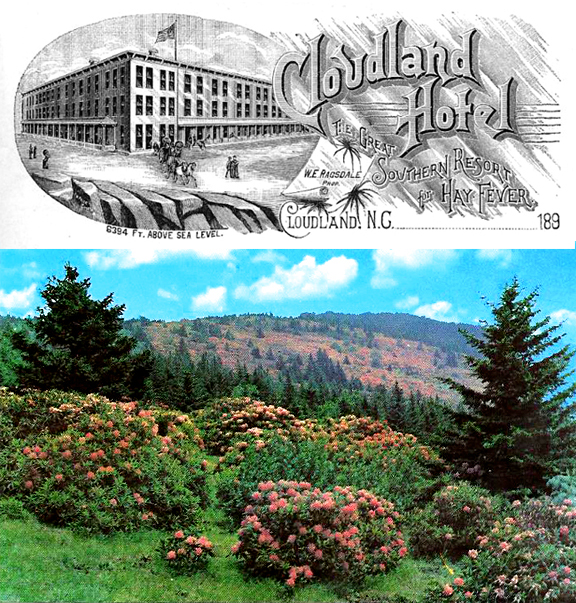
Around the end of the 19thcentury, northerners beat summer heat and annoying flies by vacationing in the relaxing pristine southern mountains of Tennessee and North Carolina, known as the “Land of the Sky.”

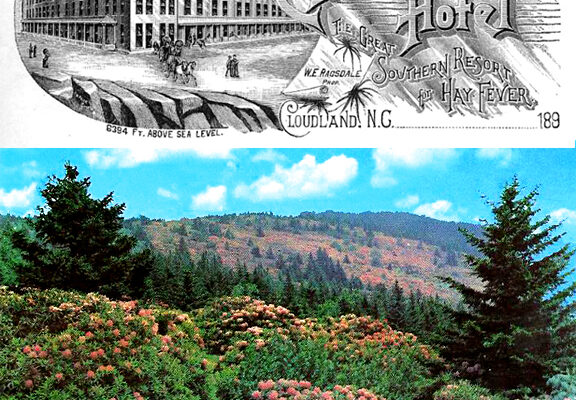
In early July 1898, H. T. Finck, a New York resident, traveled to Roan Mountain on a mountain railroad that traveled over what he deemed the “Cranberry Road.” The 40-mile long million-dollar endeavor was fabricated to transport steel. It picked up Mr. Finck at the Southern Railroad in Johnson City and chugged along toward his anxiously awaited destination.

After disembarking at Roan Mountain Station, he took a 12-mile stagecoach ride that was often used in tandem with trains to the top of the mountain at 6894 feet above sea level. Had Finck made the journey a couple of weeks earlier, he would have witnessed the stunning Catawba rhododendrons in full bloom.

The Cloudland Hotel was the tallest building east of the Rocky Mountains. The state line, dividing North Carolina from Tennessee, passed through the dining room where guests could cut their steak with a knife in one state and eat it with a fork in the other. Also, the rooms were situated such that guests could sleep with their head in Tennessee and their feet in North Carolina.

The building, capable of handling several hundred guests, exposed its broad sides gallantly to the violent winds without using chains anchored to stones like other mountaintop hotels. However, the roof of the Cloudland Hotel collapsed during high winds on two occasions forcing the owners to moor it with heavy rocks. A supreme test of strength occurred in July that year when a violent storm raged for three days nonstop. Although it was the fiercest squall the proprietor remembered in several years, the hotel remained firm on its foundation.

Weather was ideal in summer months with the thermometer dropping to 40 degrees at night, prompting the staff to burn huge logs in all the chimneys. The fires were kept lit day and night for those who desired extra warmth. During the day, the temperature varied between 58 and 64.  The hotel was perfect for authors who could work at their trade and simultaneously enjoy the spectacular surroundings. Food in the dining room was not only reasonably priced but also quite succulent.

The hotel was aptly named because clouds afforded the best entertainment when they were not so close as to obstruct the view, as was often the case. The frequent rain that bathed the area usually vanished as quickly as it arrived. Air dampness was exhilarating, not depressing. Just below and behind the hotel was a ravine from which mists formed perfect circular rainbows by the setting sun. Sunsets were magnificently varied and beautiful, painting the majestic sky in all directions.

On some of the mountaintop balds, farmhouses of local residents could be observed. A few curious visitors became acquainted with some of them, whom they described as being perfectly “civil and safe,” except for their curious habit of feuding with nearby families like the stereotyped Hatfield-McCoy feud 20 years prior.

The inhabitants owned sheep, cattle, horses and pigs. Mr. Finck interestingly noted that, while the razorback pig was not an attractive animal, it lived a fresh air life, was fed on unspoiled grass and was bathed daily by unpolluted rains. He reasoned that this was why the animals yielded such well-flavored hams, humorously noting that the critters would stampede down the hill at the mere mention of salt.

A Cloudland Hotel, Roan Mountain stay over around 1900 was truly a wilderness paradise for visitors wanting a break from life’s demanding routines.  

Read more

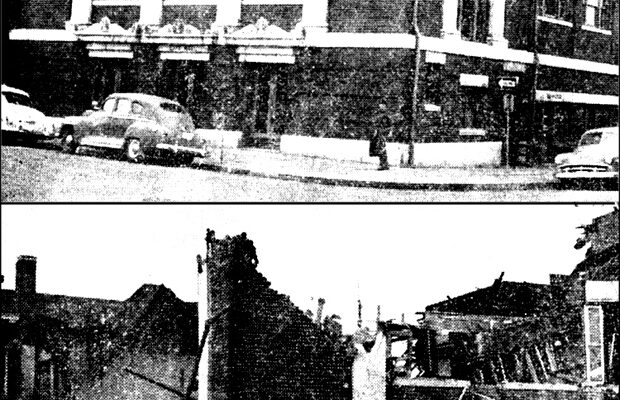
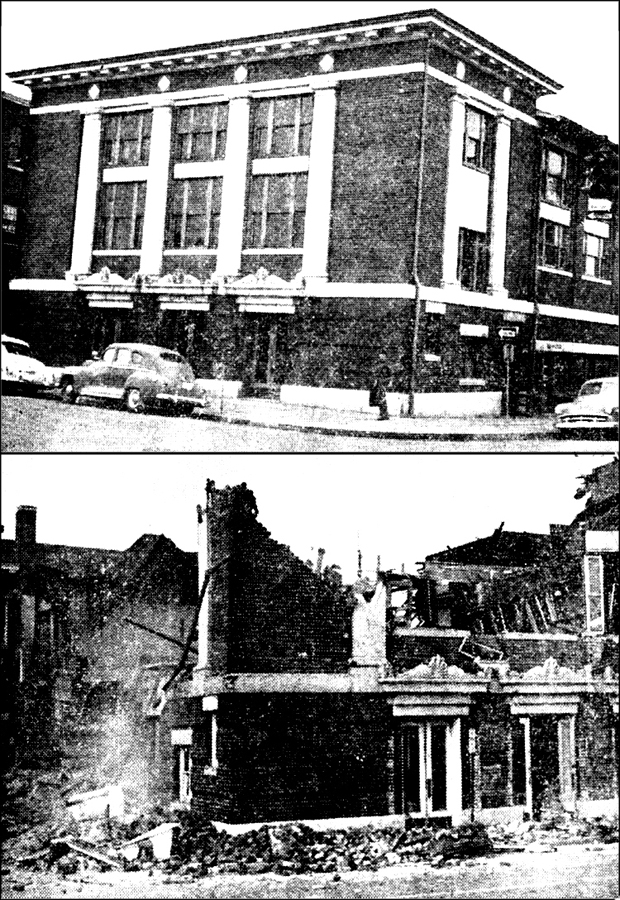
Older residents likely recall when City Hall (a.k.a. the Municipal Building) was situated adjacent to three downtown streets: W. Market, W. Main and Boone.

The massive structure operated as a civic, social and governmental centerfrom 1920 until about 1974 when a new location was selected on E. Main adjacent to Fire Station #3. The 3-story brick facility was historic because it represented the first time that city business was conducted in a municipally owned building. Prior to that, offices were rented in the business district. After it opened, the ground floor along Boone Street became City Market House with meat and produce stalls. Merchants and local farmers rented table space to vend their products to a grateful public. Early vendors included D.F. Clark’s Meat Stall (later renamed Clark’s Cash & Carry Meat Stall), Quality Service and Prices (Will Meet with Your Approval, Phone 401) and Keller’s Meat Stall (meat, vegetables and cannery products – “We Sell for Cash. Buy Here and Save the Difference”). Other tenants from that era were Associated Charities, City Fish Market and additional meat sellers: Hart and Clark, J.M. Range, J.M. Smith, John Webb and Hart and Thompson Sausage Company. The market was bustling with shoppers on Saturdays.

City Hall evolved into a heavily traveled venue to countless individuals seeking private meetings and public inquiries, thereby requiring a host of municipal employees to satisfy public needs. Much of the fate of Johnson City was determined when the mayor and other city officials dealt with thorny issues. The second floor contained a large auditorium and balcony on the W. Main Street side that accommodated about 480 people on the floor and another roughly 170 in a narrow balcony that extended along three sides. The stage became the setting for remote radio broadcasts, weddings, plays, prize contests, high school commencements, lectures, musicals and community functions. It also offered programs of local interest such as a popular cooking school that was sponsored by the local newspaper together with electric and gas companies. To stimulate attendance, the backers awarded door prizes that included baskets of food and gas or electrical appliances. The big frequently used room was often filled to capacity.

During a show in 1940, Jake Taylor’s Railsplitters Jamboree, Chuck Swain and his Radio Roundup from WROL Knoxville and a 71-year-old from Nebraska were featured. During the show, three fiddlers participated in a contest. The “loser” had to sit on a designated person’s lap and drink milk from a baby bottle. The crowd loved it.

In early 1946, Fiddlin’ Charlie Bowman, Gray Station’s North American Fiddlers Hall of Fame 2005 inductee and his second oldest daughter, Jenny, also performed at City Hall on the Smoky Mountain Jamboree. An ad from Saturday, April 13, 1946 reveals a typical performance: “The Biggest Show Ever to Come to Johnson City – 2 Big Shows – Smoky Mountain Jamboree and Circus for the Price of One – Saturday, April 13th, City Hall – First Show 6:30, Second Show 8:30 and Third Show at 9:30 – Entertainers: Speedy Clark and the Lonesome Pine Boys with Shorty Shehan and Tom ‘Pappy’ Slagle, Tennessee Pals – Eight Piece Hillbilly Band Direct from 14 years Engagement at Sunset Park, Maryland – J.E. Mainer and the Famous Mainer Mountaineers – Bob Christian and His Rhythm Boys – Charlie Bowman and Jennie, famous comedy, yodeling, fiddle and accordion team.” 

During the 1950s, Lowell Blanchard, the popular host of Midday Merry-go-Round and Tennessee Barn Dance over Knoxville’s WNOX radio, brought his country music show to the stage. One Press reader recalls winning a dollar bill from the emcee after successfully throwing a dart into the center of a bull’s-eye target. J. Norton Arney routinely sponsored fund raising shows in the auditorium. The stately building once served as a starting point for the annual Thanksgiving Burley Bowl Parade with colorful floats, tuneful bands and comical clowns lining up several blocks to the west on Main.

After 54 years of faithful service, City Hall began to feel its advancing age. Changes were made to the inside offices to accommodate the shifting times of city government. While some offices underwent significant renovations, others were simply closed and locked, perhaps serving as storage rooms. Eventually, the first floor of the building was the only part in use for city government business, an occasional rummage sale and headquarters for the Red Cross.

Former Johnson City Press-Chronicle writer, Bill Tigue, who covered the demise of the old structure said it best: “Some thought of her as an old dowager run down, a little musty, dilapidated, shop worn and neglected. Others fancied her a nostalgic relic, full of fine memories, proud and strong in the center of ‘The Old City Growing Young,’ stately, refined and dignified.” 

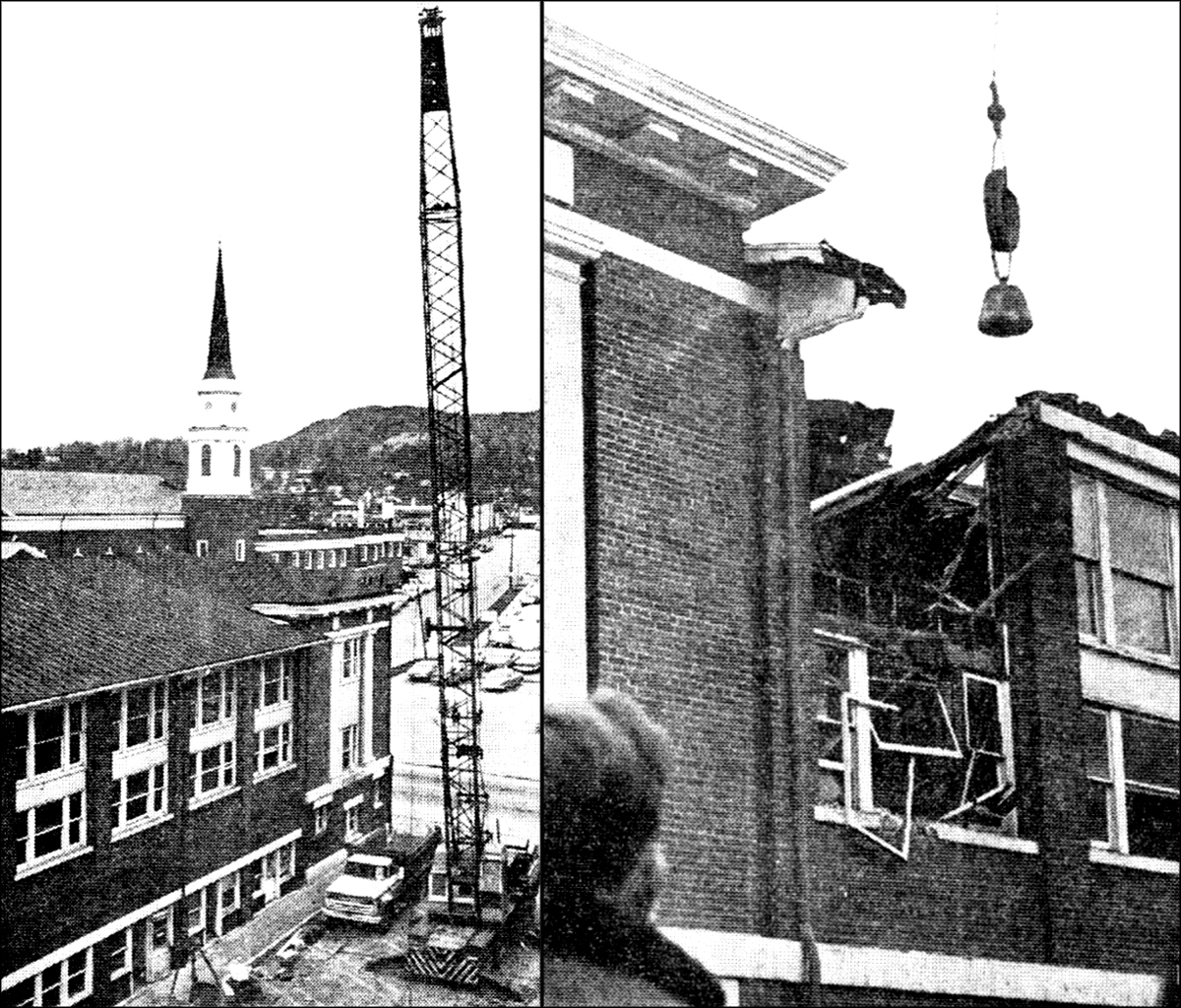
Whatever thoughts people had of City Hall, it was to no avail because on that fateful day with prior arrangements with Bradley Brothers Crane Service, she took her final bow and encountered the grim reaper, a massive 1800-pound wrecking ball. Demolition began on the south and west sides and moved inward. Gracefully, but not with absolute ease, the insolent old building stubbornly and defiantly surrendered to the big ball that cracked, bent and eventually toppled exterior and interior walls that had been standing since Model T cars roamed the streets. 

To conclude with Bill Tigue’s words, “Whatever school of thought you prefer, we hope you enjoyed your position while it lasted – she is no more. Neither dowager nor stately lady remains at the corner of Boone and Main streets this morning – just a pile of rubble.” Those who witnessed the heartrending destruction noted that she passed away gracefully and with dignity. After the debris was cleared and the dust settled, City Hall was only a memory. The site was sold to the Johnson City Press-Chronicle for a visitor parking lot.


Read more

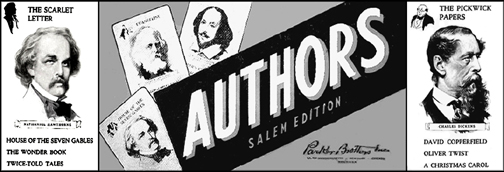
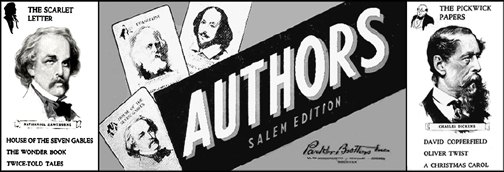
Today’s column is dedicated to my uncle, Ray Reaves, who passed away recently at the age of 97. In the early 1950s, Hazel and Ray Reaves, my aunt and uncle, introduced their young son, Larry, and me to a card game known as Authors. Hazel taught fifth grade at Boones Creek High School for years and never missed an opportunity to impart knowledge to youngsters who visited her home. Her sparking our interest in the pastime was obviously aimed more at education than entertainment, but we received a healthy dose of both.

Authors has been around since 1861 and today is still a favorite for young and old. The pastime has been likened to an earlier card game called Go Fish that utilized a standard deck of cards. G.M. Whipple and A.A. Smith first published the game. Later, others such as E.E. Fairchild Corp., Parker Brothers, Milton Bradley and Whitman marketed the product.

Authors was designed for 2-5 players. The deck I recall consisted of 52 cards, four cards each for 13 famous authors: Mark Twain, Charles Dickens, Robert Lewis Stevenson, William Shakespeare, James Fennimore Cooper, Washington Irving, Nathaniel Hawthorne, Henry Wordsworth Longfellow, Sir Walter Scott, Alfred Lord Tennyson, William Thackeray, Louisa May Alcott and Edgar Allen Poe. Over time, the number of cards and the authors on them changed. I have a deck that I occasionally get out and examine.

From top to bottom on each card was the title of one of the author’s famous works, a caricature representing the book, a large colored sketch of the novelist and the names of three additional books by the writer. The book at the top of each card identified the card with respect to the game. The arrangement of the books on each card was different.  

For example, one of the four cards associated with James Fennimore Cooper listed The Pathfinder (top), The Deerslayer, The Last of the Mohicans and The Spy. A second one featured Mark Twain’s Tom Sawyer (top), Huckleberry Finn, The Prince and the Pauper and The Mysterious Stranger. 

The game’s objective was for players to obtain full books (all four cards) by calling for cards from other players. The dealer shuffled the deck, dealt four cards face down to each player and placed the deck in the center of the table. The player on the dealer’s left then asked someone if he/she had a specific book card. If yes, the card was given to the caller and he/she asked that person or another person for another card. Anytime no card was produced, the caller had to draw a card from the deck. If the drawn card contained the requested book card, the caller was again allowed to ask someone for a card. If the deck card was not the desired book, the person to the left became the new caller. 

When a player ran out of cards, he/she was out of the game. When a player obtained a complete book, the four cards were laid aside on the table. When all cards had been gathered into books and placed on the table, the game was over. The player with the most complete set of books won. If there was a tie, each was credited for the win, which prompted a new game to begin.  

The success of Authors spawned a host of related card games such as American Authors, Baseball Legends, Bible Authors, Science Fiction Authors, Children's Authors, Composers, Explorers and Inventors.

Needless to say, I became quite familiar with 13 authors and 52 books. Playing the game stimulated my appetite to read some of the classics. This aspiration was partially fulfilled when Cut Rate Super Market on Walnut Street promoted Junior Classics (Globe Book Company) in their store by offering one condensed hardbound volume each week for $.99. Over a period of several months, I acquired 13 volumes. They now reside on my son’s bookshelf. 

Read more

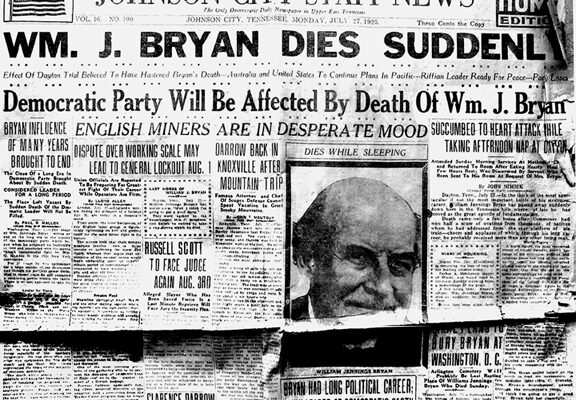
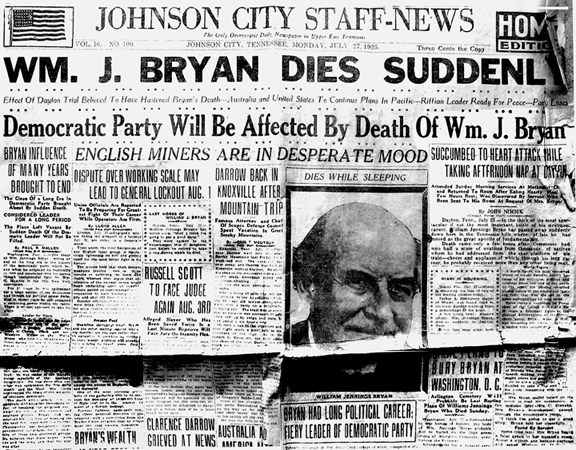
The bold headline of the July 27, 1925 Johnson City Staff-News proclaimed, “WM. J. Bryan Dies Suddenly.” The noted politician died the previous day in Dayton, Tennessee. He visited Johnson City on at least one occasion, lodging at the Windsor Hotel on Main Street. Within three days, Bryan’s body would make a final passage through East Tennessee by train en route to his final resting place at Arlington National Cemetery.

Mr. Bryan, a dominant force in the Democratic Party, made three unsuccessful bids for President. He supported prohibition and opposed Darwinism for religious reasons. “The Great Commoner,” so named because of his faith in common people, became a sought-after public speaker.

The commoner is best known for his principal role on the prosecution team at the 1925 John Scopes Monkey Trial in Dayton, Tennessee. Scopes, accused of teaching evolution in a public school, chose Clarence Darrow for his defense lawyer. Although, the jury convicted Scopes of the charge, an appeal’s court later overturned the verdict on a technicality.

Just five days after the trial, the self-confident lawyer died in his sleep after a heavy meal. Some felt the trial significantly contributed to his death. On July 30 at 8:50 a.m., two special railcars began transporting Bryan’s remains accompanied by his family on a 24-hour journey to the Nation’s Capital. Along the way, thousands of persons besieged the train as a show of respect to the fallen leader.

Although the train was only scheduled to stop at Chattanooga, Mrs. Bryan ordered another one at Knoxville when she learned of the massive crowd that had assembled there. As the train journeyed by Jefferson City and Johnson City, women at the depots sang hymns that included “One Sweetly Solemn Thought” and “How Firm a Foundation.” The train passed through Bristol at 11 p.m. In every town and hamlet, flags were flown at half-mast and many churches sent floral offerings to train depots to show their respect.

The funeral entourage arrived at Union Station in DC at 7:40 a.m. on July 30 where approximately 1,000 people were waiting in the vast concourse. A significant dispatch of police officers stood by and a horse mounted squadron kept the exit clear for the movement of the casket. 

Bryan’s widow left the funeral car before her husband’s body was removed. She was escorted to the rear platform in a wheelchair, which was then raised to the main level of the station in an elevator and taken to her hotel. The strain of the circumstances clearly showed in her countenance.

The gathering in the concourse grew steadily in number. Barricade ropes were put in place as people edged forward to view the casket as it rolled on a small truck through the pavilion. Government clerks hustling to their work desks paused long enough to bow their heads or lift their hats while it passed. 

After a brief time at the funeral parlor, the body was taken to the New York Avenue Presbyterian Church, where presidents and dignitaries of state had worshipped. Mrs. Bryan chose not to view her husband in public but agreed to a private one just before the body was taken to Arlington Cemetery for burial.

Eight honorary pallbearers who had been selected by Mrs. Bryan included Tennessee’s Senator McKellar, a Democrat. An informal reception committee met the funeral party, representing the State Department, which Bryan headed for two years.

A small delegation of troops from Fort Meyers met the casket at the entrance to the cemetery and escorted it to the gravesite. Mrs. Bryan insisted that the only display of military pomp at the funeral be the playing of taps.

The country had fittingly honored one of its fallen heroes. Mrs. Bryan joined her husband in death in early January 1930.  

Read more

One of my favorite writers of yesteryear is Hal Boyle (1911-1974), a colorful and witty AP award-winning journalist who frequently wrote about Appalachia. Typical of the writer’s work is a 1955 article commenting about how modern factories were affecting the lifestyle of residents of the Great Smoky Mountains.

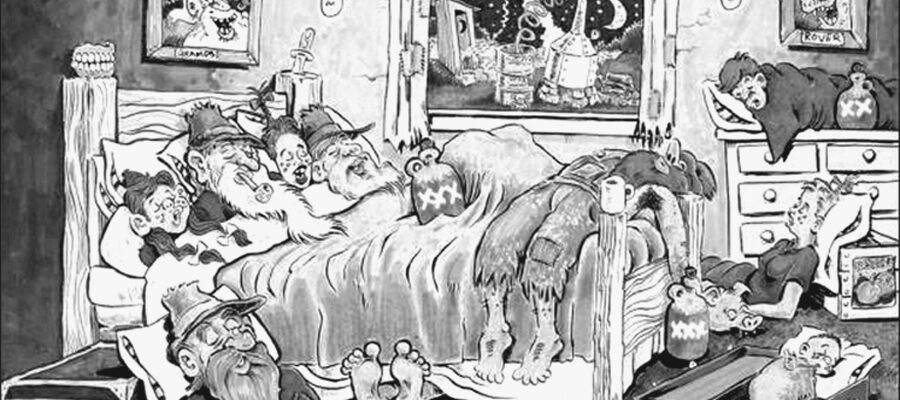
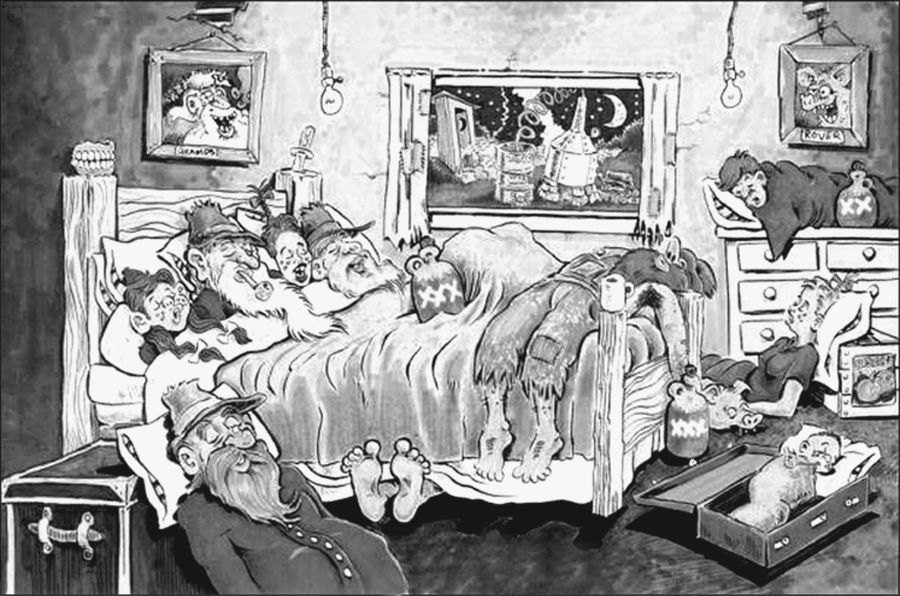
The fictional stereotyped hillbilly was portrayed as a shiftless figure wearing overalls who ran through the hills barefooted, a worn guitar slung over his shoulder, an old hog rifle in one hand and a jug of moonshine in the other. According to Boyle, the hillbilly image began to change over time.

Mountain folks began adapting to a new way of life that enabled them to maintain their ancient pastoral freedom while escaping the paucity of the past. They were enjoying the best of both worlds. Hal noted that the mountaineers humorously portrayed a distorted image for tourists to enjoy. However, they didn’t relish a ‘flatland furriner’ (city dweller) calling them a ‘hillbilly,’ preferring instead to be referred to by more dignified terms as southern highlander, mountain man, hill man or mountaineer.”

The industrialization of the Tennessee Valley changed the area from being so remote that vehicles could scarcely penetrate it to having adequate roads for travel. With it appeared improved social and economic patterns.

The mountain folks’ newly acquired skills ultimately brought them down from the hills to work at one of the growing number of factories in the valleys. Most of them opted to live in the mountains and work in the valleys. According to Boyle, “Some drove as much as 50 miles to their places of employment. When the quitting whistle blew, they climbed into their cars and drove back to their mountain homes to do their chores and cultivate their hillside gardens.”

Boyle related the case of a 43-year-old blacksmith who worked at Alcoa Aluminum Plant in the foothills of the Great Smoky Mountains, within sight of Chilhowie Mountain a few miles to the south of it. William, as I will call him, drove 10 miles to work from his 12-acre mountain farm where he, his wife and six children lived and farmed.

 Although the mountaineer eventually could afford the comforts of living in the city, he was not willing to move there even if he were offered him a house that included multiple indoor bathrooms with modern plumbing. He was fully aware that prosperous times were rapidly changing mountain living. Most residents no longer lived in rustic cabins. They chose not to live in the cities because they could bring the amenities of city living back to their quaint mountain homes. Mountaineers began enjoying the comforts of electricity for heating, cooking and powering a wide variety of electrical devices such as radios and televisions.

William spoke highly of living in the hills: “There's an $80,000 school going up in my neighborhood. Why should I want to live in town? You know, I've never had a haircut, shave or shoeshine in town in all my days. The country's the best place to live and to raise a family. The people learn how to work and save and they don't get into so much trouble. My children have no desire to live in town.”

William acknowledged that there were still a few revenuer agents around chasing moonshine stills: “The growth of factory jobs has cut it down. When I was a boy, you could count seven stills from where I lived, but now there isn't one.”

The mountain man was very proud that he had retained the rugged independence and individualism of his ancestors. He achieved a degree of economic security they never knew and still enjoyed the lifestyle, sunshine and pristine air of the mountains. The “hillbilly” shifted toward becoming a “mountain william” but never a “citybilly.”

Read more

On Friday, March 26, 1909, Munsey Memorial M.E. Church South began a new venture that they named Munsey Club. According to J.O. Lewis, secretary of the city’s Commercial Club, several pieces of workout equipment were acquired. They included popular Whitley exercisers that were attached to the walls at regular intervals, dumbbells, punching bags and Indian clubs.

The latter devices, resembling small wooden polished baseball bats, became popular in ancient times as a way for soldiers to prepare for combat by strengthening their upper torsos. The user held a club in each hand and swung them in a sequence of gracefully coordinated motions.

The entire cement floor basement of the facility was utilized for the club. It was finished in white that included a thick coat of white enamel over the walls, allowing them to be washed frequently. Surprisingly, the club never closed and membership was open to anyone who wished to join.

The organizers planned and executed an informative and entertaining open house program at the church for the more that 300 people who attended. At 7:30 p.m., J.M. Ferguson, president of Munsey Club, called for order and introduced Reverend James A. Ruble, a chaplain at Soldiers Home) who opened with an invocation.

Next came a progression of presenters that included a piano duet by J.A. Cargille (photographer) and Fred Peoples; a recitation by Mrs. W.B. Johnson, who had a reputation as an elocutionist; a solo rendering in “a very sweet voice and manner” by Mrs. Charles R. Cargille (Cargille Art Gallery); a violin piece by Frank Gilmer; a harp and song duet from Masters Charles Broyles and Garnet Vaught; an excellent rendition of “The Bells” by Miss Nugent; quartette singing from Messrs. Charles and Walter Cargille, Joe M. Horton (chief clerk, S&W Railroad) and D.R. Yarborough; an inspiring 10-minute talk from James Robert Gardner (attorney, clerk and master of Chancery Court); and a humorous song adaptation of the Rudyard Kipling poem, “On the Road to Mandalay,” by Arthur Earnest. 

The church pastor, Reverend Sidney B. Vaught, brought the meeting to a close with a few final remarks and a plea for donations to purchase furniture and equipment for the new facility. Following Mr. Vaught, Samuel Cole Williams (noted Tennessee historian who donated land and financing for Mayne Williams Public Library) adressed the audience, commending the organization and its potential positive influence on the community. The meeting concluded with a song and a benediction.

Membership quickly grew for the club. Professor Hough immediately acquired a number of pupils for his night school, resulting in the employment of several experienced instructors. The enthusiastic show of approval for the club further resulted in two shower baths being installed and an organized endeavor to collect books for a library. After Mrs. Frank B. St. John (wife of a local real estate agent) was put in charge of the ladies’ branch of the club, a special day was designated for them. 

On October 1, 1911, Reverend Vaught preached his farewell sermon, using as his theme, “A Young Man with a Conscience.” He became a financial agent for Emory and Henry College and retired from active service as a minister. During his brief term as Munsey’s pastor, church membership increased by 357 members, bringing the total to 669. The congregation raised $50,000 to pay expenses for a new church edifice costing $45,000. 

I have fond memories of swimming in Munsey’s indoor pool in the 1950s (one hour for 50 cent), diving for rubber rings in the deep end, shooting basketball and eating at their snack bar. If anyone knows the dates when the pool was in use at the church, please let me know by e-mail. I suspect it was many years after the club opened. 

Read more

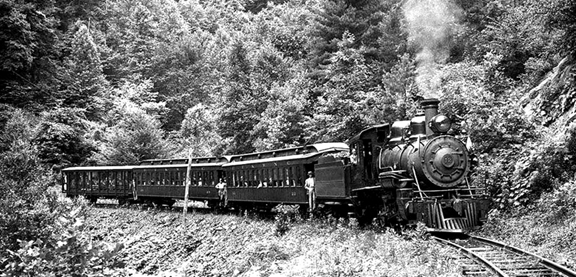
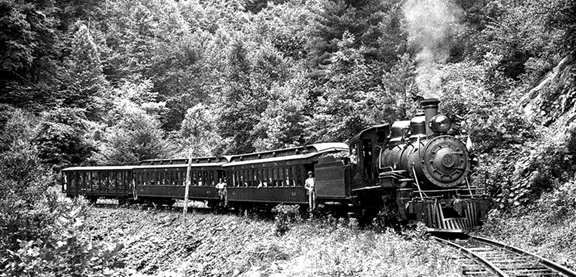
A Johnson City Staff-News writer, Carroll E. King, took an East Tennessee and Western North Carolina (Tweetsie) Railroad pleasure trip on July 9, 1933 between Johnson City and Linville Gap, North Carolina to enjoy the stunning, rarely seen surroundings that were inaccessible by automobile.

King berated himself for not having enjoyed the trip many times before, describing the ride through the gorge and over the crest as being as beautiful as is possible over the ET&WNC Railroad. He urged his readers to avail themselves of the railroad’s special 50thanniversary July rates. Sights included the famous Doe River Gorge, Skyland, Grandfather (Mountain) and other points from the vantages of the railroad. To persuade people to ride the train, he published an alluring diary of the trip:

 “Leaving Johnson City, we secured a view of our own local industries not visible by any motor road. Then we climbed up and looked down over Happy Valley and its real beauties never before appreciated.

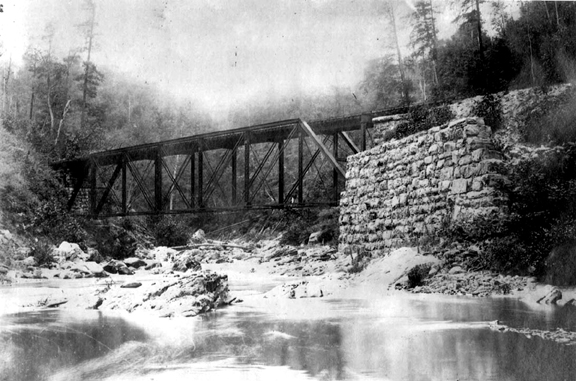
“Elizabethton followed, then Hampton and next the little newly painted and all shined up engine got right down to business. It was upgrade with a vengeance and within a short time we passed through the tunnel that led into the Gorge, a treat that no one who has not seen it can really appreciate.

“Tracks carved out rock walls, tumbling torrents at our feet, towering mountain walls of anticline rock formations and gorgeous vistas of mountain scenery elicited “oohs and aahs” from the passengers. Indeed the Gorge is a scenic gem that cannot be described. We tried in vain to get Kodak pictures to prove our claims, but the canyon is so deep and shadowy that pictures can hardly be taken because sunlight seldom reaches its depths. But it is wonderful and we unqualifiedly recommend it.

“Then up the hill and further up the hill (we went) until the bracing air and the bright sunshine cause one to dig into the lunch basket long before the anticipated time. Roan Mountain, with its beautiful resorts, high mountain peak and world-famous dahlia farms came next. Then Elk Park, bracing with its cool, clear air and invigorating climate, was closely followed by Cranberry, the home of famous Cranberry Iron Ore. There we dropped one passenger car in order to relieve the game little engine of the extra load on the upper reaches of the mountain.

“From then on, we climbed higher and higher until we reached the very crest of the Great Smoky Mountains and could look down on town after town and enjoy gorgeous vistas of mountain scenery in brilliant sunshine. Innumerable opportunities are afforded here for Kodak shots because the steep grades slow the train down to such an extent that “Kodaking” from the train becomes an interesting pastime.

“Next comes the famous summer resort, Linville, with its magnificent hotel, rustic cottages and nationally famous golf course. Several passengers alighted there to play a round on the noted course, but we felt that we could play golf any day and we wanted to see all there is to see. So we struck along and journeyed on Linville Gap some few miles further and it was well worth it.

“Linville Gap is nothing but a wild spot in the mountains, right at the foot of Grandfather Mountain and is the highest spot east of the Rocky Mountains that is reached by a railroad. Its elevation is 4,113 feet and you can look right up at another slope of several thousand feet between you and the top of Grandfather. But fortunately for physically weak city dwellers, lumbermen of that section have built a tram road or “log highway” to within a half-mile of the summit.

“These split logs have been laid with the smooth side up – one end embedded into the mountain side and the other resting on trestle work. Automobile trucks carrying acid and pulpwood logs dash recklessly up and down this road. We declined with thanks the opportunity to ride and insisted on walking. Although we might be termed a coward for not riding the trucks, we got a far bigger kick out of walking up the tram road studying the flora and fauna and picking gorgeous wildflowers and luxuriant ferns.

“Miles up, it seemed we came to a trickling waterfall and there we spread our picnic lunch. And were we hungry. The writer has as his guest a couple of youngsters and one young lady being an Ohio citizen was not very familiar with the high altitudes. Frankly, we were somewhat fearful of her capacity as she devoured sandwiches by the dozen not by the bite. Dyspeptics are urged to take this trip as a sure cure. If you cannot eat after climbing half of Grandfather Mountain, you are hopeless.

“Then, with the lunch baskets and the canteens much lighter, the climb was resumed with every widening vistas of beautiful scenery and awe-inspiring structures of nature. Realizing that the return trip must be started at 3 p.m., we reluctantly ceased our upward journey and retraced our steps with the pronounced conviction that we would return soon and this time go all the way to the top. And to our amazement, the return trip was equal if not the superior of the up-trip because all of the scenery was viewed from a different perspective. 

“Here and now, it becomes our pleasant duty to express our appreciation of the keen personal interest taken in the entertainment of the passengers by the members of the train crew and the officials accompanying the excursion. Nothing was left undone that would enhance the pleasure of the trip. Constantly crew members were busy pointing out interesting views and historical spots and every few minutes some member would make the rounds to see if everyone had everything he or she wanted.”

Carroll King reminded his readers that another excursion would be offered by the railroad line the following Sunday at 8 a.m. and urged them to take advantage of the reduced rate opportunity. Based on his excellent write-up in the newspaper, the next excursion was likely full. 

Read more