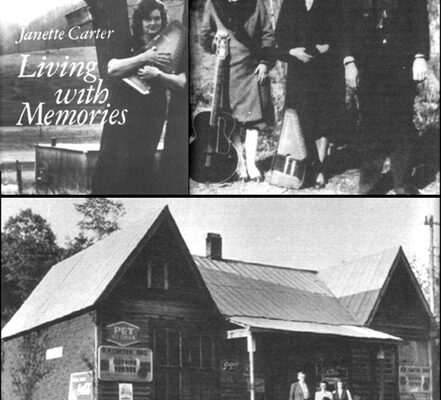
Over the years, countless old-time Appalachian music lovers have pleasant memories of attending the Carter Family Fold in Maces Springs, VA on Saturday nights. Located in Poor Valley just outside Hiltons in the beautiful Clinch Mountains of Southwest Virginia, the quaint atmosphere of the rustic Fold is a favorite setting for those who love the musical genre once popularized by The Carter  Family.

Sara, A.P. and Maybelle recorded between 1927 and 1956, making their first records at Victor’s Bristol Sessions. Their offering was a mixture of ballads, traditional tunes, country songs and Gospel. Scores of books have been written about the “First Family of Country Music,” but one publication stands tall among the rest. It is from the daughter of A.P. and Sara – Living With Memories by Janette Carter (Carter Family Memorial Music Center, 1983). The 84-page softbound book features a glimpse into the heart of a hard-working, God-fearing lady who was born, lived and died in her beloved Clinch Mountains. The work focuses mainly on family values rather than musical prowess and makes clear her adoration for her ancestors.
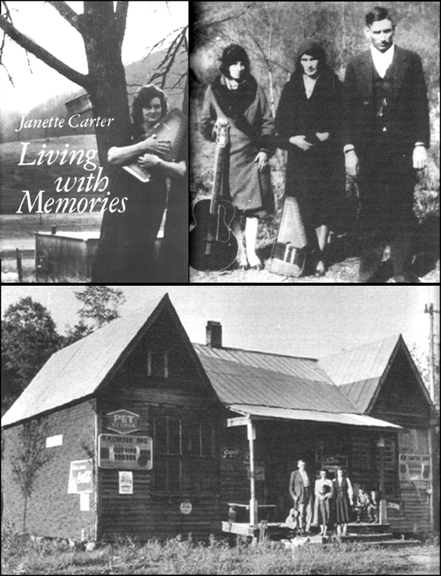
  

Poor Valley lies between Clinch Mountain and a large hill called the “Nob.” People living there were often perceived as being poor, but, according to Janette, “they were rich in their love of nature and God’s creation.” Some of her most cherished memories were at her home, her grandparent’s place; the Carter Store; Maces Springs School, Mount Vernon Church, the hills, meadows, valleys, mountains and Old Clinch.

Life was arduous. Daily chores included feeding chickens, hogs and cows; drawing water from the well; and building fires in the cook stove and fireplace. Winters required a hefty supply of firewood from Clinch Mountain that was produced using an old crosscut saw. During harvest time, neighbors helped work the big thrashing machine. Afterward, Mom and her children emptied ticks (bed mattresses) and filled them with fresh straw from the fields. After that, they plucked geese and ducks to replenish feather pillows. The family hoed corn, cut or pulled weeds, planted seeds and tended to tobacco. They subsisted on what they raised on their fertile country land.

Janette fondly recalled her mother’s ham meat, tomato gravy and blackberry pie. On Sundays, there was often the added luxury of chicken and dumplings. Mama Carter was an immaculate housekeeper; her bedding was as white as winter’s fresh snow that blanketed the countryside.

A.P. often related the story of how he and Sara met. He was selling fruit trees and stopped by a farm in Midway, Virginia. He heard a beautiful voice in the distance singing “Engine 143.” Her vocal refrain and Autoharp strumming enchanted him. When he approached her, he depicted her as the most beautiful girl he ever saw, having eyes that shown like diamonds. The two eventually married. Her family deemed her plaintive songs more beneficial during illnesses than any store-bought medicine.

A.P., whose singing voice ranged from high to low, could find scales and chords with ease. Once, while his mother was carrying him in her womb, lightening struck a tree where she was picking apples, spreading fire around her. The incident is blamed for her son’s hands trembling for the duration of his life.

In the spring, Janette loved to walk among the elder bushes, gather clusters of blackberries, sit by cool mountain streams, listen to the water rush over rocks, observe minnows swimming about and touch the damp, green moss on the rocks.   

The train passed the Carter home twice each day. Janette routinely waved at the engineer from her front porch as the big steam locomotive chugged along, bellowing coal smoke from its stack and emitting a mournful sound from its steam whistle. Afterwards, the prudent daughter walked along the track with a bucket, collecting small lumps of coal that had fallen from the train. Coal produced a hot fire and saved firewood.

Grandma Carter canned big jars of kraut, pickled beans, shuck beans, apples and apple butter. She cooked a blackberry jam consisting of part berries and part apples, stirred it all day and put it in big crocks. She also fried streaked meat in a large fish fry iron pan, crumbled the meat and grease into her bread and baked it in the old wood stove. A big smear of butter on it made it a delight. 

Mount Vernon Church, built by people in the valley, was located just down the road from the Carter home. Every Sunday morning, people walked there from all across the valley. The service consisted of singing, preaching, praying and shouting. The preacher always ate lunch at one of his member’s homes. Janette related a life-changing experience for her when A.P. took her to a revival meeting. There she found Jesus, joined the church and got baptized in the river. 

In 1938, the family moved from Poor Valley to Del Rio, Texas where they joined Maybelle, Helen, June and Anita for a stint on XERA, a large radio station in Villa Acuna, Mexico. The station produced transcriptions that were distributed to radio stations. A year later, A.P. and Sara divorced, but continued performing until their retirement in 1943. By then, Janette had become an accomplished musician in the Carter tradition.

Janette made a promise to her aging father that she would carry on the family’s musical heritage after his passing; she was true to her word. The dream first took root when she turned the rural Carter Store into a Saturday night old-time music gathering. Over time, there was a need for a larger facility. With help from her equally musically talented brother, Joe, the performance was moved next door to a spacious 842-seat wooden facility known as the Carter Family Fold. Notably displayed on the stage wall were photographs of The Carter Family, serving as an constant reminder of the family’s heritage and Janette’s pledge to her father. 

Janette spoke highly of her family: “They were proud; they worked hard; they shared their food, their love and their lives. … I don’t guess any child has loved their parents more than I did. Their fame never entered my mind. I loved them because they were my own mother and daddy.”

Janette loved the beautiful sight of wind as it majestically created waves across a sea of wheat. “(My parents) sowed the wheat,” she said. “I’m reaping the harvest.” The talented lady passed from this earth on January 22, 2006. The torch was promptly passed to Rita Forrester, Janette’s daughter, to carry on the family tradition. May the circle be unbroken. 
Read more

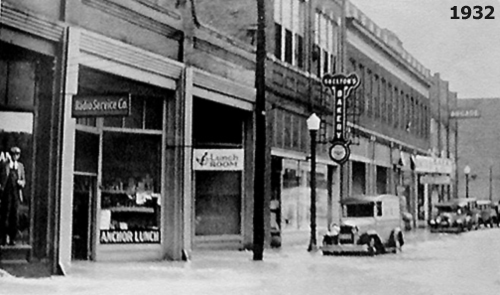
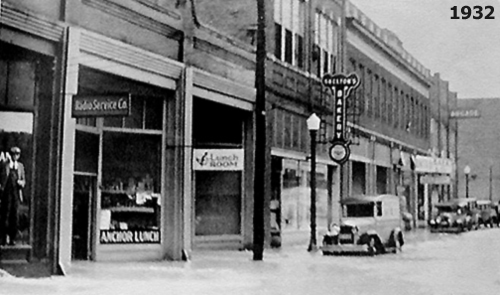
Brush Creek is a stream of water that is very familiar to Johnson Citians, largely because of its long history of flooding. The name is reported to have originated with Abraham Jobe who owned land along the creek in what became the business section of the town. He once related that a heavy mass of red brush grew along the creek and obstructed the view except for those riding on horseback. Apparently, the name stuck.

A 1959 TVA publication concerning floods on Brush Creek in the vicinity of Johnson City stated that in 1908 there were 29 road and 14 railroad bridges that crossed the winding creek within an 8.75-mile span. The resulting 43 overpasses and nearby buildings with columns became hindrances to adequate water drainage from the area.

The 44-page report further noted that the greatest flood recorded since 1868 occurred on May 29, 1908. The second highest one happened on August 9, 1938. One million square feet of land in the downtown section was adversely affected by 3,300 feet of creek.  Although there were no definite records of floods on Brush Creek prior to 1901, it is known that several major floods occurred in the business district. One of the best sources of knowledge on this subject comes from a diary kept by a local resident, Robert P. Fickle. His notes, while unofficial, shed added light on the city’s flood problems of yesteryear.

Mr. Fickle referred to “a great tide sometime in 1790.” He also mentioned 1817, 1835, 1847, 1848 and 1851 as years in which significant deluges occurred on streams in the upper East Tennessee region. On Sept. 15, 1861, he wrote, “A tide was made by a hard rain, which continued for four or five days with intermissions of 6, 12 and 24 hours. This tide was somewhat higher than the one seen in 1817.”

On Feb. 21, 1862, he noted, “It commenced raining steadily and rained without any intermission on the 21stand on during the night following until daylight on the 22nd.  This tide was about two feet higher than the tide of 1861. This was a general tide (that extended) throughout the Southern Confederacy. Rain was general throughout the southern states.”

In March 1867, Mr. Fickle recorded that “The greatest tide yet in Holston River history was caused by the most unprecedented raining season known only to the oldest people. This was the great storm that caused flooding all over the eastern part of the Tennessee Valley and resulted in the highest floods ever known at Knoxville and Chattanooga. Great damage was done on the rivers and creeks. Bottoms on the river were damaged either by being washed into holes and gutters or covered by sand. Many mills were carried off, also houses, barns and stables thought to be out of reach of high water.”

In February 1875, the Fickle diary pointed out heavy rains that fell for several days that resulted in “raising the branches more than at any time since the great tide in 1867. Great damage was done to property along the water courses and a vast number of rails were carried off.”

While none of the flood comments specifically mentioned Brush Creek, there is no doubt that on most of these occasions rainfall over the Brush Creek watershed would have been sufficient to produce large floods along the creek. It is quite possible that the great storm of 1867 produced a flood in Brush Creek of greater volume and height than any that have occurred since.

Thanks to Mr. Fickle, we garner additional facts about the troublesome little creek that still occasionally wakes up from its restless slumber and climbs precariously out of its turbulent bed to the chagrin of nearby property owners. 

Read more

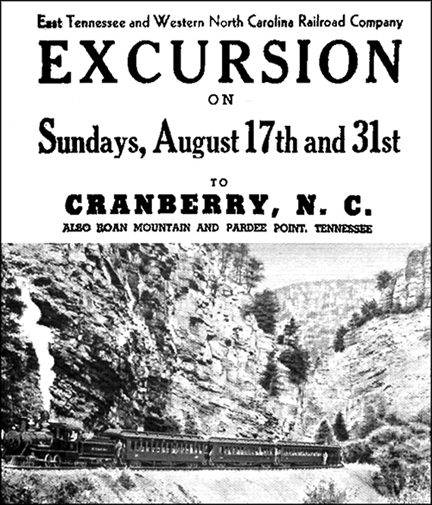
The East Tennessee and Western North Carolina’s (ET&WNC) narrow gauge railroad, affectionately known as Tweetsie, can be traced to 1881 when it began trekking between Johnson City and Hampton and a year later to Boone.

The roughly 54-mile journey required four hours under ideal circumstances to negotiate the harsh prodigious grades and winding curves. Tweetsie was not your typical train. Its sweet and mellow steam whistle served more as a greeting than a warning. The one exception was when it became necessary to frighten away an animal that unwisely ambled onto the track, posing danger to passengers and critter.

In addition to normal rail service, the amenities provided by the train were endless. Tweetsie soon became known as the “Railway with a Heart.” Cy Crumley, the train’s well-known conductor since 1906, frequently leaned out the window to grab a handful of mail to take to its destination or relay a verbal message to someone along the line. The train might stop in front of a farmhouse to deliver a spool of thread or a length of wire.

Special interest groups, such as a camera club, regularly chartered the railroad for a photographic outing along the stunning mountainous country over which the little train traversed. Crumley altered his characteristic call, “All aboard” to something with a more subdued personal tone – “Well folks, I reckon we might as well mosey along.” S.F. Pippin, engineer since 1903, followed suit by uttering to the passengers, “If you see something pretty while we are rolling along, just holler and I'll stop the train.” 

Tweetsie stopped at small log cabin villages to deliver or pick up mail and medicine, let a doctor on or off on the way to deliver a baby, or allow a patient to return home after being discharged from a hospital. An enterprising post office employee once determined that it would be cheaper for trucks to haul mail. Tweetsie’s friends, fearing the worst, came to the defense of their little narrow gauge guest with a battle cry, “Abandon Tweetsie? You might as well dig up Grandfather Mountain.” The creative postal clerk’s voice of reasoning soon evaporated.

In August 1941, the now financially struggling railroad experienced a dilemma that almost prompted it to suspend operations. A storm produced floodwaters that caused an estimated $50,000 damage to portions of the track. Officials were left scratching their heads about what action to take. Finally, management made the painful decision to notify the Interstate Commerce Commission and request authorization to abandon the line. Tweetsie’s future looked grim.

However, four months later the circumstances would change significantly. Just when it appeared that the much-beloved little railroad would depart the business world, the December 7, 1941 attack on Pearl Harbor thrust the country into the conflict and issued new marching orders for the adored Tweetsie. A war that seemed to be 3,000 miles away suddenly came knocking on America’s door that fateful Sunday morning.

The government’s need for raw materials became a critical issue, thrusting the little train back into the global spotlight. Tweetsie’s floundering role was saved almost overnight as new life was breathed into the entire railroad industry. Once again, tourists were able to hear Engineer Pippin's farewell words that he uttered after each trip: “You all come back and ride with us again.”  Indeed they did, at least for nine more years, until October 16, 1950 when Tweetsie made its last official roundtrip run.  

Read more

During 1952-53, I was in Mrs. Fannie Taylor’s fourth grade class at Henry Johnson School opposite Kiwanis Park. She was the wife of Alf Taylor, whose father, Alf, was a former Tennessee Governor. Subjects included reading, writing, arithmetic, spelling, English, geography, health, music and library. 

Mrs. Taylor had a unique talent for reading books to her students and incorporating a heavy dose of realism into each one. There were no idle minds or flickering eyelids anywhere in the class during her well-received recitations. Instead, we were kept spellbound on the edge of our seats.

One of the books she read was “The Secret Garden” by Frances Hodgson Burnett. The plot involves Mary, a sickly and spoiled little girl and Colin, a pitifully lonely young invalid as the main characters. The story centered on a flower garden surrounded in mystery by a high wall containing a door that was locked and the key discarded.

Perhaps the most memorable books Mrs. Taylor read us were from the “Uncle Wiggily” series, a collection of short stories authored by Howard Garis, a prolific writer whose books became a daily favorite of youngsters because of his witty and unique writing style.

Uncle Wiggily Longears was an elderly rabbit with rheumatism. He always dressed immaculately when he went out, wearing a sports coat, trousers and a silk top hat. He wore spectacles and carried a red, white and blue walking crutch. The extraordinary animal had the ability to carry on a two-way conversation with all the forest critters. He could also understand people, but they were not able to communicate with him.

Most stories began with the aged animal leaving the comfort of his hollow stump bungalow each morning in search of an adventure. He shared his natural abode with his private nurse and housekeeper, Nurse Jane Fuzzy Wuzzy, a muskrat. He usually departed each morning under Nurse Jane's stern admonition to “be careful”; “Keep your eyes open for the Woozie Wolf or the Fuzzy Fox”; and “You aren’t thinking of going out in this storm are you?” A usual daily escapade for Uncle Wiggily was encountering some person or animal that needed help and then figuring out a way to assist them in a non-threatening manner. Violence was completely unacceptable.

Some of the principal characters were (no snickering) Curly & Floppy Twisttail (pigs), Jacko & Jumpo Kinkytail (monkeys), Johnnie & Billie Bushytail (squirrels), Charlie & Arabella Chick (chickens) and Jackie & Peetie Bow Wow (dogs).

Each story ended with Garis’s unique “and if” promotion for the next exciting exploit, an example being “and if the sunflower doesn't shine so brightly in the eyes of the potato that it can't see to get out of the oven, I'll tell you next about Uncle Wiggily and (the next adventure).

The company issued several soft back books containing ten Uncle Wiggily adventures: “Uncle Wiggily Starts Off,” “Uncle Wiggily and the Paper Boat,” “Uncle Wiggily and the Troublesome Boys,” “Uncle Wiggily and Granddaddy Longlegs,” “Uncle Wiggily and the Black Cricket,” “Uncle Wiggily and the Milkman,” “Uncle Wiggily and the Cowbird,” “Uncle Wiggily and the Starfish” and “Uncle Wiggily and the Red Monkey.”

Mrs. Taylor was one of the most memorable teachers I had during my formative school years. Let me conclude with a Garis-like ending: “And if the two salty over-light eggs can keep from overcooking on the plate from hot runny buttered grits and sizzling smoked bacon strips,” next week I will tell you about a Tweetsie Railroad happening in 1941. 

Read more

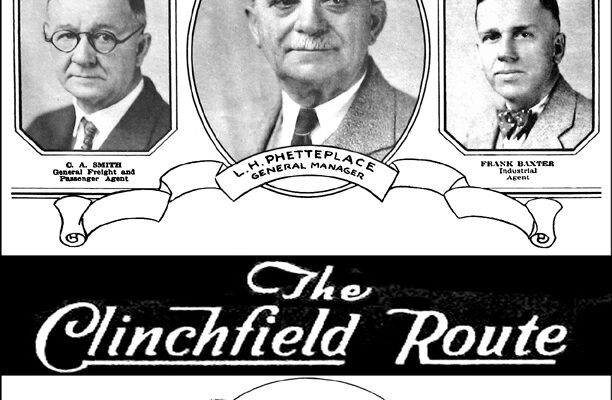
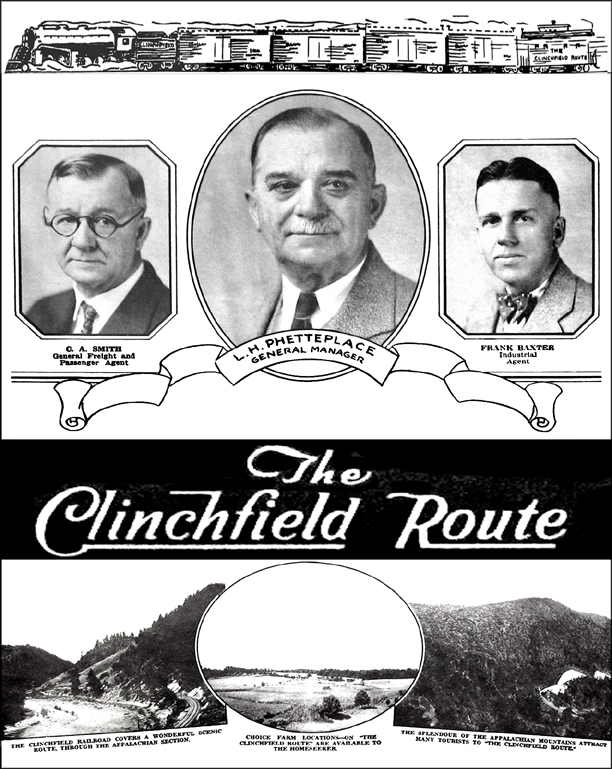
An April 1939 article in the Johnson City Chronicle and Staff News provides specifics of the building of a new and difficult train route across the Blue Ridge Mountains. The title was “The Building of ‘The Clinchfield Route’ – A Romance in Railroad Construction.”

A dream that had fostered in the minds of enterprising individuals from the earliest days of railroad history was the completion of a railroad that would span from the inland countryside across a portion of the vast Appalachian Mountains to the seacoast.

In 1832, John C. Calhoun (South Carolina politician, 7thVice President of the United States) advocated the building of a road from Charleston, South Carolina to Cincinnati, Ohio. In 1836, a company was formed for this purpose. Robert Y. Hayne (another South Carolinian, debated Daniel Webster of Massachusetts) became president of the road. Surveys were made and construction began on the South Carolina portion of the line. John C. Fremont (first republican candidate for the Presidency) was employed as a surveyor.

  Over the years, numerous schemes for building a railroad on a direct route from Charleston to Cincinnati were considered but never pursued because of overwhelming mountain barriers. The plan lay dormant until about 1887 when General John T. Wilder (Union Army soldier, Carnegie developer, Cloudland Hotel builder) interested capitalists in the construction of the road. It was named the Charleston, Cincinnati and Chicago (3C) Railway. Success in the ambitious undertaking required a heavy dose of courage, capability and cash.

Several English capitalists backed Wilder’s vision, spending about seven million dollars. However, they were forced to suspend work in 1893 when one company, Baring Brothers (English bankers), went bankrupt. The road underwent foreclosure proceedings and was sold to Charles E. Hellier on July 17, 1893. He reorganized it as the Ohio River and Charleston Railway Company. Two months later, the new company extended the road from Chestoa, Tennessee to five miles south of Huntdale, NC, a distance of about 20 miles.

In 1902, George L. Carter (rail and coal magnate, founder of modern Kingsport) and associates purchased the property of the Ohio River and Charleston Railway Company and formed the South and Western Railway Company with the idea of developing the coalfields of Southwest Virginia and Eastern Kentucky. They acquired large tracts of coal lands in what has since become known as the “Clinchfield Section.”

The New York “money kings” were initially reluctant to invest in the risky venture. After Mr. Carter acquired additional surveys and reports, Thomas F. Ryan formed a syndicate to build the road. For four years, money was shoveled into the rocky fastnesses of the Blue Ridge Mountains for the purpose of boring hills and bridging valleys. Difficult sections of the mountains were tackled first leaving easier ones to be surveyed and left undisturbed until later.

The company next extended the North Carolina portion of the line from Huntdale to Spruce Pine. Additional work was halted until 1905 when Mr. Carter interested John B. Dennis and Blair and Company of New York in the venture. Dennis is credited as being the principal force behind “The Clinchfield Route.”

That same year, extension of the road from Spruce Pine, to the south and Johnson City to the north began. Although the general plan of the old 3C road was followed as much as practical, new surveys provided more gentle curves and lower grades. In 1909, the road was completed from Dante, Virginia to Spartanburg, South Carolina. Further progress was made between 1912 and 1915 when it was extended north from Dante to Elkhorn City, Kentucky, a distance of about 35 miles.

The 309-mile stretch crossed four distinct watersheds and required 55 tunnels, which were built to a standard of 18 feet wide and 22 feet high. The shortest length was 179 feet and the longest one was 7854. Cost was high with one passageway totaling $500,000 and several miles of mountain road chalking up a price tag of $200,000 a mile. Elkhorn City was 795 feet above sea level while Spartanburg was 742. The highest point of the entire track measured 2628 feet at the crest of the Blue Ridge Mountains.

The maximum grade of one-half of one percent was strictly enforced along the road. At times, construction work was halted after it was determined that a section of road would not achieve the required grade restriction. Lower grades were ideal for larger locomotives such as Mallet and Mikado that typically pulled 80 to 100 cars of coal.

The height above sea level of The Clinchfield Route was said to be the greatest in the east and its stunning scenery was hardly surpassed anywhere in the world. While other roads had dodged severe mountain barriers, the Clinchfield boldly cut through them. Throughout almost its entire length, it traversed rugged mountain country with an impressive high standard of construction.

 On October 29, 1909, Spartanburg residents celebrated the opening of the much-anticipated line. They deemed the CC&O as “one of the greatest little railroads in the United States.” During the festivities, two individuals, H.H. Rogers and Thomas F. Ryan, were singled out for their efforts in making the road a success. The completion of the Clinchfield Route satisfied the yearnings of early statesmen by successfully opening a section of country that was abundantly rich in natural resources.

When the economic depression occurred in 1910-11, much construction work across the country was suspended except for two significant endeavors – the Panama Canal and the CC&O Railroad. The country was determined to finish what it had begun – digging a canal and finishing a railroad. Both were completed. 

Read more

Today’s column is a nostalgic quiz covering downtown Johnson City movie theatres and favorite motion pictures that were projected on their big screens. Older residents can readily recall four movie houses that entertained the masses.

Some of these businesses later changed ownership and acquired new names.                                

Theatres

Over time, 11 movie theatres occupied 5 downtown Johnson City locations: 1. Sevier (113-117 Spring), 2. Majestic (239 E. Main), 3. Tennessee (148 W. Main), 4. Liberty (221 E. Main) and 5. State (236 E. Main opposite the Majestic).


Now comes the hard part. These locations were also the site of six additional movie houses: A. Edisonia, B. Capital, C. Grand, D. Deluxe, E. Capri and F. Criterion. Test your wit by matching the numbered locations with the lettered theatre names.

The second part of the quiz deals with 10 favorite movies that I first viewed at one of the downtown establishments. Match each numbered movie title with its corresponding lettered final scene descriptor.

Movies

1. The African Queen (1951, Bogart, Hepburn).

2. Citizen Kane (1941, Wells, Cotton).

3. Gone With The Wind (1939, Leigh, Gable).

4. The Grapes of Wrath (1940, Fonda, Carradine).

5. High Noon (1952, Cooper, Kelly).

6. It’s A Wonderful Life (1946, Stewart, Reed).

7. Sergeant York (1941, Cooper, Brennan).

8. Shane (1953, Ladd, Arthur, Heflin, Palance, De Wilde).

9. Singing In The Rain (1952, Kelly, Reynolds, O’Conner).

10. The Wizard Of Oz (1939, Garland, Bolger, Lahr, Haley, Morgan).

Final Scenes

A. George sees an inscription in a book that reads, “Remember, no man is a failure who has friends. Thanks for the wings.”

B. After being thrown into the river from an explosion, Rosie wants to know which way is the east shore. Charlie answers, “The way we’re swimming, old girl.”

C. Alvin looks out over his vast farm and utters the words, “The Lord shore does move in mysterious ways.”

D. A family determines to survive the depression years: “They can’t wipe us out. They can’t lick us. We’ll go on forever, Paw, cause we’re the people.”

E. After telling a young boy goodbye, the lone rider heels his horse and gallops away to the lad’s tearful voice admonishing him to “come back, come back.”

F. A little girl arrives home from adventures in a magical land with the appreciation that “There’s no place like home.”

G. The anonymity of the word “Rosebud” goes up in smoke and forever eradicates a mystery surrounding the death of a famous newspaper publisher.

H. Two people standing at the base of a billboard look up to a picture of Don and Kathy while a background song reaches a soaring finale.

I. After a suspenseful climax, Kane opens the door, fires at Henderson, drops his badge into the dust and rides out of town with Amy.

J. The heroine boldly proclaims, “I can’t let him go. There must be some way to bring him back because, after all, tomorrow is another day.”

Answers: Part 1 Theatres: 1-(none), 2-C, 3-DBE, 4-(none) and 5-AF. Part 2 Movies: 1B, 2G, 3J, 4D, 5I, 6A, 7C, 8E, 9H and 10F.  

Read more

On Saturday, May 16, 1915, an entourage of 631 school children and other excursionists boarded a CC&O train in Spartanburg, South Carolina to make the approximately 130-mile mountainous rail trip to Johnson City.

A local newspaper described the weather all along the way as being ideal. Railroad travel in those days was a little more daunting as evidenced by the statement: “There was not the slightest semblance of an accident to mar the pleasure of the picnicking excursion.”

While not revealed, the fare for the special trip was based on two factors – the roundtrip distance traveled and the number of paying passengers. The company’s charge was slightly more than that for similar trips in previous years because of the longer distance and a drop in attendance. It is likely that some parents were uneasy about sending their youngsters on such a long train ride through remote mountains. 

The railway company, anticipating considerably more people than made the trip, provided 14 cars, which were more than ample for the expected crowd. The additional vehicles were to address past complaints that too many riders had been crammed into too few cars, making the journey a bit uncomfortable. With additional ones and fewer people, the experience was much more enjoyable.


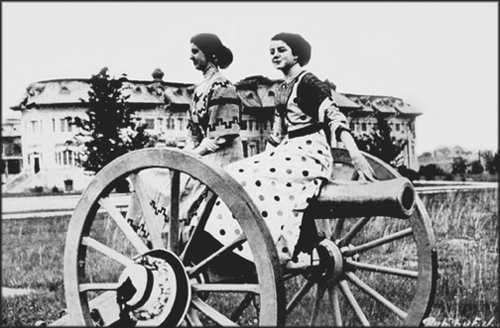
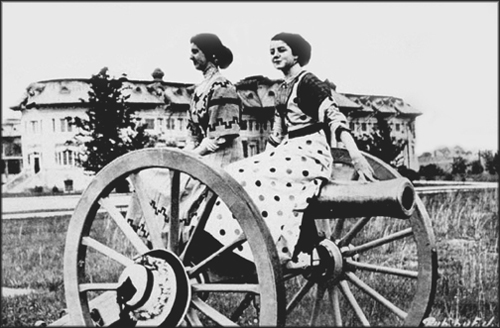
The train departed Spartanburg at 6:35 a.m. and arrived at Johnson City at 1:00 p.m. It did not stop at the usual downtown station, but instead went straight through the city and deposited visitors near the gateway to the National Soldiers Home. At that time, the facility was about one mile outside the city limits. The home opened its arms to its South Carolina guests for three hours. Hunger pangs immediately drove the travelers all along the beautiful grounds seeking shaded spots close to the lake in order to eat their lunches, assuming they had not already wolfed it down along the way.

The visitors wandered about the grounds enjoying its amenities, eventually gathering at the bandstand where a military band played several selections. Soldiers Home was described as being a beautiful facility worth an estimated $7 million dollars, having 700 acres of land and containing numerous barracks for use by 1560 soldiers. The buildings were described as being both plentiful and magnificent in design. The sightseers were exceptionally impressed, noting that the soldiers residing there enjoyed the best that life could afford them. They were described as being “an object of envy.”

At 4 p.m., it was time to embark the train for the return trip to Spartanburg, which included a 30-minute rest stop for supper at nearby Linville Falls. The vehicle arrived at its final destination shortly after 10 p.m., concluding a 15.5-hour tiring yet highly enjoyable trip.

Most Spartanburg people were familiar with the scenic pleasures of making such a journey through the heart of the Blue Ridge Mountains. They knew for themselves “the beauty and grandeur of the mountain ranges, the laughing grace of the clear mountain torrents, which so lightly leap from rock to rock and the sweet smell of spring that comes from the virgin forests which cover the range.” The writer felt that all the attributes of the beautiful mountainous scenery had been glowingly set forth in previous years so that it was only necessary to state one fact – the weather was absolute ideal.

In an effort to obtain an unbiased impression of the trip from a lady who was not a native of the area and who had not previously traveled through it before, she was asked about her feelings of the trip. She responded: “The scenery was simply grand. It was one of just vastness.” This was an appropriate comment for 1915 when Johnson City’s population was 11,865.  

Read more

I have fond memories of growing up on Johnson Avenue in a house directly behind the Henry Johnson School playground. When we moved there in 1950, my dad, eager to exercise his green thumb, turned our double lot into a mass of thick foliage with a variety of trees (including fruit), bushes, plants, vines, flowers and a vegetable garden.

Tarzan and his family could have felt right at home in the confines of our yard. A thick rose hedge, so thorny that rabbits had trouble infiltrating it, fittingly surrounded three sides of our property.

All of this came to mind recently when I read a March 24, 1940 Sunday edition of the Johnson City Press-Chronicle that dealt with the Security Feed and Seed Company.  I recall going there with my dad on numerous occasions to purchase supplies. The $20,000 annual business opened in 1929 under the leadership of Earnest D. Johnson, a Knoxville businessman. Initially, it was located at 208 W. Main Street (two doors west of the Johnson City Press-Chronicle building).

Other competing firms operating during that era were Treadway Feed and Seed Co. (601 Spring), Barter Implement and Feed (Buffalo at Cherry), Johnson City Feed Co. and Hatchery (110-114 McClure) and Farmers’ Exchange (139 Commerce, later named London Hardware). The store became recognized as one of the leaders in its field. It was a division of Security Mills of Knoxville, one of the chief distributors of farm feeds and fertilizers in the South. Other area locations were Jonesborough, Bristol, Kingsport and Greeneville. In addition, nearly 40 additional stores were maintained inside the Southern territory. Within ten years, the firm was taking in a half-million dollars annually.

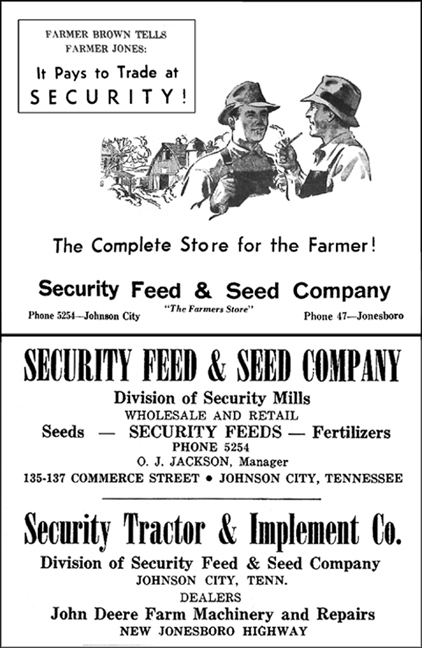
The store remained at its Main Street site until 1935 when it relocated to 117 Commerce. In 1940, new manager O.J. Jackson offered an encouraging sales outlook for the approaching year. He boasted of having 12 employees and an $18,000 annual payroll, equating to yearly wages of $1500 per worker. The business focused on feeds, fertilizer, grass seeds, heavy hardware and general farm supplies. The local store became sole distributor for John Deere farm machinery. An ad proclaimed, “John Deere farm implements are known the country over for their efficiency and stamina. We offer the complete company line of tractors and farm machinery and are prepared to give every farmer a liberal trade.”

Another ad that year referred to the business as “The Farmers Store” declaring, “Security carries almost everything needed in the operation of a farm. From planting to harvesting, (we) can supply you with the proper implements and material to do the job right. There is a Security feed for every feeding purpose. Properly balanced to give your stock and flock a scientifically correct diet, Security offers a feed of superior value. Try Security next time.”

A 1948 ad provided another indication of the company’s success – the formation of a new division identified as Security Tractor & Implement Company. It was located on the new Jonesborough Highway. Around 1950, Security Feed and Seed Co. moved to 135-137 Commerce. Three years later, the store moved again, this time to 929 W. Watauga (at the bottom of the hill adjacent to the railroad tracks near W. Walnut). The manager was Glen E. Mize.

A drive by my former Johnson Avenue home today offers little hint of the sprawling plant jungle proudly created by my father in the 1950s. Sadly, the yard no longer holds an appeal for Tarzan, Jane, Boy and Cheetah. 

Read more

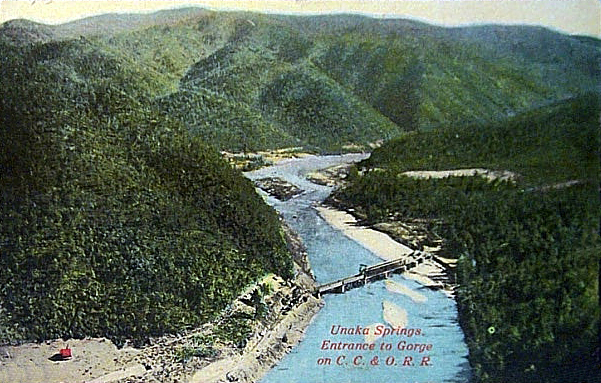
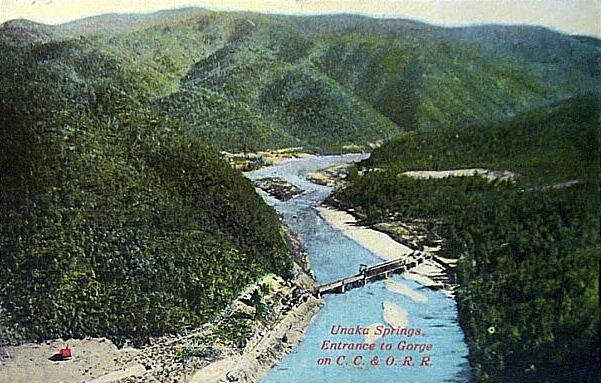
At the turn of the nineteenth century, residents and tourists had a wide variety of options for spending restful vacation time in the statuesque hills of East Tennessee. They ranged from pricey upscale hotels to affordable rustic lodgings.

In the latter category was Unaka Springs, a natural, peaceful paradise located about 18 miles from Johnson City in Unicoi County, a few miles past Erwin along a mountainous portion of the Nolichucky River. The river was originally named Nolachucky, meaning “Rushing Water”.

In August 1899, The Comet advised vacationers who couldn’t afford a high-priced summer resort but wanted to circumvent a hot city atmosphere to choose Unaka Springs. It was a setting where travelers could keep cool, drink chalybeate water, fish, hunt, boat, hike, mountain climb, swim, dance and consume plenty of scrumptious food.

If the vacationer was seeking relaxation, clean air, good butter, pure milk and fresh fish, Unaka Springs was the place to be. Added benefits included viewing nature in all its glory, listening to soothing rippling river waters and forgetting about life’s displeasures while being surrounded by towering peaks that rise all around you.

Unaka Springs was considered one of the finest mineral springs in the south. Chalybeate water became popular with folks who believed in its health enhancing qualities. A physician from early times gave a unique description of it: “The colic, the melancholy, and the vapours; it made the lean fat, the fat lean; it killed flat worms in the belly; loosened the clammy humours of the body; and dried the over-moist brain.” He further stated in rhyme: “These waters youth in age renew, Strength to the weak and sickly add, Give the pale cheek a rosy hue, And cheerful spirits to the sad.”

The springs could be reached by hack (a horse for hire that could be used for riding or driving) easily in half a day. A regular hack line ran from Jonesboro to the hotel. After passing Erwin, the road followed the Nolichucky River the last two miles of the journey. The scenery along the route was more than worth the cost of the trip.

Some people preferred to make the journey by train. A timecard from 1893 shows CC&C Railroad’s “No. 1 Daily” leaving Johnson City’s Carnegie Depot (Fairview Avenue) at 7:30 a.m.; traveling to Okolona, Fagans, Marbleton, Rose Hill, Unicoi, Erwin; and arriving at Unaka Springs at 8:45 a.m., a journey of an hour and a quarter.

After crossing the river and entering the hotel grounds, guests were completely and wonderfully isolated from the outside world. The pristine river was full of perch, waiting for guests to come and catch them (if they could). Surrounding the hotel were mountains so close that all guests had to do was step off the porch and begin ascending them. The Comet advised people, upon arrival at the quaint hotel, to stop and converse with the landlord, Mr. A.V. Deaderick, a noted photographer who operated his studio there.

James A. Goforth (former Clinchfield Railroad engineer and Erwin historian) noted in his book, Erwin, Tennessee: A Pictorial History (Overmountain Press, 2004) that the hotel was a three-story frame structure with modern plumbing and a full porch along the front. Rental rates were $2/day, $10/week and $30/month. An ad from that era firmly stated, “no consumptives.”

The highlight of the evening was when Uncle “Dot” blew his dinner horn signaling guests that the evening meal was being served. This brought people scampering to the table for a sampling of tasty cuisine. The enterprising Comet was so certain that visitors to Unaka Springs would be satisfied with their trip there that they cleverly agreed to refund the cost of having their newspapers mailed to them while on vacation if they were not happy with the stopover.  

Read more

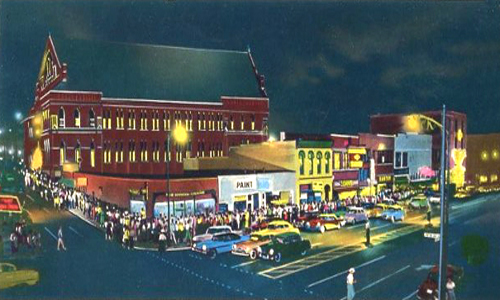
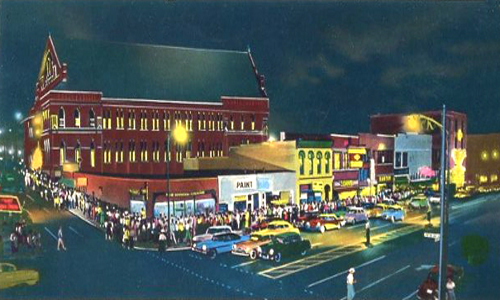
On Saturday nights in the early 1950s, I laid on the living room floor near our tube radio console listening to the Grand Ole Opry over WSM radio from the historic Ryman Auditorium in Nashville. My main attractions were the Opry humorists. Let me cite a few of my favorites.


Minnie Pearl (Sarah Cannon) from “Grinder’s Switch,” always wore a big smile, plaintive country dress and flower-laced straw hat that still had the $1.98 price tag dangling from it. Her opening line was “How-w-w-w dee-e-e-e, I'm jes' so proud to be here.” An oft-told joke was that when she died, she wanted all women pallbearers. She reasoned that if the old men wouldn’t take her out while she was alive, she didn’t want them to take her out when she passed away. 

Rod Brasfield, a comedian who resided from “Hohenwald,” frequently sparred with Minnie on the Ryman stage. The country bumpkin’s talent was poking good-natured fun at the simplicity of country life – “Minnie, we raise tomatoes on our farm. We eat what we can and what we can’t eat, we can.”  The audience loved him.

The Duke of Paducah (aka Whitey Ford, real name Benjamin Francis Ford) told jokes on the Opry – “My brother went through reform school on a scholarship.” Ford always concluded his performance by saying, “I'm goin' back to the wagon, boys, these shoes are killin' me.”

Opp, Alabama native, Lew Childre, better known by country music fans as “Doctor Lew,” was another crowd pleaser. He performed a one-man vaudeville-style comedy act of hillbilly singing, tap dancing and cruising his slide guitar. His unique rendition of “Hog Calling Blues” epitomized the crooner’s versatile witty humor.

Lonzo (Johnny Sullivan) and Oscar (Rollin Sullivan) and their sidekick, “Cousin Jody” (Clell Summey), wore outlandish costumes. The latter sang and played a lap steel guitar that he referred to as a “biscuit board.” One of their songs, “Why Should I Cry Over You,” began as a dawdling tearjerker and ended in a rollicking finale.  

June Carter, daughter of Mother Maybelle Carter of the Original Carter Family, loved to clown with numerous onstage performers. On one classic routine, Gordon Terry played “Johnson’s Old Gray Mule” on his fiddle, sang and mimicked the stubborn animal by jerking his mouth with his hand. June’s role was to distract him throughout the number by pulling his pants legs above his boots.  

Grandpa Jones (Louis Marshall Jones) acquired the name “Grandpa” in 1937 at age 24 from singer/songwriter great, Bradley Kinkaid. He received the moniker because of his grouchiness on early morning radio. His forte was singing and comedy – “My uncle was so bald that he had to draw a chalk mark on his forehead to tell how far up to wash his face.” “Eight More Miles to Louisville” became a frequently requested song of the entertainer.

David “Stringbean” Akeman was a tall lanky clawhammer banjo picker (down-picking style of playing) and singer. To accentuate his height, “Strang” wore an exaggerated shirt that positioned his belt below his waist and resulted in the crotch of his blue jeans being about level with his knees. His tag line was “Hang on chillun” just before launching into a lively hillbilly ditty such as “Hillbilly Fever’s Goin’ ‘Round.”

 The Opry began in 1925 as the WSM Barn Dance; two years later, it was renamed the Grand Ole Opry. George D. Hay, known as the “Solemn Old Judge,” ended each show by blowing his train whistle and saying, “Right now it’s time for the tall pines to pine, the pawpaws to pause, and the bumble-bees to bumble all around. The grasshopper hops and the eavesdropper drops, while gently the ole cow slips away.” This was Grand Ole Opry at its best. 

Read more