In the 1950s, many of us can recall owning a phonograph with a selection lever near the turntable that allowed the listener to chose between four separate record speeds: 78, 45, 33.3 and 16 rpm (approximate numbers).

As a child in the late 1940s, I became a devotee of 10-inch 78-rpm records after my Grandmother Cox gave me her collection of discs that she stored in a sturdy fabric case with a hinged lid. Cardboard dividers inside the case separated and identified the selections. During this time, I was recovering from a bout of rheumatic fever that greatly restricted my physical activity, including walking, for six months. I spent hours sitting in a chair while being entertained by my close proximity combination radio and record player console.  

I handled my fragile collection carefully and kept them inside the case when not in use. Records came in paper sleeves with circular cutaways that allowed the labels on both sides to be visible. Each side of the disc was limited to about three minutes of playing time.

By the 1950s, I had graduated to 7-inch 45-rpm records, even though 78s had by then become unbreakable. The 45s attracted the younger crowd with its trendy compactness and unique large hole in the middle. Newer phonograph models had to be redesigned to play them. Otherwise, the user had to put an insert in the larger hole or place a small round disc about the size of the hole on the turntable.

For a period of time, manufacturers released selected hit songs at both 78 and 45-rpm speeds while consumers began making the transition to the newer format. The 78s were rapidly heading toward extinction.

Next came 12-inch 33.3 records, known as “long play” records that typically contained six songs per side for a total of about 30 minutes of music. This new multi-selection format quickly became popular with record aficionados.

The fourth speed on the selector lever was for 16-rpm records, which arrived in 1953. I never owned any records with this speed. Why then was this speed put on record players? Truthfully, some manufacturers omitted the 16-rpm speed option on their machines. Although I cannot recall ever seeing a record of this speed in racks at the Music Mart, Smythe Electric or other downtown record shop, I suspect the businesses had some behind the counters for sale to customers who requested them.

The16-rpm records had a distinct market. The plus for the slower speed was much longer playing time; the minus was decreased sound quality, but the products did not necessitate this. Also, they were generally pressed as monaural (one-track) instead of stereo (two-track). They were ideal for low volume “dinner” (a.k.a. “elevator” and “filler”) music because one side would play for an entire meal without anyone having to change it. If a family held a Christmas outing at their home, they could play 16-rpm records of holiday favorites that would set the tone for the evening with infrequent attention to the machine.

The records also offered an advantage to the blind who were able to listen to them for long periods of time without having to change sides or disks.
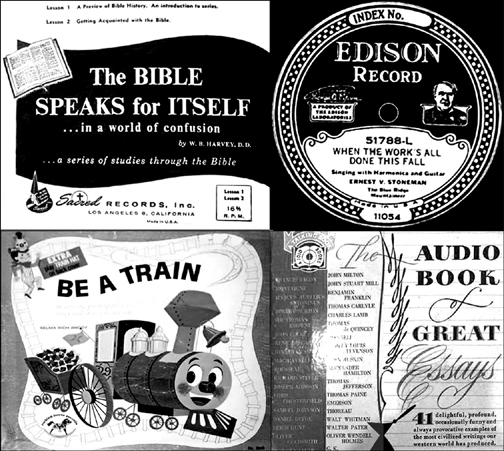
My column photo shows four additional uses of 16-rpm records (left to right, top to bottom): sets containing the “Spoken Bible”; Edison recording of Ernest “Pop” Stoneman, known as the Blue Ridge Mountaineer, singing hillbilly ballads; children’s records such as “Be a Train”; and “The Audio Book of Great Essays.” Older folks may recall when 16-rpm records were used to distribute political campaign speeches. Also schools incorporated them in classrooms to teach foreign languages.

As the parade of progress marched along, next came reel-to-reel, 8-track and cassette tapes, but that is the subject of another column.  
Read more

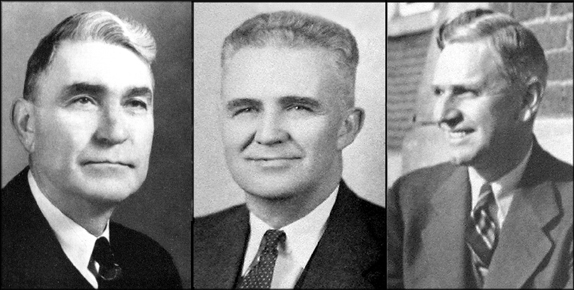
Today’s column is about former Johnson City School Superintendent C.E. Rogers. I don’t remember him because he left the position three years before I entered the first grade. My article also mentions a host of teachers and principals, some of whom I had in school. I am hopeful my readers will find a relative or friend listed.

On June 30, 1946, Rogers left the important education position after a 30-year career to accept administrative duties with several Johnson City and Elizabethton business colleges that included Steed College. In his early years, he was briefly affiliated with East Tennessee State College.

The City Teachers Association honored him and his wife with a reception in the gymnasium of Science Hill High School on Roan Street. The guest list comprised 200 names. In the receiving line were Miss Lottie Price, president of the association; the superintendent and Mrs. Rogers; Mrs. Orville Martin (my occupations teacher at Junior High School); Miss Nancy Beard and George Greenwell (my Science Hill High School principal).

Decorations for the affair consisted of spring flowers with yellow tulips and predominating purple irises. The Science Hill orchestra, under the direction of Warren F. Weddle, furnished a musical background for the evening.

As a token of appreciation to Mr. Rogers for almost two decades of dedicated service as superintendent of Johnson City schools, the teachers presented him with a nice piece of luggage. Refreshments were served from a photograph table covered with lace and decorated with flowers and yellow candles. Presiding at the punch bowl were Nelle VanGorder and Margaret Fain. The refreshment committee included Hattie Hunt, Elise Lindsey and Alma Barnes.

Teachers who assisted serving were Margaret King (my third grade teacher at Henry Johnson School), Eva Grigsby, Edith Keyes, Edna Mackey, Margaret Woodruff, Elizabeth Jones, June O’Dell, Mary Agnes Donnelly, Ruth Martin, Mildred Adams, Edith Bray, Fannie Taylor (my fourth grade teacher at Henry Johnson School), Josephine Moore, Dorothy Mingis, Frances Wildasin and Rosalie Link.

Assisting in entertaining were Marjorie Hunt, Thelma Walker, Helen McLeod, Margaret Crouch (my principal at Henry Johnson School) and Mrs. Kathryn Corpening.

On the decorations committee were Nancy Beard, Lenore Anderson, Dorothy Thomas, Levinia Bowers, Carrie Lou Yoakley, Pauline Peoples, Mabel Anderson, Harry Freeman, Coy Trivett, Ruth McAnally, W.Z. Harshbarger and George Greenwell (my principal at SHHS).

The committee selecting the gift for Mr. Rogers was composed of Helen McLeod; Gordon Grubb (my sixth grade co-teacher at Henry Johnson School); and George Greenwell, who made the presentation. Guests were the honorees, present members of the board of education, members who had served during Mr. Rogers’ tenure of office, city commissioners, presidents of PTAs, teachers and husbands and wives of members.

Board members, both past and present, who were listed  on the guest list included H.E. Miller; W.B. Miller; Dr. John Lamb; James A. Pouder; H.M. Burleson; J.H. Preas; J.E. Brading; S.D. Jackson; Harry Range; Frank Taylor; J.M. Masengill; Walter Martin; Paul Jones; John Anderson; D.R. Beeson; George Oldham; Carl Jones, Jr.; Mrs. L.D. Gump; Mrs. J.A. Summers; Mrs. J.E. Crouch; Mrs. William Dubbs; Mrs W.A. Starrett; and Mrs. H.C. Black.

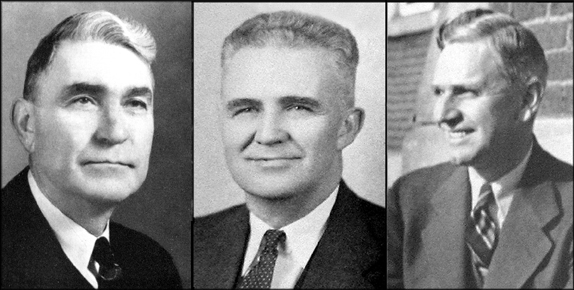
Left to right: C.E. Rogers, John H. Arrants (who replaced Mr. Rogers as superintendent) and C. Howard McCorkle (who replaced Arrants). I remember Mr. Arrants from my younger school years and Mr. McCorkle from my later ones.. 

Read more

I have been a big fan of University of Tennessee football for 46 years, attending at least one game at Neyland Stadium most of that time either as student or alumni. In the spring of 2011, my wife and I reluctantly did not renew our two Section O, Row 51 season tickets.

In spite of this, I firmly believe that even with high definition flat screen television, there is no comparison to savoring the exhilaration of the crowd at the game, something TV cannot offer.

Today’s column is a look back at almost a half-century of “Football Time in Tennessee” memories that produce a lump in my throat when I think about them. Hang on:

Attending games with our close friends, Allen and Charlotte Stafford; enjoying pre-game entertainment on Cumberland Avenue; eating an open-fire grilled hamburger at Gus Campus’s Varsity Inn; occasionally eating uptown at the S&W Cafeteria before it closed in 1981; enjoying the view of boaters as they navigate the Tennessee River to the stadium; munching on rare big orange-flavored moon pies that were handed out to the crowd;  …

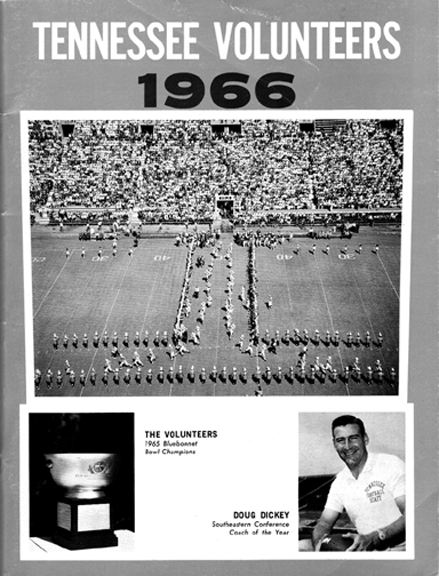
Getting excited over 32-year-old Doug Dickey as he takes the reigns as head coach of the Vols; admiring other favorite head coaches: Bill Battle, Johnny Majors, Phil Fulmer; and Derek Dooley; recalling such outstanding quarterbacks as Dewey “Swamp Rat” Warren, Bobby Scott, Condredge Holloway, Jimmy Streater, Heath Shuler, Peyton Manning, Tee Martin and Casey Clausen to name a few; …

Observing Alabama’s quarterback, Joe Namath, in 1964 as he concludes his final collegiate year; beating the Crimson Tide in 1982 just a couple months before Coach Bryant’s untimely death; cheering as the goal posts collapse after beating a heavily favored opponent; watching the stadium grow to 108,000 seats and then lose some of it due to modernization; hearing a hot dog vendor selling his product by yelling, “yummy, yummy, yummy, for your tummy, tummy, tummy”; seeing Colonel Sanders make a surprise visit …

Riding a trolley car to watch Tennessee beat Air Force at the 1971 Tulane Stadium Sugar Bowl; attending several Citrus Bowl games in Orlando; singing “Rocky Top” a zillion times; cheering as the players, coaches, cheerleaders and Smokey charge through the band formed “T”; seeing a new Smokey occasionally take over the leash; …

Enjoying a Tennessee Walking Horse’s majestic four-beat “running walk” around the field before a game; hearing a cannon being fired from a grassy knoll on “The Hill” after each touchdown and field goal score; later enjoying the same ritual from fireworks positioned across the Tennessee River; carrying a battery powered radio to the game to tap into John Ward and Bill Anderson’s outstanding play-by-play and commentary of the games; …

Looking to the skies waiting for military planes to fly formations over the stadium; gazing skyward while paratroopers jump onto Shields-Watkins field; participating in the “wave” as it flows like a river around the stadium; hearing my favorite cheer, “T, E, Double N, E, Double S, Double E, Tennessee”; getting soaked to the bone numerous times by downpours in the stadium; attending frigid games dressed warmly to support my favorite orange and white team; …

Seeing the field transition from natural sod to artificial turf and back to grass; listening to George Bitzas electrifying the crowd with his incredible vocal rendition of the “Star Spangled Banner”; enjoying halftime shows with such entertainers as Charlie Daniels, Lee Greenwood, John Denver and the Osborne Brothers; applauding Dr. Julian’s “Pride of the Southland Band” as it performs “circle drills”; seeing former players and coaches introduced at halftime …

Going to the Smokies after a fall game to enjoy the colors; fighting the crowd to get away from the stadium; observing game officials being quickly escorted away from the campus in a police cruiser; battling traffic to get on the Interstate and, if that wasn’t enough, listening to the post game call-in radio show during the drive home.

This and much more was truly … “Football Time in Tennessee.” I will miss it.

Read more

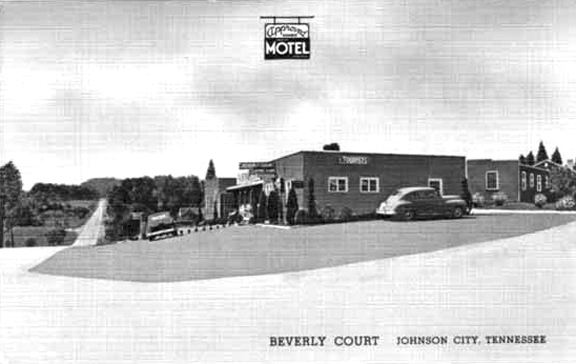
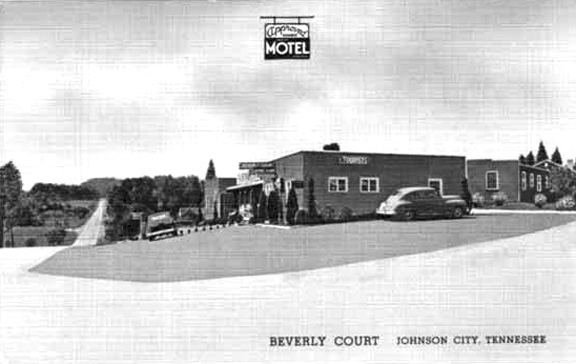
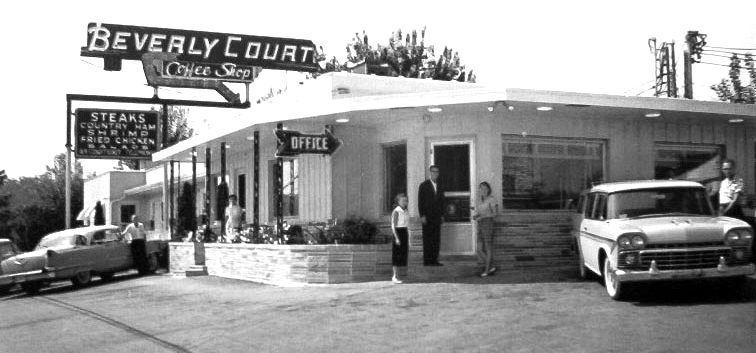
The subject of the Beverly Court and Coffee Shop was brought to light several weeks ago when Frank Campbell found three identical vintage postcards of it and sent one to the Press asking for information about the business.

Research shows that the motel had three sets of owners before it closed and was ultimately demolished. Information sources come from the late Dorothy Hamill and Kenny Johnson.

Older area residents may recall the triangular complex that was located at what is now identified as 2115 Kingsport-Bristol Boulevard (N. Roan at Sunset Drive). Beverly Court and Coffee Shop was built in 1945 soon after Robert Johnson returned from military service. Several years prior, he purchased Marion’s Camp, renamed it Broadway Camp before selling it to Cecil Crowe who changed it to Broadway Court.

Johnson’s new business enterprise was located in a sparsely developed area in North Johnson City about a mile from the city limits (located near what is now John Exum Parkway). While listening to the radio, Robert heard the announcer speak of Beverly Hills. He liked the sound of the name and decided to call his motel, Beverly Court. People frequently asked him if Beverly was his wife’s name, but he informed them that her name was Dorothy.

Robert and Dorothy started with 25 units. In those days, the highway to Kingsport and Bristol was two-lane. The D. (Doxie) D. Marable Gift Shop was located directly across the highway from them. Within a year, the Johnsons bought a lot across Sunset Drive and built a house for their residence. The couple found the motel business very interesting with never a dull moment.

The back of an old postcard from that era states: “One mile north of city limits; U.S. 11E, 19W, 23 and 41; 25 units, Tub and shower, radios, fans, steam and electric heat; Phones 2166 and 9175; Member of United Motor Courts.”

On one occasion, Robert found a billfold in the motel driveway soon after he rented a cabin to a family. Since he was sure the man had dropped it, he put it in his office without looking in it until the family returned from dinner. When they got back, the man corrected identified the wallet. Robert learned that it contained $8,000. People often placed their wallets and other valuables in pillowcases and slept on them during their stays. Diamond rings and valuables were frequently left on washstands, causing the unfortunate traveler to drive many miles to retrieve them.   


In 1962, the Johnsons sold Beverly Court to businessman Robert Dennis and moved to Florida. They also sold their home and a nearby farm they owned. Dennis got his start in the diner business in Newport, Tennessee where he owned the Coffee Pot Restaurant. Later, he acquired the Peggy Ann Restaurant in Kingsport as well as the Beverly Court and Coffee Shop in Johnson City. The successful entrepreneur was also co-owner of several enterprises in Johnson City, including the TPI Corporation, manufactur­ers of electrical heating and air ventilation products.

Facts about the third owners who took over the reins of the Court in the 1960s came from Kenny Johnson, a resident of Newport, Tennessee. They were Ed and Lexie Leonard Reedy, Kenny’s great aunt and uncle. The couple lived in Boones Creek near the train trestle while the Leonards ran the Boone Station General Store. Kenny spent many pleasant hours at his relative’s business in the 1960s while growing up.

Since the Reedys did not have any children of their own, many of the younger clan became their “adopted grandchildren.” The youngsters loved to go to the coffee shop and grill to eat anytime they could convince their parents to take then.

According to Kenny: “Every Christmas Eve, the entire extended family and many of our friends would gather there for a fabulous Christmas party.  We all exchanged gifts with Aunt Lexie and Uncle Ed. The scene looked like something out of a Norman Rockwell painting. Santa Claus would always make an appearance.”

Kenny recalled some specifics of the motel. “It was a standard motel room common for the 1950s and ‘60s. It had a bed, desk, chair, television with rabbit ears and a small bathroom containing a tub and a shower. There was nothing fancy about it. I ate in the restaurant many times. It was a real treat back then. There were booths lined along three walls with several tables in the middle. A soda fountain type bar was close to the kitchen. The furnishings were Art Deco. They served traditional plate lunches with food items that included chicken, green beans, potatoes, roast beef, corn, pork chops, hamburgers, fries, hot dogs and club sandwiches.

“Behind the motel on Sunset Drive was a white house. I am not sure if the motel owned it.  Aunt Lexie and Uncle Ed lived in the house across from the Court on Sunset. There were also a few rental rooms there. Traveling salesmen occupied a large number of rentals for two or three days at a time. My cousin, Don Leonard, told me that another great uncle and aunt, J.M. and Beatrice Leonard, co-owned the motel for a while. J.M. and Lexie were brother and sister.

“The swimming pool, located south of the office and coffee shop, was added in the early 1960s. It was probably the first real swimming pool that I ever swam in. On hot summer Saturdays, all of the extended family would drop by for a swim. With so few pools back then, it was a real treat. Aunt Lexie and Uncle Ed were the most gracious hosts.”

Kenny remembered when his aunt and uncle decided to retire: “They sold the property to First Federal and built one of their branches there. The Beverly Court and Coffee Shop was much more than a motel; it was a family business that was enjoyed by the whole family.” 

Read more

Today, let’s crank up the Yesteryear Time Machine and drift back to the “good old days” of December 26, 1922 to drive along Johnson City’s streets when its population was about 15,000. When we arrive, we find the temperature to be in the upper 20s with just a hint of snow flurries. For the most part, the main streets are paved within the confines of the city limits.

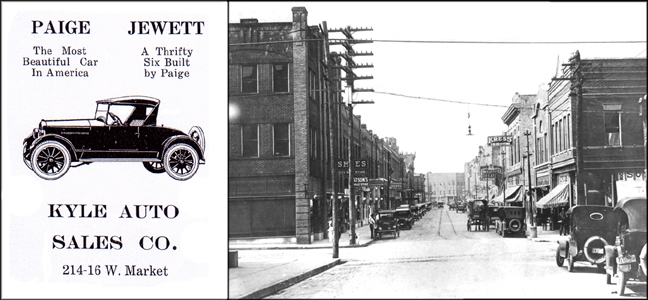
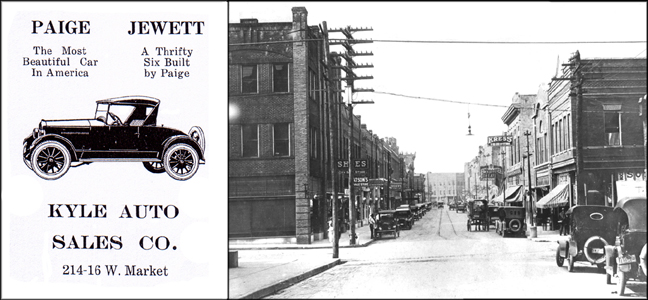
We make a decision to drive east through downtown from the west end of W. Main to the east side of E. Main and return by way of Market. We are riding in a new Paige Jewett roadster that was purchased for $1,065 from Kyle Auto Sales at 214-16 W. Market. The vehicle has a powerful 249 cubic inch six cylinder engine. 

As we motor along, we observe a variety of cars, trucks, horses (with and without buggies), electric-driven trolleys, bicycles, motorcycles, trains and pedestrians traveling by Shank’s mare (walking). We are surprised to learn that 20 miles-per-hour is the maximum speed limit in town. Mayor Ellison and his board recently approved a list of traffic ordinances. 

Heading east, we cross Delaware, Fall and Winter streets until we approach Watauga where we observe the big square shaped brick West Side School on a small hill to our right. We must slow down to 12 mph during school hours. Since school is not in session, we can resume our speed. 

As we approach Boone, we notice City Hall on our left and the new Arcade Building under construction at 137-38 Main. We draw near the train tracks where we encounter a flashing signal light warning us that a train is approaching. As we wait, we gaze at the Windsor Hotel and Annex on our right that contains T.H. Dyer’s Barber Shop and the Windsor Billiard Parlor. Trains are restricted to 15 mph in the downtown area between Division and Sevier streets and are forbidden to block street crossings for more than four minutes at a time. That sounds impossible.

After the train moves on, we reduce our speed to 12 mph until we reach Roan because of safety concerns in an area that has the heaviest vehicular and pedestrian traffic in the city. To our right is Fountain Square with the gorgeous Lady of the Fountain statue smiling at us. We smile back.

We drive past Roan and speed up to 20 mph, but as we approach Fire Station #2 on our left at 343 E. Main, we must reduce our speed to 15 mph.  The same applies for those driving past Fire Station #1 (headquarters) at 218 W. Market. The fire crews have the right-of-way during emergencies. Continuing on Main, we observe the Franklin Apartments (formerly Carlisle Hotel) on our right at Division. 

We come to the end of E. Main and cross over to E. Market and travel west toward where we began. While we are slowly driving back, let me share some additional traffic regulations. Vehicle lights have to be visible at a distance of 200 feet. A speed limit of 12 mph shall apply at street intersections and while turning corners. At viaducts, underpasses and bridges, the speed is 10 mph. An 8 mph limit shall apply to trucks at the same locations.

If a horse becomes cantankerous on the road, the animal’s owner can lawfully signal for traffic to stop until tranquility is restored. No horse can be parked within 100 feet of a drug store or where food is sold. Pedestrians may cross streets but only at designated crosswalks provided they do so at right angles. A motorist may be arrested if smoke is emitting from his car.

Vehicles operated between ten p.m. and six a.m. must be equipped with silencer apparatus. Horns must only be used as a danger warning. Cars and other vehicles are not allowed to hinder pedestrians at street intersections. An automobile may not be parked all night on a public street. All vehicles must strictly yield to streetcars.

As we arrive back for our Time Machine return voyage, we are ready to leave 1922 and return to the “good old days” of 2011. I sure hate to leave that Paige Jewett roadster behind. 

Read more

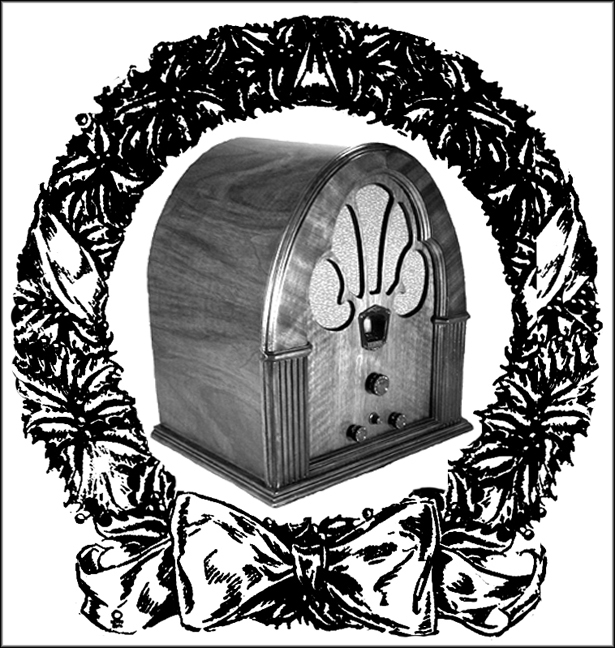
Each Christmas, I get in the holiday mood by playing old Christmas radio shows from my collection. Unlike television, radio lets its listeners formulate images of their favorite radio stars without displaying them on a small usually black and white screen. My four favorite programs from the 1930s and 40s are listed below. For you youngsters, they can be heard on the Internet.

Lum & Abner (1938): This 15-minute episode began with a brief intro: “Well, it’s Christmas time in Pine Ridge (Arkansas) and all businesses and other activities have been cast aside in preparation for celebrating the holiday. A heavy snow has fallen and it’s now way after dark.” Lum, Abner and Grandpappy Spears (voice of Lum) help a young couple named Mary, who is about to give birth, and her husband, Joseph. They are holed up in an abandoned barn adjacent to a burned down house on the east side of Pine Ridge. The three old codgers trudge through deep snow following the East Star to take them an ample supply of food from their Jot ‘Em Down Store, warm clothing, an oil heater and bed “kivvers” (covers). The narrative clearly parallels the events that took place in Bethlehem.

Fibber McGee & Molly (1945): This Johnson’s Wax-sponsored program has Fibber foolishly trying to spray paint a Christmas tree that he has purchased. The usual characters come by one-by-one to chide him: Dr. Gamble (local physician), Mrs. Carstairs (town socialite), Harlow Wilcox (series announcer who cleverly worked a commercial into each weekly program) and Teeny (the little girl next door who is really the voice of Molly).  The highlight of every season was the special rendition at the end of each show of the classic “Twas the Night Before Christmas,” featuring the King’s Men and the Billy Mills Orchestra. It beautifully captures the unique sound of the 1940s.

Amos & Andy (1947): Andy takes a job as a department store Santa in order to raise money to buy his daughter, Arbadella, a special doll that she wants. The young people standing in line give Andy so much grief that he constantly summons the floorwalker for help. The show ends with Andy delivering gifts at Amos’ place. Andy puts his young daughter to bed and turns on the radio to help her go to sleep. When “The Lord’s Prayer” is sung over the station, she asks him to turn it to some Christmas music. Amos then gives his classic recitation explaining how the words to the song relate to the true meaning of Christmas.

The Jack Benny Program (1948): Arguably Jack had the funniest Christmas show to be broadcast over radio. He and his wife, Mary, are in a department store in Palm Springs shopping for gifts. The show’s regulars are also there: Dennis Day, Eddie Anderson (Rochester), Phil Harris, Don Wilson and Frank Nelson (famous for his drawn out exaggerated line, “Yeeessssss”). Mel Blanc (the versatile voice of Bugs Bunny and many other Warner Brothers characters) works in one of the departments. Jack repeatedly buys a gift from Mel, has it wrapped and then returns it before leaving the store to exchange it for something else. Each time, the attendant has to unwrap the item, put it back on the shelf and then wrap another one for Jack. Finally, the aggravated clerk has had enough of Jack’s antics and goes ballistic, creating one of the most hilarious scenes in radio history.

Other Christmas shows from that golden era include The Great Gildersleeve (1942), Burns & Allen (1940), The Bing Crosby Show (1947), Edgar Bergan & Charlie McCarthy (1939), The Fred Allen Show (1937), The Abbott & Costello Show (1945, Hallmark Playhouse (1949), Gene Autry’s Melody Ranch (1946), Our Miss Brooks (1950) and My Friend Irma (1950). Many of the shows became an oft-repeated holiday event to the delight of its faithful listeners.

If you have a favorite radio show from the past, drop me a line. Merry Christmas and Happy New Year, folks. It is a pleasure producing this weekly column.

Read more

October 6, 1895 was a historic day for Johnson City and numerous other towns in the South. The Liberty Bell, perhaps the most precious relic of the birth of our nation traveled by rail from Philadelphia through our city to Atlanta to reside as a major exhibit in the Cotton States and International Exposition being held there.

The Liberty Bell was cast in 1753 at the Whitechapel Bell Foundry in the East End of London and sent to Pennsylvania. It consisted of 70% copper, 25% tin and traces of lead, zinc, arsenic, gold and silver. The bell weighed 2,080 pounds; the yoke added another 100 pounds. It was 12 feet in circumference around the lip and had a 44-pound clapper.

Although this was not the first or last journey for the famed Bell, some people expressed their concern that a railway accident could destroy it or perhaps cause it to further crack. Others reasoned that the Bell belonged to the nation and should be shared with its people. Another faction saw it as a means to further improve still strained relations between the North and South by promoting national patriotism. A lawsuit settled the argument when a court ruled that Philadelphia could proceed with the trip.

The train consisted of five Pullman coaches, a combination buffet car and a flat car containing the Bell. Around the platform of the latter vehicle was a railing, constructed so as not to obstruct the view of its prized occupant. On each side were panels bearing the words, “Philadelphia” on one side and “Atlanta” on the other. In the center of the platform was a special protective frame to keep the Bell from moving. On the top lengthwise timber was inscribed in golden letters, “1776, Proclaim Liberty.” This was in reference to Leviticus 25:10 (“Proclaim Liberty throughout all the Land unto all the Inhabitants thereof.”).

  On October 4 at 8:00 a.m., the train departed the “City of Brotherly Love” while a sizable crowd gave the train an enthusiastic send off and wishes for a safe return. As the train traveled from city to city, cheering crowds, speeches, ceremonies, blaring factory whistles and great fanfare greeted it. Spectators touched it, kissed it and saluted it.

After making numerous stops of varying durations at towns in Delaware and Maryland, it sped through the Roanoke Valley, over the Blue Ridge Mountains and through the valley of East Tennessee. Although there were no firing of guns, blaring of brass bands or wild hurrahs like what was seen in the northern cities, the part of the country that furnished so many Union soldiers during the Civil War demonstrated beyond question its loyalty and patriotism to the country.

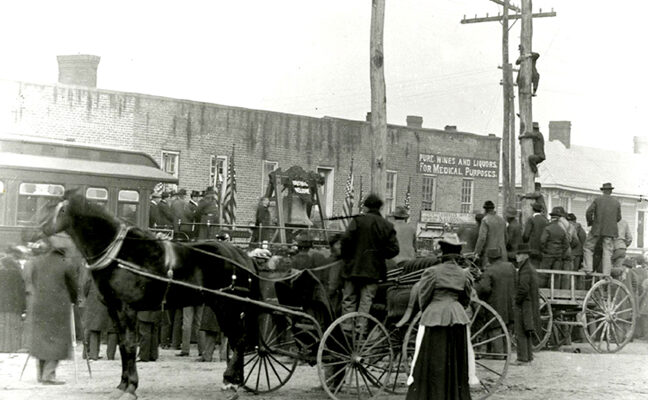
At many stops, schools were dismissed while bullet-scarred former Confederates walked side-by-side with G.A.R. (Grand Order of the Republic) Union veterans uncovering their heads in salutation to their northern guest. The train stopped in Bristol, Tennessee at 2:30 p.m. on Sunday, October 6 and proceeded to make brief stops in Johnson City (see photo), Greenville and Morristown before halting in Knoxville at 7:00 p.m. for the night.

The next morning found the train continuing its journey through Loudon, Athens, Cleveland and Chattanooga where it again parked overnight. The next morning it chugged through Dalton and Rome, Georgia before reaching its final destination in Atlanta at 2:00 p.m. on October 8. A parade two miles long escorted the prized Bell to Exposition Park. It was enthusiastically received along the route, being the most notable day of the Exposition with 40,000 persons in attendance on the grounds.

The Liberty Bell arrived back in Philadelphia at noon on February 4, 1896 after a successful 4-month absence. A 45-gun salute announced its return.  

Read more

Today’s column is a paraphrased hodgepodge of small articles taken from a variety of newspapers spanning 1890 to 1928. I hope you will find them interesting. 

Dec. 1890: Heavy snow was reported in the mountains of East Tennessee, Southwest Virginia and North Carolina. Accumulations ranged from six inches to three feet. In Bristol, trains of the Norfolk and Western Railroad attempted to maintain their normal run but soon schedules had to be totally abandoned due to deep snow on the tracks. Ground conditions were very wet and not yet turned to ice. Johnson City measured eight inches of snow while Bristol had 12.

Dec. 1892: Two freight trains, numbers 21 and 22, collided on the East Tennessee Railroad near Johnson City. Both engines were destroyed along with 20 cars loaded with cattle. In addition to the death of many animals, several hobos that had jumped on the trains plus a former employee of the road were killed. After an investigation was conducted, the engineers of both vehicles were cited for negligence in the tragedy.

Jul. 1898: Mr. H.H. McPherson, a resident of Jonesboro, (old spelling) Tennessee, sent the editor of Jewelers’ Circular, a popular trade publication, a letter describing a clock that he had fabricated from a gourd. In his words, “I grew the gourd expressly for the clock and before (it) was half grown, I put it in a press to (prepare it for) the dial and the back or door flat. The gourd is 46 inches in length. The back is cut out and hinged on. It is supplied with movement from a small nickel alarm clock.”   

Apr. 1902: The newspaper noted that Governor Robert “Our Bob” Taylor had entered an old-time fiddlers’ contest that was to be held at Decatur Alabama. Nearly 100 fiddlers who were said to be as old as the governor also participated in the event. Bob, a highly respected native of Happy Valley, Tennessee was noted for his love of the fiddle.

Dec. 1902: A shooting occurred in the lobby of the Carnegie Hotel (which burned in 1910) when two out-of-town registered guests, who had been involved in a card game, became engaged in a heated quarrel. After the feud spilled over into the hotel lobby, one man pulled a .38 caliber revolver and fatally shot the other one three times. Local police investigated the incident.

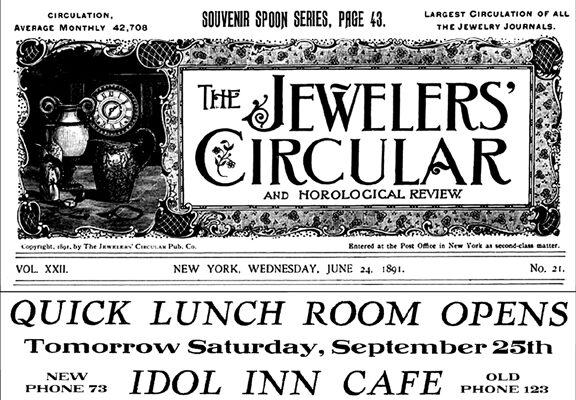
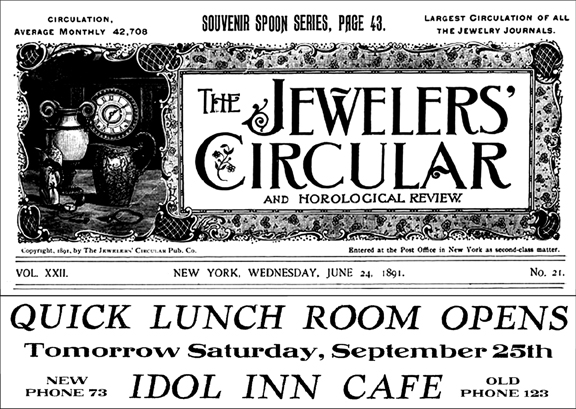
Sep. 1915: The big news in downtown Johnson City was the opening of a new progressive restaurant, the Idol Inn Café, that was located on Market Street on the northeast corner of the railroad tracks. Those desiring fast food had the option of patronizing their quick lunch stand while others desiring a more leisurely meal could eat in the nice dining room. Those of us who spent a good deal of time in downtown Johnson City in the 1950s and 60s will remember the building as the home of Byrd’s Restaurant, whose slogan was “A good place to meet but a better place to eat”). I did a lot of meeting and eating in that eatery. 

Dec. 1922: Governor Alfred E. Taylor, brother of Bob, took a break from his political campaign long enough to perform the marriage ceremony for his son David H. Taylor and Miss Nellie Hope. The younger Taylor became a star catcher in the Appalachian League.    

Dec. 1928: A Christmas tree about 30 feet high was placed in Fountain Square and decorated by the Kings Mountain Post of the American Legion. The decorative scheme was a part of an ambitious plan by Legionnaires to emphasize the Christmas spirit in every city and town in the Volunteer State. Johnson City’s tree was advantageously located, observable from distances in all directions.  It was beautifully strung with colored lights and “decorated artfully.” Its purpose was emblematic with no ceremonies planned in connection with the yuletide decoration. Downtown was always a special place at Christmas.    

Read more

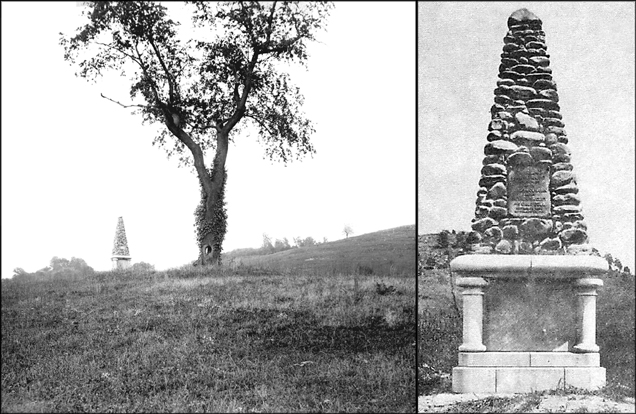
Drivers motoring along West G Street in Elizabethton encounter a unique memorial situated on a small hill at the intersection with Monument Place, just a short driving distance from Sycamore Shoals State Historic Park. While some people scarcely give the century-old structure a passing glance, others are vividly aware that it symbolizes an epic event that significantly shaped our country’s history.

The Sycamore Shoals Memorial was installed in late October 1909 when the area around it was an expansive field. It commemorates the Overmountain Men’s march from that spot on September 25, 1780 across the mountain to join up with fellow patriots and continue toward King’s Mountain, South Carolina. Their mission was to engage in combat with British commander, Major Patrick Ferguson, who greatly underestimated the determination of the rugged mountaineers.

Historians credit the skirmish, which resulted in the death of Ferguson and many of his British Loyalist troops, with turning the tide of the Revolutionary War. It ultimately brought independence to the country. 

The marker was erected through the dedicated efforts of three chapters of the Daughters of the American Revolution: John Sevier (Johnson City), Sycamore Shoals (Bristol) and Bonnie Kate (Knoxville). The monument was constructed on an Indian mound that was located on the farm of Mrs. J.C. Thomas, who donated the land.

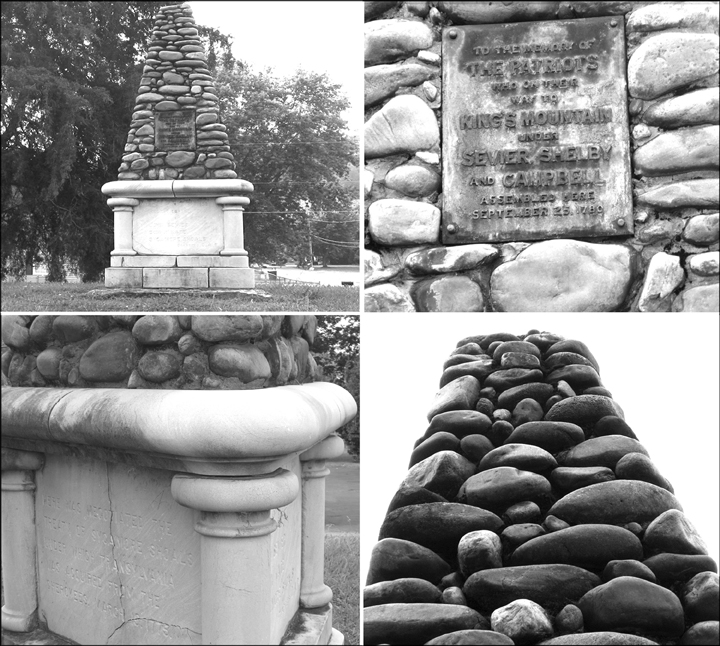
The final design called for a 13-foot tall shrine that was triangular in shape, having a base four feet high that was made of Tennessee white marble. It had columns on each end and a vertical shaft nine feet high that consisted of river rock embedded in cement. The rock was selected from the Watauga River.

The inscriptions on the three sides of the base contained the words: “1780-1909. John Sevier, Bonnie Kate and Sycamore Shoals Chapters, D.A.R. The Sword of the Lord and Gideon.” / ''Fort Watauga, First Settlers Fort Built West of the Alleghenies 1770.” / “Here was negotiated the treaty of Sycamore Shoals, under which Transylvania was acquired from the Cherokees, March 19. 1775.” A bronze tablet on the shaft bore the inscription: “In memory of the Patriots who met here Sept. 25, 1780 on their way to King’s Mountain under Campbell, Shelby and Sevier.”

Dedication of the monument was announced to the public for October 7, 1909, but setbacks caused it to be delayed until June 14, 1910. The historic occasion brought into the valley of East Tennessee some 3000 people from Virginia, South Carolina, Kentucky, Georgia, Alabama and other southern states. Special trains had to be run from towns and cities in East Tennessee in order to transport the multitude of travelers.

A party of young men, dressed in pioneer garb, arrived from nearby towns representing the original Overmountain Men who once assembled there to formulate a route and battle plan to take down Ferguson and his men.

The Rev. Osborne of Johnson City opened the ceremonies with prayer. Afterward, while a choir of 1000 voices sang “America,” three youths, who were descendants of the three generals who led the valiant pioneers across the mountains, unveiled the monument. The lads (and the commander they represented) were Robert Asher Gray of Bristol (Colonel William Campbell), Carter Crymble (Colonel John Sevier) and Evan Shelby, Jr. of Memphis (Colonel Isaac Shelby).

Three regents (and the chapter they represented) were Mrs. J. H. McCue (Sycamore Shoals), Miss Mamie Arnell (John Sevier) and Mrs. Joseph W. Sneed (Bonnie Kate). Each gave a brief talk. Reverend David A. Carter of San Antonio, Texas, a great-great grandson of John Sevier, offered another speech. Mrs. Edward Pearson Moses of the Bonnie Kate Chapter followed Dr. Carter and read an original poem entitled, “Ode to Tennessee.” Shelby Thomas and Margaret Robertson, both descendants of William Campbell and Samuel Doak (who prayed for the soldiers prior to their departure for King's Mountain), were also present. The Bristol Military Band next played, “The Star-Spangled Banner.”

United States Senator and former governor Robert L. Taylor, who was born in close proximity of the monument site, was the orator of the occasion and, as expected, delivered a powerful address in which he reviewed the story of the early struggles and the men whose efforts collectively counted for much credit in bringing independence to the nation. The ceremony concluded with the band playing a rousing rendition of “Dixie.”

The John Sevier Chapter of the DAR is credited for not only aiding in the erection of the stone monument but also for working with CC&O Railroad personnel to provide a number of substantial history makers along the route taken by the Overmountain Men.

The Sycamore Shoals Monument is worthy of attention by the public. Residents are encouraged to stop at the unpretentious monument, which is starting to show its age, take some photos and savor the two important pieces of local history that occurred in 1780 and 1910.  

Read more

Louis Feathers, an occasional contributor to my column, is particularly proud of the fact that he is a fifth cousin to Herman Michael Hickman and William Beattie Feathers, two former University of Tennessee football standouts. Anybody knowledgeable of Big Orange football is familiar with the two names. Louis wrote about them in his 195-page autobiography.

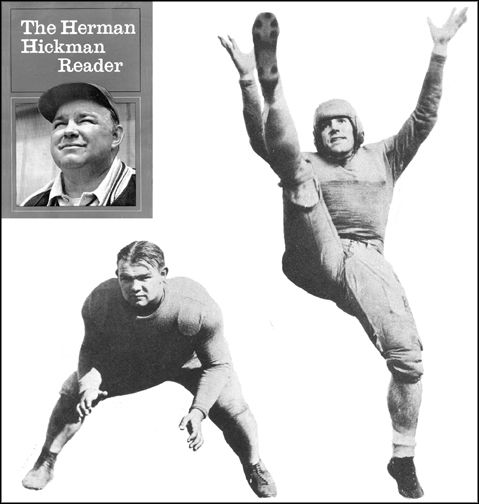
Herman Hickman (left) and Beattie Feathers

Hickman was born on October 1, 1911 in Johnson City. His parents, Herman M. and Ossie Feathers Hickman, lived on W. Unaka and later moved to Highland Avenue. Both athletes played on early 1930s teams that were coached by Robert Neyland for whom the stadium is named. The two of them were on the 1930 squad that won nine games and lost one, remarkably outscoring their opponents 209 to 31. Both athletes were named All-Conference and All-America.

According to Louis, “Hickman was a lineman (guard) who gained fame in sports as well as other fields. He was elected to Phi Beta Kappa and made All-America in his senior year at the age of 19, making him one of the youngest to attain the honor. He played three years for the Brooklyn Dodgers (football) and was a professional wrestler, known as the “Tennessee Terror.”

After serving as an assistant football coach at North Carolina State and Wake Forest, the 300-pound “Friar Tuck” appearing athlete was hired as line coach for Army in the mid 1940s, the days of Glenn Davis and Doc Blanchard (known as Mr. Outside and Mr. Inside). The Army team won three National Championships during this period.

In 1948, Herman became Head Coach at Yale before retiring in 1951. Grantland Rice, a noted sports writer of the time, called him the best guard in football history. Because of his keen intellect and outgoing personality, he became a panelist on “Celebrity Time,” a popular television game show in the 1950s and “The Herman Hickman Show,” a 15-minute sports program. Later, he developed into a public speaker. Louis said he was privileged to hear him speak at a General Electric function in Cincinnati. The football great next turned to writing, which included a column, “Herman’s Hunches,” for Sports Illustrated and a book, The Herman Hickman Reader. The “Terror” died in 1958 at the age of 47.

Feathers next turned the subject to Beattie Feathers who lived in Bristol, Virginia. He played football in an era when team members played both offense and defense. His main position was as a triple-threat halfback, meaning he could run, pass or punt. In 1933, his senior year, he was named All-American. The following year, he joined the Chicago Bears where he became the first NFL player to rush for more than 1,000 yards in a season. He amassed 1,004 yards in 101 carries, averaging nearly 10 yards per carry, while missing two games during the season. In 1938-39, he played for the Brooklyn Dodgers NFL team. A year later, which was his last season, he played for the Green Bay Packers. 

Louis further added, “Beattie was later inducted into the National Football Foundation Hall of Fame, which is apparently different from the NFL Hall of Fame at Canton, Ohio. Years later, he coached football and baseball.”

Finally, Feathers commented on the Vol skipper, General Neyland, a 1916 graduate of West Point and career army officer. He came to the University of Tennessee in 1925 as Professor of Military Science and Tactics of the ROTC Unit and also served as the Assistant Coach of the football Team. In 1935, the Army sent him to Panama and a year later he retired from the Army and returned to UT as football coach. Except for the war years, Neyland remained as that position through the 1952 season when he was made Athletic Director at U.T. His overall record at the school was an amazing 173 wins, 31 losses and 12 ties. He had bragging rights to six SEC and four national championships.

A trip to Neyland Stadium is a constant reminder of this great coach from the annals of yesteryear. 

Read more