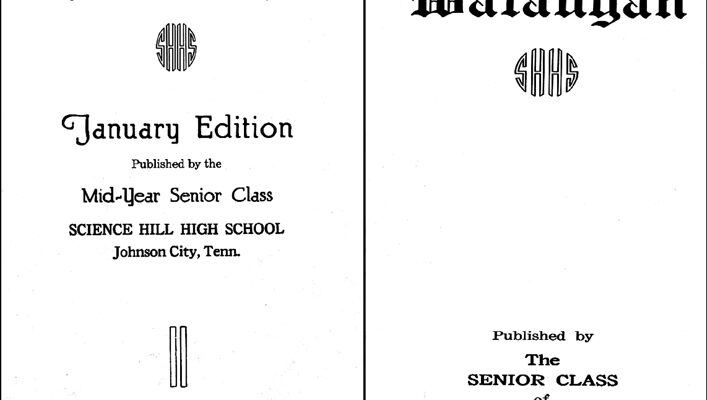
When I graduated from Science Hill in 1961, the high school sold one annual, “The Wataugan,” that year for those seniors graduating in May. During 1927-34, the school discontinued the popular publication, later reestablishing it as two separate editions, one in January and the other in May.

The change was prompted by the advent of two separate graduations within the school year, allowing students who successfully completed graduation requirements to receive their sheepskin early. Each one had a commencement exercise and baccalaureate observance. Although my father, Robert Earl Cox, graduated from “The Hill” in May 1934, he left behind both editions from that year. 

The January Wataugan comprised 34 pages with 26 graduates while the May edition was 60 pages and had 101 seniors. The Wataugan explained the new concept of mid-year graduations: “For the first time in its history, Science Hill High School is graduating 26 seniors at the close of the first semester. This is of decided advantage both to the seniors and to the school. Heretofore, those students who completed in January the amount of work required for a diploma were forced to return to school in May in order to graduate. Now, by receiving diplomas in January, seniors may enter college for the winter quarter’s work, and the school can make room for sophomores sent from the Junior High.”

Roy Bigelow, Supervising Principal, offered his greeting: “May I offer my congratulations to you as you complete the requirements for graduation from Science Hill High School. I extend them to you first of all because you are inaugurating the plan of a mid-term commencement. Although your group is small, we shall probably see our mid-year graduating classes representing about half of the senior groups. I congratulate you also because you have undertaken to revive the school publication, The Wataugan. May these, along with the joyous experiences of your school career, be cherished memories to you.”

Mary Lee Taylor, a faculty member, provided an explanation of how the school publication received its name: “The name ‘Wataugan’ was officially given to the student publication of Science Hill High on February 9, 1921. Perhaps some word of explanation is necessary as to the reason for the selection of such a title.

“The word is an Indian Name and, early in the history of this section, was applied to a beautiful stream, which flows from mighty gorges, cutting its way through mountain ranges and uniting finally, with the Doe River at the head of Happy Valley. This river quite naturally gave its name to the lovely valley forming the heart of East Tennessee. At this spot, the mountain boys met, proceeding thence to King’s Mountain where they defeated the British regulars in a memorable battle.

“In this same Valley was located Fort Watauga, made famous by Bonnie Kate Sherrill’s thrilling escape from the Indians. The first home on Tennessee soil was erected on Boones’ Creek at the place where it empties into the Watauga River. Still another place of interest is that designated with a bronze tablet, making the famous trail of the pioneer, Daniel Boone.

“From the Watauga Valley came the beloved Bob and Alf Taylor who, in other years, figured largely in the life of the state and nation. In more recent times, the renowned valley of the Watauga sent to the front its quota of men who gave their lives gloriously with the famous Thirtieth Division during the World War.

“Wataugan, then, is a name replete with memories of the past and is a most dignified and appropriate title for the publication of a school, which occupies so prominently in the present life of this section.” 
Read more

The recent firing of Derek Dooley as head football coach at the University of Tennessee brought to mind another gridiron coach from the college’s yesteryear. 

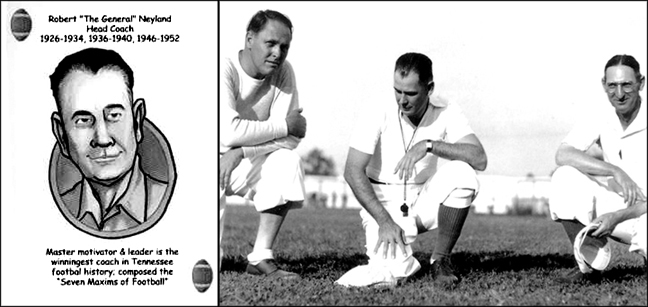
On January 24, 1951, the University of Tennessee gave 58-year-old football coach, General Robert Reece Neyland, a lifetime contract after his team won 10 games that season, lost one to Mississippi State and upset Texas 20-14 in the Cotton Bowl. Tennessee scored 315 points to their opponents’ 57, placing the Vols fourth in the country in the final Associated Press poll.

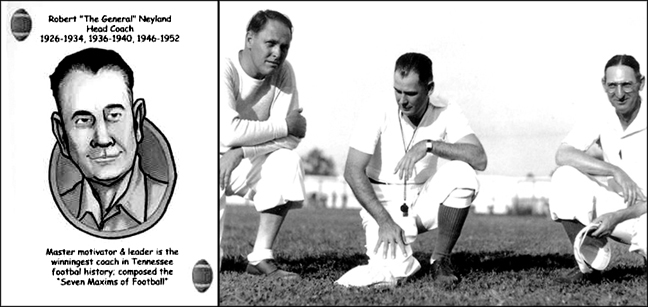
Robert Neyland Playing Card; Bill Britton, Neyland, Paul Parker

Although Neyland's annual salary was not made public, speculation placed the figure at $16,500 plus an additional $2,500 for expenses, making him one of collegiate football’s highest paid coaches. He was a disciple of the old single-wing formation.

In announcing the extension of the coach’s contract, Nathan Dougherty, chairman of the Athletic Council, said, “Our agreement with General Neyland ensures that he will remain at Tennessee for the remainder of his athletic career.” The coach responded, “I'm very happy to remain at Tennessee because I’ve always wanted to stay here.”

Neyland came to Tennessee from West Point in 1925 as a military science instructor and assistant football coach, becoming an overnight success. His Volunteers won eight games and lost one that year. In the next six years, Tennessee won 51 games, lost one and tied five. Neyland's overall record in 19 campaigns was 154 wins, 24 losses and 11 ties. Skillful blocking and tackling became trademarks under Neyland’s balanced single-wing system.

As a major in the Army engineers, Neyland went to the Panama Canal Zone in 1935. Although he retired the next year and returned to Tennessee, the Army summoned him back to active duty in May 1941. He served a five-year stretch, retiring with the rank of general.

In 1951, it was common knowledge that the general wanted one more outstanding season before he quit active coaching and relegate himself upstairs at Tennessee. That desire was to include an unbeaten and untied season plus a bowl game victory, allowing him to invoke the lifetime clause of his contract and retire as athletic director and advisory coach. Neyland, then 59, had accomplished this only once during his 21 seasons at Tennessee. That occurred in 1938, when the Vols dumped 10 regular season opponents, yielding only 16 points while piling up 276 and then trimming Oklahoma in the Orange Bowl 17-0.

Tennessee went on to beat Texas in the 1951 Cotton Bowl 20-14, but lost in the Rose Bowl, twice in the Sugar Bowl and again in the Orange Bowl. Neyland made it known that he was ready to retire from the sport.

In 1952, the general, who lived modestly on an income reported to be $25,000 a year, owned a $200,000 plus home at Sarasota, Fla., where he fished after every football season. He made no bones about wanting to retire within a few years. Neyland's mantle as head coach was expected to transfer to balding Harvey Robinson, his offensive coach and Tennessee quarterback in the 1930s.

Whenever a longhaired musician hit town, Robinson, an accomplished pianist, was present as an enthralled spectator. Neyland, famous for his “bull” victory roars, was strictly from the big band era of Vaughn Monroe and Spike Jones. Robinson was more communicative than the general. Neyland shunned publicity, never appeared on television or radio and granted only a few cautious interviews. He vehemently rejected all offers for ghostwritten articles bearing his signature.

Neyland’s coaching finale occurred after the 1952 season. On advice of his doctor, he asked the university to relieve him of his coaching duties, which they did. He remained as athletic director. As expected, Harvey Robinson got the nod to become Tennessee’s new coach. The 70-year old general died on March 28, 1962. Today, the stadium and road behind it proudly bears his name. 

Read more

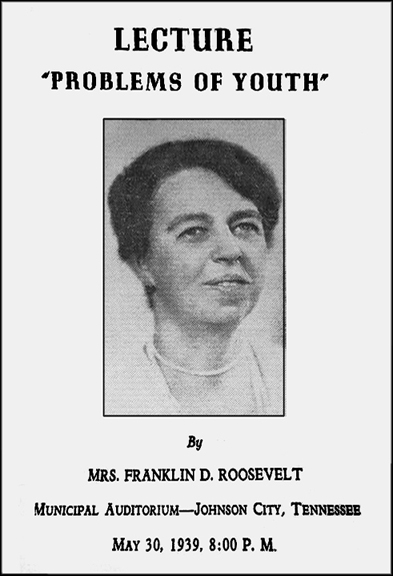
In 1935, Mrs. Eleanor Roosevelt wrote an article titled “Facing the Problems of Youth” for the February edition of “National Parent-Teacher Magazine.” She later used the subject as she began traveling around the country giving lectures.

The first lad made a stopover in Johnson City on May 30, 1939 and delivered a brief speech that mirrored her article, shortening the title to “Problems of Youth.” The event took place at 8:00 p.m. in the big City Hall auditorium at the northwest corner of West Main and Boone streets. As you read her comments, think about how things have changed, yet remained the same over the past 77 years. Here are excerpts from her talk:

“Education today is not purely a question of the education of youth; it is a question of the education of parents, because so many parents, I find, have lost their hold on their children. One reason for this is that they insist on laying down the law without allowing a free intellectual interchange of ideas between themselves and the younger generation.

“I believe that as we grow older we gain some wisdom, but I do not believe that we can take it for granted that our wisdom will be accepted by the younger generation. We have to be prepared to put our thinking across to them. We cannot simply expect them to say, ‘Our older people have had experience and they have proved to themselves certain things, therefore they are right.’ That isn't the way the best kind of young people think. They want to experience for themselves.

“I find they are perfectly willing to talk to older people, but they don't want to talk to older people who are shocked by their ideas, nor do they want to talk to older people who are not realistic. We might just as well accept things, which are facts as facts and not try to imagine that the world is different, more like what we idealized in the past.

“But if the relationship is such that youth has no desire to talk to older people, then, I think, it is entirely impossible to help the youth of today—and they need help badly. I think they are very glad to have it, too, when it is given in a spirit of helpfulness, not self-righteousness. We don't need to idealize things that are past; they look glamorous, but perhaps they were not so glamorous when we really lived through them.

“My own feeling would be that the most important education is the education which will enable us, both in our homes and in our schools, to understand the real problems that our children have to meet today. It is easy enough to impart book knowledge, but it is not so easy to build up the relationship between youth and older people, which is essential to the working out of their problems—very difficult problems on which young people need our leadership and our understanding.

“We cannot pass over the fact that the world is a hard world for youth and that so far we have not really given their problems as much attention as we should. We smile—I smiled myself the other day when one young boy said that he hoped to go in and clean up politics. Politics need to be cleaned up, of course. Everything that is human needs that particular kind of enthusiasm.

“But we older people know that we don't always succeed as easily as these young ones think they can. Yet I doubt if we should smile. I think that we should welcome their help, and find places where this tremendous energy that is in youth—if it cannot be used immediately in making a living—may at least be used where it is so greatly needed today.

“I should like to leave with you this one idea which I have been thinking about a great deal of late: the necessity for us as parents, as teachers, as older people, to put our minds on the problems of youth, to face realities, to face the world as it is and the lives that they have to live—not as we wish they were, but as they are – and, having done that, to give our sympathetic help in every way that we can.” 

Read more

In 1947, five local physicians had their practices at 234, 236 and 238 E. Market Street near Tannery Knob (where I-26 now comes through). Doctors George Scholl and Mel Smith were at the first two-story dwelling, doctors Harry Miller and J. Gaines Moss at the second and doctor Ray Mettetal at the third. Unlike the other five doctors, he and his family lived upstairs and had his practice downstairs.   

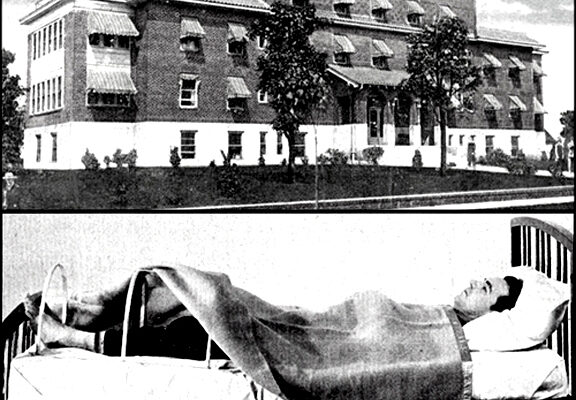
Dr. Mettetal told my parents something that year that would have a profound impact on my life – I had rheumatic fever. The disease is an inflammatory infection affecting the joints and possibly the heart, skin and brain, targeting youngsters between the ages of four and eighteen. I was five at the time and sickly with the classic symptoms of fever, joint pain, fatigue, paleness, lack of appetite, weight loss, a rash and bouts of strep throat. 

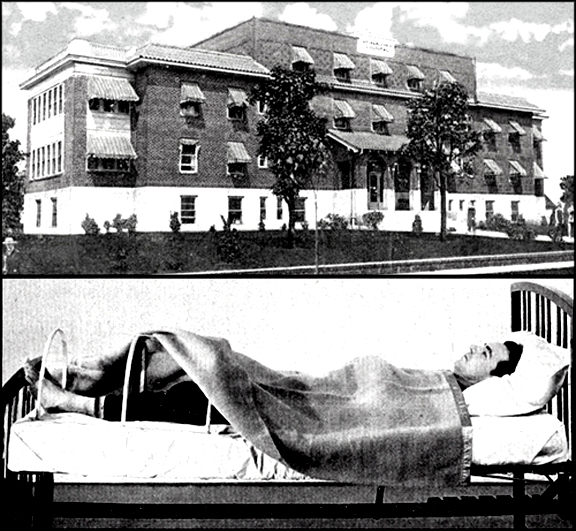
My daily routine quickly began to change significantly. After two-weeks of being quarantined in our smallish apartment, I was subjected to absolute bed rest with limited physical activity. I was not permitted to walk so I had to be carried everywhere I went. Unlike today, almost total inactivity was considered essential to control rheumatic pain and spare damage to the heart. 

Once a month, I was taken to Memorial Hospital (Boone Street and Fairview Avenue) for a blood “sed (sedimentation) rate test” that measured the amount of inflammation still present in my body. The procedure was performed on the second floor along the north end of the hospital with windows overlooking E. Watauga Avenue.

I grew to dread the needle that was placed in my arm and held there for what seemed like an eternity. The attending nurse always had me look out the windows to get my eyes and mind off the needle. I recall seeing a man on Watauga chase his hat that had blown off from a wind gust. Everyone was laughing at him except me.

For about six months (maybe longer), I spent my days in bed, at our dining room table, in a chair with a bag of toys on our table’s center leaf that was positioned across the arms or sitting in a chair looking out the window of our second floor apartment. I observed traffic below and saw people at the Sur Joi Swimming Pool (107 Jackson Avenue). Sometimes I played 78-rpm records on our old upright radio/record player. A thoughtful young lady, Anna Buda (sister of George Buda), who lived in a nearby apartment, routinely came by with her little dog, Butchie, and let me play with him.

Some time ago, I came across a Metropolitan Life Insurance Company ad in an April 30, 1944 edition of Time Magazine. It featured a young boy (about my age when I was sick) with rheumatic fever in a bed crammed full of toys, books, games and crayons. A young girl was entertaining him with a puppet show at his bedside. The ad emphasized the need to keep patients fully occupied until all signs of the disease had cleared up. Entertainment, it said, was the best medicine a patient could receive.”

A second advertisement in a February 1944 edition of Good Housekeeping Magazine showed a mother privately talking to the doctor with a young boy in bed in the next room. It consisted of solemn questions and answers between Mrs. Roberts and the physician.

Until 1960, the disease was a leading cause of death in children and a common source of structural heart disease. Although the malady had been known for several centuries, its association with strep throat was not made until 1880. In the 1930s and 1940s, rheumatic fever was a serious medical concern for adolescents. With the discovery of penicillin followed by a plethora of other antibiotics, patients could then be treated adequately.

The end of my illness meant learning to walk again. My dad held my arms much like he did when I took my first steps as a toddler. I was assigned the morning session of Miss Taylor’s first grade class at West Side School because I needed an afternoon nap. In 1950, we moved from our apartment to the “wide open spaces” of Johnson Avenue. My new active lifestyle of running and playing was a thrill that is firmly embedded today in my memory. 

Read more

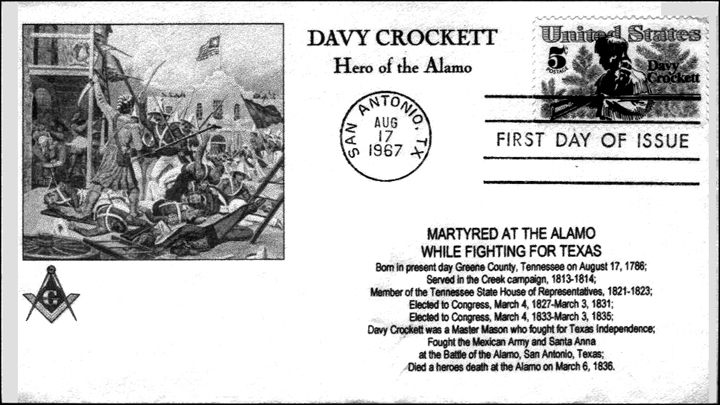
People living in the 1950s readily recall the action-packed Walt Disney movies pertaining to the life of legendary hero, Davy Crockett. Many, like this writer, had to have a coonskin cap to wear that was available from such downtown establishments as S.H. Kress, McLellan’s, Woolworth’s, Charles Store and Powell’s.

Disney broadcast the action-packed episodes to those who were fortunate to own black and white television sets. Today, they are equally exciting to watch in DVD and Blu-ray formats.

The hit song from the series made popular by Bill Hayes, Fess Parker and Tennessee Ernie Ford, while very entertaining, was not completely accurate. It had the pioneer being born on a mountaintop (instead of the banks of the Nolichucky River), living in the greenest state in the land of the free (absolutely correct), raised in the woods where he knew every tree (certainly) and killed him a bear when he was only three (highly improbable even for Davy).

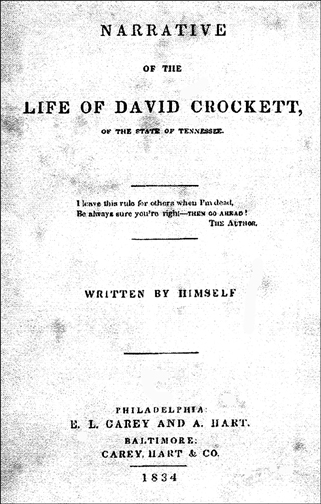
The colorful pioneer penned his autobiography, which he titled, Narrative of the Life of David Crockett, of the State of Tennessee (Carey and Hart Co., 1834). The work provides a realistic and often humorous perspective on the hardy backwoodsman and later politician.

The preface was captivating because Davy talks directly to his readers and reveals what makes him tick. Reading this section prepares readers for what to expect in the remainder of the book. Crockett began by saying, “Fashion is a thing I care mighty little about, except when it happens to run just exactly according to my own notion and I was mighty nigh sending out my book without any preface at all, until a notion struck me, that perhaps it was necessary to explain a little the reason why and wherefore I had written it.”

Crockett was quick to state his motive for the autobiography; instead of fame, he sought justice. It seems that a nameless author had penned a biography of him and Davy was not happy with it: “(He) has done me much injustice and the catchpenny errors, which it contains, have been already too long sanctioned by my silence. I don't know the author of the book and indeed I don't want to know him; for after he has taken such a liberty with my name, and made such an effort to hold me up to public ridicule, he cannot calculate on any thing but my displeasure.” Other comments of the famous Tennessean can best be stated in his words:

“I have met with hundreds, if not with thousands of people, who have formed their opinions of my appearance, habits, language, and every thing else from that deceptive work. They have almost in every instance expressed the most profound astonishment at finding me in human shape and with the countenance appearance and common feelings of a human being.

“In the following pages I have endeavored to give the reader a plain, honest, homespun account of my state in life and some few of the difficulties, which have attended me along its journey down to this time. I am perfectly aware that I have related many small and, as I fear, uninteresting circumstances, but if so, my apology is that it was rendered necessary by a desire to link the different periods of my life together, as they have passed, from my child-hood onward, and thereby to enable the reader to select such parts of it as he may relish most, if indeed there is any thing in it which may suit his palate.

“I have also been operated on by another consideration. It is this: I know, that obscure as I am, my name is making considerable deal of fuss in the world. I can't tell why it is, nor in what it is to end. Go where I will, everybody seems anxious to get a peep at me.

“They will, at most, have only their trouble for their pay. But I rather expect I shall have them on my side. But I don't know of any thing in my book to be criticized on by honorable men. Is it on my spelling ? — that's not my trade. Is it on my grammar? — I hadn't time to learn it, and make no pretensions to it. Is it on the order and arrangement of my book? — I never wrote one before, and never read very many; and, of course, know mighty little about that.

“Will it be on the authorship of the book? — this I claim, and I'1l hang on to it, like a wax plaster. The whole book is my own and every sentiment and sentence in it. I would not be such a fool, or knave either, as to deny that I have had it hastily run over by a friend or so, and that some little alterations have been made in the spelling and grammar; and I am not so sure that it is not the worse of even that, for I despise this way of spelling contrary to nature. And as for grammar, it's pretty much a thing of nothing at last, after all the fuss that's made about it. In some places, I wouldn't suffer either the spelling, or grammar, or any thing else to be touch'd; and therefore it will be found in my own way.”

Crockett’s preface concluded by saying, “But just read for yourself, and my ears for a heel tap, if before you get through you don't say, with many a good-natured smile and hearty laugh. This is truly the very thing itself — the exact image of its author, David Crockett, Washington City, February 1st, 1834.”

If Davy could correct the hit song about him in the mid 1950s, perhaps it would read: “Born on the banks of the Nolichucky River; Greenest state full of groundhogs and beaver; Raised in the woods so’s he knew every tree; Killed him a bear when he was over three; Davy, Davy Crockett; King of the Wild Frontier.”  

Read more

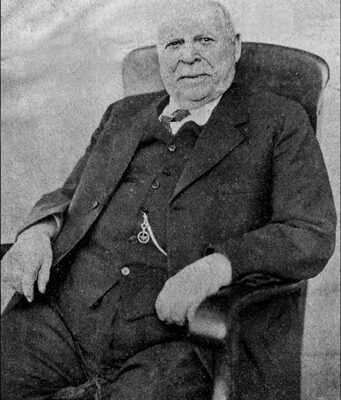
On Wednesday morning, November 25, 1931, former governor, Alfred Alexander Taylor passed away. The next morning, newspapers across the country broadcast the breaking news proclaiming, “Uncle Alf is Dead.”

The grand old man of the Republican Party in Tennessee had gone to his eternal rest, stilling a deep voice that thrilled and stirred thousands of people over two generations. He joined a long list of mortals who were forever lodged in the memories of a people.

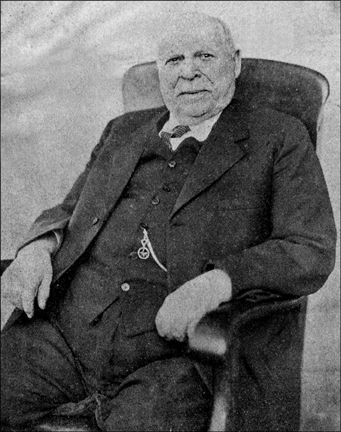
Former Tennessee Governor, Alf Taylor

Outside of the state were people who knew him impersonally as political leader, congressman, and state governor with political exploits that spanned his long and active life. Inside the state, the congenial statesman was more of a friend, fellow townsman, neighbor and public-spirited citizen of his community. Locals described Alf as one who held dearer to his heart the esteem and friendship of his neighbors and friends regardless of their social or political status.

Although Uncle Alf had passed away, his memory became a shining light to be cherished in thankfulness for having shared his friendship. When the curtain on a life that had been brilliantly spent had been drawn, the family was joined by thousands of well wishers whose lives were touched by a man who made the world a brighter, finer and better place to live.

The colorful 1886 “War of the Roses,” governor’s race campaign between “Uncle Alf” and “Our Bob,” endeared the two brothers to the state and commanded the attention of the nation. The story of Bob Taylor, a Democrat, and Alf Taylor, the Republican contender, engaged in a famous brother-against-brother battle for governor has been told countless times from one end of the Volunteer State to the other. Bob defeated his challenger in a good spirited and often humorous contest. Thousands attended their debates, even those living in smaller counties. At Nashville, an estimated crowd of 15,000 gathered to hear them engage in a battle of elegant words in the public square in Nashville.

When advised of Uncle Alf’s passing, Tennessee Governor Henry Horton issued comments about him: “A life of good will, kindness of spirit and firm character is brought to a close in the passing of our greatly beloved ex-Governor, Alfred A. Taylor. The people of Tennessee, irrespective of political creed or dogma, will be greatly afflicted by the melancholy news of his death. He was a loyal-hearted man and carried the riches of God within himself. Governor Taylor was the kindest and most generous of men. All of the gentle virtues came into full bloom in his life. I join with our people in mourning his death most sincerely.”

Among the many messages received by Mrs. Alf Taylor was a telegram of condolence from President Herbert Hoover: “The White House, Washington, Nov. 25, 1931, Mrs. Jennie Anderson Taylor, Milligan College, Tennessee. Mrs. Hoover and I are greatly saddened to learn of the death of your husband, Alfred A. Taylor for his public career as governor and as a member of congress, he served the public welfare with diligence and faithfulness. His was a high sense of integrity in personal life. Please accept for yourself and members of your family our sincerest sympathy. Herbert Hoover.”

A fitting tribute to former Governor Taylor was made in a statement issued by B. Carroll Reece, previous first district congressman: “Death of Governor Taylor will not only cause a great loss to the political party with which he affiliated, but it is a tremendous loss to the state of Tennessee as well as the nation. His life has been and will remain an inspiration to countless numbers of young people who have read of his activities through his public and private life. We are all saddened by his passing and I feel in it a great personal loss.”


Read more

Today’s column is a continuation of several vintage news briefs that I have accumulated over the years from old newspapers. This edition spans 96 years (1863 to 1959).

Oct. 1863: The ravages of the Civil War became a stark reality on this date when a band of Confederate raiders descended upon the town of Blountville, Tennessee, reducing the larger and better portion of it to ashes. Those whose homes and effects were totally obliterated included W.W. James, John Powell, John Fain, Dr. N.G. Dulaney, E.P. Cawood, Rev. N.C. Baldwin, Mrs. Martha Rhea, F.L. Bumgardner and Major J.G. Eans. The courthouse along with the offices of the clerks of the county and the jail were also destroyed. Loss was estimated at half a million dollars.

Mar. 1872: A new calaboose was opened in Johnson City to accommodate the imbibed public. The city had recently been incorporated with a mayor, Board of Alderman and police force. An amusing unplanned dirt street race that occurred one evening attracted a crowd of spectators. Two large intoxicated men and a smallish fellow with exceptionally large feet somehow mounted a small horse and precariously began riding it down the street. After the trio became blatantly boisterous, seven policemen were dispatched to the scene and gave chase but surprisingly could not keep up with the revelers. The drunks outpaced the officers by 200 yards.”

Nov. 1895: George D. Massengill, Jr. and Miss Inez Jobe, a young lady from a prominent city family, were married one afternoon. The next day, they were being driven on a wagon to the train station with expectations of making a bridal trip to Washington. Without warning, the team of horses became startled and galloped away, throwing Mrs. Massengill to the ground where she received a skull fracture and passed out. After examining her, the physicians who were called to the scene determined that her injuries were not life threatening. John Garrell, driver of the team, was also seriously injured, but Mr. Massengill was not hurt.

Dec. 1906: Senator-elect Robert Love Taylor of Happy Valley, Tennessee selected Mr. Laps McCord, long-time editor of the Tennessee Sugar Tree Gazette, to be his private secretary. The paper humorously stated, “Only a man whose mind runs to something like sugar would do for the frolicsome fiddler from Happy Valley.”

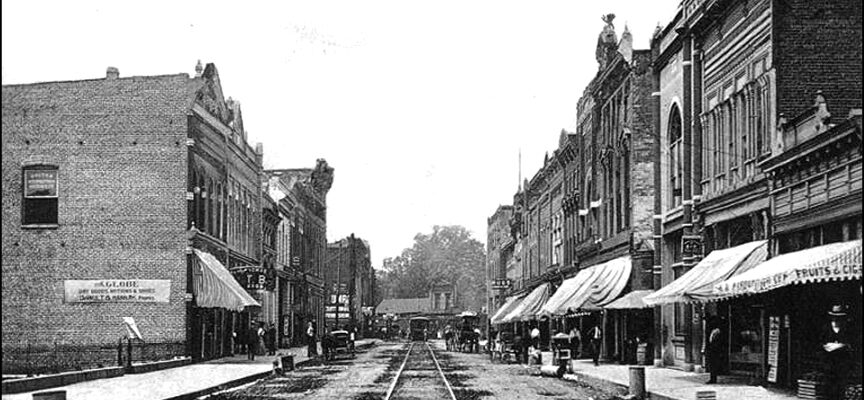
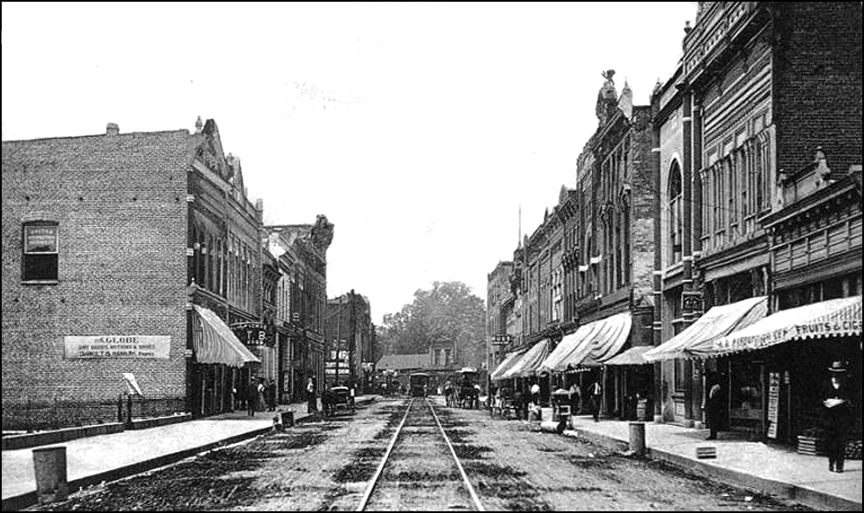
Main Street Looking West in Johnson City as It Appeared in 1908

Aug. 1909: A man (whose name I will withhold), had been in Washington, DC for 100 days, but had been locked up behind bars for 95 of them for drunkenness and vagrancy. The Civil War veteran begged the presiding judge to let him leave the nation’s capitol and return to his mountain residence in Johnson City, Tennessee. “Judge, your Honor,” he said, “I want to go back to my native home because it is dry down there. I fought for the freedom of my country, but I don’t think much of the freedom of the Capitol of this glorious land of the free. This town has too many temptations for me and I can’t keep sober where there is so much liquor flowing. I want to go back to the town of my birth.” “All right, Thomas,” replied his honor, “I shall keep you in jail for 60 days to get the liquor fully out of your system and, after that, you can return to your home in Tennessee.”

Jan. 1959: The wreckage of a Southeast Airlines plane, missing for several days with 10 persons aboard, was spotted about 400 feet from the top of rugged Holston mountain. There was no sign of life at the scene of the wreckage. An Air National Guard plane located the wreckage at 11:50 a.m. about 10-15 miles east of Holston Dam in the rocky, heavily forested East Tennessee area. Captain Robert A. Jackson of the Civil Air Patrol led a mobile unit to the scene with 15 members of the Greeneville, Tennessee Rescue Squad accompanying him. It took the rescuers several hours to reach the scene.  

Read more

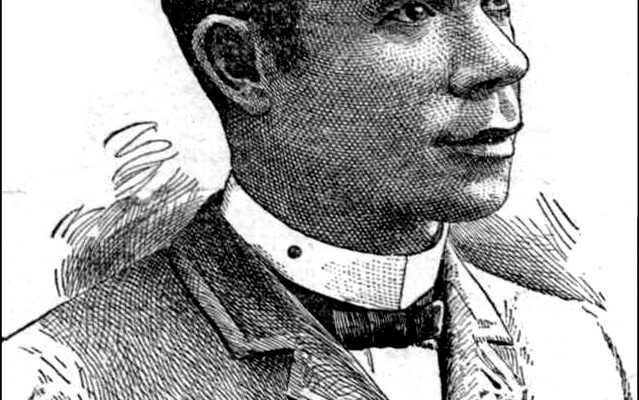
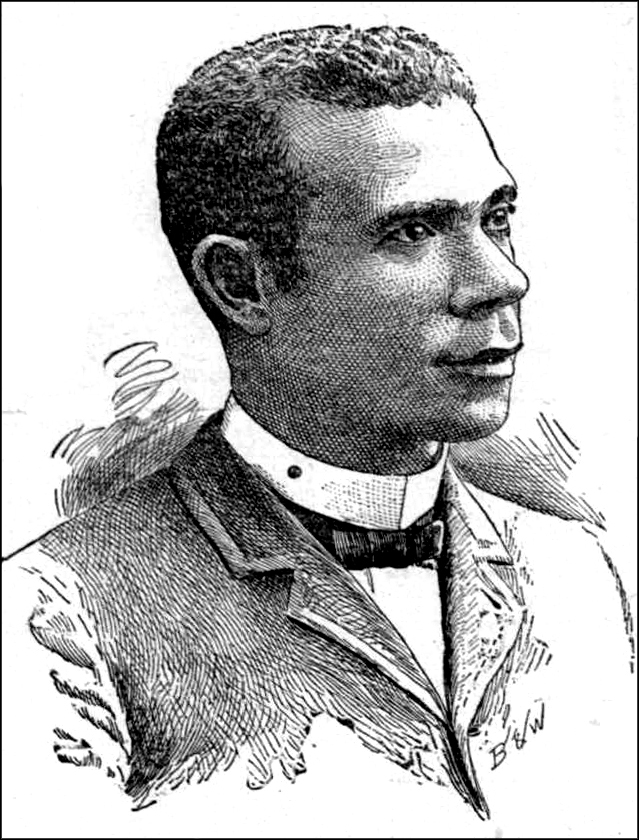
In November 1909, Booker T. (Taliaferro) Washington (1856-1915) began an “educational pilgrimage” through five southern states: Tennessee, Mississippi, North Carolina, Texas and Florida. The educator’s purpose was to boost the spirits of African Americans living in appalling conditions in these five states. The first day of the Tennessee portion of the trip included stops at Bristol, Johnson City and Greeneville where he spoke to large crowds comprised of both races. 

The train stopped first at Bristol. It was explained to Dr. Washington that since the centerline on State Street split the city between two states, half the population lived in Tennessee and the other half resided in Virginia.  


Bristol was described as an educational center of considerable importance, being the seat of four institutions of learning: Virginian Southwest Institute (a Baptist academy for women), King College (a Presbyterian college for men), Sullins College (a Methodist college for girls) and Bristol Normal Institute (a black school for both sexes under the auspices of the Presbyterian Church).

The party arrived in Bristol during a driving flurry of snow that morning. Several hundred people, black and white, braved the harsh elements to come to the railway station for the opportunity of seeing their guest. A committee of the local branch of the Negro Business Men's League, which Dr, Washington organized, surrounded him and escorted him through a cheering crowd to carriages, which then gave the party a tour of the city.

Judge J. H. Price, the son of a slaveholder and one of the Democratic leaders of western Virginia, introduced Dr. Washington, a former slave in Southwest Virginia, to the crowd as one of the Old Dominion's most distinguished sons. 

From Bristol, the train proceeded to Johnson City, one of the new manufacturing cities of East Tennessee. It had evolved from a village to a bustling city with steel mills, tanneries and a Carnegie Library. Under construction was a $75,000 Federal building, a tribute to the influence of Congressman Brownlow, the East Tennessee Republican boss with the Appropriations Committee in the House of Representatives.

A large crowd greeted its special guest at the railway station. As Dr. Washington appeared on the railcar steps, the band from National Soldiers' Home struck up a welcoming tune. Johnson City’s Hippodrome, a large rink-like hall a few blocks from the station (located about where the Johnson City Press building now sits), was the chosen site for the gathering. Almost all downtown businesses closed and schools, both black and white, dismissed early. Teachers marshaled their pupils to the Hippodrome as a group. The barn-shaped structure was filled to capacity.

Mayor Burbage introduced Washington, who was received enthusiastically by the crowd. After his speech, hundreds accompanied him back to his train, where he shook hands with many people until it was time for his train to leave. Cheers could be heard as the vehicle chugged out of sight. 

Greenville, the next stop on the tour, was reached about 3:30 p.m. This town, which was proud of giving the country a president, escorted visitors to a small street off Main Street. Here stood a dilapidated, weather-beaten little shop bearing a cracked signboard containing barely decipherable words, “A. Johnson, Tailor.” President Johnson was buried in Greeneville on a hill overlooking the town.

Dr. Washington's party was next driven in darkness in buses to Greeneville College, a black school located a half-mile out of town. Dinner was served in the commons room of the school. Afterward, the party was escorted back to town for a meeting in a large crowded hall.

At 10:30 p.m. the special tour train departed Greeneville and headed for Knoxville; the first day of the Tennessee pilgrimage was over.  

Read more

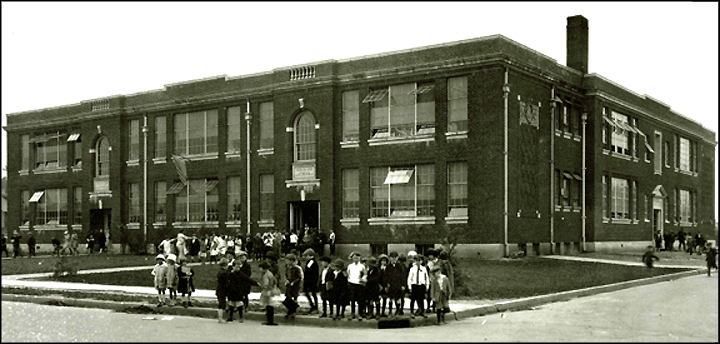
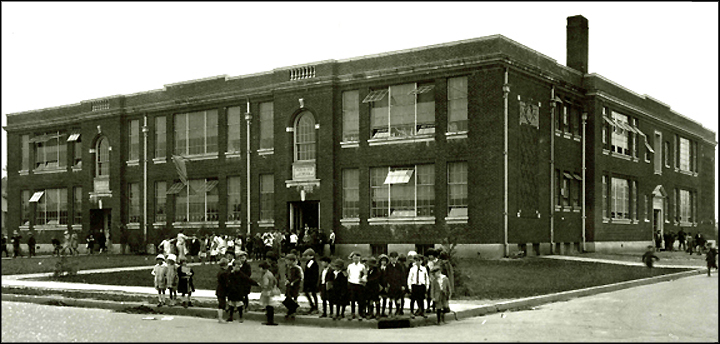
Today’s column deals with the old North Side School that was built in 1922 at N. Roan Street, sandwiched between E. Eighth and E. Chilhowie avenues. In 1928, the city began a study for replacing, remodeling or expanding several area schools.

That same year, the Johnson City Chronicle initiated a review of existing schools in articles titled, “Inside the City School Houses.” This was likely done in an effort to draw attention to several schools that needed attention. A number of educational facilities were inspected over the course of several weeks and the results reported in the paper. The reviews ranged from deplorable to excellent; those receiving an unsatisfactory grade was due primarily to the building being crowded or aged.

A year later, the city made a decision to spend $300,000 to build new elementary schools for Columbus Powell, Martha Wilder (later renamed Stratton) and West Side (later became Henry Johnson). The appropriation also included additions to two schools, Science Hill and South Side. (My November 1, 2008 feature story dealt with that expansion program).

North Side School, which was only six years old at the time, received a glowing report. One comment stated, “Wherefore, let us give thanks that in our corporate midst on city-owned acreage there stands a public school building that appears to be well-suited to most of the crying needs of the day. It is modern in type and construction and ample of accommodation.”

The report went on to say that more tears had been shed over North Side than any other grammar school building, but they were from childhood heartbreak at being taken out of distant schools and being compelled to walk several miles every day to attend classes.

Many residents vividly recall that the school was a two-story brick building containing 20 classrooms. The six-year-old facility was described in the report as “cheery, well lighted and properly ventilated, with wide airy corridors whose ground floor doorway entrances had no ice coated steps to navigate to enter the building.”

That year, there were 800 students attending six grades of classes there. The floors were made of hardwood with tile floors in the boys’ and girls’ lavatories on both levels. The stairways, designed for emergency exit, were well placed throughout the building. Each classroom contained a wardrobe with doors that opened only into it. Tack strips adorned each classroom slate blackboard. Separate rest rooms were provided for teachers. Panic locks on all interior doors enabled classroom occupants to open the doors from the inside by turning the doorknob. On the outside, the knob could be locked if desired, but it could never be locked on the inside. Panic locks were also placed at each ground floor main entrance.

The article noted that the past decade had marked rapid changes in the building complexion of the city as a whole. Old structures were repaired, remodeled, enlarged or replaced to make room for new. The life of a building suited to swift progress was said to be relatively short. The Chronicle chided the school system for willful neglect of school buildings, allowing them to fall in such disrepair that the final solution was demolition.

Although some schools had occasional repairs made to them and even had additions built onto them, most had been woefully neglected. This was deemed shameful to the students who tried to get a good education there. 

The newspaper ended by saying, “And if so, in light of what has already been written and anticipating the worst yet to come, let us be thankful that in at least one of our valuable public school properties everything is jake.”

I will feature the reports of some of the other schools in future columns. Three had very unflattering comments made against them and were targeted for replacement. 

Read more

Yesterday, September 30, 2012, marked the anniversary of a historical event that occurred 126 years ago. Two local history buffs met on September 30, 1986, the 100-year anniversary of the incident, and relived the story for an article for the Johnson City Press-Chronicle.

Jim Goforth (Erwin historian and author) and Tom Hodge (historian and Press-Chronicle writer) convened on that day in Tom’s office to revive the particulars of the granting of a charter to the Charleston, Cincinnati and Chicago Railroad, commonly referred to as the 3-C Railroad.

The two history buffs contrasted the 1886 exciting announcement of the construction of a much-needed railroad in Johnson City with the 1893 disparaging news that work was being suspended, even after much track had been laid.

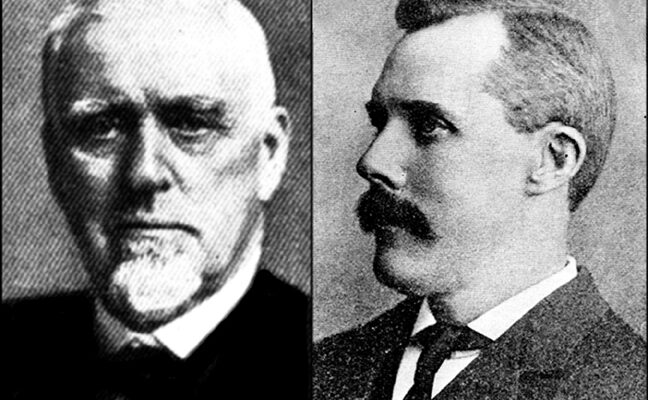
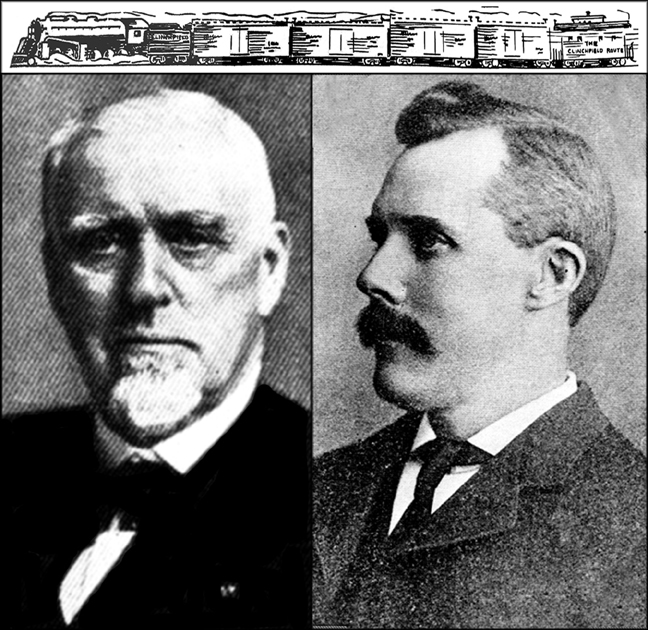
L: John T. Wilder, R: George L. Carter

In 1886, ex-Union General John T. Wilder received a charter to build the 3-C Railroad, a forerunner of the Clinchfield. He already had other significant businesses in the city: the Carnegie Land Company, the Cranberry Iron Furnace, the Carnegie Hotel and the Cloudland Hotel (atop beautiful Roan Mountain).

While campaigning through the Southeast during the Civil War, the industrialist visualized great potential for developing the area, but he also realized that the region lacked an adequate transportation system. To remedy this, he received authorization to begin constructing a 625-mile railroad from Charleston, South Carolina to Cincinnati, Ohio to connect the industrial midwest with the Atlantic seaport. The new route would further serve the coalfields of Eastern Kentucky and Southwestern Virginia, the timber and mineral areas of East Tennessee and Western North Carolina, the resort areas of the Blue Ridge and the agricultural area of the Piedmont.

The estimated cost of the venture was $21 million, which was a considerable amount of money then. Within two years, a 171-mile segment from Camden, South Carolina to Marion, North Carolina was completed and put into service.

When the Carnegie section of Johnson City, near the Empire Furniture Company plant on E. Fairview Avenue, was chosen as the northern headquarters of the railroad, the city almost overnight became a boomtown. Track installation was expedited in both north and south directions from the city. Rails reached the Nolichucky River in Erwin in 1890 and the roadbed to Dante, Virginia was 90% completed three years later.

In 1893, the country suffered a depression, known as “Cleveland’s Panic,” and the 3-C Railroad immediately faced bankruptcy. Assets were sold at foreclosure for $550,000. Johnson City, eager to help reclaim the 3-C line, bought $70,000 worth of bonds, thereby subjecting the city to heavy financial strain when it defaulted.

A new owner, identified as the Ohio River and Charleston Railroad, acquired the assets in 1897, but unfortunately did little to extend the line. Conversely, the company began selling portions of it.

In 1902, a new hero emerged. George L. Carter acquired the northern segment of the road and completed construction as the Clinchfield Railroad. However, he abandoned much of the 3-C roadbed and instead laid new track to Johnson City from the northwest. Since the entrepreneur had become involved in developing the coal lands of southwestern Virginia, he needed a railroad to transport his coal to a south Atlantic seaport. Between 1905 and 1909, work to extend the Clinchfield from Dante, Virginia to Spartanburg, South Carolina was successfully completed.

A few years ago, Clint Isenberg, a Gray resident, showed me some weed-covered track near Spurgeon’s Island just off the old Kingsport highway. According to Tom and Jim in 1986, track could still be seen at the intersection of East Fairview Avenue and Star Mill Road and at the old J. Norton Arney Farm, which later became Winged Deer Park. Are there still portions of 3-C track visible in the area? 

Read more