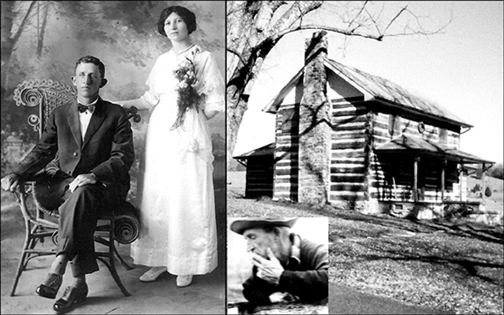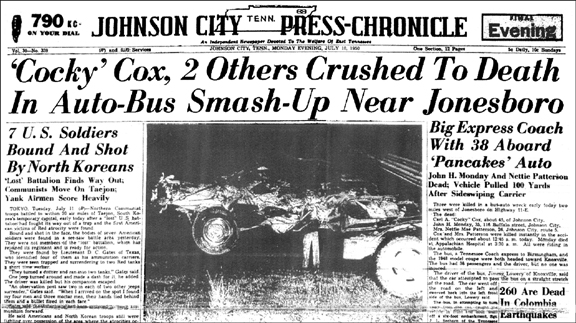
Ray and Norma Henry, former area residents, recently recalled when the peaceful early morning hours of July 10, 1950 suddenly turned into a ghastly scene of carnage that claimed the lives of three local people.

Ray picked up his sweetheart and future wife, Norma Murr, at Telford in his solid black 1938 Chevrolet 2-door sedan and drove to Johnson City to take in a movie at the Sevier Theatre (113 Spring Street). Being Sunday, the business was not permitted to open until 9 p.m. Norma remembered standing in a long ticket line outside the theatre that stretched back toward Main Street. When the movie ended at about 11 p.m., the couple drove to Nave Drive-In (200 Delaware at W. Market) for a snack.

Afterward, Ray headed back to Telford on 11-E to take Norma home. At about 12:45 a.m., just minutes after the couple passed the interception of Highway 81 to Erwin and the American Legion Club (formerly Woodland Lake) on the right, they spotted a bright light flashing across the sky behind them. Simultaneously, they heard what sounded like a motorcycle revving its engine. Believing a biker had run off the road, Ray turned the car around to investigate.

As they approached the Club, they spotted Joe Fleenor, the custodian who lived there, running back from the wreck to call for help. He hurriedly told them that there had been a horrific bus and car collision there. Ray and Norma drove to the wreck scene and parked along the side of the road. Since it was pitch dark, the couple took a flashlight from their car and crossed over a damaged barbwire fence by using a wooden sty that had been built there. 

The bus, a Tennessee Coach express en route to Birmingham, was heading to Knoxville. The other vehicle, a 1948 five-passenger Ford coupe, was reportedly traveling to Cosby. When Ray and Norma reached the bus, they observed the driver, Jimmy Lowery, helping his 38 passengers exit the vehicle. Surprisingly, no one appeared to be injured or overly alarmed. After the bus was emptied, the passengers huddled together until another coach could be dispatched. 

Lowery indicated that the Ford had attempted to pass him on a straight stretch of highway but briefly ran off the left side of the road and immediately swerved back along the left front of the bus. Jimmy tried to avoid hitting the car, but their bumpers suddenly locked together, sending both vehicles through the fence, down a 6-foot embankment and skidding 100 yards in a field before coming to rest. Fortunately, they missed several trees and Barkley Branch Creek or the circumstances would likely have been much graver. The bus landed upright on its wheels directly over the car that was upside down and barely visible.

About that time, Joe Fleenor returned saying that help from the Sheriff’s Department, Highway Patrol and Rescue Squad was on the way. Lighting was installed to illuminate the wreckage area. Dillow-Taylor Funeral Home provided two hearses that also served as ambulances. Three wreckers arrived. Two drove down the embankment to the wreck site while the third one stayed on the road to later pull the first two back onto the highway. 

Over the next agonizing minutes, one wrecker slowly pulled the bus forward while the other one partially dragged the car from under the bus. At first, it was impossible to determine how many people were in the car or who was driving. One person was still alive and in obvious pain.

Initially, it appeared that there were two occupants. Then Norma spotted another body in the back seat of the wreckage. All that could be seen was her red hair. In order to free her, workers had to carefully pull the coupe farther away from the bus. It was quickly confirmed that the woman was deceased.

Ray described the wreck as gruesome, saying it was the most sickening one he had ever witnessed. There was virtually no means to help the car occupants because they were literally compressed in a heap of metal and flesh.
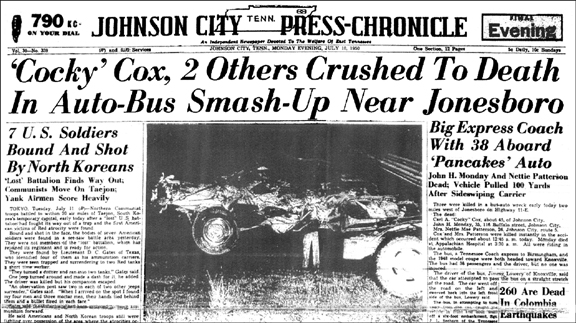
The Johnson City-Press Chronicle’s Monday evening edition provided additional facts about the crash. The passengers were identified as Carl “Cocky” Cox, 45; John Monday, 35; and Nettie Patterson, 26. Monday’s body was removed first because he was still alive, but he passed away at Appalachian Hospital (300 N. Boone Street) in Johnson City at 3:30 a.m. One item of interest found in the car was a blood-soaked small brown bag containing $2700 in bills.

Cox’s lifeless body was next removed from the wreckage. Ray recognized Carl’s face, removed his wallet and handed it to a patrolman. His driver’s license confirmed his identity – Carl Vernon Cox, Limestone, Tennessee. The investigating patrolmen speculated that Monday was the driver. Sergeant Jim L. Seehorn of the Tennessee Highway Patrol said the vehicle was crushed like an accordion, having an astonishing vertical height of 18 inches.

Cox, a well-known, colorful businessman of that era, operated nightclubs in the surrounding areas at various times in his career. In September 1947, he was arrested after the Highway Patrol raided the Mott-O Club that was located on the west side of the Kingsport Highway not far from the Kingsport/Bristol intersection, seizing liquor and gambling equipment. Cocky received a 6-month jail sentence and was fined an undisclosed amount of money. A large number of Johnson Citians rallied behind Cox and partitioned Governor Gordon Browning. They convinced him that politics figured heavily in the raid and that Carl deserved to be excused. Consequently, the state’s chief executive issued a pardon after Cox had served only two days.

Monday, a World War II veteran, had been a driver for Diamond Cab Company (116 Buffalo) for about 10 years. Mrs. Patterson, the mother of three children, was a waitress at Central Bar-B-Q (701 S. Roan).

Appalachian Funeral Home (101 E. Unaka) handled arrangements for all three families. Funeral services for Peterson, Cox and Monday were held respectively at Highland Christian Church, Watauga Avenue Presbyterian Church and Temple Baptist Church.

Although 60 years have come and gone, there are still senior citizens around who remember that dreadful early morning event of summer 1950. Ray and Norma Henry are two of them.

 (Note: Carl “Cocky” Cox was Bob Cox’s second cousin.) 
Read more

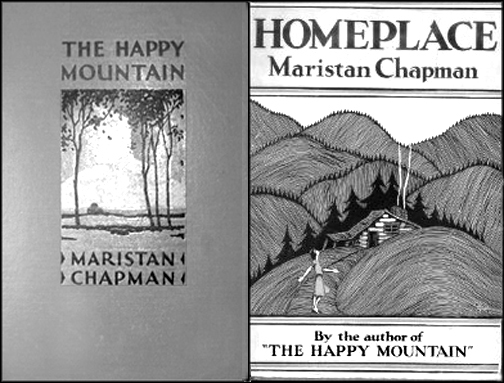
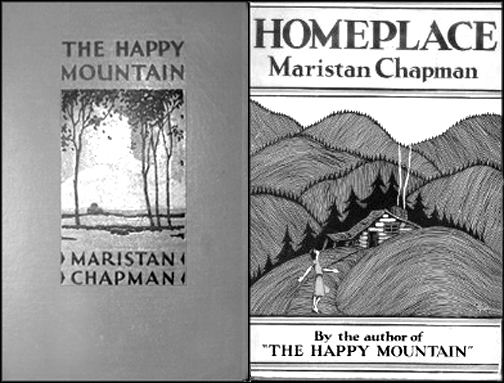
Two novels by Maristan Chapman titled, The Happy Mountain (1928) and Homeplace (1929), offer insights into the manners and mores of southern mountaineers who struggled against approaching change in their secluded land. She lived in the southwestern portion of the Cumberland Mountains just over the Tennessee state line.

Chapman's objective in writing the books was to educate outsiders about her people whose remote existence was widely misunderstood. Almost overnight she became an authentic interpreter and historian of southern mountaineer culture. She told her story in fictional novels that was historically accurate, making them both entertaining and educational. The Literary Guild of America was so duly impressed with The Happy Mountain that they endorsed it.

To the average “outlander,” a designation used by mountain country folks to describe city dwellers, the diet of the hill people was believed to consist only of fundamental and bland food that was as unvarying as the hills and mountains themselves. But according to Maristan, mountain people not only enjoyed plenty of first-rate food, they also knew how to make it palatable – both wholesome and mouth-watering.

“Most of the food that is consumed is raised by the people themselves,” said Mrs. Chapman. “They have as unreasoning a horror of canned foods as they have of various labor saving devices that hail from the outlanders. They eat as people do who have hard work to accomplish, for earning a living means to earn it through a constant battle with the soil itself. Food is never really eaten in very large quantities. The meals are simple, nutritious and appetizing.”

Breakfast consisted of cereal, fried eggs, some cold bread left over from supper the night before, coffee and preserves. Fruit was never eaten for breakfast; instead, it was eaten between meals as snacks.

Dinner generally consisted of a variety of meat, fried eggs, tomatoes, beans and potatoes. Tomatoes were frequently fried with bacon or stewed with rice. Preserves or fruit butters were almost always present at the table. It was eaten with hot bread and butter; no meal was considered complete without them. 

Supper was somewhat of an extension of dinner. Whatever was left over from the midday meal was served again in the evening along with hot bread and buttermilk. Usually, a homemade pie was added to the menu “to sweeten the stomach.” Staple bread was made of cornmeal in a variety of forms such as from the humble pone of meal and water that was baked crisp in hot ashes of an open hearth. Another delight was the fluffy and succulent Sally Lunn, a type of yeast bread lightly scented with lemon that originated in England. It was traditionally sliced horizontally, spread with butter or whipped or clotted cream and reassembled for the meal.

Biscuits were made with sour milk and soda. The mountaineers never used baking powder because they believed it was tainted “fetched-on stuff” supplied from the towns. Their biscuits were large and distinctly browned, each one resembling a small loaf of bread.

Bread products were eaten piping hot. They were covered with white unsalted butter that was similar to clotted cream or consumed with one of the many preserves or fruit butters on hand. Sometimes the biscuits were eaten cold, made into sandwiches containing a slice of cold meat or overstuffed after butter has been spread within them.

According to Mrs. Chapman, southern mountain folks worked hard and were rewarded handsomely with appetizing food on their rustic dinner tables. I ordered both books and am currently reading them.  

Read more

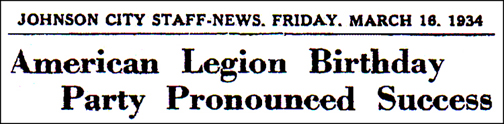
March 15, 1934 marked a special event for the Kings Mountain Post of the American Legion; it celebrated 15 years of service. Congress chartered the association in 1919 as a patriotic, mutual-help, and wartime veterans’ organization. While my source did not reveal the location of the Legion in that year, it later resided at 503 E. Main Street adjacent to the Central Fire Station.

The first order of business at the anniversary commemoration was a review of its history by the membership. More than 200 members, visitors and honored guests were on hand for what was described as a “bean feed” coupled with an elaborate program, an initiation ceremony for six new members and a gala party.

Past commanders, who were introduced in the sequential order of their terms, spoke briefly concerning their experience as heads of the local Legion and further elaborated on progress made since its early beginning. Mrs. Cleve B. Coe presented the American Legion Auxiliary officials who reviewed the work of both the Legion and the Auxiliary.

A huge birthday cake, appropriately topped with 15 candles occupied the center of the stage. Each commander lighted a designated candle before addressing the large audience and introducing guests.

Dr. H.M. Cass, chapter member and leader during the first year of the organization, lighted the first candle. Other unit heads in order of their service were scheduled to speak, although not all were able to attend: Lee B. Harr, twice commander, (1920-1921), R.F. Farrell (1922, absent), Adam Bowman (1923), Belmont Collette (1924 and 1928), Sam H. Colie (1925, absent), Harry Smith, 1926), Joe Summers (1927), W. Lewis Smith (1929), W.T. Watkins (1930), C.B. Coe (1931, absent), C.C. Rice (1932, absent) and Fred M. Lewis (1933).

Members of the Auxiliary lighted candles for the absent former commanders and presented them to the audience. When Frank Gaut, the 1934 commander, was introduced, he lighted a “half candle” commenting that the present Legion year only deserved one that size.

The commanders said they were highly pleased with the Legion’s accomplishments. The subject of relief to families of needy ex-service men and the bonus became the principal topic for their brief discussion.

Mr. C.B. Coe introduced the past commanders of the Auxiliary as follows: Mrs. Mary Lyle, Miss Ethel Barton, Mrs. Louise St. John Taylor, Mrs. Ray Greenway; Mrs. George Hyder, Mrs. Hubert Johnson, Mrs. (?) Scott, Mrs. John Herrin. State officers – Mrs. H.L. Moore, Miss Belle Miller and Miss Louise Summers – were also introduced.

Following an appeal by Miss Edith Barton, it was unanimously decided by Legion and Auxillary members present to start operation of the Crippled Children’s Survey in Johnson City immediately.

Next came an impressive initiation ceremony for six new members. Following this was a program of addresses, both formal and impromptu. Commander Galt, who presided throughout the meeting, outlined a plan designed to increase club membership by reviewing the various impressive objectives of the organization.

Next on the agenda was the main event, a party that took weeks of planning and preparation.  Many were present from out of town posts as well as the Lester Harris Post of Mountain Home. Several past commanders were unable to be present but sent their congratulations.

The cake “cutting” was a surprising finale to the gathering. A $15 prize was offered to the past commander who could cut a piece of the mammoth pastry. No one won the money because the cake was actually fabricated of tin boxes that were revealed when the icing was penetrated.  

Read more

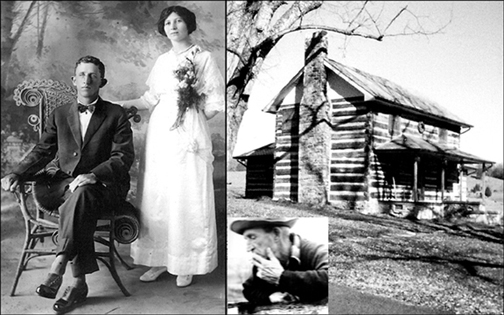
Paul Gill, a frequent responder to my history articles, has conducted a tremendous amount of research on several local families that include Weaver, Sherfey and Feathers. He put me in contact with Sandy Mills for a column about her grandfather, Arlie Anderson Weaver.

Sandy and her siblings, Jeanne and Marta, fondly remember Arlie as a gentle, soft-spoken man who never raised his voice. He was born in 1887 in Bristol, Tennessee and died in 1961. He married Ira Beatrice Crumley with whom he raised four children, three girls and a boy.

Soon after the death of Arlie’s father, Jacob Emanuel Weaver, in 1919, the couple acquired the old Frederick Weaver home where Arlie was born. The house, reportedly built around 1770 by the Beeler family, resided in the Weaver clan for 162 years until it was sold in 1982 shortly after the passing of Ira.

The stately old home still stands but has been renovated over the years. It was located on Weaver Pike across from Weaver School, Weaver Church and Rader Store, which was once owned by Arlie’s father. Sandy attended the school until the mid-8th grade.

Ms. Mills obviously possessed a passion for the old home place as evidenced by her detailed description of its exterior and interior features. It had a huge chimney and fireplace made of stone. The front steps were very wide and also constructed of stone. A swing hung on the front porch.

Sandy meticulously described the interior of the house with its beautiful fixtures and spacious rooms: “Inside was a large living room with a standing radio, a short-wave radio and a piano. The latter had a seat cover that slipped when I sat down on it. On a large wooden desk sat a very old typewriter with glass keys on it. A bedroom was located to the left, though I suspect it was once a parlor or perhaps a second living room. The telephone was in this room. My grandfather kept frequently used phone numbers written on the wallpaper beside the telephone. He had no need for a Rolodex.”

Sandy recalled that the dining room was back of the living room: “My grandmother served Sunday dinner there on pink depression glass dishes. In the corner was a curved glass cabinet, which held special pieces and a set of dishes that Glenn Weaver, my uncle, brought back from the Korean War. 

“Next was the kitchen with a cabinet, which had a flour mill inside one door. A built-in cupboard occupied the back corner and a table was in the middle. On it was always pear butter or similar food item in a covered dish. My grandfather ate there, at least when I was present. There was a closed-in back porch beyond the kitchen. This is where he always marked our height on the doorframe, labeling the name of the child and the date. Thus, he could show us how much we grew from visit to visit.”

The granddaughter said that access to the upstairs was achieved using a stairwell that was opened from the downstairs bedroom. Climbing the steps revealed three bedrooms. The one her grandfather slept in had a feather bed that was never made. He logically reasoned that it was foolish to make the bed and then mess it up again at bedtime. Each bed upstairs had a light hanging on the headboard and the closet areas were curtained. Sandy recalled that her grandfather’s Mason sword always hung on one bedroom wall.

Sandy concluded her note: “There was a cellar accessible from outside, which held canned foods that were ‘put up’ during the summer months to be enjoyed until the next season. My grandparents ran a dairy farm. The barn was down a little way from the house with a large spring in between. My cousin and I played in the barn frequently in the summer.”   

Paul Gill sent me a photo dated May 1904 of the Tip Top Restaurant that once operated in Johnson City. He believes it was near Fountain Square. Visibly noted are unpaved streets and wooden sidewalks. Paul said the man in the apron is his cousin and storeowner, George R. Brown. Standing beside him on the right is his wife. Their son, Melvin, and daughter, Phoebe, are in front of them. Several advertisements can be read: G.R. Brown, Tip Top Restaurant, Ice Cream, Lodging 25 Cents and Fresh Oysters. Paul said that when autos became plentiful, George opened a service station in town. He would like to know if anyone could provide additional facts to share. An old City Directory identifies George’s wife’s name as Sallie and their residence on Boone Street at W. Watauga Avenue.  

Read more

Old timers will fondly recall the popular 11-piece Marion Mercer Band that featured the bandleader’s equally talented sister Nelle on piano. Debuting in the 1930s, this musical ensemble was the only major one in these parts until its success later spawned other groups. Marion Mercer could play a variety of instruments: trombone, vibraphone, violin, accordion, piano, organ and chimes.

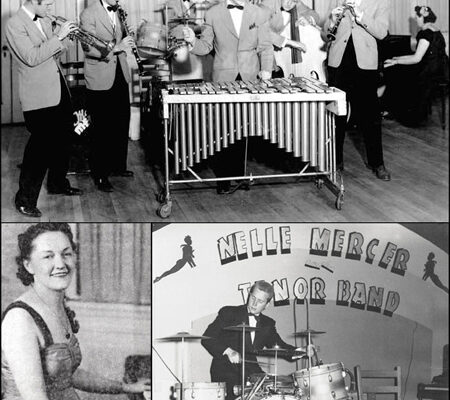
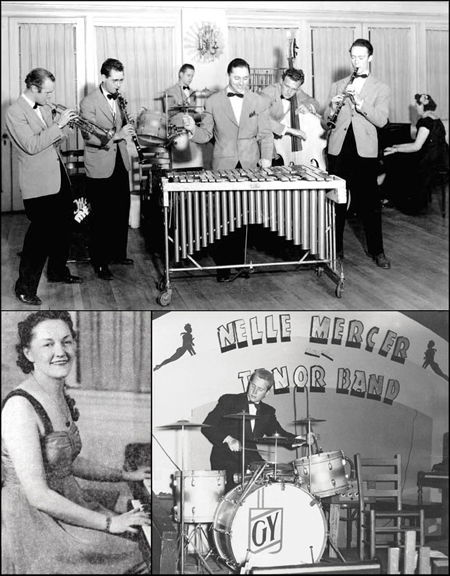
Top: Marion Mercer Band, Bottom: Nelle Mercer Band, Gene Young on Drums

In 1980, the late Press writer Dorothy Hamill interviewed Nelle. The bandleader showed the reporter a photo of her brother’s early band and identified band members. Duke Barron played saxophone and clarinet. Doc Welch, Tony Farris and Edwin Bowman played saxophone. Trumpeters included Dan Zoerb and Bill “Rocky” Stone. Park Johnson was on bass fiddle and Junior Campbell pounded the drums.

Because musicians had regular jobs then, they worked weekdays and performed on weekends. They were in heavy demand throughout East Tennessee and usually stayed booked most of the time. Aside from vocalist Frieda Ricker Rose, Nelle was the only female performer in the band. The gifted lady, who in private life was Mrs. Earl Dotson, could assume Marion’s bandleader responsibilities during his absence at a moment’s notice. Ms. Rose later became a receptionist for the Johnson City Press-Chronicle.

The three Mercer siblings, Marion, Nelle and Beulah, grew up in a musical family. When Nelle was about three years old, she stood on her tiptoes in order to reach the piano keys and plunk out tunes. At age 12, the youngster played piano for Unaka Avenue Baptist Church. Later, her mother would hold her on her lap and let her play.

When World War II broke out, Marion took a military hiatus and began serving his country as a member of the U.S. Army Special Services. Before departing, he turned over the reins of his band to Nelle. The new leader’s first order of business was to compose a theme song, “Study In Rhythm.” Doc Welsh served as arranger for every new piece that the group played. Nelle’s genre was primarily easy listening big band music – soft and sweet in the fullness and richness style of the Glenn Miller Band. Those were the days of the fox trot, Big Apple, waltz and jitterbug.

Jean Bowman Moore, who lived a block away on E. Myrtle Avenue, recalled going to Nelle’s residence at 515 E. Fairview when the bandleader and her band would practice their music on the porch and draw a sizable crowd of spectators on the steps, sidewalk and street below. Jean recalled that those were fun times.

During the war years, Nelle and her band purchased a bus and began traveling to distant gigs in Ohio, Michigan, Louisiana, Kentucky and West Virginia. About this same time, she saw the need for and hired a booking agent.

When the war ended, Nelle and Marion did not reunite, but instead led separate bands. By then, added competition came from others such as Vernon Weaver and Rocky Stone who formed their groups.

Patrons once asked Nelle to organize an all-girl band, but she could not locate enough qualified, available musicians to meet their request. The bandleader’s witty solution was to begin introducing her male band members with ladies names: Mabel (Doc Welsh), Agnes (Park Johnson) and Nanny (Marion Mercer, when he played with them). Not to miss out on the fun, Nelle acquired the name Butch.

Over time, other female vocalists performed with Nelle’s band, such as Lucille Young, Georgia Horne, Margaret Harrison, Ginger Dennis, Betsy Ross and Pat Archer.

In 1947, Nelle and Earl bought the Country Kitchen in 1947. It was located near the old structural steel bridge over the Watuaga River in the Austin Springs community.

In 1956, Marion moved to Crystal Springs, Florida where he remained active in the music entertainment business by forming a new band, which he called the Marion Mercer Trio. He was active there for many years playing at local venues.

The musician opened the first Radio Shack in that area and became the owner of Mercer Music Store in three nearby cities. Many people knew him through his music at the Port Paradise, Plantation Club, Yardarm, Holiday Inn, Citrus Hills and Seven Rivers Golf and Country Club. He passed away in March 2000. 

Nelle’s group later became known as the Nelle Mercer Tenor Band, consisting of tenor saxophones, trumpets and drums. Band personnel were Robert Moore, Tony Farris, Gene Proffitt, Charlie Showalter, Gene Young (drums), Rex S. Rowe, Daley Fine, Clay Slagle, Joe Morrell, Al Bryan, Mac Blackwell, Joe Henley (trumpet) and 13-year old singer Pat Holden.

The Country Kitchen was apparently a successful business enterprise for the Dotsons because they operated it for 21 years until they closed it in 1968. The building stood vacant for many years as a drive by tribute to its big-band heyday era before it became dilapidated and was finally razed.

Although Nelle quit playing professionally, she never abandoned the music she loved. At her home on Austin Springs Road, she owned two organs and a piano and played them with gusto. Since she and Beulah composed numerous songs during their lives – gospel, sentimental and ballads – they ushered in their senior years by getting together frequently and harmonizing their tunes.

Although the three Mercer performers have long passed from the scene, their popular music added rays of sunshine to people’s lives, making them smile at a time when the world’s war situation greatly saddened them. 

Read more

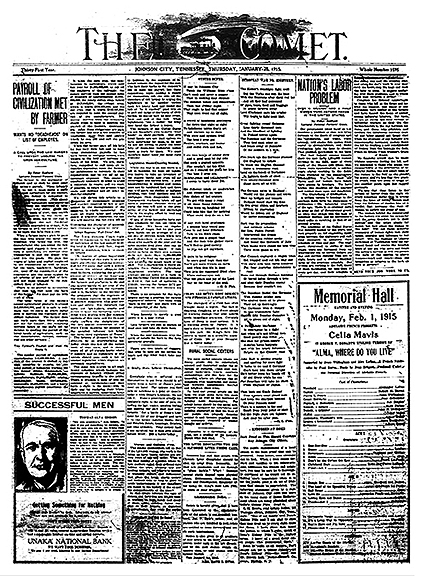
I love to read old newspapers because I never know what I might come across. Such was the case when I examined an article in an April 1931 Johnson City Staff-News titled “Major Lyle Is Chief Speaker for Kiwanis – Old Resident Describes Development of City from Days of Long Ago.”

Major Cy H. Lyle, former editor of the city’s first daily newspaper, The Comet, offered interesting tidbits to the club of the development of Johnson City from a diminutive village of less than 400 people to a thriving town of almost 30,000. The occasion was the Kiwanis Club’s regular luncheon meeting Wednesday noon at the John Sevier Hotel.

Fortunately for club members, he offered very specific information about the city’s growth from 1887 until 1931. However, regrettably for newspaper readers, the account provided a dearth of specific information about the history he was so fluently discussing.

The noted newspaperman supplied details of the city’s gradual growth from the days when the town consisted of the Hoss House, a single water tank (used for trains at Johnson’s Depot), a water ram (hydraulic pump that operates without electricity) and a few scattered houses. Lyle further related numerous anecdotes involving some of the early citizens. Again, the newspaper writer saw fit not to mention their names or what they said. Cy proceeded to describe the struggles of producing a daily paper.

Major Lyle depicted the various residences and business buildings that sprang up as Johnson City grew, relating specifically where each one had stood. The newspaper indicated that older members of the club enjoyed his address because they remembered the things he said. Younger members were also interested because they had heard about them from hearsay.

Lyle recalled the days when Bob Taylor, Augustus Herman Pettibone (member of the United States House of Representatives for the 1st congressional district of Tennessee) and others engaged in heated political battles.

 “I quote these facts from memory,” said Lyle, “but there is none here who can dispute them. I can remember Johnson City from 1878, when I went to work for the Jonesboro Times. I moved to Johnson City in 1881 and lived here much of the time since.”

After Lyle concluded his speech, Mayor W.B. Ellison, who was in charge of program entertainment, introduced some pupils from West Side School The young artists gave a varied program, including a piano and xylophone number, the chorus from a song titled “The Levve,” a reading called “Moonlight on the Colorado” and a song by a quartet of harmonica players.

F. Stewart Crosley, newly elected governor of the Kentucky-Tennessee district, was introduced by president and businessman F.B. Hannah and, in a brief response to a standing tribute by the club, expressed his intention of carrying out the agenda launched by the late Dr. E.B. Bowery, whom he succeed in office.

Afterward, the president handled several items of business. One was an invitation from the Miami Kiwanis Club for the Johnson City members to attend the international meeting in that city sometime in May. District trustees Charles Edwards of Kingsport, L.M. Allred of Erwin and Walter Hunter of Kingsport were present to name a successor to the post of lieutenant governor. It was announced that W.T. Watkins won the award for having the greenest necktie at the previous gathering.

The meeting concluded on a humorous note. Ralph Carr was introduced as the club’s “Baby Kiwanian.” 

Read more

In 1954-55, Miss Sophia Boring was my sixth grade teacher at Henry Johnson School on W. Market Street across from Kiwanis Park. This pretty lady had taught there since 1936, after previously being employed at Columbus Powell School.

Our room was on the second floor in the southwest corner of the school overlooking the playground, Miller and Keezel Garage and the Pepsi Cola Plant. One of the first lessons our teacher taught us was to never call her by her first name. One student deviously tested her sincerity and reaped the consequences.

Subjects that year included reading, writing, spelling, English, geography, history, arithmetic, health, physical education, art, music and duty. Miss Gordon Grubbs, the other sixth grade teacher, taught us geography. John Manning, the city’s elementary school physical education director, visited the school on Fridays to work with the boys.

Sophia (oops, Miss Boring) possessed a special talent for reading stories to her students. She was anything but boring. She read and even performed portions of Homer's “Iliad” and “Odyssey” for the class. She was not opposed to standing on her desk for added dramatization. I can still picture in my mind the massive Trojan horse that she word painted for us. She received her training from Science Hill High School’s Dramatic Club in 1927. She also wrote a school play each year, but that is another story.

Weekly Readers were distributed to students at no charge. They were popular juvenile newspapers that contained stories as well as national news, written in a style fitting for six graders. Once a month, a “Classic's Illustrated” comic books was also handed out to students who could afford the 15 cent charge. 

In those days, we did not have ballpoint pens. Instead, we used fountain pens that had to be filled with ink. Miss Boring had a cabinet along the back of the room with one shelf dedicated for students’ inkbottles. We identified our bottle by scratching our last name on the cap. To fill a pen, you placed the tip of it into the ink and simultaneously pulled a small lever on the side. This created a vacuum, causing ink to flow into the chamber. We filled our pens each morning before class, which usually lasted us all day.

Our classroom had slate blackboards along the north and east sides. Within a few years, green boards began replacing black ones, but the newer ones did not seem natural to us. We still referred to them as blackboards.

Assigned daily duties, which were graded, included carrying out trash, dusting erasers, sweeping the floor and washing blackboards. A fundamental rule was to erase the boards thoroughly before washing them to prevent streaking. We took the erasers to a designated outside door on the west side of the school for cleaning, which consisted of beating two of them together. We were strictly forbidden to strike an eraser against the steps or side of the building. About half way into the year, the school purchased an electric eraser, which was actually a small vacuum cleaner. It was kept in the back of the cafeteria for all classes to use. It was especially loud. 

After I graduated from the sixth grade, I did not see Miss Boring again until 1967 when I learned that she lived on Highland Avenue. I just had to see her. I shared several memories with her from that era, but sadly she was unable to recall any of them. When I bragged on her wonderful teaching skills and story telling ability, she seemed pleased. I concluded the visit and departed happy that I had seen my former teacher. She passed away shortly thereafter. She stands tall as one of my better schoolteachers.

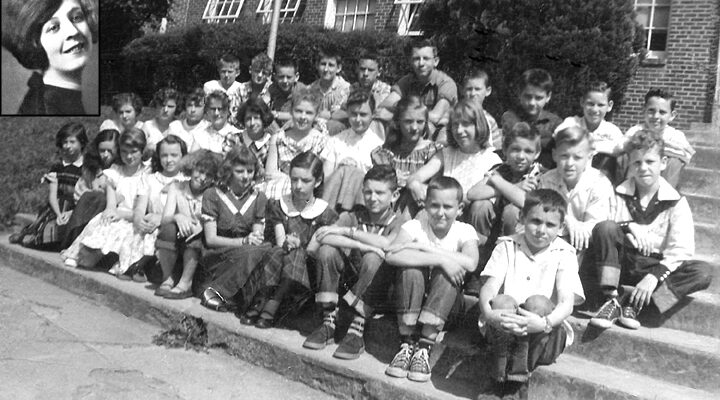
Miss Boring (upper left inset) probably took the column photo showing her 32 students posing on the upper set of front steps of the school. The photo was her 1927 Sciience Hill High School graduation picture.

Classmates that I can identify are (left to right):

Front: 1. Carolyn Patrick, 2. Joan Curtis, 3. Tonda Nave, 4. Jean Senter, 5. ?, 6. Janice Blevins, 7. Dorothy Greene, 8. Robert Cox, 9. Charles Willingham, 10. Frankie Lewis.

Middle: 11. ?, 12. Brenda Lady, 13. ?, 14. ?, 15. Janie Buchanan, 16. ?, 17. Nanci Biddix, 18. ?, 19. ?, 20. Allen Davis, 21. Jimmy Laughren, 22. Bill Durham.

Back: 23. Johnny McKenzie, 24. Ralph Miller, 25. Wyndham Frye, 26. Edward Johnson, 27. Harold Tyree, 28. Leonard Smith, 29. Stanley Bishop, 30. Kyle Bulla, 31. Larry Hodges and 32. Eddie McKinney.

If anyone can supply the missing names, drop me a note for inclusion on the History/Heritage page.  

Read more

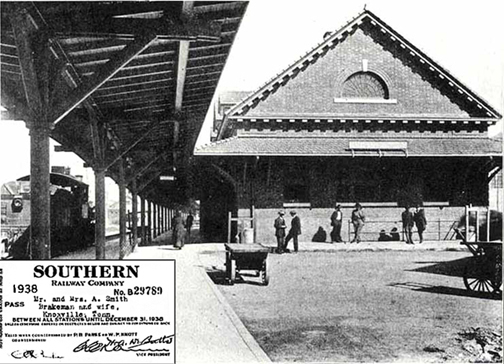
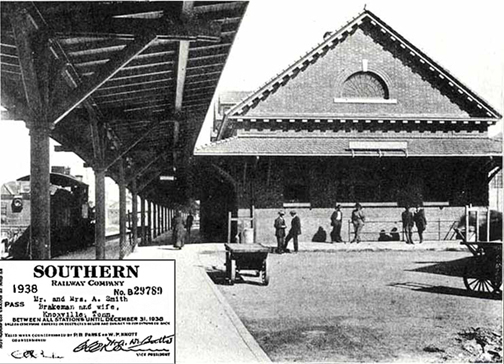
In its heyday, Johnson City’s Southern Railway Depot was a scene of constant activity as travelers embarked and disembarked passenger trains.

Today’s column deals with a young lady, whom I will identify as Jane Doe. It is early summer of 1938 and she is anxiously waiting for the big locomotive to arrive to take her on an extended journey away from the city. Since she has never been on an overnight train trip before, she is understandably apprehensive.

It is imperative that she follows a few common sense rules of train etiquette while on board. First, she needs to dress fittingly for the long ride. Summer wear calls for her to adorn a silk or non-crushable linen suit and a lightweight woolen coat. Her hat should be small yet comfortably stay on her head. She needs to wear sturdy comfortable leather shoes. Her luggage should be sturdy enough so as not to come apart at some point during the lengthy jostling ride.

If at any time she needs a question answered, either at the station or on the train, she should consult a railroad employee not a fellow passenger, lest she be offered erroneous advice. Most trains have signs posted advising people not to play cards with strangers. That is not to say she should not participate in a friendly game of bridge or similar pastime, providing no wagers are involved.

When Jane enters the dining car, the steward will escort her to a table and offer her a menu card. Afterward, a waiter will take her order and deliver her food. After she finishes the meal, he will bring her check on a tray. She should place her money on it and wait until he returns with her change. If her bill is under a dollar, the appropriate tip is ten cents. If the meal totals more than a dollar, the suggested amount is 10 to 15 percent of the bill.

Pullman cars can present a formidable and awkward challenge to travelers. Jane can choose a lower berth or an upper one. Since she is young, she picks a higher one, which is slightly cheaper and often more comfortable, although more difficult to get in and out of. A small, agile person can fully dress in his or her berth, but others may find it difficult. Miss Doe should bring along a dark robe or appropriate gown to wear when going from her berth to the nearby dressing room. She needs a small bag containing brushes, combs, cosmetics and other toiletry items for use in the washroom.

Some folks prefer to dress entirely in the dressing room, which requires getting up early ahead of the morning rush. Passengers who chose lower berths are entitled to sit in the seat that faces forward. If the young traveler wants to retire early, she can request the porter to have her berth made ready. The lower occupant must move to an unoccupied nearby seat or go in the club car until this task is completed. When ready to turn in, she again notifies the porter to bring a ladder. In the morning, she uses a bell to signal the porter that she needs the steps again.

Another courteous suggestion is to ask for additional blankets before retiring. Train blankets are heavy but often provide little warmth. Ringing for a porter in the middle of the night is inconsiderate because it awakens other passengers plus the porter may not be available or on break. If Miss Doe wants her shoes shined, she places them on the floor under the lower berth. Payment for the shine can be included with the tip upon leaving the train.

Before Miss Doe reaches her final destination, her porter will brush her clothing, wipe off her shoes and carry her bags for her. This is the appropriate time to tip him. The amount should be 25 to 50 cents for each special service rendered such as a shoeshine or providing a card table. Bon voyage, young lady, we hope to see you back in Johnson City soon. 

Read more

Tommy Church, a Johnson City resident, recalled when Homer Harris, a local cowboy star, performed at his school:

“From 1971 until 1975, I attended kindergarten through the second grade at King Springs School. I remember when he and his trick horse, Stardust, came to our school and put on a program. I later attended Happy Valley Elementary School and he also visited there but with a horse that he called Stardust, Jr. Do you know anything about this man?”

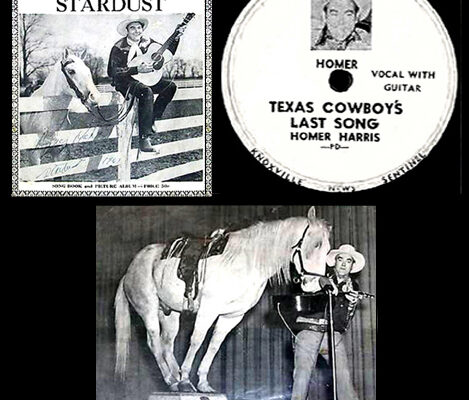
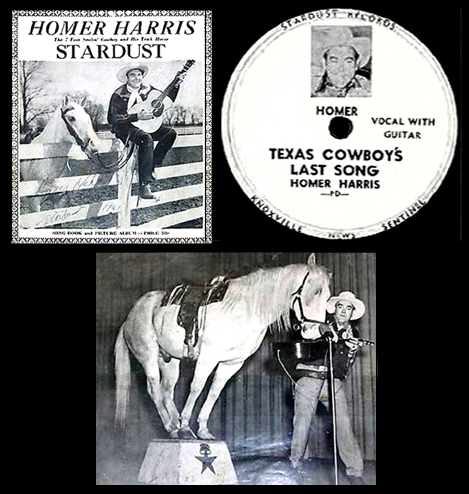
Many East Tennessee residents who lived in the area from mid-1940 through the 1970s will likely recall Homer Harris and Stardust. He became known as the “Seven-Foot Smiling Cowboy,” but admitted that the figure also included his hat and boots. He became an instant hit with the area’s youthful “buckaroos and buckarettes.”

Harris was born on May 18, 1909 in Hartford, Tennessee in Cocke County. He acquired his first guitar while still a young boy and learned to sing by listening to old breakable 78-rpm phonograph records by country and western legends such as Mother Maybelle Carter.

In 1937, Homer acquired a job singing and playing his Martin guitar over WBIX in Muskogee, Oklahoma. While there, he won first prize in a radio contest singing, “Little Brown Jug.” A year later, the emerging songster moved to California where he displayed his talent in numerous venues. He was even hired to entertain Shirley Temple at her sixth birthday in Palm Springs.

Harris accepted a job at Monogram Studios in Hollywood doing supporting roles for western movies, but his employment was short-lived; he received his draft notice. While serving in the Army from 1942 to 1945, he participated in numerous GI shows. In 1943, the crooner made a guest shot singing “Little Brown Jug” in the British documentary film, “Welcome To Britain,” starring Bob Hope and Burgess Meredith. In April 1947, he recorded the song for Nation Record Company in New York, but apparently it was never released.

After his discharge from service, Harris used his separation pay to buy a Palomino horse that reportedly was named Prima. It would be the first of several steeds that he would own during his colorful career. He conceived the idea of writing a song that he titled, “I'm Riding My Horse on the Radio.” It became such a hit with youngsters that Homer decided to include his horse in his performances.

Soon after the war, Homer relocated to East Tennessee where he joined Knoxville’s “Mid-Day Merry-Go-Round” over WNOX. The program was comprised of Lowell Blanchard (program director, emcee); Archie “Grandpappy” Campbell (comedian, tenor, Hee Haw fame), Bill and Cliff Carlistle, Burke Barber, Molly O’Day and Homer Harris. In 1949, Homer began appearing on Cas Walker’s radio show over WROL and later WIVK. The savvy entrepreneur and philanthropist learned the financial benefits derived from using radio and later television to sponsor singers and musicians of old-time music to promote his chain of rustic supermarkets.

A photo from 1949 shows Harris sitting on his horse Dolly beside Cas inside one of his country stores. About this time, Homer purchased a 3-year-old trick horse named Stardust from Walker that added a new dimension to his act. The educated horse eventually learned to count by striking his foot on the ground and to strum Homer’s guitar using his nose. The popular cowboy began appearing on radio with three shows a day over Knoxville’s WROL (later renamed WATE). Soon after, a noon hour show was added for WIVK.

On July 16, 1950, Homer and Stardust participated in a remote broadcast sponsored by WIVK. Two 90-minute shows were presented at the Atomic Caverns (now Cherokee Caverns) located on the Oak Ridge Highway. The first show was aired from inside the caverns. At the conclusion, Stardust amazingly climbed 69 steps from 200 feet inside the caverns to the Crystal Ballroom at ground level. The second program followed outside at the caverns’ entrance. Admission for each was 75 cents for adults and 35 cents for children. Other entertainers included Hargis Kelly (trick fiddle), Simon Kelly (guitar), Pee Wee Whaley (mandolin), Puddin’ Head Joe (comedian) and the Kelly Brothers Quartet.

Subsequently, Homer and Stardust joined Bonnie Lou and Buster on WCYB radio. When WJHL television came on the air in 1953, the four of them moved to the new station where they performed with Lloyd Bell for a three-days-a-week program. Other musicians who performed with the group were Guy “Pepe” Pealer (steel guitar), Chuck Henderson (aka the Carolina Indian, guitar, banjo) and Bennie Sims (fiddler). Later, it became a daily morning show.

Homer eventually left WJHL and began touring the south with his guitar and famed trick horse. However in due time, he migrated back to Knoxville and joined Cas Walker again, this time appearing on the grocer’s music shows over WATE and WBIR television.

During the 1960s, the cowboy and his horse were busy appearing at area grammar schools and theatres. A July 3, 1969 theatre flyer promotes a 1965 movie and a western stage show with several music stars: “Showing on Screen- 'Buffalo Bill' – Ridin', Shootin', Singing TV Stars Coming In Person – Homer Harris, 7-Foot Cowboy; Carl Story, RCA Recording Star; Trick Horse, Stardust, A Real Live Oklahoma Educated Horse; Recording Stars: The Saddle Pals, Lloyd Bell and Bobby Thompson; and Ray Myers, The Armless Musician Who Leads a Normal Life.” The ad contained a photo of Homer and Stardust doing the “camel stretch.”

When Stardust passed away in 1973 at age 29, Homer had three-year-old Stardust, Jr. trained and ready to fill his hoofs. By 1978, Homer was forced to retire due to health reasons. Even then, the aging cowpoke occasionally performed at John Rice Irwin’s Museum of Appalachia near Norris, Tennessee and at local senior citizen centers and charity shows.

The end of the winding dusty trail for the towering “Seven-Foot Smiling Cowboy” came on September 7, 1998, concluding an entertainment career that is still fondly recalled by Tommy Church and many other area residents.  

Read more

In 1943, there arose a need for increased production of quality gloves brought about by the war effort and increasing civilian demands.

Tom Lee, in his excellent book, The Tennessee-Virginia Tri-Cities (U.T. Press, 2005) noted that during World War II  “while wartime demand increased manufacturing activity across the Tri-Cities area, the distribution of major new employers during the war reflected a growing disparity among the urban centers that made up the Tri-Cities. Elizabethton continued to rely on the rayon industry. Johnson City recruited only one new firm, the Artcraft Glove Company of Tennessee.”

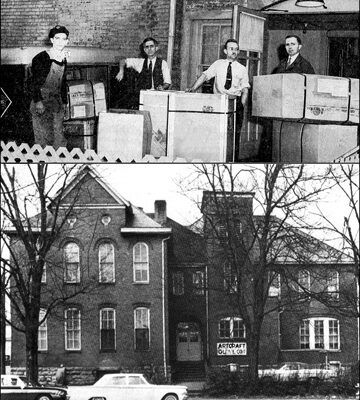
The big news came from Mr. Patrick Crocetta, president of the Artcraft Glove Company of New York with several factories in operation there. He announced that his company was expanding operations to Johnson City. The plant became a reality for our city after five years of negotiations between Artcraft officials and the local Chamber of Commerce headed by Norris Langford, manager of the J.C. Penney store.

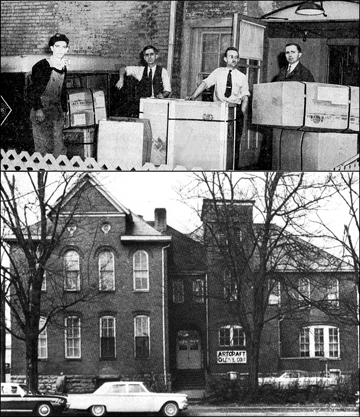
Artcraft chose to remodel an existing building, the vacant Columbus Powell School at 901 S. Roan, for its facility rather than construct a new one. Remodeling efforts went into high gear on September 15 that year with ambitious plans to have it operational by early November. Machinery units soon arrived at the new business. Training of production line workers was assigned to Mr. William Warren “Doc” Simmons of the Johnson City Vocational School. The United States Employment Service hired personnel from the area’s local labor pool, excluding foremen positions.

According to estimates, between 165 and 290 people worked in the factory with 80% of them being women since a goodly number of men were serving their country. My cousin, Mrs. Jean Bowman Moore, who lived on Myrtle Avenue at the time was one of them.

The plant started up as planned and capacity soon rose to between 3,000 and 4,000 pairs of gloves a day. Nearly all of them went into the various branches of the military – a wool-lined leather glove for the Navy, a wool glove with a leather palm for the Army and Marines and a leather mitten, as seen in “Memphis Belle,” for the Air Force. The latter was a 1943 documentary film directed by William Wyler that told about the 25th and last mission of an American B-17 bomber, which was based in England during World War II.

Surprisingly, Artcraft made no work gloves, choosing instead to produce multi-purpose ones for both military and civilian needs using a wide variety of material available for glove construction. Retail cost for the gloves ranged from $2 to $3.

One stipulation of the effort was that the plant would be utilized for government contracts if available. Mr. Crocetta emphasized that the plant was not considered to be temporary with full expectations that production would continue long after the war. Indeed, it did.

The glove factory operated two shifts a day, six days a week. Paul Sechrest was chosen plant manager. His daughter, Mrs. Charles E. Allen, remembers that every day from 6 p.m. to midnight, she was with her father, mother and sister laboriously packing the day’s production output into boxes for shipment to military units around the world.

According to historian Ray Stahl, the plant was one of the first new industries to come to Johnson City after the Depression of the 1930s. It stayed around for 30 years, ceasing operations in 1973.  It served our country well. 

Read more