(Note: The subject of this article is controversal and will likely be rewritten to address some response that came in after it appeared in the Johnson City Press. Some people maintain that it is accurate as written, while others believe it was Robert Young who owned Sweetlips and brought down the British leader Patrick Ferguson at the Revolutionary War Battle of King's Mountain. Check back later for updates and comments. If you have information on this subject and would like to post a blog at the end of the article, e-mail me at boblcox@bcyesteyear.com.)  

The bold headline from an unidentified and undated newspaper article reads, “Famous Old Gun Found, Used at Kings Mountain.” The date is likely from the early 1900s.

In early October 1780, a spirited congregation of patriots, known as the Overmountain Men, originating from Sycamore Shoals in Elizabethton, Tennessee joined forces with similar groups of frontiersmen from nearby Tennessee and North Carolina. Their mission was to travel to Kings Mountain, SC (near the North Carolina border) to do battle with the British under the leadership of their commander, Major Patrick Ferguson.
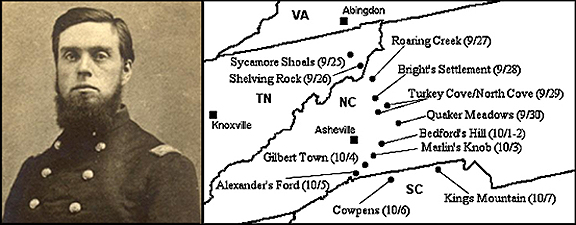
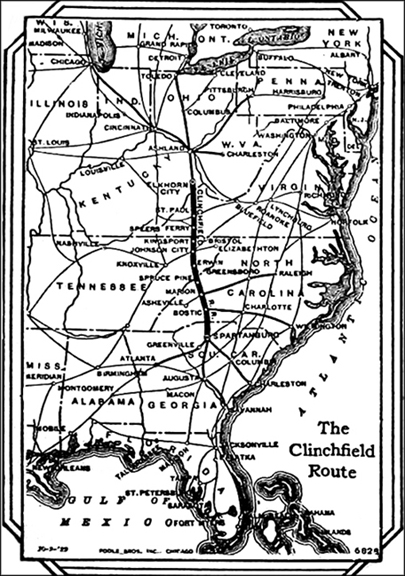
General Wilder and a Map Showing the Overmountain Men's Route

Although three or four bold mountaineers were called upon on October 7 to bring down the British officer who was observed coming down the hill, Darling Jones was credited with firing the fatal shot that ended the leader’s life. He accomplished the feat using a long, flintlock rifle that he christened “Sweetlips.”

The article made a profound statement: “When “Sweetlip’s metallic lips so spoke on that day of patriotic struggle, its voice was heard throughout the entire British armies and turned the tide of the revolution.”

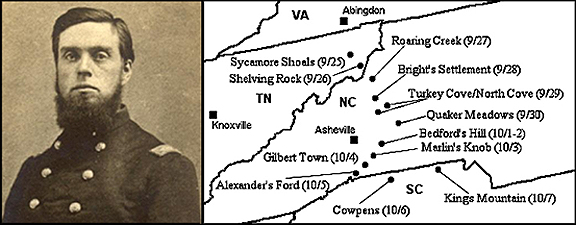
Over time, interested parties began to wonder what happened to the now famed rifle, but its whereabouts were unknown. Eugene F. Ware, Commissioner of Pensions in the nation’s capital, turned to someone whom he believed could locate it. He contacted John T. Wilder (1830-1917), a noted industrialist, who served as a Civil War Union officer and became a chief developer of natural resources in Tennessee.

Wilder further promoted the construction of the Charleston, Cincinnati & Chicago (3Cs) Railroad and became a driving force in the development of the booming industrial suburb of Carnegie along the east side of Johnson City. The magnate next constructed the popular 166-room Cloudland Hotel near the summit of Roan Mountain to serve tourists via the scenic narrow gauge “Tweetsie” railway line. In 1887, the tycoon organized the Roan Iron Works and built and operated two blast furnaces at Rockwood, Tennessee.

Gen. Wilder believed that the gun likely resided in Washington County since Darling Jones was from that location. Some years prior, he tried to learn its whereabouts from Jones’s widow, Nancy, but neither she nor her son knew had knowledge of it. She died in 1902.

Wilder, in an effort to locate the well-authenticated gun for Mr. Ware, journeyed to Johnson City about 1905, visiting a city that he was very familiar with because he previously resided there from 1884 until 1992.

Wilder entered the establishment of Summers, Barton and Parrott’s hardware store in the downtown district. Seeing some firearms for sale prompted him to ask if anyone knew the whereabouts of Darling Jones’ gun. Frank Mountcastle, a prominent farmer and merchant who lived near Johnson City was in the store and heard Wilder. He spoke up and said that he owned the prized gun and began to relate its history. Wilder, excited over the news, offered him the best gun in the store in exchange for the old relic. Mr. Mountcastle accepted his proposal and agreed to ship the gun directly to the commissioner’s home in Washington.

The gun was described as being an old, long-barreled, flintlock rifle used by the pioneers for killing game. The stock was broken but the lock and barrel were in good condition. The firearm was fabricated by a man named Deckard of Pennsylvania and was given by Darling Jones to his son-in-law, James Dunkin. The name “Dunkin” was cut in the barrel and helped to establish its identity.

Dunkin was foreman on the farm of Mr. Montcastle’s grandfather for years and died in that capacity, leaving the gun as a relic to the Mountcastle family. It remained in the attic of the old home place for many years. Only Mr. Frank Mountcastle knew its presence.

Does anyone know where “Sweetlips” resides today? 
Read more

In the late 1940s, Mom and I shopped for my clothing needs at Parks-Belk under the able guidance of Morris Thompson. As I grew older I started patronizing Kings Department Store where funnyman Ed Bateman helped guide me through selections (while continually reminding me that I needed to get married).

(Note: The three photos of Hannah's would not load. Check back later for them.)

On occasion, I shopped at Hannah’s at 213 E. Main. I was always impressed with the vast selection of (slightly higher priced) clothing they offered, the neatness of the place and their always-helpful attendants.

Hannah’s defined the scope of its business by its logo: “Hannah’s Incorporated – Dependable Wear for Men and Boys.” Another slogan was “Hannah’s is not merely a word but is that personal, individual interest in each customer that means guaranteed satisfaction on every purchase.

George S. Hannah established the George S. Hannah Co. in 1912.  Prior to that, he was a traveling salesman residing at 117 E. Watauga. His management team included Ferrell B. Hannah and H.A. Smith. He and his wife, Margaret, later lived in the beautiful Westover Manor (subject of a previous column) on Walnut Street Extension. In 1924, George withdrew from the business causing the formation of a corporation, Hannah’s, Inc. The incorporators were Harry A. Smith, Ferrell R. Hannah and Kyle Slaughter.

The George S. Hannah Co. covered a complete line for men, women and children’s wearing apparel. However, Hannah’s Inc. narrowed its business focus to only men and boys. It featured such nationally known product lines as “Kuppenheimer and Griffon Clothiers, Nettleton and Nunn-Buss Shoes, Dobbs and Style Park Hats, Interwoven Hosiery, Manhattan and Arrow Shirts, Manhattan and Vasser Underwear and Pajamas, Resilio and Beau Brummel Neckwear, Knit-Tex Top Coats, Lilly Baggage and Bradley Sweaters.” 

It its ads, Hannah’s Inc. singled out several brands to promote why they stocked them at their establishment:

Griffon Clothers (“Established in 1862, L. Grief & Brothers, Inc.”), Endicott Johnson Shoes (“For men and boys at popular prices in Hannah’s Annex. We carry a full line of these well known shoes and recommend them for service and satisfaction to the thriftiest buyer.”), Dutchess Trousers, (10 cents a button, $1.00 a rip. Free from loose buttons, seams and belt loops that rip, inaccurate size markings and other common annoyances.), Tom Sawyer Shirts. For real boys at Hannah’s, no boy’s shirt is more favorably known in Johnson City mothers than Tom Sawyer.), …

Nunn Bush & Weldon Shoe Co. (men’s fine footwear of nationally known merit.), The Middishade Co. (fireproof, Middlishad blue serge suits.), Manhattan Shirts (“The Best Known-Known as the Best.”), Duckhead (overalls made for men and boys. An overall should give you these three things: perfect fit, good appearance and long wear.), Stylepark Hats (something entirely news in the field of modern prices. $5.00 at Hannah’s.) Amdur Clothing Co., Inc. (AAA guaranteed sun proof, Service Surge hand tailored.), …

The Excelsior Shoe Company (We feature the Grant Flexated and Excelsior fine shoe for men.), Morris Asinof & Sons, Inc. (Boy’s Students’ and Young men’s Clothing of Merit.) and Resilio Cravats (“In motor cars, it is Speed. In tobacco, it is taste. In cravats, it is resilience that counts. Why? Because a tie is discarded when it lost its freshness, its smart lines. A Resilio cravat always had that “just out of the box” newness. A patented hand-tailored construction is the secret. Look for the loose stand of silk thread in the lining. 

To those of us who grew up in Johnson City, today’s column takes us on yet another pleasurable remembrance journey to the often crowded and festive downtown area that we loved so much and visited often.  

Read more

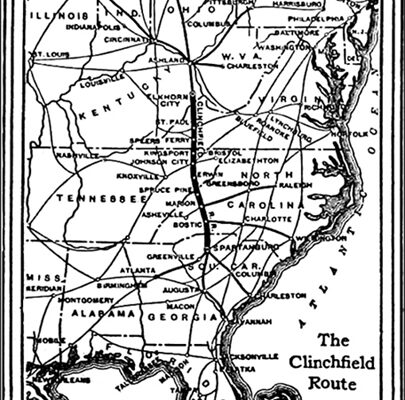
On October 29, 1909, the Carolina, Clinchfield & Ohio (CC&O) Railway completed track from Dante, Virginia to Spartanburg, SC. Festive celebrations were observed in both Johnson City and Spartanburg that year. I wrote a column about it in September 2011.

The Johnson City one took place at Hotel Carnegie on E. Fairview with the presidents of Johnson City's three railroads attending. Congressman Walter P. Brownlow served as master of ceremonies with speeches, toasts, a banquet meal and the smoking of fine cigars by the men. 

In Spartanburg, thousands of people attended the event with over 1,500 persons treated to a barbecue celebrating the first train to arrive in the city on the CC&O Railway.

A July 20, 1910 advertisement in the Spartanburg Herald urged folks to make reservations early for a second train excursion to Johnson City, with several additional stops. The date chosen for the trip was July 26-28. The round trip cost, which included nine meals in the diners and berths on the Pullman tourist cars, was only $17 for adults and $10 for children. The ad further urged interested parties to make early reservations.

On the day of departure, a large crowd of Spartanburg residents was on hand to see the train depart. It left Spartanburg at 8:30 a.m. pulling 12 Pullman coaches and four dining cars. Provisions were made to carry nearly 400 people with each car having a double berth. The vehicle carried streamers with the words, “Spartanburg Chamber of Commerce,” printed on them and featured the most modern equipment and fixtures available.

For convenience, the Pullmans were placed in the Spartanburg yards on the evening of the 25thfor early boarding of passengers. Breakfast was conveniently served in the dining cars on the morning of the 26th. The railroad’s assistant to the general manager, the traveling passenger agent and the division passenger agent went on the trip with the paid riders.

A great deal of interest was manifested in the Chamber of Commerce excursion over the CC&O and all cities and towns in the State with organized commercial bodies expressed a strong desire to participate in the great trip over the new road. This included such cities as Columbia, Greenville, Laurens, Newberry, Charleston, Anderson and other places. Columbia made reservations for 100 persons and other cities had sizable delegations.

The much-anticipated journey was finally underway. The first stop was Ridge, NC and a view taken of Mt. Mitchell, Table Rock, Hawk's Bill and other well-known peaks in the vicinity.

A stopover of one hour was made at picturesque Unaka Springs near Erwin in Unicoi County, Tennessee. The evening of the 26th was pleasantly spent at Johnson City where the party was escorted to Soldiers' Home for a band concert and a “moving picture show” on the military premises.

The train left Johnson City at 1:11 a.m. on the 27th, heading for Spears' Ferry. From there, it made a side trip to Natural Tunnel, Virginia, after which it returned to Spears' Ferry for the night. The train then continued to Dante, Virginia, where ample time was allowed to view the mines. The party remained at Dante until midnight to allow the passengers to enjoy dancing and other entertainment.

Just after midnight, the train returned to Johnson City. At 10 a.m. the following morning, it departed and made a second stop at Unaka Springs. At Alt Pass, North Carolina, the train paused for three hours, allowing passengers to engage in mountain climbing. The railroad concluded its mission in Spartanburg at 7:30 on the evening of July 28.

The scenic trip became so popular that it became an annual event for several years. I previously wrote about a special outing for 631 school children that occurred in 1915. Wouldn’t it be great to go back in time and take that trip? 

Read more

Johnson City was once recognized as one of the outstanding burley tobacco centers of the Appalachian region. It contained approximately 40 million pounds of the product stored in seven spacious tobacco warehouses with combined floor space of 450 thousand square feet. Sadly, all seven structures have vanished into yesteryear. I recall two of them went up in smoke, while others were razed.

In 1887, at the request of many tobacco planters, J.H. Winston, a Bristol businessman, submitted an article in the local newspaper that addressed the subject of the proper handling of tobacco for market in order to secure a good price for it. I found his comments very interesting.

“Supposing that your tobacco is cured,” he said, “let it hang in the barn until after a hard freeze. It may then he taken down and put into bulk. It should be bulked with the tails lapped, the stalk end out. Then cover it with straw, sides and top, so as to preserve the order and prevent it from drying.”

Winston said it could at that point be stripped at leisure regardless of weather conditions. If stripped before a freeze, it should either be marketed immediately or replaced on the sticks and hung up until it is subjected to a spell of cold weather. It is always a safe practice to hang tobacco as fast as it is stripped in a closed house and then hung there as long as may be necessary. Many planters favor this plan.

The businessman further advised during the stripping phase to let one person do all the sorting. The sorter had to be a good judge of tobacco, both as to quality and color. Leaves of the same color, size, and quality were to be placed together. However, all racked and worm-eaten loaves were to go with the lugs. The hands of leaf tobacco should contain from six to eight leaves. Lug bundles may be a little larger. All must be neatly tied up.

“The small leaves that grow at the end of the rows and especially next to the woods make the best bands,” he said. “In every hand, let all the leaves be about the same length. Wrap to about one and a half inches from the head, but don't cover the top of the head with the band. The ends of the stems must always be visible.”

J.H. further advised that when marketing tobacco, it would sell better loose than if tightly pressed together. Therefore when possible, it was best to haul tobacco to market neatly packed in a wagon bed. If this was not feasible, he further advised to force it in large packages but not so hard as to bruise the leaves and cause them to stick together. Fine yellow tobacco should be put in large metal drums and handled as delicately as a silk dress. Every bundle was to be spread out smooth and straight, being subjected to no more pressure than the weight of one’s hand.

The tobacco man advised that when stripping tobacco to grade it accordingly: lugs, short leaf and long leaf. It was again subdivided into dark, bright, red, mahogany and yellow, with the different shades of each color. He noted that all of these grades and colors were not usually found in the same crop. As to its uses, tobacco was divided into manufacturing, shipping and non-descript. 

Tobacco that was not distinctively manufacturing and shipping, was deemed non-descript, being a less desirable sort and always sold at lower prices in comparison with other grades. Unfortunately for our region of the country, a large portion of the tobacco raised was of the nondescript character. The owners of such tobacco crops were always disappointed in the price they received.

Winston concluded by saying, “Tobacco carefully handled will always sell for more than the same tobacco roughly handled. It is hard to say whether the early or the late market will be best. Last season, the early market was the best. However, we are inclined to believe that there will not be much change in prices for some time.”

The businessman was cautious in formulating an opinion as to the quality of the crop of 1877. He invited inquiries from tobacco growers. 

Read more

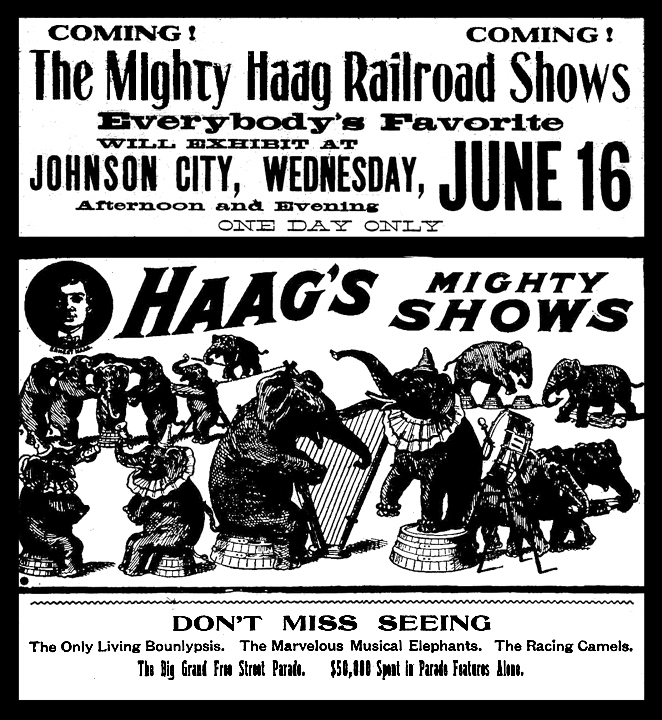
A circus visited Johnson City on Wednesday, June 16, 1909 carrying the name, The Mighty Haag Railroad Shows. It came by rail for a two-show, one-day only event. Ernest Haag formed his entertainment business in 1895 as the Mighty Haag Shows, then renamed it The Mighty Haag Railroad Shows from 1909 until 1915 when it became The Mighty Haag Circus. It wintered first in Shreveport, Louisiana and later in Marianna, Florida.

Until the depression days, Haag’s shows was said to be as popular in the smaller towns of America as Lydia Pinkham's medicine. The owner offered clean family entertainment – no dancing girls, no gambling and no practical jokes. Haag was a modest man with a unique vocabulary that was not listed in any dictionary. He never laughed at his jokes.

In the spring of 1909, Ernest Haag put his show on rails using the very best railroad equipment that could be obtained. He purchased elaborate hand carved tableau wagons, cages and chariots with the traditional sunburst wheels and massive elegant bandwagons. These were all in place when the railroad show pulled out of Shreveport in the early spring of 1909 for the long summer tour.

Mr. Haag’s frequently offered the youngsters attending the afternoon performance a free ride on the ponies at the conclusion of the performance, emphasizing that careful attendants always supervised the rides.

The show featured the only orchestrainia in the country. This unidentified device was originally brought to this country by the German Government to feature in the German exhibit at the Jamestown Exposition, but it arrived too late for opening of the event and was never used. Mr. Haag made several attempts to acquire it, but the owner would not sell it. However, he was fortunate enough to lease it for one season, after which it returned to Wittenberg, Germany. 

The Mighty Haag Railroad Shows had the only elephant in existence that was capable of performing a complete somersault without the aid of man or machine. The elephant doing this unique trick was named “Major” and the only thing the trainer needed to do was say to the animal, “Major over.”

The shows were reported to have the most unique trained animal acts ever produced, composed of bears, ponies and blue-faced monkeys. The latter displayed remarkable acts of intelligence.

The Haag shows once possessed the youngest living baby camel in captivity, having been born in the winter quarters at Shreveport prior to the shows departing there for a new season. The youngster was described as being the finest specimen of Siberian camel that could be found in America.

To substantiate the idea that whatever is novel, thrilling, bewildering, educating and interesting was important to his circus, Mr. Haag secured at enormous expense the celebrated king of the air, Mons, Di’Fauhlam and his world famous aeroplane “Meteor.” The entertainer had all of France at his feet since his successful flights with the “Meteor.” He became the only undisputed equal of the celebrated Wright Brothers. The Frenchman performed his act at The Mighty Haag Shows.

Mr. Haag’s show did not participant in the entertainment show trust. Several inducements were made to encourage Mr. Haag to join it, but he vehemently refused all offers and continued to offer the public the same high-class shows that he had in the past. He became so successful that he enlarged the operation of every department in the show and even switched to his own special trains of cars. He further increased his street pageantry from one to two miles with abundant music, pretty ladies, fine horses, funny clowns and massive open cages of animals. All of this was done at no cost to spectators who showed up on the streets.

The Haag circus closed its doors in 1938 after an impressive 43-year run, this was three years after the death of Mr. Haag, the man who made it all happen.


boblcox@bcyesteryear.com

www.bcyesteryear.com 

Read more

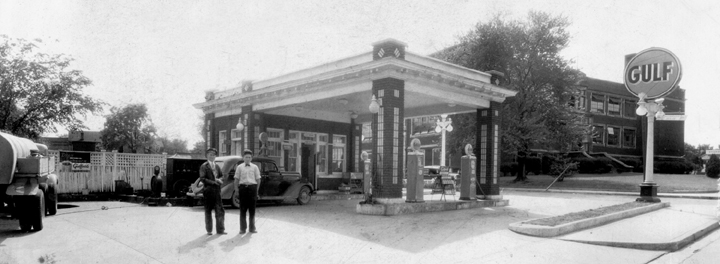
I received a letter from Tommy Thomas of Johnson City, containing two high quality photographs of Johnson City as it appeared in 1949. “As an avid reader of your column in the Monday edition of the Press,” said Tommy, “I thought you might be interested in the two photos I have enclosed.

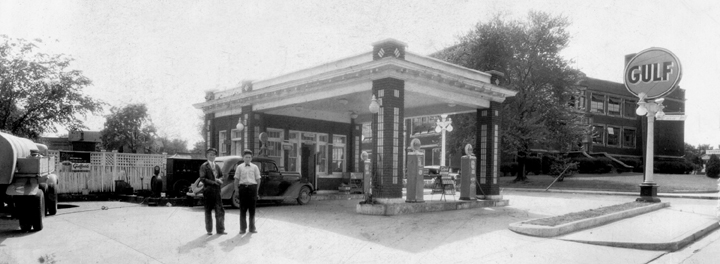
 “I was a Gulf Oil distributor in the 1970s and 80s. I sold to Appalachian Oil Company but have since retired from the business. My grandfather and father were also distributors of the company. The Gulf service station in the smaller photo was located at the corner of Fairview Avenue and N. Roan Street. The old Junior High School building can be seen to the right in the background. The operator of the business was a gentleman named Roy Trivette. I think he is the person on the left in the photo. He operated the station for many years in the late 1940s, 50s and 60s. The Gulf Oil Company razed the building in the 1970s.”

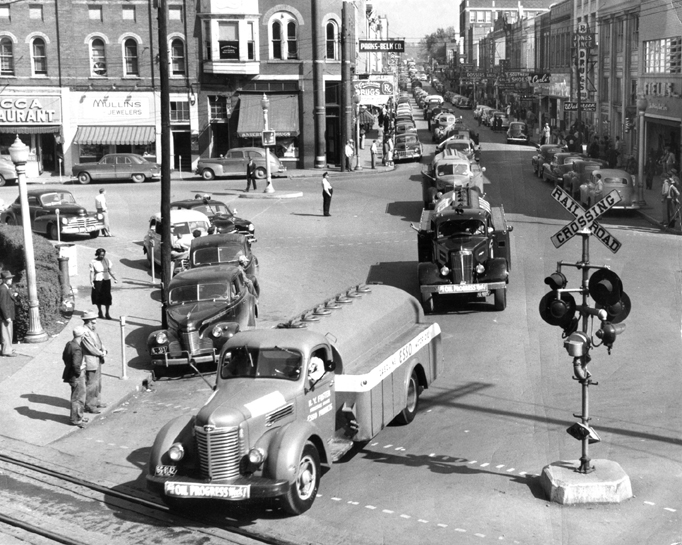
The other photo reveals a parade in the downtown district that, according to the license plate of the front truck, occurred in 1949. According to Thomas: “Note that the front gasoline truck belonged to R.Y. Foster. He sold Esso products at that time and ceased operating his business, I think, about 1970.”

Based on an examination of both photos and the additional use of a 1948 City Directory, I made some observations:

The service station photo shows Trivett Service Station, as Tommy pointed out, located at 405 N. Roan Street. Kiser Funeral Home was directly across the street from it. Tommy’s father was a distributor for Gulf Refining Co. The bulk plant was situated at 940 W. Walnut Street. To call them, a person picked up the phone receiver, listened for the operator to say “number please” and gave her the number “80,” after which she would say, “Thank You.” Can you imagine a telephone number that low?

The small sign on the back fence to the left reads, “Drain Your Oil. Change to Gulfpride.” A display rack containing several cans of oil is positioned between the two front gas pumps making it convenient for service attendants to add oil to a customer’s vehicle. This was when these stations offered free service (oil, water and tire pressure checks plus cleaning the windshield). Two additional gas pumps are adjacent to the door leading into the building. A shared outside restroom on the left side of the building contains these words: “Ladies and Men’s Room.” Note the decorative light globes mounted on the brick pillars and a free standing one to the right.


Thomas’s other photo looking east on of E. Main Street is a heart tugging nostalgic journey back to the downtown area. This was the Johnson City that many of us remember.

The license plate is in the shape of the state of Tennessee. The sign on the bumper of the two front trucks reads, “This is Oil Progress Week!” This was a time of celebration when the city paid its respect to the petroleum industry for the significant part it played in past, present and future economic welfare. Although the crowd is modest, a line of trucks can be seen extending up the hill, past the Post Office on the right and out of sight.

Does anyone recognize the police officer standing in the middle of the photo? Could that be Earl Byrd, a patrolman from that era? His patrol car, a black Ford coupe with an emergency light on top, is parked in the road behind him purposely blocking traffic. The sign on the lamppost at the crosswalk reads, “Keep to the Right.”

Several street lamps can be seen on both sides that are typical of that era. Note the two-way traffic flow on E. Main instead of the current one-way flow east. The parking meters appear to be tiny compared to those of today. A small water fountain is barely visible, located on the far left side just to the right of the hedge (left of the lady). It attracted much attention throughout the years, especially on hot summer days. This plaintive device was nothing compared to the majestic bronze Lady of the Fountain that once stood facing east on Fountain Square. It was removed in 1937 and relocated to Roosevelt (Memorial) Stadium.

Note how the people are dressed; most of the men are wearing hats and are decked out with coats and ties. The women appear to be wearing dresses.   

Allow me to guide you on an imaginary walk beginning at Fountain Square and going east on the south (Hamilton Bank) side of the street to Colonial Place (later renamed Colonial Way and Colonial Drive). We will then return by crossing Main Street to the north side of the street and traveling west. See how many businesses you can remember:

Snyder-Jones Pharmacy, Calfee & Swann, Fields Department Store, Congress Barber Shop, Jones-Vance Drug, (crossing Spring Street), Hamilton Bank Building, Carl H. King Co., Hollywood Shop, Southern Shoes, Goldsteins Store, H.E. Hart Jeweler, Peoples Drug Store, Thomas’ Men Shop, Thomas’ Lady Shop, Sterchi Brothers Stores, Dosser’s Department Store, Beckner’s Jeweler, Christiansen’s Café, Smythe Electric Co., Lorraine Shops, Booze Brothers Shoes, The Hat Shop/Plaza Fashions, Masengill’s Women Clothing, (crossing Roan Street), King’s Department Store, Charles Store, Ben’s Sport Shop, American Optical Co., Gunner Teilmann Florist, Siler & Co. and Marshal Brothers Lumber Co.

This brings us to Colonial Place where we will cross Main Street to the north side and return to Fountain Square by going west. Again, note all the businesses along this side of the street:

Home Federal Savings & Loan, General Exchange Insurance Corp. / Singer Sewing Machine Co., Montgomery Ward, J.C. Penney, Peoples Bank, (crossing Roan Street), Liggett’s Drug, F.W. Woolworth, The Young Set, The Jewel Box, S.H. Kress, Majestic Theatre/Barber Shop, Kinkead’s Flowers, Thom McAn Shoes, Cole Drug, The Budget Shop, Kinney Shoes, McLellan’s Department Store, Liberty Theatre, Darling Shop, Betty Gay Shop, Wallace’s Shoes, Hannah’s Men Clothing, Glamor Shop Women’s Clothing, Parks-Belk Department Store, Glen-More Clothing Store and Anderson Drug Store. This brings us back to Fountain Square. If only we could actually make that trip.

Two other businesses on Fountain Square visible on the left side of the photo are the Mecca Restaurant, and Mullins Jewelers. Just inside the door to the right of Mullins is a set of stairs leading upstairs to eight professional offices.

A hardy thanks is extended to Tommy Thomas for sharing his wonderful photographs and story with us.


boblcox@bcyesteryear.com

www.bcyesteryear.com 

Read more

In October 1938, an unidentified outdoorsman, whom I will call Jim, joined a hearty group of fellow hunters on what was billed as a cross-country marathon boar hunt on the Unaka Mountains in the hills of East Tennessee. One of the men, Ben Ellis, served as guide for the party. The rugged trip was said to offer the thrill of the chase, the beauty of the mountains at stunning peak fall colors and, if successful, from 60 to 150 pounds of the most scrumptious pork imaginable.

European boars, introduced as game animals in the early 1900s, thrived in Southern Appalachia but were generally considered a nuisance because they destroyed plants and robbed food resources from bears.

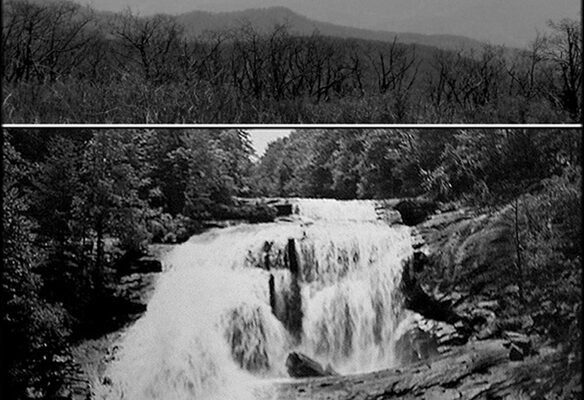
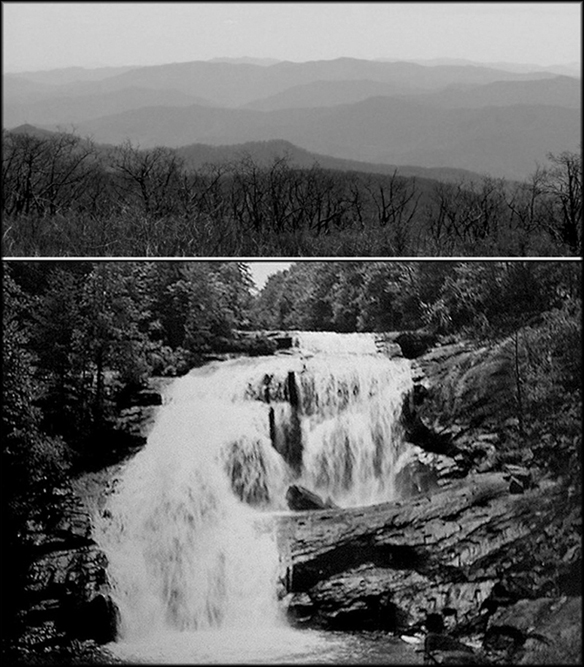
The hardy outdoorsmen left at the crack of dawn and traveled up the Tellico River into Cherokee National Forest. Just before 9:00 a.m., they stumbled down a steep trail to the bank of the river and ended up with their first reward – a 150-pound tusker that they slung on a pole between them. The hunters then parked their car a few paces from where the Bald River plunged over a cliff to join the waters of the Tellico and followed a trail that winded far above the Bald.

Prussian boars in the Cherokee Forest were said to be able to run 60 miles in one stretch. When they were rested, they could sail over hills and through timberland with little effort. But when pressed closely, a bewildered hog often turned and gave battle with the hounds, affording the hunter an opportunity to get close enough for a shot.

While they followed Ellis up the steep slope, they observed that the dogs had passed over the crest and were out of hearing distance. It seemed as though they would never reach the top, but they finally made it and paused for a moment to catch their breath and listen for any sign of the dogs. About that time, a faint yelp was heard in the distance.

The boys continued their journey into Cow Camp Hollow, tearing openings through patches of briars. When they were almost in sight of the dogs, the pack ceased baying and took up the trail again. Their prize had taken to his heels and that they had to make another dash after him. They crossed the little creek and climbed to the opposite side of the hollow.

Jim began experiencing sharp shooting pains that ran through his body causing him to fight off the desire to sit down and give up. When the group finally climbed the top, they were wet with perspiration. After a brief rest, there came the welcome chorus of the hounds indicating they had cornered an elusive boar once again.

Presently, the hunters came to a small clearing in the center that contained a growth of blackberry briars. On the far side of the patch the dogs had the hog at bay, but before one hunter could fetch his gun, the hog made a break for the timber with one of the hounds between him and the hog, putting the canine in harm’s way.

The huntsman couldn't run another step, choosing instead to walk through the woods on a fairly level stretch of ground to the edge of Cow Camp Hollow. About that time, the dogs came tearing around the mountainsides; the faithful old hounds had brought the boar back and were now chasing him straight down into the hollow below them.

Jim somehow managed to navigate his way through the tangled mess of undergrowth. He stumbled upon Ben who was casually sitting on the bank of Cow Camp Creek watching the boar stand off the dogs. Ben handed Jim his weapon and graciously allowed him the honors. Jim steadied his trembling hands just enough to bring closure to the animal.

The journey back was about a half-mile up the mountainside and an equal distance down the opposite side to the road, but even with a heavy hog between them, they didn't mind the weight. Their hunting exhibition was a complete success.

Read more

The first settlers in East Tennessee took up residence near the Watauga River where they had to adjust to the complications of life in the harsh mountainous region. Before leaving their homes in the East, these robust pioneers saved money for the trip by boldly selling their land and other possessions. Initially, many of them settled in the Appalachian Mountains, but eventually crossed the Mississippi River and headed farther west.

The families packed all the essentials they could reasonably carry on their horse-drawn wagons, including axes, rifles, cooking vessels, food and clothing. The lack of roads presented them with formidable challenges as they migrated across rugged terrain.

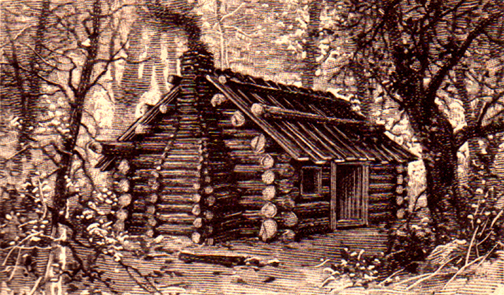
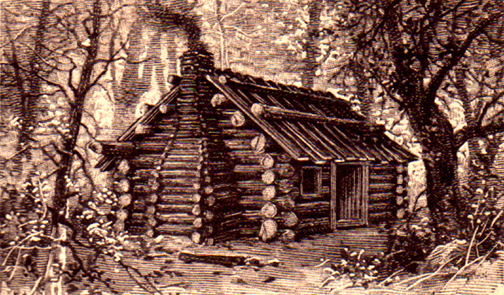
Their first order of business when they arrived at their newfound land was to build a rudimentary permanent cabin adjacent to a nearby spring of pure water. This meant finding temporary living quarters such as their wagons, beds of leaves under large trees, canvas covered lean-tos, one-room shanties and even teepees.

Every male old enough to swing an axe chopped down trees and other obstructions to afford them an opening in the thick forest for their new abode. They cut and fit tree logs together, sometimes “scalping” the wood (hewing or shaping it with numerous hard blows from an ax). This was tedious work because of the heaviness and quantity of logs required. They stuffed a mixture of mud and grass in the spaces between the logs to keep the elements and the varmints out.

The family had two options for a floor; they could leave the hard earth bare or cover it with heavy split slabs of roughly dressed timber known as puncheons. The roof consisted of clapboards held in place by straight wooden logs. A rudimentary door was cut in the south side of the house and a small elevated window was provided along the north side.

For many years, household furniture was crude but also functional. The cabin contained no fine furnishings such as bureaus or sofas. Instead, a bed consisted of nothing more than two poles pushed into cracks in a wall with the opposite ends resting on two rough forks cut from tree branches. On these were laid flat boards, which supported a bed tick (mattress) filled with leaves, straw or feathers from wild pigeons, geese or ducks.

Clothes were hung on wooden pegs in the walls around the room. The finest piece of furniture was generally a rustic chest that was used to store the family’s finest clothes and treasures. 

Since bricks were not available then, chimneys were lined with rough, flat stones and soft clay. The fireplaces, which were used for heating and cooking, were usually outsized enough to hold half of a wagonload of wood. 

A good water supply was essential for drinking, cooking, cleaning and bathing purposes, as well as storing and preserving butter, milk, fresh meats and other perishable items.

Initially, pioneer children did not attend school for two reasons – they were usually unavailable and youngsters, regardless of their ages, were needed for essential chores at home. Men and older boys hunted wild game. The meat was then cleaned, cut it into pieces and stored in salt, which preserved it until it could be eaten. Just prior to cooking, it was scrubbed to remove the salt. Another option was to store meat in snow barrels in winter.

Those were the days when adversity and strife often existed between settlers and Indians, thus forcing them to occasionally gather their belongings and seek refuge in forts or stockades. These hardy brave settlers eagerly sought a new and exciting way of life, which they received and more, usually exceeding their wildest expectations.  

Read more

Most politicians show little compassion for their opponents. Often a debate gets ugly with harsh and sometimes angry words emitting from both sides of a debate with each trying to outdo the other. It is rare when two people can disagree on issues while showing respect for the other.

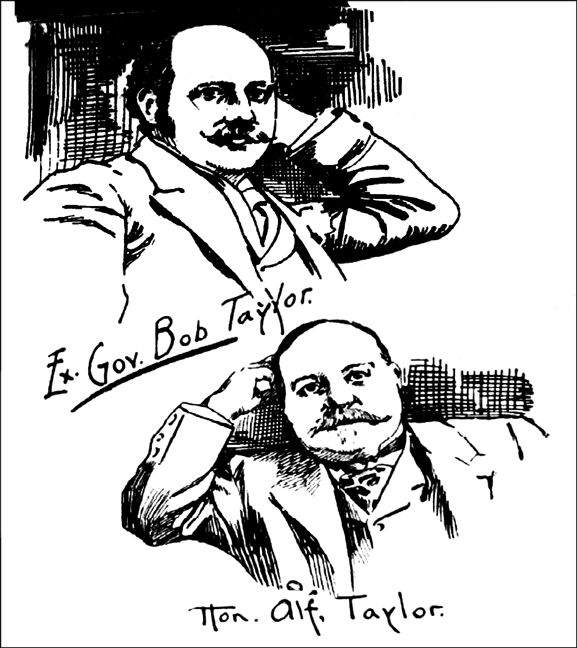
Such was the case in 1886 when Democrat Bob Taylor and Republican Alf Taylor stumped the State of Tennessee campaigning against each other as nominees of their respective party for governor. The fact that they were brothers did not prevent them from waging political warfare against each other throughout the Volunteer State in joint debate.

In that memorable campaign when they met at Chattanooga, they stayed at the same hotel and shared a room. When the supper hour had faded away, a band appeared below their room balcony. A chant commenced from the crowd below calling out in unison: “Alf Taylor, Bob Taylor, Taylor brothers.” The brothers responded by coming out on the balcony. 

Alf Taylor spoke first. He gave a brief speech that included thanking the crowd for their interest in the gubernatorial campaign and for coming to the hotel. Then he took his brother by his arm and humorously proclaimed, “And now fellow citizens, I have the pleasure of introducing to you the brother of the next governor of Tennessee.”

Bob Taylor, not to be outdone by his younger sibling, thanked Alf for his kind words and then invited everyone to the inauguration ball at Nashville. Bob said he would be installed as governor and where he graciously said, “You will again meet my distinguished brother, sitting at my right hand, the chief and honored guest of that occasion.”

When they appeared at Lebanon, Tennessee in Wilson County several years prior, 8,000 people greeted them. The county was once the stronghold of the old Whig party. When Alf began his speech, he offered a eulogy on the party and its leaders: “Fellow citizens, if the Whig party were in existence today, I would not stand before you as a Republican. (My brother) is a more graceful speaker than his brother and he touched a tender chord in the affection of his audience.

But Bob Taylor unmercifully tore away the Whig mask from the brow of the Republican candidate. Yes, fellow citizens, every Republican speaker nowadays begins his speech with a eulogy on the Whig party and its great leaders. He tells you in feeling tones, ‘(Henry) Clay is dead, (Daniel) Webster is dead and I don't feel very well myself.’”

The two unique characters toured the country providing entertainment in a most novel way, something not seen before. It was very popular as noted by the huge crowds that attended their lectures. They were secured for an engagement in St. Paul, Minnesota and then appeared at the People's Church.

Later, the Taylor brothers appeared at Sweeney and Coombs Opera House in Houston, Texas. Their entertainment was not billed as a lecture or two lectures. Instead, it was described as entertainment in which the two men were brought out as in a beautiful drama of fraternity.

In the presentation of the first half of the theme, the Honorable Alf Taylor typified and set forth the spirit and resolve of the Yankee nation. Bob Taylor, with the assistance of a splendid male quartette in which he participated by singing second tenor, portrayed the beauties of the Southland, the peculiarities and oddities of all his people. He provided illustrations of their music and dwelt with humor and pathos upon the rare customs of her rural people.

The other members of the quartette assisting the ex-governor were Robert W. Nichol, Robert I. De Armon and T.A. Davis. The production was proclaimed as “something new under the sun.” 

Read more

Dec. 15, 1973 was a cold Saturday night in Knoxville. My wife and I, along with our friends, Allen and Charlotte Stafford, drove there from Johnson City to see the Volunteers play the Temple Owls in the Volunteer Classic. We joined 11,700 others at the Stokely Athletics Center. The temperature inside would soon get as cold as it was outside. Allen and I pooled our recollections of that night for this column.

Ray Mears’ squad consisted of Ernie Grunfeld (f), Doug Ashworth (f), Austin Clark (f) Len Kosmalski (c), David Moss (f), Bill Seale (f), John Snow (g), Wayne Tomlinson (f), Rodney Woods (g), Mike Jackson (g), David Mitchell (g), David Smith (g) and Vinnie Tracey (f).

Tennessee came into the game with impressive wins at South Florida (117-90) and DePaul (96-61). Temple brought with them three wins and one loss. Don Casey, first year Temple Coach, was concerned about his team beating Tennessee. Therefore, he devised a strategy for the match.

With 11:44 minutes into the contest with Tennessee leading 7-5, Casey made his move. He placed two of his best players about 28 feet from the goal and positioned them five feet apart. They began dribbling the ball and passing it back and forth with no attempt to throw it to anyone else or attempt to score. Ray Mears, not to be outdone by his rival, instructed his players to go to a 2-3 zone defense and stay there.

This was before the days of a shot clock. Casey’s idea was to force Tennessee to come out and try to retrieve the ball, opening up his best shooters to score. As time ensued, the crowd wondered how long this repetitiveness would continue. The fans’ demeanor quickly turned from disbelief to anger. They paid to see a competitive basketball game, not two guys passing a ball back and forth.

Despite the crowd’s constant ranting, Temple held the ball until the first half ended and exited the court to a barrage of boos. They trailed by only two points.

The second half opened with more of the same. By now, the crowd became much more vocal and hostile, tossing ice and trash onto the floor, causing game delays. Security was beefed up in the building, including positioning additional police officers behind the Temple bench. 

Mears, visibly agitated by the goings on, yelled several times at the Owls to start playing real basketball. Casey responded by challenging the Vols to come out of their zone and get them. The two coaches were in a stubborn stalemate with neither one giving in.  

John Ward, the “Voice of the Vols, somehow managed to keep his listeners glued to their radios that night. Surprisingly, few fans left the game early because, as boring as it was, everyone anxiously wanted to see a Tennessee win. The four us certainly had no inclination to leave.

Although Temple did not give the Vols a single shot from the field in the second half, John Snow made four free throws to preserve an 11-6 Tennessee win. Kosmalski was the Big Orange’s leading scorer with five points. Temple held the ball for about 32 minutes of the 40-minute game.

Ed Bowling, school president, instructed the Vols to play an intra-squad game to appease the crowd. The four of us moved to the center section for better seats. Most of the crowd showed little interest in an exhibition game and began a mass exit. The game was quickly cancelled.

Reportedly, when the two coaches met after the finale, Mears informed Casey that he would never be invited back to Knoxville as long as he was coach. The game would go down in Tennessee sports history as the lowest scoring college game of the modern era.

Although the NBA had a shot clock as far back as 1954, it did not infiltrate the college ranks until the 1985-86 season when a 45-second one was adopted. Eight years later, it was reduced to 35 seconds.

As a parting shot to a wasted night, I mailed our two ticket stubs to the Temple Athletic Department requesting a full refund of the “game.” I am still patiently waiting for it.  

Read more