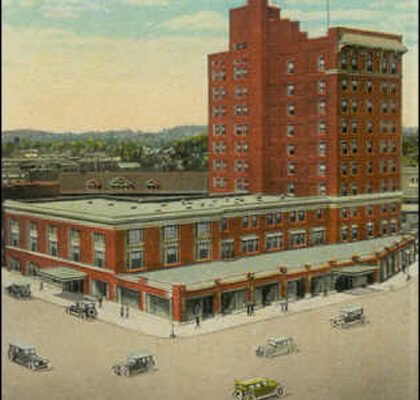
In the fall of 1928, the Tennessee Hotelmen's Association held a two-day conference in Johnson City at the downtown John Sevier Hotel. Folsom B. Taylor, manager of the 10-story structure and vice-president of the state association, served as host. W.W. Westmoreland, manager of the hotel and J.M. Majors, administrator of the nearby Colonial Hotel also served as hosts.
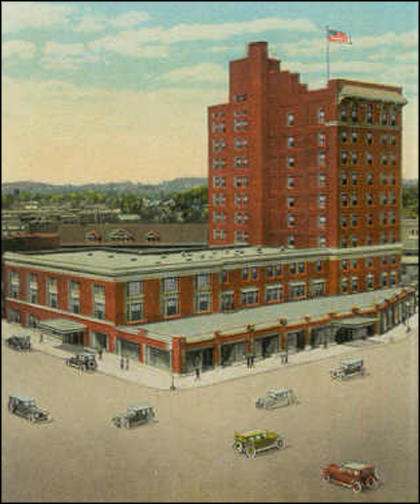
The John Sevier Hotel as it appeared in 1923 after the first of three planned additions. The second one was built a few years later but the third (adjacent to E. Market Street) one never materialized.

The event was largely of a social nature, following business sessions held in Kingsport on Monday, with Frank B. Warner, manager of the Kingsport Inn, as planner.  After arriving from Kingsport shortly before noon, the hotel men, their wives and guests, attended a luncheon at the John Sevier, where formal greetings were given on behalf of Johnson City, with responses by members of the association. A prominent part of the program was the paper on “Good Roads,” by Folsom B. Taylor, after which a general discussion occurred.

 In the afternoon, a motor visit was made to Glanzstoff, Bemberg, Soldiers’ Home and other area points of interest, where members were courteously received.

Frank Shutt, of Memphis, presided as toastmaster and in addition to the scheduled numbers, bits of enjoyable side conversations were indulged by various members.

A double feature was the dancing and singing in costume of Miss Jane Douglass, who introduced “A Cabaret Specialty,” in fancy costume, singing and dancing to modern syncopated music. Also, an Oriental interpretative dance was appropriately costumed and artfully introduced. Accompaniments were by Miss Marjorie Davenport (a clerk at J.G. Sterchi Furniture Co.).

Charles J. Broyles, baritone, introduced the popular “Brown October Ale” song from “Robin Hood” and responded with a splendid rendition of “The Wanderer,” both artistic numbers approvingly received. Music throughout the evening was inspiring, rendered by a trio, Miss Mary Inah Conner, piano;  Professor Kratochwill of Greeneville, violin; and Chester Edens of Elizabethton, violin/cello.

Besides members of the association, visitors introduced included J.W. Ring, a prominent figure associated with the securing and location of Bemberg and Glanzstoff; Carroll E. King and Fred W. Hoss of Appalachian Publishers. Mr. Hoss responded with an original piano selection. The singing by the John Sevier Bell Hop Male Quartet, whose well-known harmonies and musical humor were enjoyable parts of the program, producing arousing applause.

The hotel stay included an eight-course banquet in the beautiful ballroom on the final day, affording guests the pinnacle of preparation, service, variety and quantity of “their own wares.” 

The ballroom was lavishly decorated with a profusion of cut flowers and smilax (a popular floral decoration in the asparagus family that has a slender vine and glossy foliage. A huge decorated cake was formally cut at the conclusion of the dinner, followed by an elaborate and varied program of entertainment.

The elaborate menu offered a variety of tasty items: Stuffed Kalamaoo Celery with Roquefort Cheese, Mixed California Olives, Salted Almonds, Chicken Consommé Julienne, En Tasse Double Shutt, Poached Halibut, Oyster Sauce, Augured Potatoes, Hot Rolls, Cranberry Punch Frozen, Roasted Stuffed Milk Feed Chicken Hawaiian, Idaho Baked Potato Spanish Style, Asparagus Tips on Toast, Drawn Butter, Tiny French Peas in Novelty Cases, Buerre Fondue, Hot Rolls, Vienna Bread, Maiden Blush Salad with Saltine Wafers, Coupe Beau Rivage, Fancy Cakes and Coffee, Mints and Cigars and Cigarettes.

The dinner in the evening was followed by a dance, in which a number of local young people joined the visitors. The hotel men, managers and officials of the largest hostelries in the state, lavishly commended the entertainment provided and especially had praise for the closing banquet, which they declared could hardly be excelled.
Read more

On October 6, 1928, newspapers around the country proclaimed that the picturesque little mountain city of Elizabethton, Tennessee would play host to presidential hopeful, Herbert Hoover. 

Herbert Hoover became the 31st president of the United States in 1929 largely because of his favorable national reputation, a booming economy and deep splits within the Democratic Party. The future president, well satisfied with the political outlook and the functioning of the machine he built to carry the Republican message to the country, which included a strategy to target Southern states.

In the fall of that year, Hoover traveled to the Southland to make his fourth major address of the campaign—a personal appeal to the voters of Democratic Dixie to support his Republican candidacy.

After leaving national headquarters in the nation's capitol, the nominee traveled down the Valley of Virginia to Bristol, Virginia where he made an impromptu address to the crowd that had gathered at the station. Republican leaders of Virginia were invited to join the party.

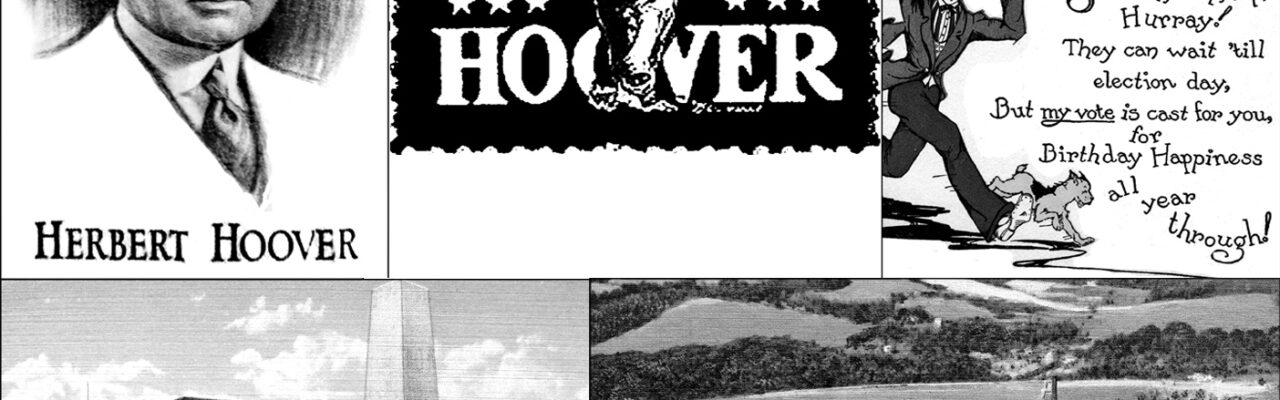
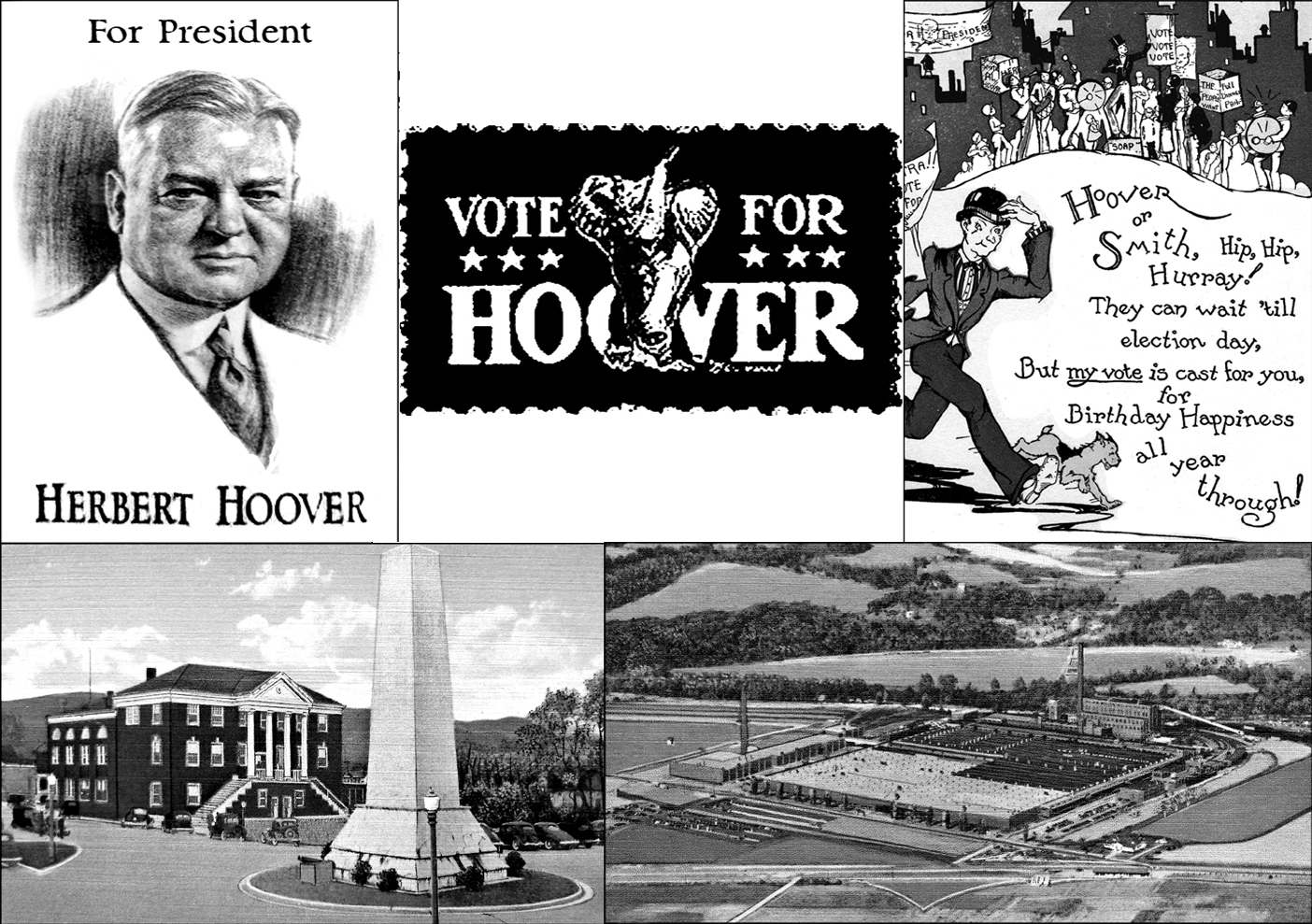
(Clockwise: Hoover campaign poster, vote for Hoover Sticker, comedic policitcal  birthday card, American Glanzstoff (North American Rayon) and Elizabethton courthouse and monument downtown)

When Mr. Hoover arrived at 10 a.m. at the flag station of Childers, located four miles away, he was greeted by a large motorcade of specially decorated cars. During his drive to the city, he passed through a crowd of 7,000 school children who tossed flowers in his path. After traveling the principal streets of the town, the entourage guests were hosted to a luncheon provided by the Chamber of Commerce.

Politics was essentially set aside as Democrats joined hands with Republicans. Even the Al Smith Club that had recently organized suspended activities until after Hoover's departure. The event was described as a “great show” that attracted those who had never visited Elizabethton, or for that matter, had never heard of the town. Thanks to the soon-to-be president, the city was overnight ushered into the limelight.

Three tons of decorations provided a splendid costume for the city that day. The streets were ornamented in red, white and blue decorations with flags plenteously hanging at residences and businesses.

Some 495 deputized patrolmen, recruited from Elizabethton’s citizens, significantly augmented the police department's normal force of five men. Badges were ordered for the “policemen-for-a-day” recruits. Also, a squad of State Troopers as well as local Boy Scouts added their services to the event. After presentation of a huge city key by City Manager, E.R. Lingerfelt, Hoover witnessed an impressive reenactment by the Tennessee National Guard, comprising two batteries of artillery, a machine gun company, aviation corps, light artillery and two companies of infantry. Further, factory whistles within the confines of the city sounded and rock quarries, of which there were many, ignited a barrage of dynamite. While all this was happening, numerous airplanes flew over the battle site dropping a white column of smoke around the pseudo-warriors.

Following a reception for Mrs. Hoover, the Republican nominee rode in a parade headed by more than a hundred pure-blooded Cherokee Indians. This was followed by covered wagons and floats depicting historic epochs in the progress of this section.

A modern Indian camp was erected on the banks of the Doe River, equipped with an Army field kitchen, Army tents, electrically lighted streets and expert chefs ready to provide meals. The facility was large enough to seat 12,000 people, with additional seating in front of the platform and on the slope behind the stand. Two large nearby fields provided overflow space for those unable to find seating. 

The speakers' stand, built on the side of Lynn Mountain, one of the foothills of the Great Smoky Mountains, was ready for arrival of its welcomed guest. To handle the expected influx of reporters, a vacant building near the platform was equipped with wire facilities and typewriters that also served as a transmitter for radio broadcasts.

At 3 p.m., 81-year-old famed former Tennessee governor, Alf Taylor, introduced the president, after which Hoover began his 45-minute speech. Subsequently, other features of the day included a football game; the first automobile races ever held in this section, for which a special dirt track had been built; a street dance; and a “Hoover Ball” at the Armory. Hoover's visit to Elizabethton concluded with two final events: a commemoration of the Battle of Kings Mountain and the dedication of the town's second artificial silk (rayon) mill – American Glanzstoff.

After Hoover's exhaustive visit to Elizabethton concluded, his schedule called for a second address at Soldiers’ Home at Johnson City, Tennessee and dinner as the guest of the Chamber of Commerce before beginning the return trip to Washington.

Hoover's key focus on the South paid off; he won 58% of the vote, defeating challenger, Al Smith. However, he would not be so fortunate four years later in a bid to seek reelection due to the Great Depression that would descend upon the country and thwart his chances for a second term.

Read more

I maintain a running log of area news briefs for occasional use in my column. Today's 10 entries cover a variety of subjects spanning 1872 to 1889:

Mar. 1872: Elcanah Hoss, Esquire, completed an elegant and spacious hotel (unnamed but likely the City Hotel, later renamed the Piedmont Hotel) just a few steps from the location of the city’s car shed. He featured an impressive menu of tasty items for his patrons. A witty ad in rhyme states, “Elcanah is a good hotelier and otherwise a bully feller. He’ll give you chicken, ham or beef. He’ll give you coffee, milk or tea or anything you wish to see and will not bring your cash to grief.”

Mar. 1872: A 14-inch snow that blanked the area produced as much as 25 inches of mud in some places. Overall, business was good that year considering the scarcity of money in the country. There was talk of resuming work on the railroad from Johnson City to the Carolinas. Iron was the great staple here. Several improvements were underway in the city.

Oct. 1872: Dr. Daniel Kinney, one of the oldest physicians in upper East Tennessee died on this day. Also, a  small son of Major Tipton of Roan County fell from a wagon loaded with pumpkins. The wheels ran over his body causing serious but not life-threatening injuries. William Perry, a worthy citizen of Sullivan County was severely injured after being kicked on the right knee by a horse, confining him to his home with severe pain.

Apr. 1873: Favorable signs were discovered at the foot of Buffalo Mountain near Johnson City, which proved the existence of bituminous coal in large quantities. A company was organized and began drilling a shaft for further development. Mica was also discovered near the same site and another company was contacted to pursue it. Iron ore was also found to exist there in abundance.

Apr. 1873: Mr. John C. Blakely, a 40-year-old resident on Horse Creek about 18 miles from this place, has lived in the same settlement ever since he was a child. He made his first visit to Jonesboro that month. For the first time, he saw a train of railroad cars. He admired the massive engine of a passing train and commented that it could “blow its horn louder than a cow could bawl.”

Apr. 1873: The rumor mill began buzzing over news that an undisclosed company had bought property and organized at the old downtown Union Depot for the purpose of erecting buildings to provide a cotton manufactory.

July 1873: A number of farmers in the vicinity of Johnson City met for the purpose of organizing a “Farmers' Association.” Mr. Tipton Jobe donated 15 acres of land as a suitable location for a fair ground. Mr. Sam Miller was elected temporary president of the Association.  

Oct. 1, 1873: The Washington County Fair opened for a 2-day engagement. The gathering was described as being a large one for the first day with over 1000 persons in attendance. The ladies were out in full force and were deeply interested in the activities of the event. The display of stock, farm products and ladies handiwork was judged to be excellent. The fair was a complete success. C.W. Charlton (editor of Brownlow's National Wig) spoke for about one hour and a half, with those in attendance listening to him with “marked respect and attention.”

July 1874: Professor Gale's School in Blountville ended its school year with an entertaining concert. It was accompanied with charades with all of the students participating. The admission fee was ten cents. The blurb noted that the school was large and doing well. The professor was described as an excellent teacher.

Apr. 1889: Contractors were ready to begin work on the CC&O Railroad pending the issuance of bonds. They were placed in the hands of a trust company to be delivered to the railroad at which time the mayor of Johnson City and the chief engineer of the line deemed that the terms of the contact had been met. It was noted that Johnson City had more enterprise to the square inch than any town in the South and could be relied upon when a significant occasion like the railroad issue presented itself.

Read more

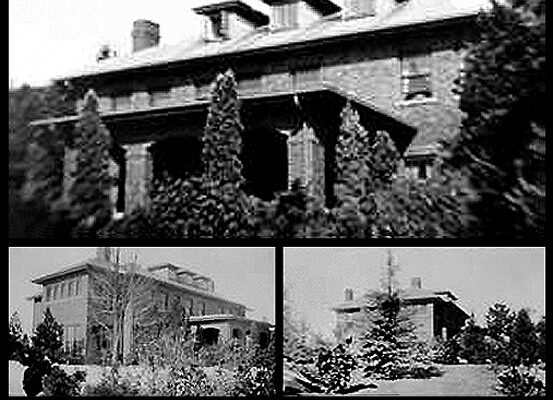
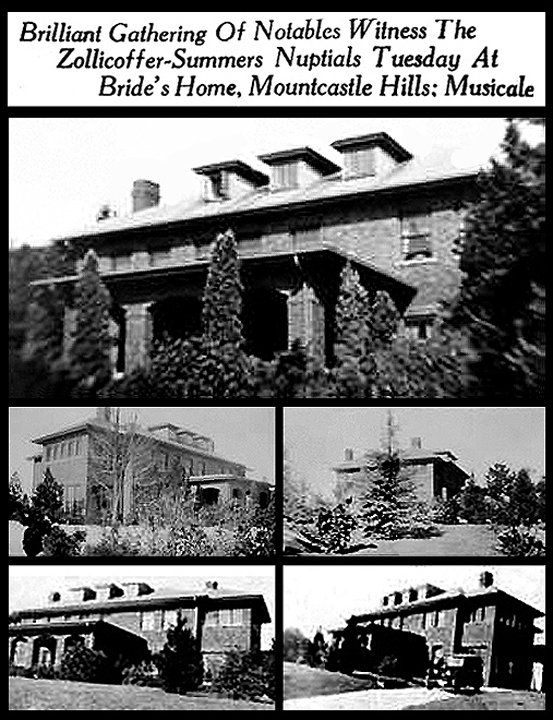
This is my third column on the house that was built as Mountcastle Hills, located just off N. Roan Street in 1917. In the first one, John Zollicoffer sent me several old photos and clippings about the wedding. In the second one, Alex Summers recalled specific details of the dwelling once owned by his grandparents. 

Today's column materialized after I located an article in my yesteryear collection written in 1987 by Jon Ruetz for the Johnson City Press-Chronicle. It covered the years that the home was owned by Dr. and Mrs. Edward Campbell.

“Originally called Mountcastle Hills,” said Jon, “the house occupied the crest of the hill at the end of Barberry Road since its construction in 1917 by Mr. and Mrs. James A Summers.”

According to Mrs. Christine Frambach, the daughter of the couple, “Dr. Campbell started his practice in Hampton, Tennessee. In those days, there were only two ways for him to travel long distances – either by horseback or hopping on Tweetsie, the famous little railroad which once ran through Upper East Tennessee. Later, the doctor became one of the first flight surgeons in the area, giving a physical to anyone from Knoxville to Roanoke who sought a pilot’s license.” 

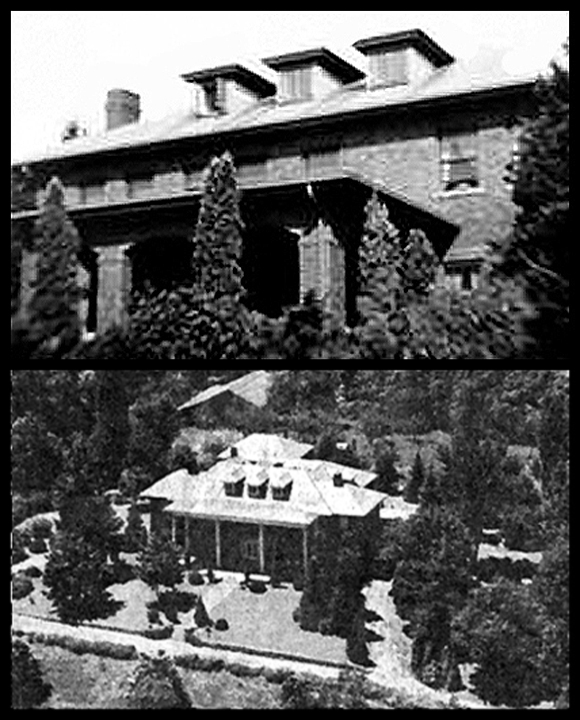
Ruetz said the Campbells purchased the home (about 1936) and renamed it “Argyll,” since the family was known as the “Campbell Clan of Argyll.” During its heyday, it had been a showplace with gala dinner parties and summer evening barbecues. One can only imagine the massive wooden pillars of the front porch heavily decorated with Christmas lights, with each huge old window containing a gleaming candle.

Mrs. Frambach further indicated that the abode was opened each New Year’s day for open house. Literally hundreds of Johnson Citians would stop by to visit with the Campbells, he being a renowned eye, ear, nose and throat specialist.

The 11,000 square-foot residence contained many conveniences, such as an elevator. Even as it was being torn down years later, it still displayed the elegance characteristic of the lovely old home.

“My mother, a frustrated architect,” said the daughter, “designed and oversaw the remodeling of the house. The old windows on the first floor were bricked up and beautiful new Palladian windows were installed.

”A Palladian window is an architectural section, which usually contains a taller central window with an arched top and a smaller narrow window on either side.” The beautiful cornice work in the main room downstairs and even the corner cupboard in the kitchen were plaster. A Mr. Zintmeyer, who was a Swiss artist, did the work.

The walls of the second-floor landing were covered with what Mrs. Frambach called “scenic paper,” wallpaper that matched edges to form the look of a mural She said the paper had also been used in the main room on the first floor, but her mother had it painted several years prior.

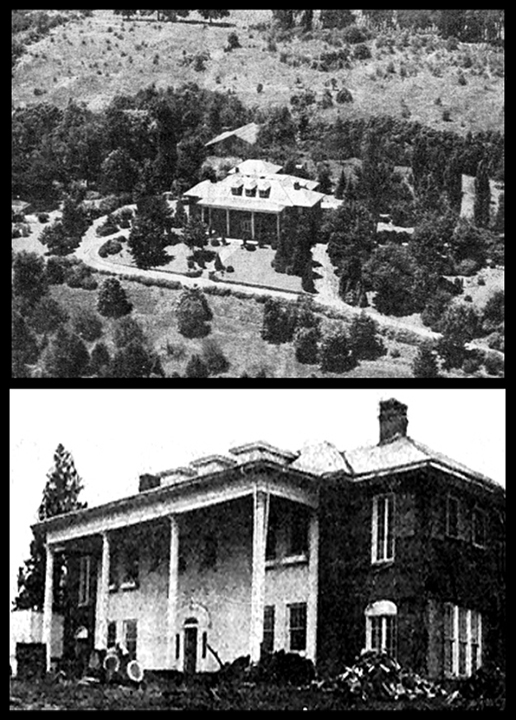
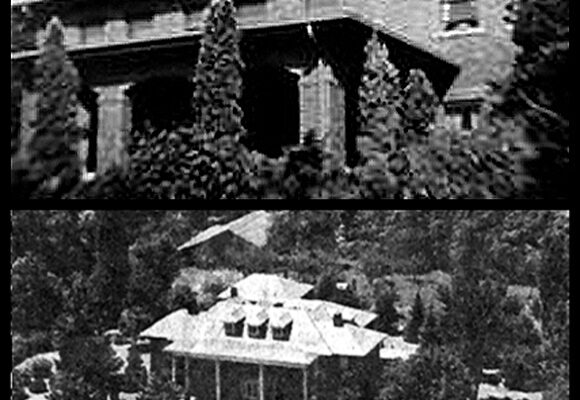
A swimming pool was added to the grounds in 1952. My column photo was taken from an airplane in 1937 by Mrs. Frambach’s brother, Ed Campbell, after the house had been remodeled. It shows the swimming pool and guest quarters  in the middle of the photo at the extreme left.

Of special interest in the picture is the lack of anything in the field behind the house. Today, the John Exum Parkway runs roughly along the line of timber at the top of the photo, with Science Hill High School now standing in what was a corn patch just behind the trees.

Mrs. Frambach noted that the city limits on Roan Street came up to “Barberry Road, but the house and most of the property was outside the city at the time. The road is visible in front of the house.

Shortly before the vacant old structure met its fate from a malicious wrecking ball, Ruetz visited the site and offered some poignant words: “The old house stood casting a gaunt and austere silhouette against the gray December sky – a behemoth from an earlier time that had outlived its day.”

Read more

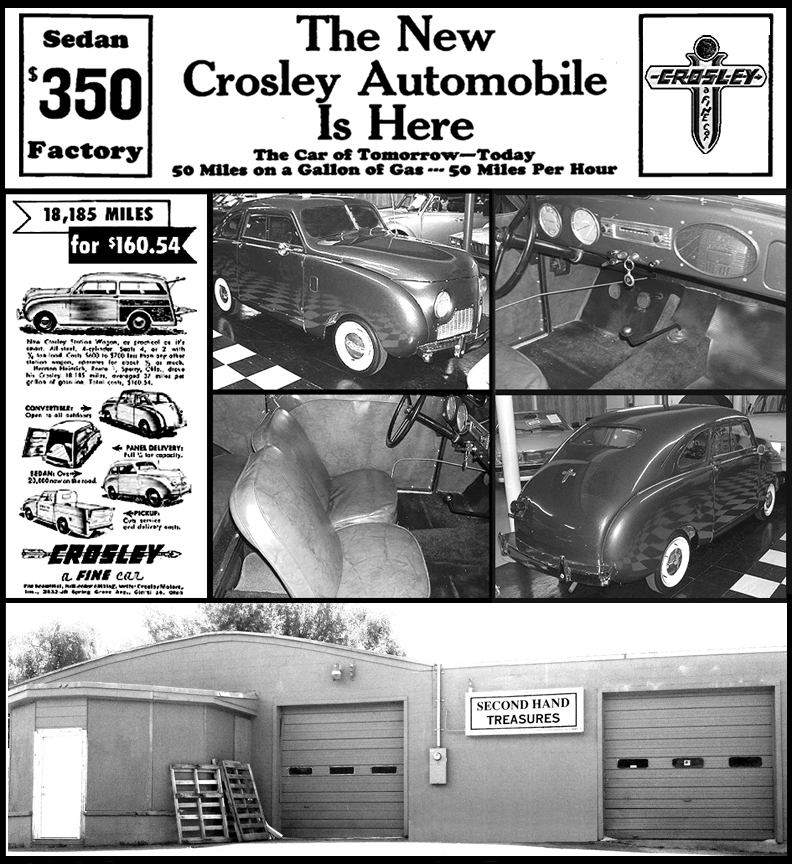
My cousin, Wayne Whittimore, and I recently conversed by phone concerning the Crosley automobile dealership that his father, Ernest, and another man, Jess Crigger, opened and operated about 1949. They appropriately named it C&W Motor Sales.

Ernest previously worked for (J. Norton) Arney’s Motors while Jess was once employed by Potter's Auto Repair (whose business was on the New Jonesboro Highway). Whittimore had previously worked at a King Street repair garage and at a Maple Street shop. The businessmen acquired a building on E. Main Street, two businesses east of Broadway Street on the right (west) side. 

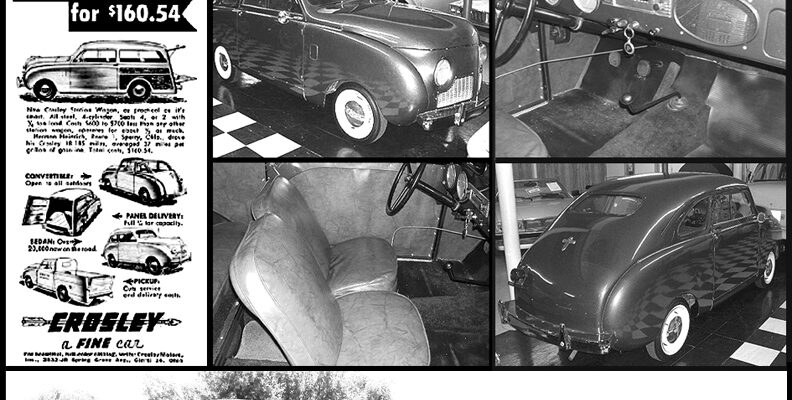
The photo at the bottom of the collage, taken in 2013, shows the same building used for the Crosley dealership in the late 1940s and early 1950s

Crosleys were the only products they sold. The front showroom was fairly small, being just large enough to display two of the diminutive vehicles. However, the back portion of the building was spacious enough to service 15-20 cars.

Although Crosleys were not overly reliable, they were so affordable that, depending on the maintenance problem encountered, it was often more economical to buy a new car rather than repair an old one. Wayne recalls that the shop was usually full of automobiles. He further recalled that the owners obtained parts from Knoxville. Although the autos averaged about 50 miles to the gallon, it was barely large enough for four normal sized people to sit comfortably in them, thus adding new meaning to the expression “no frills.”

Wayne indicated that while he later owned a Crosley, his father never did because he was a staunch Buick man. My cousin recalled that the smallish Crosley weighed nearly 1100 pounds, possessed a 4-pound engine block, had four cylinder pistons and measured 4-foot wide by 12-foot long. The consumer was limited in factory color choices that included gray, yellow and blue. It has been said that four husky musclemen could pick up and carry the vehicle a short distance, making it the target of pranksters.

Wayne alleged that the most unusual Crosley product was a “Farm-O-Road” (meaning “farm or road”). It could be modified by installing two extra wheels on the rear and used on the farm as a tractor. Afterward, the wheels were removed and the car driven onto the highway.

Powel Crosley, Jr., already well-known for producing low cost radios, reasoned that a basic, no frills car would attract scores of customers. A $300 Crosley had a chassis with an 80-inch wheelbase, half elliptic springs with beam axle in front, quarter elliptics in the rear, a 2-cylinder Waukesha air-cooled engine with the fan a part of the flywheel, a 9-inch diameter clutch and a 3-speed transmission. If a patron desired a rear seat, it cost extra.

The first Crosley produced was a two-door convertible that weighed under 1000 pounds and sold for $250. While not an instant success, the company introduced additional body styles in 1941 to boost sales.

The Crosley was so narrow that it could go though a standard commercial store door, allowing dealers to sell radios and cars from the same building. A glove compartment, barely large enough for a pair of gloves, was set into the right side of the dash, while above the steering column was a crank for the manual windshield wiper. Although windows slid open for signaling and ventilation, a standard summertime modification was to remove the side glass entirely.

In 1949, a station wagon, a pickup truck, and a sports model called the “Hotshot” were added to the product line. It was the first real postwar sports car in America and lived up to its name by winning the first Sebring 12-hour race.

According to Wayne, C&W Motor Sales stayed in business about four years, closing around 1953. By the early 1950s, demand for the little cars began to diminish. I asked my cousin if he still owned his Crosley. He said he finally sold it to a person in Johnson City who fully restored it and let him drive it. He was thrilled at the make-over because he has a soft spot in his heart for the Crosley.

If you owned a Crosley, I would like to hear from you.

Read more

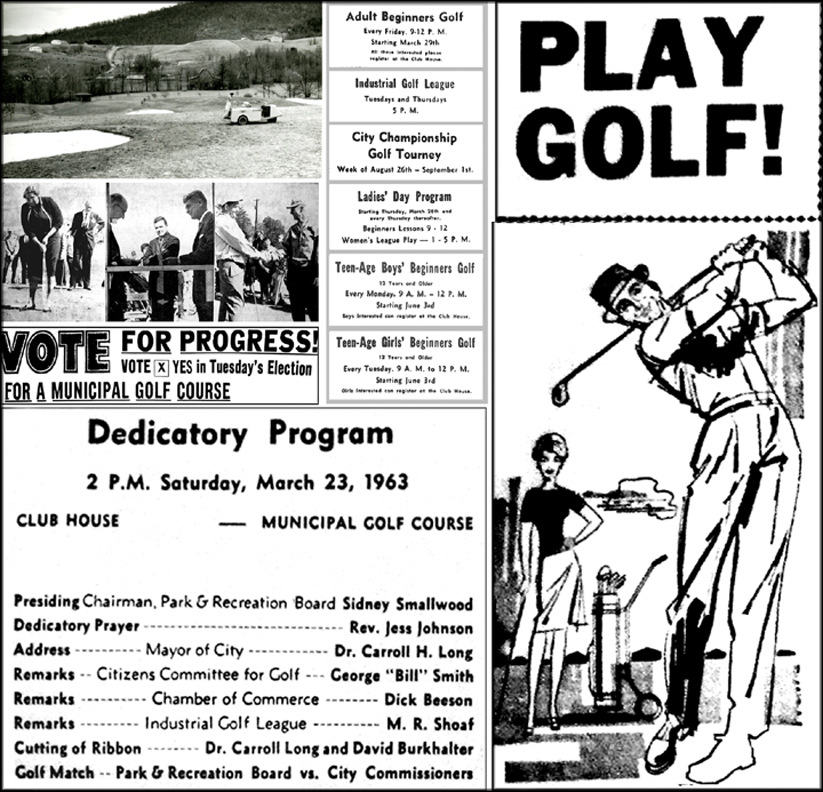
I received a note from Mike Jennings, golf professional for Pine Oaks Golf Course on Buffalo Road in Johnson City, saying, “Bob, we are celebrating our 50th anniversary this year. In preparation for that event, I put together some items relating to our history that I acquired mainly through word of mouth and some old newspaper clippings. 

“I discovered that there was support and opposition concerning the building of the course. The proposal split both the citizens and the commissioners. I thought I would throw the facts your way to see if you have any interest in pursing this.”

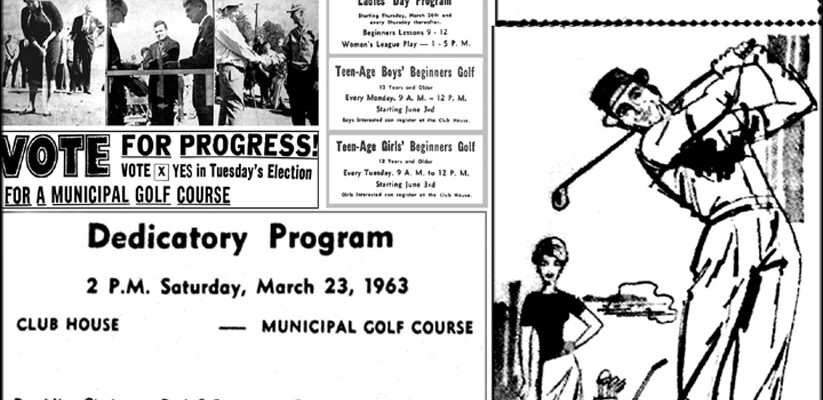
Mike sent me several photographs and provided numerous interesting specifics about the origin of the golf course. The referendum was held on December 12, 1961 with the dedication occurring on March 23, 1963. 

The idea for a municipal golf course originated with citizens of Johnson City through the Parks and Recreation Board. A report submitted by the Johnson City Planning Commission indicated that the course would be self-liquidating, self-supporting and profitable.

The proposal was endorsed by several civic clubs and organizations: Business and Professional Women's Club. Chamber of Commerce, Board of Directors; Civitan Club; Civinettes; Jaycees; Kiwanis Club; Junior Service League; Junior Monday Club; Nativic Civitan Club; Opti-Mrs Club; Pilot Club and the Rotary Club. Although the new facility received solid support from three city commissioners, two opposed the effort.

The new golf course offered numerous attractive advantages to the city: providing a wholesome recreation program for area residents as well as visitors, attracting new industry, offering a needed park and playground, providing beautification and open spaces, providing a tourist and convention attraction, increasing property values in the city and providing aid to retirees.

It was accordingly noted that regardless of the outcome of the election, the city’s urban renewal program was to proceed. The vote was aimed only at the golf course issue.

The city's Regional Planning Commission did ample homework. After considering prospective golfers and similar municipal courses across the country, they estimated that annual revenue from operation of the course would be $37,700, a figure, they said, that would increase as the city's population grew.

The proceeds' figure was obtained by estimating the number of active golfers who played on other courses in the surrounding area, such as Elizabethton, the Johnson City Country Club, Kingsport and others. Planners projected the number of active golfers to be a minimum of 641, which they believed could easily increase by as much as 50%. Dedicated sports fans, they reasoned, spent an average of 2.5 days per month on a golf course. They further increased the number of golfers by 258 to included prospective and inactive ones.

The question put before voters was whether the city would issue $400,000 in general obligation bonds, $250,000 for a combined golf course and recreation area and another $150,000 for three proposed urban renewal projects. The number of voters arriving at the polls that day was considerably higher than expected, especially with a steady downpour of rain.

When the polls closed, residents had given approval for the golf course and construction of the new municipal facility. The win immediately launched two efforts by the city –  the buying of property in the south end of the city and the selection of a golf architect to design the new course.

The official vote count was 1946 voting “yes” and 1470 saying “no.” It passed because only a simple majority was needed for passage. The question carried in 8 of 11 wards, with only Columbus Powell, West Side and Keystone failing to side with the majority.

 It was noted that the combined vote of 3,416 was 205 more than those who voted in  the previous month’s industrial bond referendum to build a plant in the city for American Hospital Supply Corporation.

An eager City Manager, David Burkhalter, expressed his desire for construction to begin as early as weather would permit. Mitchell Thorp, chairman of the Industrial Committee of the Chamber commented: “We are pleased with the results of the referendum. This should greatly help the industrial program of the city. Mayor May Ross McDowell noted: “We believe the golf course and recreation will fill a big need in the recreation program of the city.

Howard Johnson, director of the Parks and Recreation Board related: “I am proud of the people who thought enough of our efforts to give the city a good recreation program to give us their support and confidence. Finally, Sidney Smallwood, chairman of the Park and Recreation Board, offered these words: “This is a big step forward for progress, especially in our recreation program.”

The commission was so eager to get the facility in operation, they initially considered the possibility of getting the first nine holes in operation before starting the back nine.

Mike said the club is planning to celebrate the anniversary that includes inviting past friends and former employees back for some activities. They will offer several specials.  They designed a brochure on the history that includes about 25 old photos with interesting tidbits on the time period.

Happy 50th anniversary, Pine Oaks Golf Course. May your future continue to be filled with swings, putts and an occasional hole-in-one. Enjoy your well-deserved celebration.

Read more

I recently corresponded with John Zollicoffer concerning the article I wrote about the wedding of his parents in Johnson City in October 1934. The nuptials took place at the bride's parents, James and Alice Summers' beautiful home in Mountcastle Hills. John passed our notes to Alex Summers who played a significant role in my Summers Hardware feature in 2009. “Dear Bob,” he wrote, “Glad to see you are still digging around about the Summers and Zollicoffers.”

“Mountcastle Hills,” Summers said, ” was the name and address of the property where my grandparents built and moved into in 1917. It was not the general area surrounding it. It was located near the city limits at the end of N. Roan Street at that time. There was (and still is) a short street named Barberry Road on the left (south side) that led to the property. Our house was at the end of the street. There was one other house there, known as “Aquone” (pronounced “uh-jwan-nee,” Cherokee for “resting place”) that belonged to Judge Samuel Cole Williams (financier of Mayne Williams Library).


“In 1916, my grandmother purchased 6.5 acres from Mrs. Carrie L. Gilmer for $250/acre ($1625), which had been part of the Gilmer farm. There must have been an earlier purchase either from Mrs. Gilmer or other adjacent landowners since at one time there were some 18 total acres. The Mountcastle property contained the residence, a swimming pool and bathhouses, a tennis court, a servants' house, a three-car garage with a laundry under it, a barn for my father's horse and the children's ponies, areas where chickens were raised, a garden where corn and other vegetables were grown plus an extensive nursery where my grandmother grew trees and shrubbery for the Monte Vista Cemetery.

Alex noted that although the house was fairly large for it's day, it was typical of other nice homes throughout the city. There were about 5000 square feet per floor, a full basement and attic, all the new conveniences of the time that included two furnaces with central steam heat, an elevator, electric refrigeration and a central vacuum system. Mr. D.R. Beeson designed the house in the latest style, which showed the influence of Frank Lloyd Wright.

According to Summers, Dr. and Mrs. G. Edward Campbell purchased the house about 1936 and renamed it Argyll. Mrs. Campbell had the house renovated by adding white columns across the front (see photo), replacing many of the windows with arched Palladian style windows and other refinements.

About 1987, the Campbell's daughter, Christine McCoy Frambach, sold the property to a developer who razed the house and the out buildings. The property was cleared and graded to a flat plateau where the top of the hill had been.

Alex commented about nearby Mountcastle Drive. “The former name of the road that became Mountcastle Drive was changed when a new link to Baxter Street was made after the mall was built there. The area was the location of an approximate 350-acre farm that was owned by Addie White Mountcastle, my great grandmother.

“The farm was located loosely between the Kingsport-Bristol Highway, Princeton Road, Mountcastle Drive and Lakeview Drive, extending almost to Oakland Avenue. Cobb Creek ran through the property creating Lake Wataussee (later renamed Cox's Lake by owner, Leon Cox). There was formerly a large frame house on the west end of what is now Mountcastle Drive where my grandmother was born. Sometime in the early 1890s, the Mountcastles sold the property to the Cox family (for a dairy) and moved into town.”

I have a third column coming soon that addresses Argyll and its ultimate demise. Alex, as always, you are a treasure trove of memories. Thank you for sharing them with us.

Read more

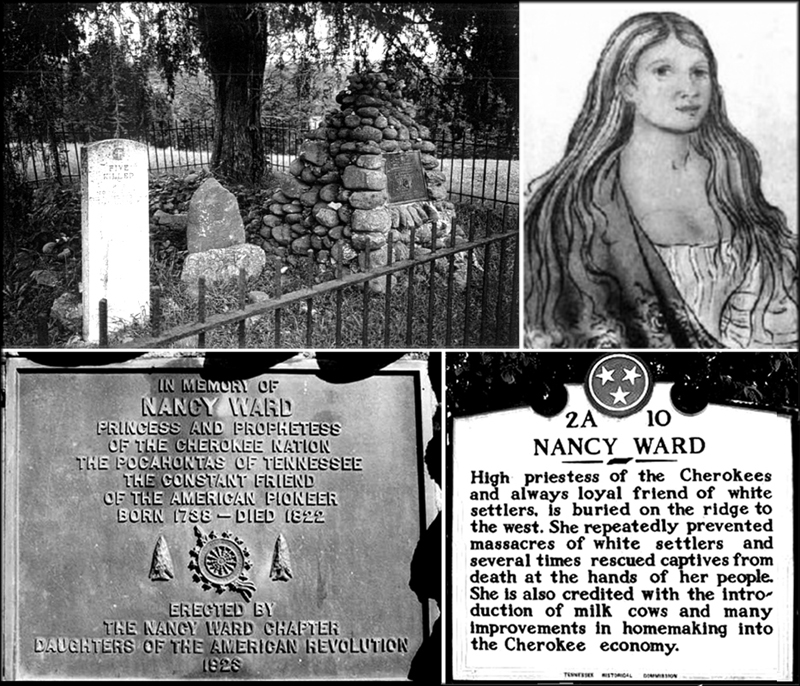
Recently, I examined the book, Tennessee History Stories (T.C. Karns, B.F. Johnson Publishing Company, 1904). One subject grabbed my attention – Nancy Ward, who became Tennessee’s Pocahontas. What did she do to earn such a prominent place in Tennessee history?

Most people are familiar with the heroics of Pocahontas, an Indian girl who saved the life of Captain John Smith in Virginia, after becoming a friend of the white man. Unless your are a student of Tennessee history, you likely are not familiar with the lesser-known name, Nancy Ward. Like Pocahontas, she became friends with the white man and endeavored to promote goodwill between him and the red man.

Nancy’s father was an English officer, while her mother was of royal Cherokee blood, being the sister of the vice-king, Atta-kulla-kulla. Nancy's residence was at Chota, (Madisonville, TN) on the north bank of the Tellico River. The town was the capital of the Cherokee nation and became known as a city of refuge to those who had committed a crime and went there to prevent imprisonment or execution.

Nancy became known as a prophetess because it was believed that she was under the control of the Great Spirit, which included looking into the future and foretelling her people what was going to transpire. Not only was her wigwam larger than the others, she resided near the chief, which was close to the great council house where important meetings were held such as declaring war or peace.

Ward’s standard of living was quite good. It was noted that she kept a charm on her door that comprised an otter restricted by the coils of a water snake. Two white men once came up the Tellico River to trade with the Indians for corn. A dispute arose between the two factions and the intruders were about to be killed by a crowd of Indians. Nancy found out about the quarrel and immediately rushed to the spot where she quickly defused the disagreement.

The prophetess explained to her people: “These men are our brothers; you must not ill-treat them.” Because of her standing with the tribe, her order was immediately obeyed without further ado.

Nancy did not stop there. She commanded that the white men's canoes be filled with corn. The surprised but grateful visitors rowed back down the river and informed everybody whom they encountered about this beloved woman named Nancy Ward.”

On another occasion, the Indians made a raid on the Watauga settlement and arrived at the house of William Bean, an associate and fellow longhunter of Daniel Boone. Bean’s wife, a friend to the Indians, did not seek safety in the fort, thinking she would be safe. The Indians carried her to the Indian towns on the Tellico River, where they tied her to a stake on a high mound with the intent of burning her alive. Before the wood could be kindled, Nancy Ward rushed to her side and secured her released. 

Dragging Canoe, the great chief of the Chickamaugas, opposed Nancy, but her power was far too great to overcome. Mrs. Bean was not only set free but was given a guard to protect her on her way back to her husband and children on the Watauga. Whenever the Indians began the war dance and were getting ready to make an attack upon the white settlements, Nancy Ward would seek help from Isaac Thomas, an Indian trader, or some other trusted messenger to warn the settlers of impending danger.

The influence of this amazing lady also extended to John Sevier. After the frontiersman and other leaders had made a raid upon several Indian towns and were causing havoc on everything in their path, they arrived at Chota. “This town,” said the locals,” “must not be burned because it is the home of Nancy Ward, the friend of the white race.” The town was spared destruction.

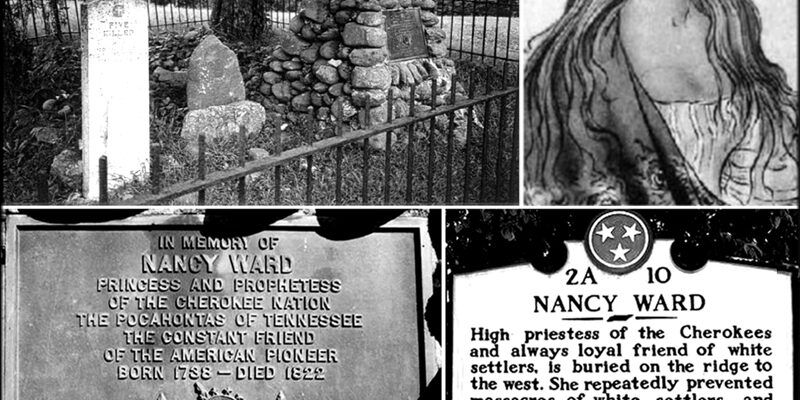
Nancy died in 1822 and was buried near modern day Benton, TN. In 1923, a Chattanooga Chapter of the Daughters of the American Revolution placed a monument on her grave. 

Read more

On Oct. 14, 1934 at 8:00 p.m., Mr. John Zollicoffer and Miss Helen Summers became husband and wife at the home of bride’s parents in Mountcastle Hills. The Johnson City Chronicle described the ceremony as “dignified simplicity.” Several out-of-town guests attended the gala affair. The Rev. Robert King, pastor of the First Presbyterian Church, impressively and beautifully solemnized the rites.   

The spacious rooms of the home displayed an alluring aspect with an improvised altar before the massive eastern fireplace of the drawing room. Tall cathedral candles and baskets of mammoth chrysanthemums were placed at each side against the ivy covered, white background. Ivy and baby chrysanthemums were entwined along the lovely colonial stairs and small boxwood pots marked the aisle for the entrance of the bridal party.

A program of nuptial music began at 7:45 p.m., rendered by Mrs. H.L. Burbage, pianist; Mrs. Edward Brading, violinist; and Miss Mary Luther Wright, harpist.

The Mountcastle Hills Home of the Summers Family Where the Wedding Took Place

The exquisite numbers were “Traumeri,” “Morning Calm as the Night” and “Toujours L’Amour Toujours.” Mr. Charles Broyles, tenor, sang “All for You.” At the closing bars of “Liebestraum,” the bridal party entered to the strains of “Lohengrin’s Wedding March.” During the service, “Sweet Evening Star” was softly played and as a recessional Mendelssohn’s “Wedding March” and Schubert’s “Serenade.”

The bride’s brothers, Frank and Jack Summers, preceded the bride to the altar. Mrs. Frank Summers served as matron-of-honor while Miss Edith Summers, only sister of the bride, was maid of honor. The bride’s father gave his daughter in marriage. They descended the stairs and proceeded to the altar where they were met by the groom and his best man, his brother, Algernon Augustus Zollicoffer.

The bride was radiant in a bridal gown of white satin, fashioned on straight princess lines, distinguished by a deep braided satin period collar and cuffs and sweeping train. Her exquisite bride’s bouquet was of orchids and valley lilies. The bridal veil of rose point lace was shaped to the head with a coronet of orange blossoms.

The dining table, covered with an imported lace cloth, was a picture of exquisiteness. A great bowl of white chrysanthemums centered the large table and white tapers burned in silver holders. White tulle was festooned in streamers from the chandelier to four edges of the table.

The bride cut a lovely four-tiered bridal cake, decorated with lilies of the valley and calla lilies. The talismanic favors were contained in the beautiful cake. Ices were shaped to resemble bridal slippers and wedding bells. Mints were decorated similar to the cake and served with coffee.

Assisting in the dining room were Miss Mary Gump, Mrs. William Preas, Miss Mary Elliott, Mrs. Glenn Elliott, Mrs. R.N. Dosser, Mrs. Welsford Artz, Miss Effie Leland, Mrs. Jay Gump, Mrs. Harris Sanders of Nashville, Miss Marjory Shipley and Miss Elizabeth Shipley. Guests were received at the door by Mrs. Allen Harris and Mrs. David Miller and entertained by Mrs. Paul Wofford, Mrs. L.L. Copenhaver, Mrs. George Oldham, Mrs. Ward Friberg and Mrs. Frank Henderson.

The groom was a graduate of the University of North Carolina Law School, a member of the Delta Kappa Epsilon Fraternity and engaged in the practice of law with his brother, Mr. Jere Zollicoffer.

Immediately following the reception, tendered by the bride’s parents, the bride and groom left by motor for a two-week honeymoon to the Chicago World’s Fair. Upon their return on November 1, they resided in Henderson, NC.

What makes this wedding so special is the fact that the couple in later years rescued the city’s gorgeous Lady of the Fountain from being melted. They stored it for a period of time in their E. Watauga garage before taking it to their home in Henderson, NC where it became a garden decoration with running water from the urn. The pair eventually agreed to let the bronze statue come home to Johnson City where she belonged and hopefully will remain. Thank you Mr. and Mrs. Zollicoffer.

Read more

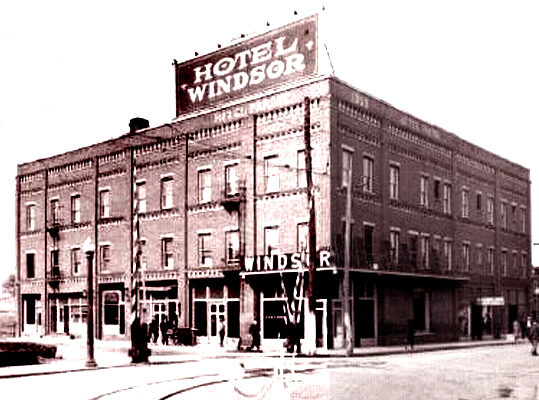
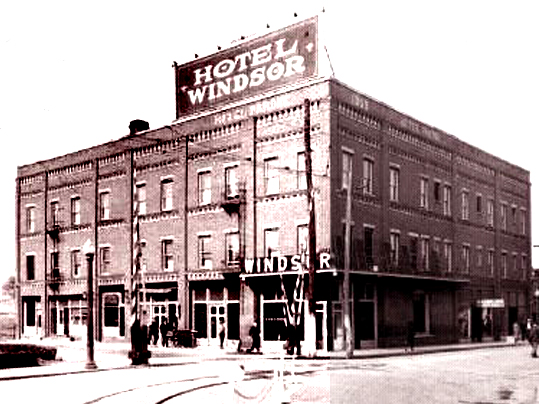
Hotel Windsor, originally built as Hotel Pardue in 1909, became a downtown fixture on Fountain Square until it was razed in 1971. I located an interesting item from what appears to from 1939 in ETSU’s Archives of Appalachia’s “Hotel Windsor Collection” (AppMs269, 1937-54).

The assortment contained a listing of 33 signs that once adorned the local East Tennessee landscape with facts about each one: number, property owner, location, authority (permit or lease), highway, miles from Johnson City and type (bracket, barn or other). The list includes 11E, 23, Old Jonesboro Highway, Glanzstoff Highway (E. Main Street in Johnson City to Elizabethton) and 81/34 (rural state roads). They are as follows: 

102 Ben Miller, Telford, lease, 11E south, 17 miles, 36”x48” bracket. 103 C.R. Green, Telford, lease, 11E south, 13 miles, 36”x48” bracket. 104 J.E. Slonaker, RFD Jonesboro, lease, 11E south, 11 miles, 36”x48” bracket. 104A Frank Hawkins, Johnson City, lease, 11E south, 9 miles, 14’x45’ barn.

104B D.A. Vines, Johnson City, permit, 11E south, 8 miles, 23’x45’ barn. 105 Mrs. J.S. Pritchett, Jonesboro, lease, 11E south, 6 miles, 36’x48” bracket. 106 Mrs. J.S. Pritchett, Jonesboro, lease, 11E south, 6 miles, 8’x30’. 107 Mrs. J.S. Pritchett, Jonesboro, lease, Old Jonesboro Highway, 5 miles, 6’x10’.

109 Mrs. F.S. Gray, Johnson City, leash, 11-E south 3 miles, 12’x60’. 110 C. M. Martin, Johnson City RFD, leash, 11E north, 3 miles, 8.5’x20’. 111 Mrs. Sam Fulkerson, Johnson City RFD, lease, 11E north, 4 miles, 36’x48’ bracket. 111A Mrs. Ida Meadows, Johnson City RFD, lease, 11-E north, 6 miles, 36”x48” bracket.

112 C.P. Taylor, Piney Flats, lease, 11E north, 8 miles, 36”x48” bracket. 113 Ira Green, Piney Flats, lease, 11E north, 10 miles, 8’x25’ barn. 114 Gregory Place, Bluff City RFD, permit, 11E north, 12 miles, 8’x55’ fence. 115 Mrs. W.S. Sproles, Bluff City RFD, lease, 11E north, 13 miles, 36’x48” bracket.

200 E.P. Roller, Kingsport RFD, lease, 23 north, 15 miles, 36’x48” bracket. 201 S.S. Rollins, Jonesboro, lease, 8 miles, 36’x48” bracket. 202 John B. White, Nashville, lease, 23 north, 5 miles, 10’x32’. 202A R.L. Crouch, Jonesboro RFD, lease, 23 north, 4.5 miles, 8’2”x26’.

203 Colla Sell, Johnson City RFD, lease, 23 north, 4 miles, 36’x48” bracket. 204 J.A. Denton, Johnson City, permit, 23 south, 1 mile, 6’x8’. 205 Mrs. H.H. Swadley, Johnson City RFD, lease, 23 south, 3 miles, 10’x30’. 207 Mrs. Peek, Clear Branch, permit, 23 south, 26 miles, 8’x22’.

207A Mrs. J.S. Runion, Erwin RFD, lease, 23 south, 22 miles, 12’x35’ barn. 208 Mrs. R.D. Dittorton, Unicoi RFD, lease, 23 south, 8 miles, 36’x48” bracket. 209 John Ledford, Unicoi RFD, lease, 23 south, 11 miles, 36’x48” bracket. 300 V. Chambers, Johnson City, permit, 67 south, 4 miles, 6’x10’.

301 Orville Martin, Johnson City, lease, Glanzstoff Highway (E. Main in Johnson City to Elizabethton), 2 miles, 8’x35’. 302 Carter Furniture Co., Elizabethton, lease, 19E, 11 miles, 36’x48” bracket. 303 J.D. Miller, Elizabethton, lease, 19E, 12 miles, 12’x25’. 307 Mrs. F. Hoss, Embreeville, permit, 81/34, 10 miles, 5’x9’. 308 Mrs. Ellis Moody, Jonesboro RFD, lease, 81/34, 12 miles, 6’x10’.

When I was growing up, these signs could be seen on most roads surrounding the city. Many of them remained long after the hotel closed. I hope today’s column generates unique memories from readers who recall one or more of them. I particularly visualize the one at Clear Branch near Erwin. If you know of one that is still standing or would like to comment on any of them, please drop me a note. 

Read more