From 1908 to 1940, it was not unusual for a Johnson City family to anxiously travel to the railroad station to greet the arrival of their newly purchased mail order prefabricated model home from Sears, Robuck & Co. (formerly dubbed the “World’s Largest Store”).

On board were one or two railcars containing approximately 30,000 house components weighing an estimated 25 tons. During the program’s 32-year span, over 100,000 homes representing 447 styles were offered to the public. Entrepreneurs Richard Sears and Alvah Roebuck began their successful business venture in 1893.

To order a prefabricated home, buyers had to show clear title to the lot, have steady employment and make a pre-payment equal to 2.5 percent of the amount of the material bill. A kit included all materials needed (excluding the house’s foundation) to build a sturdy, well-designed house. Eager homebuyers, aided by family, friends and neighbors, often provided labor for the project. Others contracted the work with a local construction firm or paid Sears to build it for them.
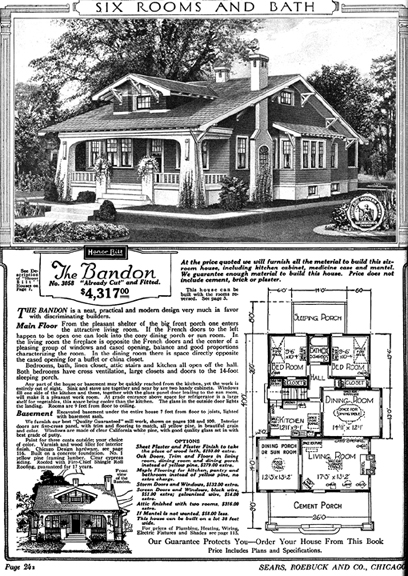
Each home came with an elaborate leather bound instruction manual containing step-by-step instructions for assembly. Sears promised that an average sized house could be constructed in about 90 days. A unique number inserted on each piece of carefully precut lumber identified its exact location as noted in the manual, eliminating any guesswork.

Sears Modern Homes consisted of three choices: Honor Bilt, Modern Bilt and Simplex Sectional. The first used only the best types of lumber, such as Douglas fir or Pacific Coast hemlock for framing, cypress for outside finish; and oak, birch and Douglas fir or yellow pine for interior finish. Catalogs showed floor plans ranging from modest to elegant homes. For instance, Honor Bilt homes in 1926 ranged from $986 (The Fairy) to $4909 (The Glen Falls).

Standard Bilt homes that ranged from $499 to $999 were available for those who could not afford the more expensive Honor Bilt ones. Although they too were high quality, they were not top of the line.

Simplex Sectional units were, as the name suggests, made in sections and could be quickly bolted together. These included add-on garages ranging in prices from $87 to $227. They also were suitable for summer cottages and hunters’ cabins.

Renters were urged to buy prefab homes and save monthly payments. The houses, depending on their size, could be paid off in as little as seven years. A side benefit of home ownership was having a nice yard where the entire family could enjoy landscaping it with green grass, flowers and vegetable gardens and a variety of trees, shrubbery and plants. Some house plans allowed potential buyers to alter the layout, such as reversing floor plans that took advantage of morning and evening sun. These altered plans contained the word “Reversed” after the name. Also, customers could suggest design changes by submitting blueprints to Sears, creating another kit.

As an experiment, the company once built two identical houses. One was built the ordinary way that required measuring and cutting; the other was a Sears home kit just as it came from the factory. The Sears home required 40% less labor. The company also sold wood to consumerswho chose not to order a precut home but desired quality materials from them at lowest cost.

In early years, houses could be built with or without an indoor bathroom. When one was included, it was generally located on the second floor. The company even sold a 720-pound sturdy outhouse kit priced at $41 that measured 4×7 feet. It contained ventilators on each side, asphalt roofing and two smooth finished seats with different size holes – one for adults and the other for children.

In later years, central heating, indoor plumbing, and electricity became standard in most homes. Consumerscould select the heating system that best suited their needs: hot water heat, steam heat, warm air heat and a Hercules “pipeless” furnace. Also available were complete plumbing systems and a choice of bathroom fixtures such as the little nostalgic porcelain tub that stood on four feet.

Consumers could pay cash with the order, pay for material during the construction phase, pay after inspecting the shipped material or provide a “guaranteed letter of deposit” from a post office. The latter stated that the buyer had deposited with them the required sum of money as a special fund to be paid upon delivery of the kit. Every home carried with it a “Certificate of Guarantee” for delivery of all materials as detailed in the plans and specifications.

A typical testimony from a satisfied homeowner reads as follows: “I am well pleased with the house and with your material. My wife and I, who are approaching 60 years of age, built the house ourselves and saved about $1,300.”

The curtains came down on the Sears Modern Homes era by the Great Depression of 1929. Almost overnight the company was thrown into a financial tailspin by steadily rising payment defaults. Because of their high quality, many of the homes are still standing. According to local resident, Ken Harrison, the houses at 309 W. Pine Street and 320 Hamilton Avenue in Johnson City are Sears homes.

The City of Johnson City Historic Zoning Commission is interested in learning of any Sears kit homes that are located inside the city limits. If you know of any, please call Jessica Harmon with the City of Johnson City Planning Division at (423) 434-6073.

How can someone identify a house as being a Sears one? Search the Internet for suggestions: “Determine if the house was built between 1908 and 1940. Compare the actual floor plan dimensions with those shown in an old catalog. Identify characteristic column arrangements on porches. Find a square block molding at the foot of stairs. Look for numbers on boards used in attics and basements. Locate a shipping label under a staircase. Find the house’s building permit in a local courthouse. Look for an “R” or “SR” on plumbing. Find a stamp that says “Goodwall” on the back of sheetrock.”

(Resources/contributors: www.searsarchives.com; www.wikihow.com/Identify-a-Sears-Kit-Home; Small Houses of the Twenties, 1926 house catalog reprint, The Athenaeum of Philadelphia /Dover Publications, 1991; Ken Harrison; Bernie Gray; and Bill Russell.) 
Read more

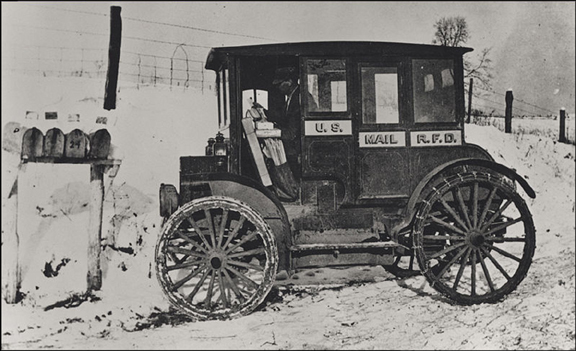
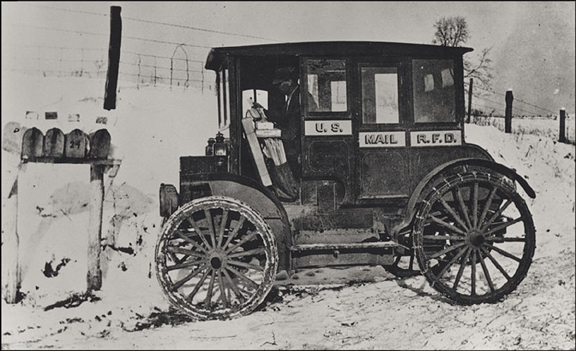
In 1775, Benjamin Franklin was appointed as the first Postmaster General, but it would be another 125 years before the postal system would implement RFD (Rural Free Delivery) aimed at providing mail service to country folks.

According to the 1988 book, History of Washington County Tennessee, initially the government was the primary user of the postal service. The general population had to rely on volunteers traveling to and from their area to receive mail delivery. Eventually mail routes became established with riders carrying mail in saddlebags. When roads improved such that stagecoaches could travel over them, parcels were delivered by these roomier conveyances.

By 1796, a post office was established at Jonesborough with John Waddell, Jr., a son-in-law of John Sevier, as postmaster. In Washington County, post offices were at first located in the homes or stores of designated postmasters, which meant a change of address anytime there was a change of postmaster.

In 1803, a proposed stagecoach route between Jonesborough and Blountville was rejected because it was too costly – $600 per year for once a week delivery. A carrier on horseback could transport it for $200. By 1840, mail was established between Jonesborough and three nearby cities: Abingdon, Virginia; Winston-Salem, North Carolina; and Knoxville, Tennessee.

By 1847, there were only eight post offices in Washington County. The number slowly grew to 14 by 1868. However, as the population began to increase, numerous additional offices were established throughout the county.

Postage stamps were introduced in 1847. During the Civil War, a Jonesborough postmaster issued a five-cent stamp on which his name appeared. However, uniform rates for stamps were not established until 1863. Initially, customers could prepay for a letter using a stamp or let the recipient fork out the money upon arrival.

Around 1900, the number of post offices began to decrease significantly because RFD had arrived. The establishment of 300 free rural delivery routes in Tennessee resulted in an almost immediate closing down of all post offices in Tennessee; they had served their usefulness. New and prosperous towns sprang up near villages, which brought with it larger distribution locations for the mail.

Many of the old post offices had historical significance attached to them. For instance, Bean station was where William Bean in 1769 built the first cabin by a white settler in Kentucky, Tennessee or Western North Carolina. 

Noli Chucky (Nolichucky) was the site of Jacob Brown’s first store opening in Tennessee in 1772. It was also where Russell Bean, the first child born on Tennessee soil first saw light. Also, John Sevier whose bravery was displayed in a battle with Indians earned the nickname “Nolichucky Jack.”

A few hundred yards from the Boons Creek office was the site of a gigantic leaning beech tree that bore the famous inscription, “D. Boon cilled a bar in the year 1760.” 

According to the book, Tennessee Post Offices and Postmaster Appointments, 1789-1984, there were 99 original post offices in Washington County. A sampling of nine of them with the post office name (its first postmaster, the years in existence and where the post office function was absorbed) include the following:

Alfred (Landon C. Garber, 1889-1899, Johnson City), Austin Springs (Clisbe Austin, Jr., 1875-1900, Johnson City), Blizzard (renamed Damphool, John F. Grisham, 1889-1900, Jonesborough), Blue Plum (Henry Johnson, 1849-1859, discontinued), Douglass Shed (renamed Douglass, Charles S. Ervin, 1895-1900, Jonesborough), Hacker (Robert L. Ford, 1893-1900, Telford), Haws Cross Roads (Thomas R. Haws, 1860-1900, Jonesborough), Johnson’s Depot (renamed Haynesville, 1857-1870, name changed to Johnson City), and Knob Creek (Alpheus Dove, 1856-1859, discontinued). 

Read more

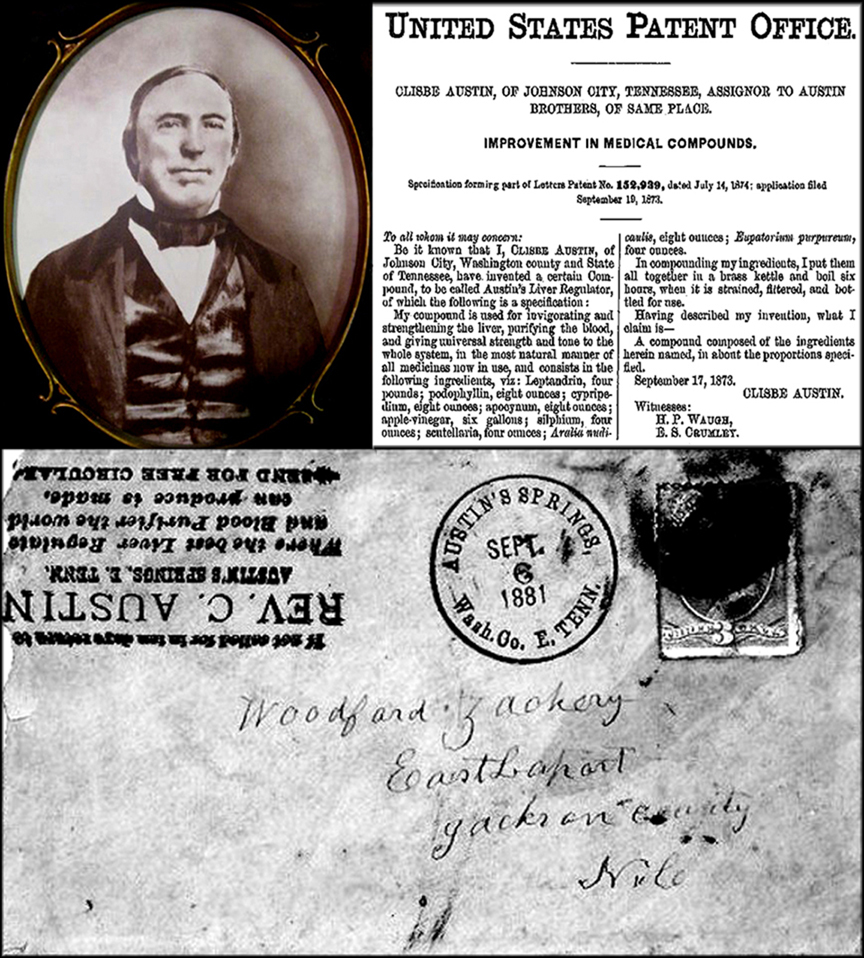
 In 1873 when Johnson City’s population was about 600, Reverend Clisbe Austin, who listed his address as “Johnson City, Washington County, State of Tennessee,” marketed a U.S non-alcoholic medicinal product known as Austin’s Liver Regulator.

 On September 17 that year, the reverend submitted an application for his invention to the United States Patent Office. He was granted rights for patent 152,939 under the category “Improvements in Medical Compounds.” Research suggests that Clisbe, as assignor, authorized his two oldest sons, Frederick and Clisbe, Jr. (by his second wife, Jane Ann Hammond) to produce and market the product from their recently purchased Austin’s Springs property on the Watauga River. 


The recipe consisted of eight largely unfamiliar, hard-to-pronounce ingredients, with the exception of one – apple-vinegar. The components were placed in a brass kettle, boiled six hours, strained, filtered and bottled for distribution.


In a June 1874 local ad, the inventor promoted his product: “The world wonders why it is that Austin’s Liver Regulator so far excels all other family medicines now before the people. The reason is it is the result of 35 years gathering and experimenting until we brought it to the state of perfection and now proves its wonderful virtues at home before going among strangers. We boldly challenge the world to produce its equals as a gentle, safe and reliable family medicine.


“The product cures all derangement of the liver and bowels and purifies the blood, has cured several cases of scrofula (tuberculous infection of the lymph nodes), prevents and cures diseases generally if taken in time (cholera and all fevers not excepted). Hence, every family should keep it in their house and prevent sickness and doctor bills. It is purely vegetable compound made of the roots of Armenian growth, their medicinal properties extracted with pure apple-vinegar without the drop of spirits.”


The ad identified a “cloud of witnesses,” prominent Johnson City citizens who put their stamp of approval on the medicine in a document dated April 15, 1874: “We the citizens of this town and vicinity do heartily recommend Austin’s Liver Regulator as being one of the safest and best family medicines we have ever used. It is exceedingly popular where it is made and has performed many wonderful cures among us. The signatures read like a who’s who of the regions early days:


B.F. Swingle (clerk and master chancery court), 0.P. Childress (merchant), H.C. Burroughs (merchant), John J. Adams (home builder), H.H. Crouch (builder), A.B. Bowman (postmaster), D.B. Farnsworth, (express and depot agent), A.J. Toppings (surgeon and mechanical dentist), E.F. Akard (attorney at law), Rev. T.B. Felts (M. E. Church, South), Rev. F. D. Crumley (M.E. Church, South), Col. P.P.C. Nelson (ex-state senator of Tennessee), Dr. H.H. Carr (Tennessee legislature), Col. J.K. Miller (U.S. revenue collector), D.W. Crumley (City Mayor), Charles S. Holloway (city marshal), W.H. Taylor (city alderman), Jacob McNeese (city alderman), J.M. Carr (city alderman), Rev. J.D. Daugherty (M.E. Church, South), A.J. Daugherty (shoe and boot maker), D.M. Taylor (deputy sheriff), E.S. Crumley (tinner), J.P.S. Ryburn (tanner), A.S. Brownlow (claims agent), E.D Hoss (hotel keeper), G.W. Hicky (hotel keeper), S.H. Miller (justice of the peace), J.M. Williams (justice of the peace) and J.B. Love (farmer).


 The Austin Brothers made and sold the product for one dollar per bottle; five bottles equaled a gallon. The company offered an undisclosed discount if the buyer purchased a dozen bottles. A printed circular could be ordered at no cost from the company that provided additional information about the medicine. The mailing address was shown as “Austin Brothers, Johnson City, East Tennessee.” 


Reverend Austin died in 1883 at Austin’s Springs (later Austin Springs).


Read more

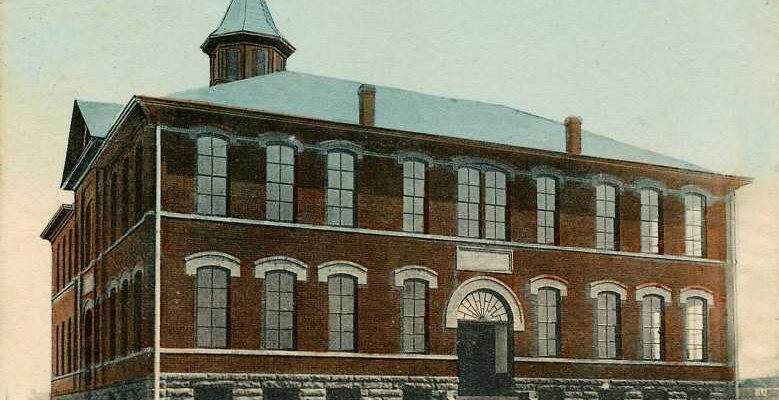
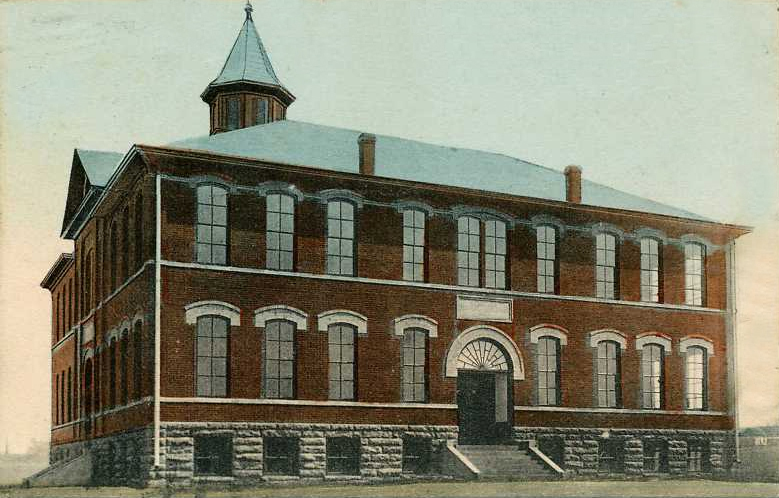
I grew up in the 1940s about a block from West Side School that was once located at the southeast corner of Main Street and Watauga Avenue. I attended the first grade there in 1949-50 under the watchful eye of my teacher, Miss Mildred Taylor. A Johnson City Chronicle dated May 3, 1947 contained a news item that aroused my interest by mentioning several names that I recognize.

Miss Eleanor Robertson, teacher at Training School of East Tennessee State College, was the speaker at the May meeting of the school’s School Parent-Teacher Association. The educator chose as her theme, “Relation of the Child to the Parent,” listing love, respect for work, honesty and obedience as the four fundamental principles for training children. She stressed that youngsters need positive models rather than negative critics. 

The 4-F children, as she defined them, experienced “firmness, fondness, fun and fairness.” She concluded her talk by reading an interesting old poem that has been heavily quoted over the years titled, “The Child’s Appeal,” by Mamie Gene Cole:

“I am the child. All the world waits for my coming. All the earth watches with interest to see what I shall become. Civilization hangs in the balance. For what I am, the world of tomorrow will be.

“I am the child. I have come into your world, about which I know nothing. Why I came I know not. How I came I know not. I am curious; I am interested.

“I am the child. You hold in your hand my destiny. You determine, largely, whether I shall succeed or fail. Give me, I pray you, those things that make for happiness. Train me, I beg you, that I may be a blessing to the world.”

Following the speech, Mrs. Roy Webb gave the secretary’s report; Mrs. Joe Bettini, in the absence of Mrs. William Cox, read the treasurer’s report. During the devotional period, each member of the group read a Bible verse. Miss Georgia Tomlinson gave the membership information, stating that West Side had received the Gold Leaf Award for having 100 percent attendance.

Other chairpersons providing concise reports included Mrs. Earl Gentry (finance), Miss Ruth Martin (school lunch), Mrs. Lester Bowman (founder’s day, my aunt), Mrs. Maude Meek (music, spiritual education), J.H. Mahoney (principal, program chairman), Mrs. H.R. Deere (art), Miss Mildred Taylor (child welfare), Miss Carrie Lu Yoakley (building and grounds) and Miss Mildred Adams (procedure, by-laws).

Mrs. Primus Dees (wife of my former downtown barber, president of Central PTA council), conducted the installation ceremonies for the following new officers and positions: Mrs. Roy Webb, president; Mrs. Glen Maupin, vice president; Mrs. Ralph Hamley, secretary, and Mrs. Joe Bettini, treasurer; Mrs. Mildred Lawson, program; Mrs. Fred Deneen, publications; Mrs. D.V. Paradis, publicity and scrapbook; Mrs. H.W. Cassing, summer round-up; Miss Carrie Lu Yoakley, child welfare; Mrs. R.Y. Foster, school lunch; Mrs. Howard Hartsell, buildings and grounds; Mrs. Harry Johnson, finance; Mrs. Earl Gentry, hospitality; Mrs. Lester Bowman, founder’s day; Mrs. Harold Dyer, study course; Mrs. Harry Yeager, membership; and Mrs. H.R. Deere, spiritual education.

It was announced that the Central Council would meet on May 23 at 2:30 p.m. at Mayne Williams Library and that the Mother’s Day Arts and Crafts Club would convene in the Girl’s Club Room at the First Presbyterian Church on June 4 at 2 p.m.

Graduation exercises for the sixth grade class were scheduled for 2 p.m. on May 26 at the school followed by a class party. It was also reported that the luncheon for teachers would be held at noon on Wednesday, May 28.

The meeting concluded with Mrs. Nathan Holley winning the attendance prize and Miss Georgia Tomlinson’s third grade class receiving the room-count prize.

Read more

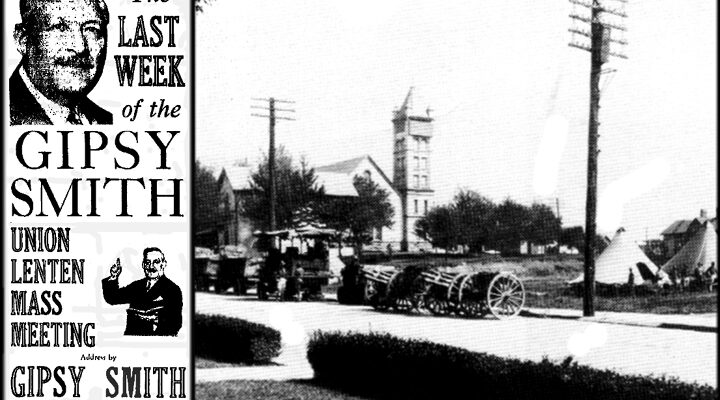
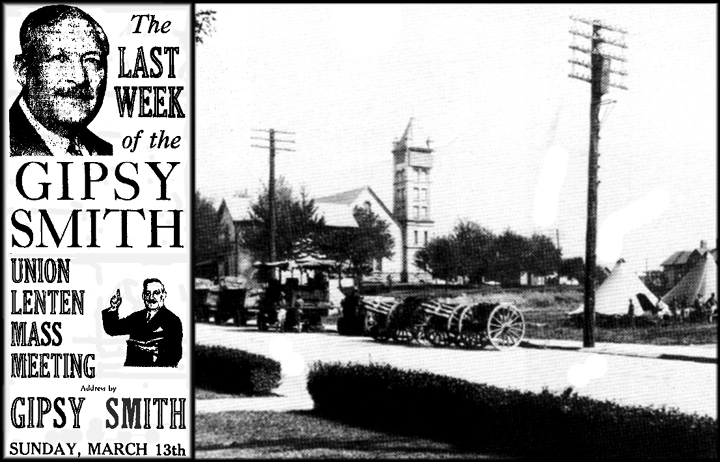
In 1928, two evangelists came to Johnson City to lead pre-announced revivals. The first one was Winston-Salem, North Carolina evangelist, Edward Fraser, who arrived on September 13 with a sermon he titled, “Weeds – Spiritual and Physical.” He rented land for his tent meeting on East Market Street opposite the Colonial Hotel (at about the location of today’s Colonial Way, see attached photo).

The message was a demonstration of practical Christianity. Before the gathering, Fraser lead a group of men in an effort to convert the unsightly weed covered lot where the meeting was to be held into a neat, well-groomed lawn. The effort was consistent with the desires of the Appalachian Publishers and the Chamber of Commerce to rid the city of weeds before the forthcoming visit to the city by Herbert Hoover and also the annual Appalachian Fair.

Citizens witnessed firsthand how quickly an eyesore could be converted into something attractive. The effort was twofold – cleaning an unkempt lot and providing an illustration for his upcoming message.

Mayor William Barton; Sam R. Sells, president of the Chamber of Commerce; and members of the Rotary and Kiwanis Clubs were invited to participate to display their full support to eradicate weeds. A picture of the lot was taken before and after it was cleared and manicured.

Fraser asked those who had worked on the lot not only to attend the meeting the next night but to also bring their scythe and Bible with them. The meeting began promptly at 7:45 with an appropriate song – “Bringing in the Sheaves,” an analogy between harvest time in the fields of grain and the spiritual harvest of souls as a result of diligent sowing and reaping. When the meeting rolled around, the evangelist delivered his gospel message,” asking his congregation to clean up their lives both physically and spiritually.

Left: Gipsy Smith Ad; Right: The vacant lot can be seen in this photo.

The second evangelist that came to Johnson City was the well-known “Gipsy” Smith who conducted evangelistic campaigns in the United States and Great Britain for over 70 years. He arrived in the city on October 12. His focus was a bit different from Fraser’s. Long before he came to town, he had his followers organize small group gatherings in people’s homes, known as “cottage prayer meetings” to pray for the upcoming revival.

The ladies of Johnson City eagerly volunteered their homes, forming assemblies that averaged from 20 to 24 women. Each meeting was held from 10:00 to 10:30 a.m. The 33 ladies (and their residents) who volunteering their homes represented many prominent families from yesteryear:

Mrs. Ross Spears (312 East Holston Avenue), Mrs. Sam Sells (Sunset Hill), Mrs. Henry Blackwell (1305 Baxter Street), Mrs. Will Blevins (1204 E. Holston Avenue), Mrs. Charles Piston (Oakland Gardens), Mrs. S.G. Henson (310 E. Fairview Avenue), Mrs. Fred Lyle (615 E. Fairview Avenue), Mrs. L.M. Snapp (Lafayette Apartments, 302 W. Main), Mrs. Sam O’Dell (215 W. Holston Avenue), Mrs. L.E. Faulk (201 W. Holston Avenue), Mrs. D.E. Fine (301 Lamont Street), …

Mrs. Sue Miller (502 Highland Avenue), Mrs. Sam Collins (300 Fall Street), Mrs. J.F. Templeton (102 E. Unaka Avenue), Mrs. H.C. Beasley (106 E. Myrtle Avenue), Mrs. Harry Lyle (100 West Pine Street), Mrs. Neal A. Beasley (315 W. Poplar Street), Mrs. N.H. Dickson (1415 S. Roan Street), Mrs. Hughes Peters (804 Grover Street), Mrs. L.F. Sage (516 W. Main Street), Mrs. J.L. Jillin (310 Wilson Avenue), Mrs. F. Wilton (425 Hamilton Street), …

Mrs. St. Clair (303 Hamilton Street), Mrs. J.L. Hankins (920 W. Maple Street), Mrs. E.O. Woodyard (717 W. Pine Street), Mrs. Charles Dickey (412 W. Maple Street), Mrs. Frank Taylor (312 W. Pine), Mrs. A.J. Davis (511 W. Locust Street), Mrs. McFadden (216 Tacoma Avenue), Mrs. Frank Graham (200 W. Watauga), Mrs. Andy Lanless (1007 Grover Street), Mrs. John Cox (1207 Alton Street) and Mrs. Will Archer (907 Claiborne Street). 

If you recognize a family member or friend in the list, please send me an e-mail or letter.

Read more

I have fond remembrances of patronizing several “mom and pop” grocery stores in Johnson City during my youth. The earliest one I recall was the Red Store in the late 1940s (Bert Weems, later W. Howard Stewart, located on W. Market at W. Watauga).

Others included Ford Wilson Grocery (Ford and Verna Wilson, Elm Street, delivered groceries to our apartment in the 1940s), West Side Grocery (Carroll and Nettie Younce, two of my favorite people, W. Market at Knob Creek Road), Fox Grocery (Henry and Louise Fox, Knob Creek Road near Peachtree), Bailey and Son Grocery (Frates and Mary Bailey, Earnest Street, selling those wonderful orange sherbet and vanilla ice cream “pushups”) and Puckett’s Grocery (Jeff and Martha Puckett, Forest Avenue).

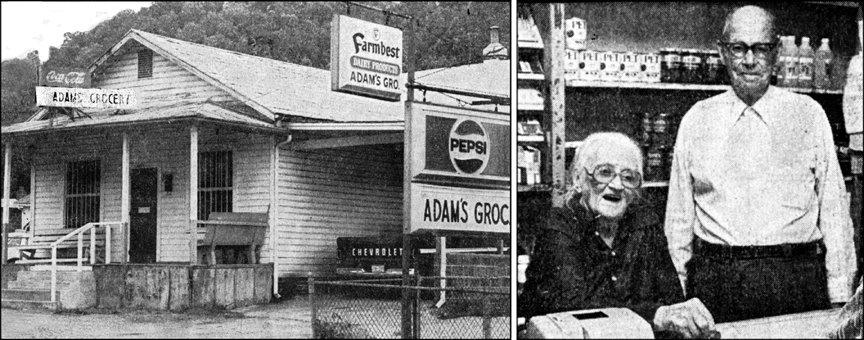
Today’s column spotlights Adams Grocery at 109 E. Main (Guy and Carrie Adams). I recall the store but do not remember going in it. Karen Roberts of the Johnson City Press-Chronicle interviewed the couple in October 1988.

The couple sold groceries in the front of their home and lived in the back. Three old store signs graced the entrance with each one having a different product displayed: Coca Cola, Farmbest and Pepsi. Vintage soda pop machines and an ice cream freezer stood next to the walls along the front and side while the other two were stocked high with canned goods. Two benches greeted patrons on the front porch, as did a Chevrolet truck, usually sitting under the carport, and a cat named Bill that roamed freely about the place.

Karen noted that big-name chain stores extinguished much of the smaller stores’ trade. However, the couple was the epitome of small struggling grocers from that time. In good and bad times spanning three decades, the Adams’ business philosophy of treating customers with respect was unwavering.

“If I ever mistreated anybody in my life,” said 87-year-old Carrie, “I don’t know it. That makes a big difference with customers. If you treat them nice, you can get along with the world. People came in the store as much for friendship as for food. Not many people come by anymore because the dirt road out front is now paved, carrying torrents of traffic. You can hardly get across the street now. Would you send your kid to the store in that traffic?” Karen readily understood what Carrie was talking bout because passing cars and trucks drowned out most of what she was saying.”

“Also hurting small business are large companies giving big stores hefty discounts,” said Carrie. “If you were starving to death,” you couldn’t get anything to eat at a big store. If anybody comes in here and says that they are hungry, we give them something to eat. It happens almost every week.”

Guy, Mrs. Adams husband of 70 years, added his two cents: “Sometimes people knock on our door at five o’clock in the morning. There is no certain time for us to get up or go to bed.” This presented no problems to the couple.

Mr. Adams, a former livestock dealer who was 90 years old at the time of the interview, was mostly a silent partner, except when he talked of his love for horses. Pointing to Keystone, a housing project down the street, Adams noted that it belonged to his family. “It was just a big cornfield. It’s the first winter I ain’t kept some horses out there, but if I live to warm weather, there will be horses in that lot.”

Mrs. Adams boasted of her ability to get along with people in a neighborhood that some people consider a bit rough. “I get along with the meanest boys in Keystone and that’s saying a lot. They are all good to us,” Mrs. Adams said. The subtle way Mrs. Adams handles a disagreement has led to an enduring marriage. She makes her point and abruptly leaves without any argument.

When the couple was asked if they would consider selling the store, Carrie responded that they would keep it open as long as they were physically able. They needed the income plus it was a part of their life and their home.

Read more

 In 1948, Johnson City was Tennessee’s fifth largest city with a population of 31,508. “The Hub of Tennessee,” as it became known, had experienced a population growth since the turn of the century: 1900, 4,645; 1910, 8,502; 1920, 12,442; 1930, 25,000: and 1940, 25,322. In 1948, officials provided some remarkable statistics about the city. It had a trading population in excess of 250,000 within a radius of 25 miles. Retail sales two years prior hit $26.9M.

In addition to the general products were lumber, building material, hardware supplies, dress goods, groceries, machinery and other allied lines of merchandise. The city served as the favorite retail shopping locale for the vast and fast-growing area.

By 1948, Johnson City was served by three railroads: the Southern Mail Line from Washington to New Orleans, the Clinchfield main line and the East Tennessee and Western North Carolina. Three U.S. Highways 11E (East and West), 19 (North and South) and 23 (North and South) contributed to traffic flow through the city. Also present was a million dollar airport that was the first stop of American Airways’ southern route out of Washington, with four planes flying daily.

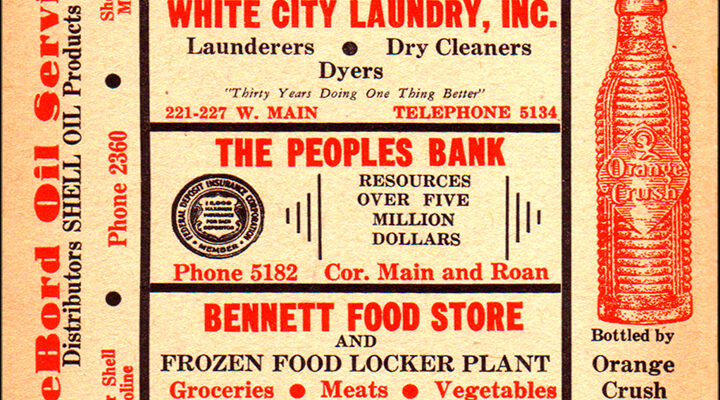
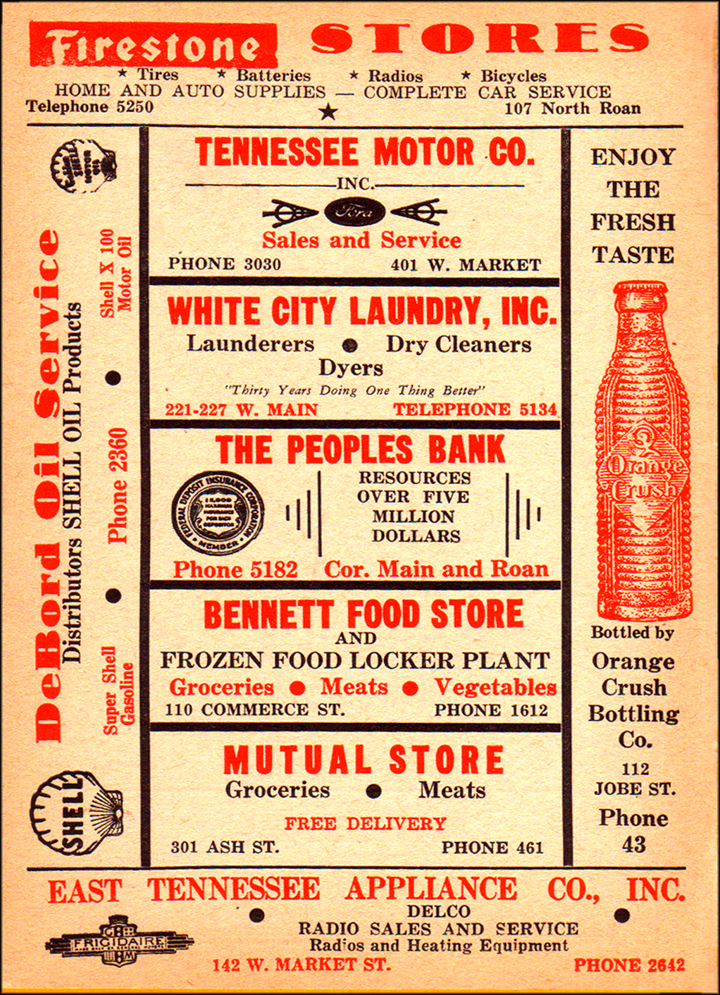
Advertisements from a 1948 City Directory

Johnson City was the most diversified trading center of East Tennessee and one of the leading industrial centers. Local industries included hardwood flooring, furniture, textiles, rayon yarn, hosiery, fabricated steel, foundry products, bobbins and other products. There were 30 industries employing 4000 people with an annual payroll of slightly under $5M dollars.

In addition to the general mercantile products were lumber, building material, hardware supplies, dress goods, groceries, machinery and other related lines of merchandise. Retail sales for 1946 were $26,900,000.

Johnson City’s terrain was rich with a wide variety of raw materials including hardwood lumber, agricultural products, clay, shale, feldspar, coal, limestone, acid woods, water, mica, manganese and other natural resources, all of which existed in a crude and undeveloped stage.

The city was likewise proud of its Mountain Branch of the Veterans Administration Facility for Disabled Veterans. The reservation contained 450 acres of land on which were 76 buildings. It had six miles of asphalt-paved roads, three miles of secondary roads and its own “white way.” The value of the buildings and plants was appraised at $3,511,276, exclusive of the worth of equipment, which amounted to $785,733 or a total value of $4,297,049. The replacement value was estimated at $15M. There were 556 hospital beds, 1,723 duty and non-duty beds, and 330 unofficial barracks beds, making a total of 2,609 units. About 5,000 disabled World War veterans were admitted each year.

Johnson City was well served by a “Class A” school system with a splendid education system. In addition, there was an excellent Junior High School on N. Roan Street. The city boasted of providing the home for East Tennessee State Teachers College that had an annual enrollment of approximately 1,500 students. Nearby Milligan College had an annual roster of approximately 400 students. The 48 churches dispersed throughout the city covered practically all denominations. By this time, most of them had large congregations and modern church structures.

The civic clubs of the city in 1948 included the Chamber of Commerce, Junior Chamber of Commerce, Rotary, Kiwanis, Optimist, Civitan, Business and Profession Women, Pilot, Monday, Merchants Credit Association, as well as numerous patriotic, educational and music organizations.

The city was served with daily newspapers, both owned by Press, Inc. The Johnson City Chronicle was delivered in the morning and the Johnson City Press was distributed in the afternoon. It was also the home of radio station WJHL, which had just recently increased to 1,000 watts and had become a part of the ABC national hook-up at 910 on the radio dial. Station WETB, Johnson City’s newest station, broadcast from sun-up to sundown at 790 kilocycles.

Johnson City was recognized as being one of the outstanding burley tobacco centers of the Appalachian region. Within a radius of 70 miles of Johnson City, there was annual production of approximately 40-million pounds of burley tobacco. The quality and type of tobacco was up to standard and annually competed favorably with other markets in price and volume sales. The city had seven spacious tobacco warehouses with a combined floor space of 450,000 square feet of floor space.

With two sets of buyers, Johnson City could easily double the pounds sold. Thousands of tobacco growers preferred selling their product in Johnson City. Johnson City, being such a diversified retail and wholesale trading center, had a great advantage to the farmer in buying the necessities of life because, according to one slogan, “You can get it in Johnson City.”

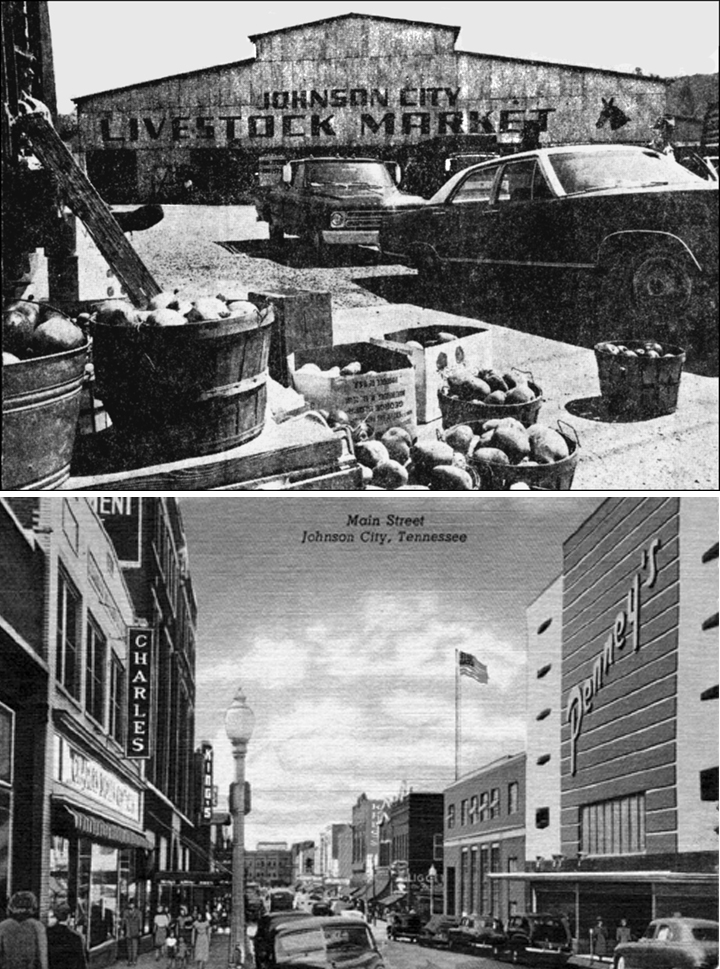
Top: Johnson City Livestock Market As It Appeared on Broadway Street; Bottom: Main Street Looking West. Charles Store Is On the Left, Penneys on the Right

By 1948, the city had fast become the livestock and agricultural center of East Tennessee with the opening of a new livestock market. This was brought about by its ever-increasing number of quality mules and horses, the quality of its beef and dairy cattle, its fast-growing lamb production and an increase in poultry products. Washington County was in the midst of a soil improvement program aimed to prevent land erosion, increase lime in the soil and expand red clover across the land. Washington County was believed to have an enviable future in agricultural and livestock advancement.

The opening of the Johnson City Livestock Market in 1948 provided the handling of more than a thousand head of livestock each Wednesday.

Read more

 A vintage boarding house (a.k.a. a lodging house or rooming house) referred to a home where the owners rented one or more of their rooms to paying customers. Room and board typically meant lodging and food for the guests. Initially, boarders shared washing and toilet facilities, but later each room normally had its own amenities. Depending on arrangements made with the landlord, duration of stay at a facility varied from a few days to several weeks to a year or more.

Boarding houses are mentioned in literature that date back before the Victorian period. Renting a room rather than a home made good sense. Income from such an arrangement could significantly augment the owners’ revenue, although it added additional work and expense for the renter from regular meal preparation and housekeeping chores.

An examination of old city directories reveals that Johnson City had eight boarding houses in 1909: Mrs. Mattie Almany (206 W. Main), Mrs. Hanna Coleman (East Maple Extension), Mrs. Nannie Creasman (102 E. Walnut), William G. Day (107 W. Main), Mrs. Annie Fair (503 W. Walnut), Mrs. Nancy Pickering (505 Afton), Miss Cordie Range (107 E. Holston) and Mrs. Lou Sharitz (117 W. Walnut).

Within two years, the number had soared to 21: Arwood & Patterson (213-215 N. Railroad Avenue), Mrs. Maude Carroll (814 E. Fairview), W.H. Cressman (145 E. Market), Mrs. Rhonda Crumley (421 W. Pine), Mrs. S.C. Crumley (114 Jobe), Mrs. B.A. Dempsey (114 W. Pine), Mrs. Ellis Mollie (209 E. King); Mrs. Hannah Frizzell (E. Maple Extension), Ella Gentry (202 W. Market), Mrs. J.A. Greenfield (404 Montgomery), Mrs. M.C. Hess (215 Buffalo), Mrs. S.A. Lawson (122 W. Market), Mrs. Sarah E. Lusk (101 E. Myrtle), Mrs. Etta Martin (125 S. Railroad Avenue), Mrs. M.E. Osborne (402 E. Unaka), Mrs. Lou Sharitz (104 E. Walnut), J.W. Smith (113 W. Cherry), Mrs. Mary Stroup (129 E. Jobe), Charles Walters (116.5 W. Main) and Mrs. Cora Weilder (109 W. King).

The number varied over the years: 1915 (11), 1917 (10), 1919 (6), 1922 (8), 1923 (19), 1935 (9), 1937 (15), 1939 (18), 1941, (22), 1944 (4), 1948 (7), 1950 (18, 5 boarding houses and 13 furnished rooms). By then, “boarding houses” were beginning to be known as “furnished rooms.”

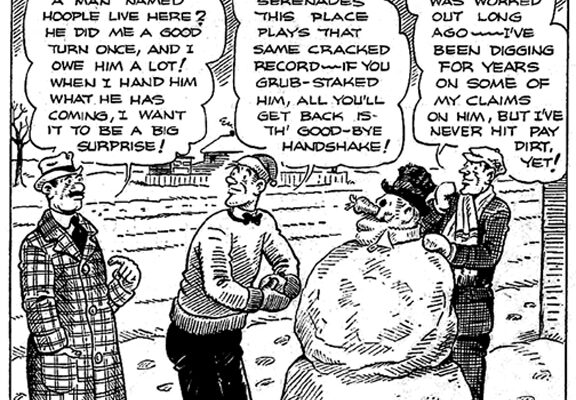
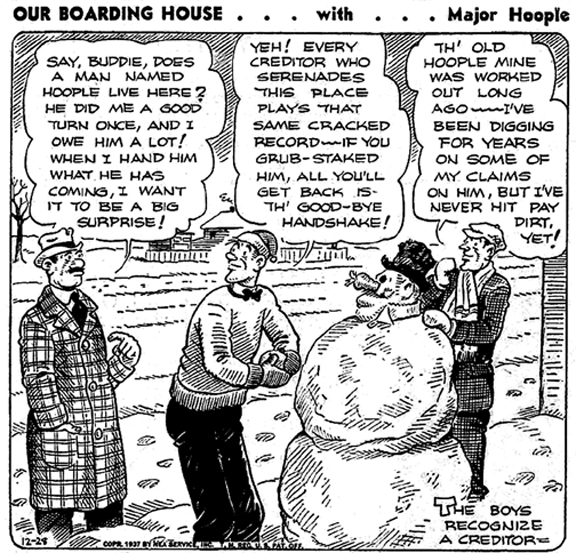
Major Hoople Cartoon Strip, Newspaper Enterprise Association, 1937

Many of my “Yesteryear” readers remember Major Hoople. “Our Boarding House,” a once highly popular newspaper cartoon strip, featured the antics of the unstable Major Amos Hoople and his unwavering faithful wife, Martha. She owned a boarding house that was comprised of an always-eccentric group of boarders.

The Major’s morbid fear of work caused him to be quite content to let his hard-working spouse handle the daily chores of the business while he lounged around home complaining or partied with his equally useless cronies. He routinely uttered whopping lies about his many accomplishments and get-rich-quick schemes. The overweight, balding buffoon displayed a bushy black mustache and always wore a fez. Some people compared him to the egotistic comedian W.C. Fields.

Hoople has been properly described as “the greatest windbag, stuffed shirt and blowhard ever to ‘hrumph’ or ‘egad’ his way across the funny pages.” The public loved him. The caricature, written and drawn initially by Gene Ahern, ran as a daily cartoon in hundreds of newspapers from 1921 until 1981. The series was geographically restricted because almost every scene occurred in the boarding house, usually showing the couple scowling at each other to no avail.

Although Ahern retired in 1953, the newspaper series continued in popularity for decades, eventually inspiring a short-lived radio show starring Arthur Q. Bryan (who previously played Dr. Gamble on the long running successful Fibber McGee and Molly radio show).

If you know of another city boarding house or remember one that I listed, drop me a note.

Read more

On August 14, 1940, a devastating flood occurred in Elizabethton, brought about by a massive overflow of the mountain-fed Watauga River. The 24-hour torrential rain was the remnant of a 91-mph hurricane that, after pounding the South Carolina and Georgia coasts, took direct aim at East Tennessee. The Watauga, normally a peaceful mountain stream about 50 feet wide and only a few feet deep, rose to a staggering 26 to 30 feet and a quarter of a mile wide.

Workers, scampering about in total darkness, rescued persons desperately clinging to trees and housetops after the rising waters swept the Rio Vista region that was adjacent to the city, home to about 150 residents. Authorities began preparations for an orderly evacuation of as many residents as possible.

Mrs. Bob Shell, 54-year-old mother of seven children, became a victim after being trapped in an automobile with her husband and 83-year-old mother when they fled their engulfed home that was located beside the river. The flood also caused heavy property damage.

Sergeant Claude Buckles of the Tennessee Highway Patrol believed that a number of persons drowned as the stream caused the water to rise 20 feet between nightfall and midnight. Although the waters began to rapidly recede, it was daylight before an accurate death toll could be determined.

Don Calfee, managing editor of the Johnson City Chronicle, said he witnessed the bodies of two men being pulled from the water. The small community was adjacent to two large rayon plants, Bemberg and North American Rayon, which had become the hub of industry for this city of approximately 10,000 people.  W.S. Argabright, the telephone company manager, said a number of persons were marooned on house roofs as darkness handicapped rescue work.

To assist rescue efforts, a truckload of boats and additionallaw enforcement officers were rushed from nearby Johnson City. Deputy Sheriff Campbell said that every available man who could be located was deputized for relief duty and began patrolling the washed out section. 

Nearly half of the East Tennessee and western North Carolina mountain streams bulged from their banks after the downpours. Floods in western North Carolina wrought undetermined property damage to industries and dwellings, interrupted rail and motor traffic.

Asheville’s City Manager said that his city's 51,000 residents faced a major crisis unless repairs were made within 36 hours to three large water mains feeding the two city reservoirs. Workmen, reaching the intakes in the mountains 20 miles away, reported several hundred feet of one 24-inch main washed out and sections of two 18-inch ones broken.

The Swannanoa and French Broad rivers, converging at Asheville, swept out of their banks, forcing hundreds of residents from their homes. Heavy rains sent streams rising rapidly in the Piedmont section of South Carolina from Augusta, Georgia to the North Carolina line. Many highways were closed to traffic.

A young man from Denver, Colorado drowned when his boat plunged over a dam at Lake Eden into the Swannanoa River. Thousands of summer tourists were marooned at dozens of resorts when landslides halted east, west and northbound traffic over the Southern Railway. High water washed away bridges and covered highways in numerous areas.

After the water began receding here, flood warnings were issued for Kingsport on the Holston River 40 miles from Elizabethton and some 1,200 persons living on Long Island near the Tennessee Eastman plant were hastily evacuated.

After the disaster ended, North Carolina counted six deaths from drowning and landslides. Three more were reported near Galax, Virginia and Elizabethton had three. One fatality occurred when a woman died of a heart attack after learning that floodwaters were approaching her home.

Read more

In March 1947, there were 57 cafes/restaurants within the posted limits of Johnson City (excluding those eateries in five and ten stores, drug stores and ice crème parlors). Some of the better-known ones, depending on your age, were Dixie Barbeque, Melody Lane, Guy’s Café, Derby Grill, Eddie’s Steak House, Long’s Barbeque, Market Street Café, Lucky Grill, Peerless Steak House, Spot Steak House, Dinty Moore’s and Patio Grill.

A few of the lesser recognized ones included Bacon’s Café, Fair’s Grill, Jestes Café, Maple Street Lunch Stand, Sevier Café, The Stag, Main Coffee Pot, Murr’s Place Cafe, Sports Center Sandwich Shop, Tipton’s Roxie Café, Black Hawk Restaurant and “Y” Café.

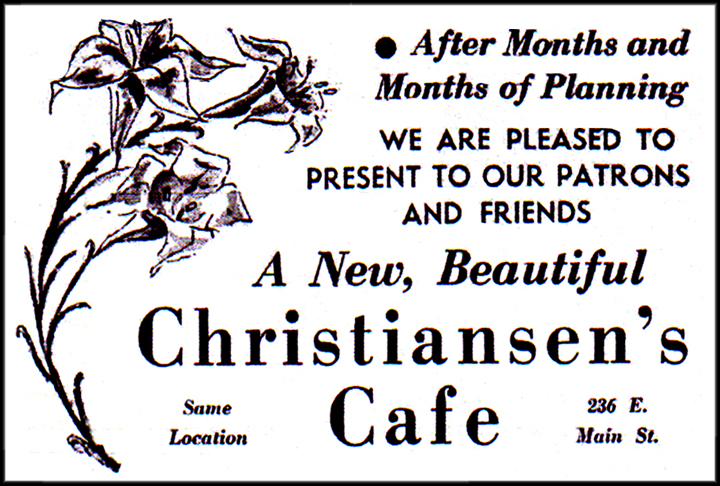
Over the years, some restaurants opened and remained in business for an extended period of time while others were short-lived. A few relocated to a more favorable location. One establishment upgraded its facilities and food choices after shutting down and remodeling its premises. Henry “Chris” Christiansen owned Christiansen’s Café at 236 E. Main Street. His wife, Vera, worked as a secretary for Sterchi Brothers Stores Inc.

The food establishment was located on the south side of E. Main between the Keys Building (Orth D. Hutchens, accountant; Carla B. Keys, President of Johnson City Enterprises, Inc.; and Tunnell’s Photographic Studio) on the west and Smythe Electric on the east.

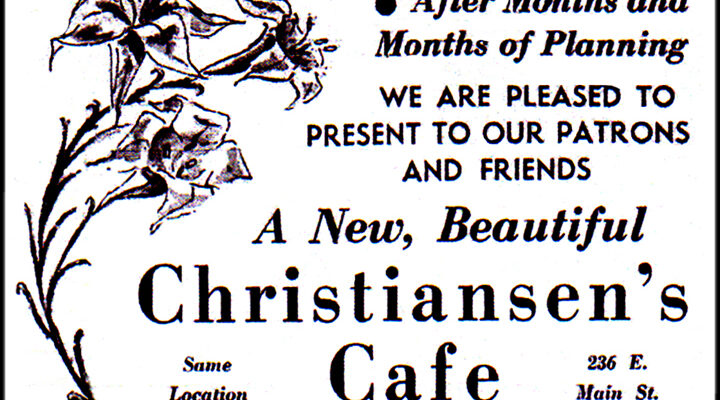
The Johnson City Press-Chronicle announced its reopening on Saturday, March 20, 1947, with a bold headline: “East Tennessee’s Most Beautiful Restaurant Makes Its Bow!” The ad further declared: “After months and months of planning, we are pleased to present to our patrons and friends a new, beautiful Christiansen’s Café at our same location. We have long dreamed of giving to Johnson City an eating establishment comparable to the finest to be found in larger cities. With this in mind, we’ve worked untiringly through the years of shortages to present just such a restaurant to our patrons and friends. This is now a reality and on Wednesday, we invite you in to see the most modern, beautiful and complete restaurant within hundreds of miles of this city. We hope you’ll like it. Chris.”

The newspaper on that Saturday displayed several ads from local businesses offering their wishes for success, but also plugging their products or services:

Hecht’s Bakery, Inc.: “Congratulations to the new Christianssen’s Café. Try our delicious cream pies at Chris’s.”

Smythe Electric Company: “Best wishes, Chris. Johnson City may well be proud of your newly remodeled restaurant and we are proud to have played our part in its construction.”

J.E. Green, Contractor: “Congratulations to
Christiansen’s Café on the opening of our newly remodeled restaurant. We are pleased to have worked with you on this job.”

Grocers Baking Company: “Congratulations Chris. Honey Krust bread is made with pure golden honey making it fresh, wholesome and delicious. Honey Krust products – enriched white bread, whole wheat, cracked wheat, Aunt Sally’s self-rising, rye, sugar rolls and tea biscuits – are available at your cafe.”

Scruggs Equipment Company, Inc.: “Congratulations to the modernized Christiansen’s Café in Johnson City, Tennessee. Scruggs Equipment Company, Inc. of Knoxville, Tennessee, furnished the new, modern equipment and fixtures. The local representative was W.D. Chadwick from Johnson City, Tennessee.”

While I do not know when the business opened or closed, I do know that by 1953 the E. Main Street location was occupied by Jo-Ann’s Shops. If anyone can recall eating at Chris’s place, knows someone who did or can shed additional light on the former business, I would like to hear from you.  

Read more