In April 1895, Charles Russell, a longtime resident of Jonesborough, Tennessee, gave readers of the Herald and Tribune newspaper an unusual story to read. Here is a paraphrase of his account.

“Early one morning, I fell into a deep sleep in my comfortable porch swing near downtown Jonesboro. When I awoke from my slumber several hours later, I quickly noticed that my surroundings seemed strangely different with curious noises that greeted my ears. I looked in the distance and saw factories on every side of the town, but oddly observed no smoke emitting from any of them.

“I hurriedly went into my house, donned my coat and vest and scurried down to the street where I encountered another surprise. The streets and sidewalks were no longer dirt. The roads were granite and the sidewalks were granolithic (crushed granite and cement) in every direction. I thought surely I must be dreaming. This was not the Jonesboro I knew before my nap.
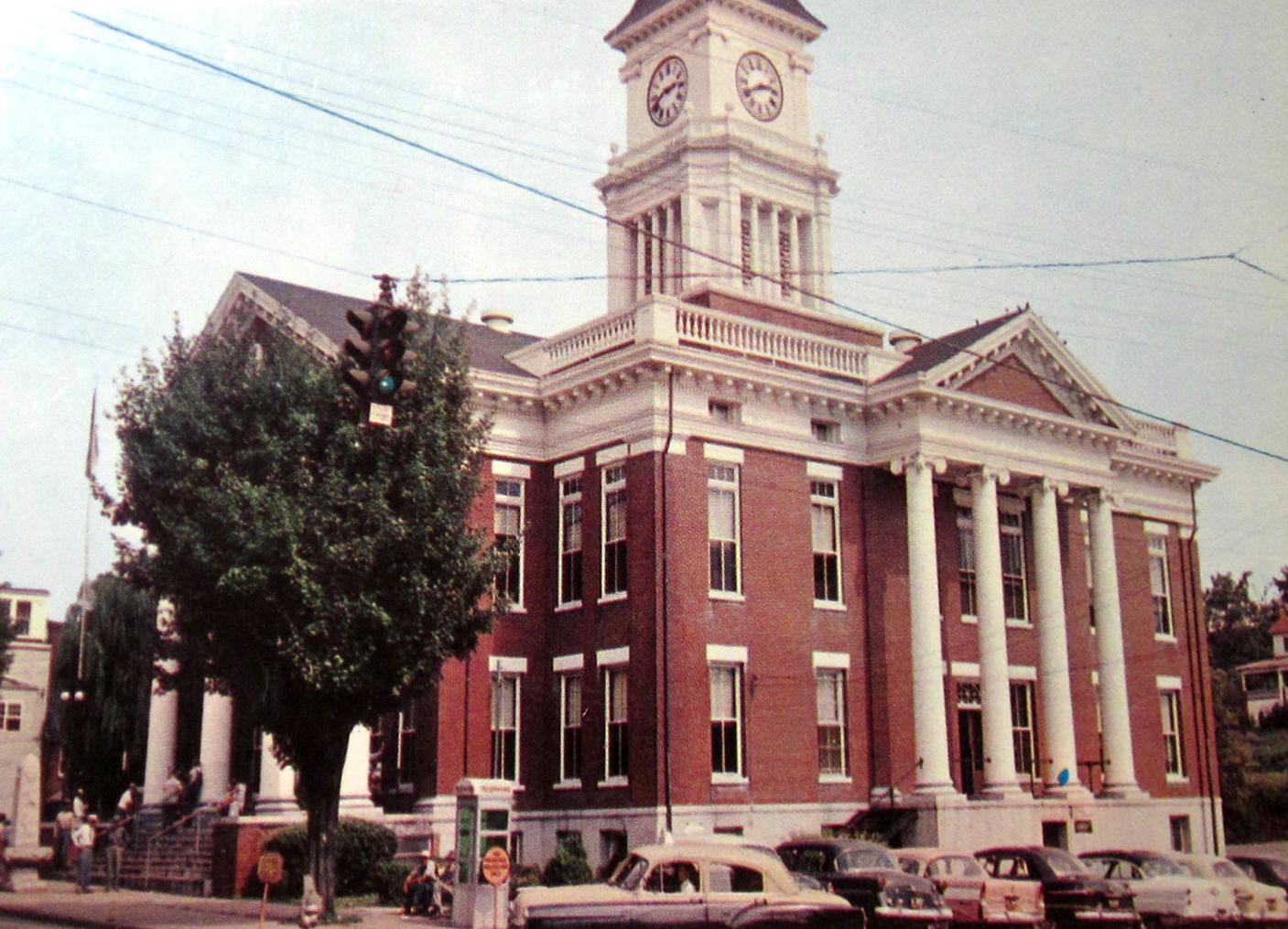
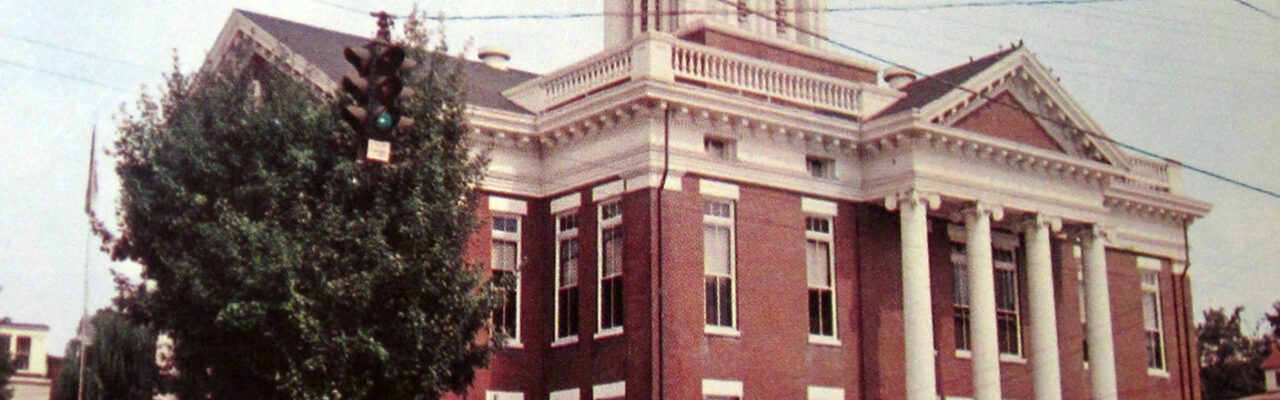
Jonesboro Court House as it Appeared About 1960

“I continued my stroll toward town and soon encountered a gentlemen whose attire was much different from mine. I introduced myself and he said his name was James Dosser, a familiar name in Jonesboro's business past. He wore knee pants and shoes with a platinum buckle and a short roundabout with a fancy silk shirt. His cap had a gold band around it with numbers on it. I noticed another man similarly dressed nearby with a silver band on his cap and different numbers. Where was my Jonesboro?

“Charles stunned me when he told me this was Jonesboro, Tennessee and showed me the date on his morning newspaper – April 1, 1960. Before I took a nap, it had been April 3, 1895, but after my snooze, it was 65 years later. I seemed to have traveled forward in time during my nap. 'Ah,' Dosser said, 'When you went to sleep, electricity was in its infancy and not readily available; now we do everything by electricity. It is a way of life with us. The women even wear essentially the same type of clothing as men.'

“I asked Charles the meaning of the gold and silver bands on the different caps worn. He explained to me that they indicated the wealth of the individual, which the law required them to wear in order to accurately collect income tax. 'The gold bands,' he said, 'signified billionaires, of whom there were four in town: John D. Cox, L.W. Keen, Ed Boyd and me, Charles Russell.'

“I asked him how the four gentlemen came to accumulate such a sizable fortune. He explained that Mr. Cox had been banking all his life; Mr. Keen had invented a process of taking pictures by electricity; Ed Boyd was in the wholesale grocery business; and, as for himself, he secured a position as post office inspector and made some good investments.

“The silver bands represented millionaires and there were quite a number of them in town. Among them were J.J. Hunt; proprietor of 'The Lightning Elixir;' S.H. Anderson of the Bicycle Feed and Sale Stable; Tate L. Earnest, Secretary of the Treasury; T.B. Hacker, attorney; and Cramp Smith, Editor of 'The Baptist Howler.'

“I was surprised to learn that all my old friends were still living and asked for an explanation. He told me that in the year 1900, the Old Mill Spring was found to possess something that extended life to those who encountered it. In fact, since that time, there had been only one funeral in Jonesboro and that was of a citizen who died while in Washington D.C. seeking  political office.

“Russell showed me public parks in various parts of the city with fountains and statuaries, among which I noticed were statues of Walter Brownlow, Sandy Stuart, Bob Dosser and R.M. May, who had donated the parks to the city. He escorted me to some of the principal factories, where almost everything was made.

“Where Col. Dungan's house once stood was a large poetry factory where about 200 employees were rapidly filling orders for poems, which the superintendent informed me were to go to 47 different states. He didn't indicate which state was missing and I didn't ask. 'No two places' he said, 'want the same kind of poetry. For instance, one package of a certain dialect goes to Massachusetts, while in nearby Johnson City, one of our suburbs, we cannot sell anything but blank verse.' After that remark was made, I perceived the presence of a distinct rub between Jonesboro and Johnson City.

“We next visited a sermon factory situated at the junction of the Atlantic, Pacific and Flag Pond Railroad and the old Southern. Here I had the pleasure of meeting the Rev. B.B. Bigler who was being measured for a two-hour sermon.

“We next visited other factories and public buildings and, as we returned from Telford on a mid-air car, we heard the electric chimes ringing from the tower of a large cathedral. My guide informed me that it was to celebrate the marriage of A.C. Britton, one of the former mayors of the city.

“I next inquired about some of my old friends and found various changes had taken place. Since the discovery of the medical properties of Old Mill Spring, physicians had nothing to do in their line of work. Therefore, Dr. Hoss was farming by improved methods, having his farm lighted by electricity so he could now raise two crops where he once raised only one.

“Dr. Stuart was now the Congressman from the district and Dr. Pierce was celebrated as a hypnotist, having large audiences every night at the auditorium. Jasper Peoples had become mayor, edging out Bridge Baxter by only seven votes in the previous election. Silas Cooper was still clerk of the court, while his oldest son Joe was manager of The Electric Sausage Plant, situated on the Fall Branch and New York Railroad. Peter Tierney was still Governor.
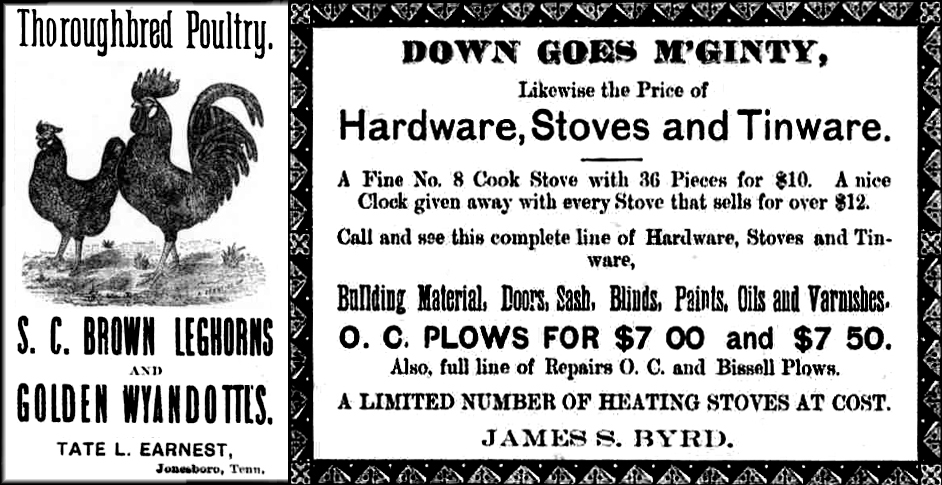
Two Jonesboro Advertisements from 1895

“I was delighted to meet so many of my old friends as they looked 65 years later and found out that they were doing so well. I met Scott Hickey who was running a large egg factory, the only one of its kind in the South. Joe Febuary was proprietor of the Embreeville Steel and Tool Works and his large factory was under the management of Charley Brown.

Captain McPherson was one of the postmasters and Wright Hoss the other. I saw a large nine-story building of white marble, occupied by Herbert McPherson & Sons, wholesale jewelers, who had a large trade with South American cities.

“After seeing more of the sights of the city, Charles and I walked down a sharp incline in one of the parks. I managed to collide with a horse rack at the old court house and received a sudden shock. Suddenly, I awoke and found myself back in 1895 Jonesboro again. Charles was nowhere to be seen and the streets and sidewalks were dirt again. Apparently, I had been dreaming and walking in my sleep.”  

After finding this clipping, I decided to share it with my readers as my April Fool expose. Although the story is quite whimsical, the people were former residents of Jonesboro.  It is interesting that Mr. Russell's imagination, as to what 1960 Jonesboro would look like, was a bit off the mark. It never grew into a massive city, but instead retains that wonderful charm and quaintness to this day. Don't change Jonesborough; we like you just as you are.
Read more

If George Washington is considered to be the “Father of our Country,” who then is the “Father of Tennessee?” In spite of all the great men who helped found “The Volunteer State,” the accolades likely belong to John Sevier.

The American soldier, frontiersman, politician and one of the founding fathers of the State of Tennessee was foremost among the pioneers of the territory and arose to a beloved leadership through his bravery, daringness and valor in Indian wars.

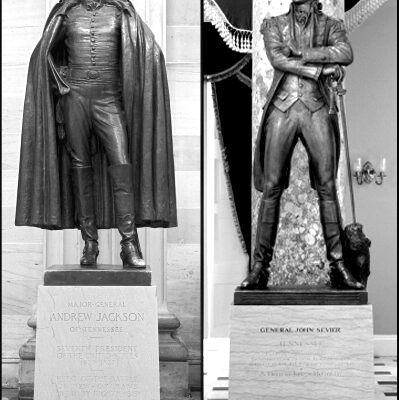
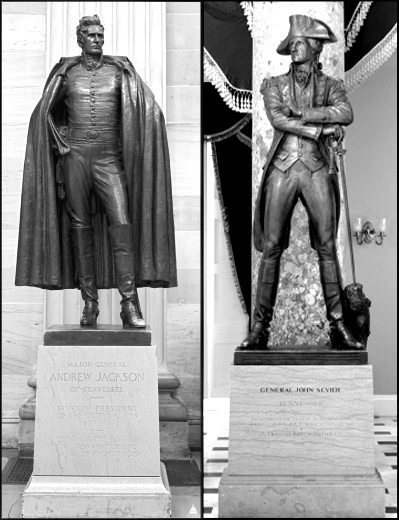
In 1913, it was proposed that Tennessee's contribution to Statuary Hall in the Capitol building in Washington DC would be Andrew Jackson and John Sevier. The hall is an impressive chamber devoted to sculptures of prominent Americans. It consists of a large, two-story, semicircular room, located immediately south of the Rotunda, with a second story gallery along the curved perimeter.

A

Andrew Jackson (left) and John Sevier

Concern was raised about one of the two individuals selected. Any youngster raised in the Volunteer State would readily identify Andrew Jackson and his contributions to the state of Tennessee. However, the deciding committee was not so sure about John Sevier, although his credentials were certainly overwhelming. In any event, the choices were Jackson and Sevier and they were selected. Their statues in Statuary Hall are shown in my column photo.

I checked my old seventh grade school book, The Story of Tennessee, by Joseph Parks and Stanley Formsbee, that was used by Miss Dora Huddle, Junior High School's Tennessee history teacher. There were 18 references to Sevier, who was portrayed as a great hero in our state.

The selection of Jackson and Sevier was ironic because the two men became bitter personal and political enemies. The competition was strong between them as each wanted to be the leader in Tennessee affairs. Jackson denounced Sevier for his ignorance of the Constitution and failure to respect the rights of the people. Sevier countered by calling Jackson a “poor pitiful pettifogging lawyer.” In spite of their differences, the fair-minded Governor Sevier appointed Jackson a judge of the Superior Court.

Once the governor of North Carolina picked a quarrel with Sevier and the latter was arrested unjustly and taken to Morgantown to be tried for treason and outlawry. The comrades of Sevier did not sit idly while their chief was being condemned. Instead, they took action.

One night a party of four men – James Crosby, Major Evans and Sevier's two sons, John and James rode up over the mountains through the green fertile valleys and arrived at the edge of the village of Morgantown. Crosby and Evans left the party and, disguised as poor farmers, rode to the courthouse holding the reins of one of Sevier's swiftest horses. When the two arrived, they noted that court was in session; through the open door, they could hear the busy hum of voices within.

Crosby got off his horse, went into the courtroom and approached the judge's bench. He looked his honor squarely and firmly in the face and thundered in a stern voice, “Are you not about through with this man?”

The judge sank into speechless amazement at the man's boldness. The jailers, the spectators, the lawyers – all looked at Crosby not sure what to do. Meanwhile. the bold backwoodsman cast a significant warning glance at Sevier and then at the door. Sevier peeked over and saw his horse pawing the earth expectantly. He knew what to do.

While all eyes were on Crosby and in the confusion of the moment, Sevier quickly, quietly arose and walked briskly out of the room, the bewildered crowd giving way to form a line where he could walk. Once at the door, he gave one bound, landed on his horse and dashed away in a cloud of dust.

“He's gone!” gasped the judge in a dazed manner and looked doubtfully at the sheriff. The confusion deepened and everyone forgot to consider the newcomer who had planned the coup. But this was exactly what Crosby had counted on. He discretely slipped away, found his horse again at the edge of the village and overtook his comrades on the road back to Tennessee.

Sevier continued his services for the cause of the colony and years later was made military governor of the territory of Tennessee by General George Washington.

Read more

Eddie Baldwin reminisced about his employment at Wilson Pharmacy at 273 W. Market Street in the late 1950s and early '60s. He lived on W. Main Street within a short walking distance to the store. He previously worked at nearby (Hubert C.) Dyer's Venetian Blind Laundry.

The drugstore, initially identified as Prator-Wilson Pharmacy, was established in July 1936 by Lee Prator and Guy Wilson. After about two years, Mr. Prator decided to relocate to Abingdon, Virginia and open a pharmacy there. The split proved to be very profitable for both men. The business would retain the same name until about 1951 when “Prator” was dropped, becoming “Wilson Pharmacy.”

“The business,” said Eddie, “was a combination soda fountain and drugstore. Food service included hamburgers, Campbell's soup (especially chicken noodle) that was served in little green bowls, Will Cope hot tamales, ice cream, milk shakes, soft drinks (both fountain and bottles that were kept in a large cooler behind the counter), hot chili with crackers, a variety of chips and an assortment of desserts that included (Orville) Seaver's Pies that sold for a dime.”

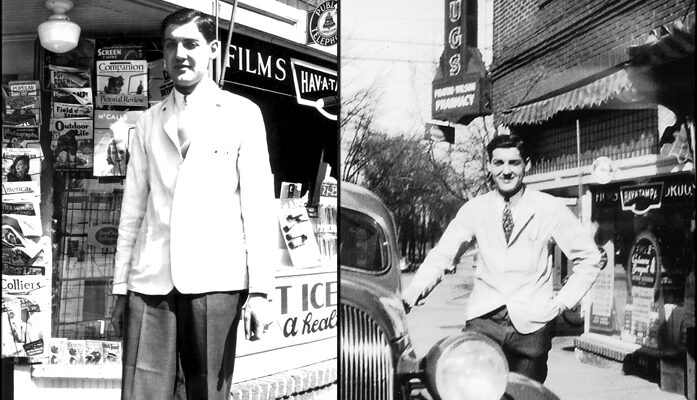
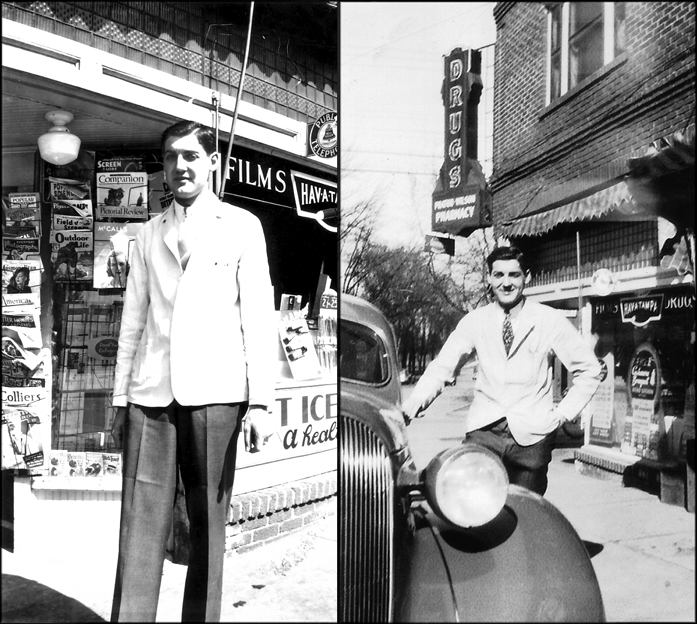
1940s: Guy Wilson at Door of His Pharmacy, Next to His Car Parked on W. Watauga Avenue

Older folks may recall that Will Cope made scrumptious hot tamales which were wrapped in corn husks and tied off on each end with string. He operated out of C.C. (Edward W. Carson) Grocery at 212 W. Chilhowie. He delivered his product to Guy's Pharmacy and other downtown establishments, such as John's (Buda) Sandwich Shop. 

Guy had a relief pharmacist by the name of Bill Gregg, who worked there and operated the drugstore in Guy's absence. The pharmacy initially opened at 7:00 a.m. and closed at 10:00 p.m., but later was changed to 8:00 p.m. and then to 6:00 p.m. Unlike most downtown stores, Guy's Pharmacy stayed open Wednesday afternoons. That mid-week evening was known as “mop the floor night,” with Eddie and others performing cleanup duties after the store closed.

A large section of magazines was displayed to the left as you entered the store. The all-important comic book rack was located on the east side of the store, adjacent to a large walnut cabinet that was used to store women's cosmetics.

Comic books were often read by adults as well as children, who would, after buying something from the fountain, take it back to a table, pull a comic book from the rack and read it as they consumed their purchase. Guy was amicable enough to let customers and even employees on break read comics, provided they purchased something. When Guy saw someone reading a book without spending money, he uttered the oft-repeated words, “Okay boys, order up.” The perpetrators got the message.

Eddie worked three basic jobs at Guy's: serving customers behind the counter, delivering food and/or medicine orders on a bicycle” and general cleanup duties.

Eddie recalled this humorous story: “After receiving a prescription order, I jumped on my bicycle and headed west on Market Street to Green's Rest Home (owned by Mrs. Bertha Green at 607 Hillcrest Drive), behind the old Hillcrest Drug building. When I arrived, I parked my bike in an empty space in front of a car.

“I delivered my package and was about to leave the home when I heard a loud crash. To my dismay, my bike had fallen over and the driver of the car behind it accidentally ran over it, heavily damaging it. Since it wouldn't roll, I lifted it over my head and carried it back to the store, dreading having to tell Guy the bad news. When I did, he just smiled at me as if it was no big deal. Two days later, I had a brand new bicycle to ride. That's the kind of man Guy Wilson was.”  

Bill's (Garland) Barber Shop was in the building on the east side of the pharmacy. When Bill moved his hair cutting operation across the street to the building vacated by (W. Howard Stewart's) The Red Store, Guy bought the building, knocked out the wall between the two stores and significantly increased the floor space of his pharmacy. This acquisition allowed more tables to be added.   

A nice feature about the pharmacy was that people who urgently needed an order filled could call Guy's home and someone would come and open the store to fill the customer's order. He remembered one urgent request that occurred in the wee hours of the morning turned out to be for a pack of Kodak film.

Eddie left Wilson Pharmacy to go to work for Giant Food Market on Commerce Street in downtown Johnson City. Later, he was hired by the Johnson City Police Department, serving under Police Chief Tom Helton. Eddie requested that I give honorable mention to three long-time store workers: Shirley Shepherd, Ray Trivette and Mabel Dykes.

Thanks Eddie, for your cherished yesteryear memories. 

Read more

Johnson City's mayor in 1908 was Guy L. Smith, who also worked for the Armbrust-Smith Co, a furniture store at 204-06 E. Main (much later the site of Nettie Lee's Boy and Girl Shop). If we could somehow ask Mr. Smith what Johnson City was like soon after the turn of the twentieth century, he would likely answer us like this:

“Johnson City is located in Washington County, the oldest and first settled in the state. It was in this county in 1771 that a colony set up and established the first free and independent government, known as the Watauga Association. It was also the home at one time of Andrew Jackson and of Davy Crockett.

“Johnson City is situated on the Southern Railway, 106 miles northeast of Knoxville and about 25 miles from both the Virginia and North Carolina state lines. Its growth in population in a single decade increased from 637 to 4,150 and the population in the last few years has more than doubled. As of today, we are the third largest town in East Tennessee and already being called “The Coming City of the South, a designation all of us love to hear.”

“Johnson City's altitude is 1,650 feet above sea level, it being located in the foothills of the Southern Appalachian Mountains. These mountains with their subordinate ranges are in full view of the city. In both scenery and climate, it is very similar to Asheville, NC. A significant plus for this section of the country is its cool nights in the summer and its freedom from malaria, mosquitoes and epidemics.

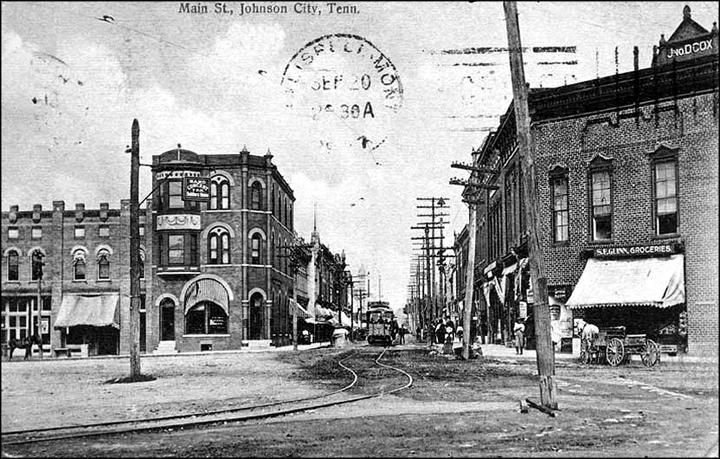
Main Street Looking East in 1908 Johnson City

“Protected by the Allegheny Mountains on the east and the Cumberland Mountains on the west, this area is the least visited by destructive winds of any in the Union. Because of its altitude, summer temperatures are much lower than those recorded in the cities of the north.

“Near Johnson City, within an hour ride by train, are some of the most noted summer resorts in the country. The majestic Cloudland Hotel on the top of Roan Mountain, the highest habitable point east of the Rocky Mountains at an elevation of 6,300 feet, is a celebrated resort for sufferers of hay fever and malaria.

“Another notable resort is Linville, NC, located at the foot of Grandfather Mountain (elevation 5,000 feet). Unaka Springs, 20 miles distant, located at the foot of several towering peaks on the banks of the Nolachucky River, is resorted to for its medicinal spring. Not to be omitted are Austin and King springs whose healthful waters are principally Chalybeate and Lithia.

“Johnson City has five railroads:

“1. The line from the Southern Railway from Washington, DC to Knoxville, Memphis and New Orleans, passes through the city, putting us in direct contact with every municipality on that great system.

“2. The ET&WNC Railroad runs from Johnson City through Cranberry, NC, where is found the finest body of magnetic iron ore in America, and on to other points in North Carolina. The general offices are in Johnson City.

“3. The Virginia and Southwestern is now a branch of the Southern Railway and reaches the city on the tracks of that system.

“4. The Johnson City Southern connects the city with the Embreeville furnaces.

“5. The CC&O Railway, still under construction, is correlated with the Seaboard Air Line and will extend from the coal fields of Southwest Virginia to the Atlantic Coast.

“A new Federal building has been erected in the city and plans have been drawn for the erection of a Union Passenger depot at a cost of $100,000. In addition to a recently installed modern sewer and water system, we have paved many streets and laid several blocks of sidewalks. Already in place are substantial business blocks, progressive banks, a thorough education system, elegant and costly church edifices, splendid retail stores and many beautiful modern homes.

“Johnson City is destined to become a manufacturing center because of a strong and steady inflow of population. The three competing trunk lines entering the city offer affordable rates to all points. It supplies coal, thus securing for manufactures a permanent and unfailing fuel supply. The Nolachucky, Watauga and Holston rivers, which are close at hand, afford power sites of immense value.

“The surrounding deposits of minerals, the great variety and supply of hardwoods, cheap and abundant labor make Johnson City 'The Coming City of the South.”'

I think most of us would concur that Johnson City has more than lived up to its 1908 expectations.

Read more

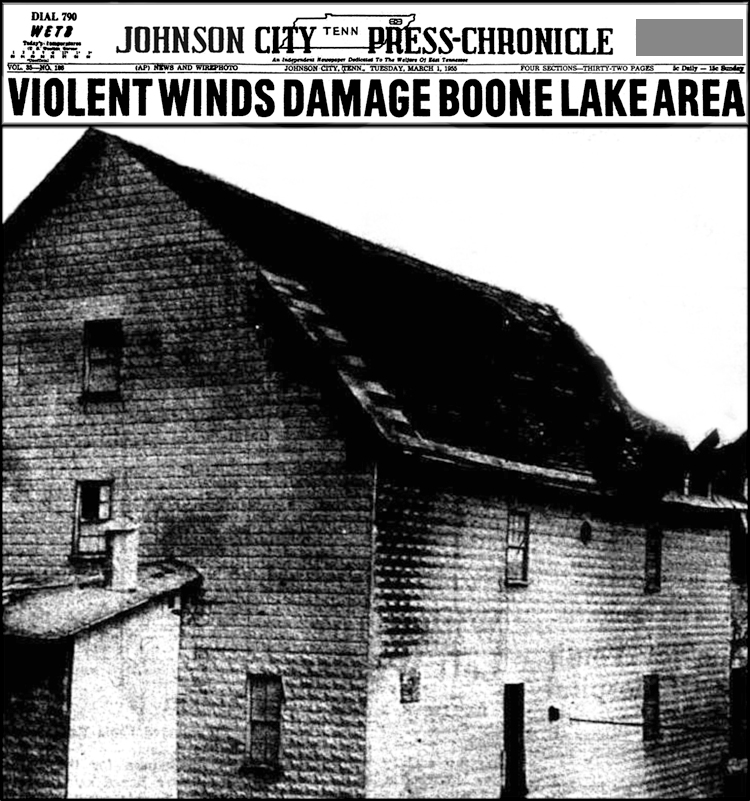
On Tuesday, March 1, 1955, turbulent winds from a funnel-shaped cloud ripped off roofs demolished barns and turned boats upside down in the Boone Lake area.

According to the Weather Bureau at Tri-Cities Airport, although winds ranged as high as 80 miles per hour, no injuries were reported in the brief, yet violent storm. Reports from the Flourville area described the squall as rushing along with a sound like a truck. Almost immediately, the area became ominously dark.

Flourville Mill Roof Damage Can Be Seen

The roof of the Flourville Mill (makers of Daniel Boone Flour and Becky Boone Corn Mill) was heavily damaged off, with damage unofficially estimated at around $1200. Hal Wexler’s barn was demolished and sections of it were hurled in a westerly direction into Boones Creek. Large trees were uprooted in the vicinity and several of the side roads were totally blocked by debris.

A boat house belonging to Bert Couch and Ivan Good was tossed on its top, the strength of the wind breaking a one-inch steel cable that was holding it. Dr. Nat Winston’s boat was reported to have been lifted up and blown to dry land while other crafts were flipped on their side by the strong wind gusts.

V.C. Ford, owner of the Boones Creek Boat Dock, said that he was sitting in his car when the storm struck, resulting in the back end of his vehicle being blown around about three feet. “I was scared to death,” he said. He added that one boat was blown about 300 yards.

Portions of Roy Brummit’s barn were carried about half a mile and sections of the tin roof were scattered over adjoining fields, with some of it landing in trees. A truck owned by Jim Crouch was also swerved around in the road for about three feet. Several residential window panes were reported broken and damage inflicted to roofs.

The storm, which many residents described as a ”baby twister” hit the Flourville area the hardest, although other sections received high winds and rain.

Nearby Johnson City received a heavy rainfall accompanied by winds about the same time as the storms struck the Boone Lake area. Also, Kingsport streets reportedly were flooded by the deluge. A barn near the Tri-Cities Airport and a radio range tower of the Weather Bureau were knocked down.

The weatherman said the storm moved eastward at about 40-50 miles per hour. For those residents in the storm area, which extended over a radius about two miles, the groundhog must have had seen his shadow a month earlier because the weather roared in like a lion that day.

A Spokesman for the Johnson City Power Board noted that considerable damage resulted from the wind, which entangled power lines causing short circuits. He said that the trouble was sporadic over a fairly large area and not confined to any one section of town. All crews worked to restore serves to the relatively small percentage of power users who were affected.

The Inter-Mountain Telephone Co. reported the problem of “wet cables” following the heavy rain and that emergency crews were hard at work to repair the damage. Company officials said that a total failure on the line had been occurred between Knoxville and Atlanta.

Cloudy skies were occurred for the remainder of the day, with scattered showers and thunderstorms in the afternoon. A springtime temperature was forecasted by the weather man for the day with a high around 70.

In Morristown, a large tree fell across some Southern Bell Telephone Co. lines, knocking out telephone services to all Tennessee points east of the city. The company also reported that 70 of its long distance circuits were cut by trees, felled by wind gusts up to 82 miles per hour. The outage occurred about 7:30 a.m. near Whitesburg, about 15 miles east of town.

Associated Press news service to newspapers and radio stations in the upstate area was affected temporarily by the weather.

At Knoxville Municipal Airport, a strong gust of wind picked up a Piedmont Airlines two-engine plane and slammed it into a fence.

How many of my readers recall that troublesome 1955 spring day?

Read more

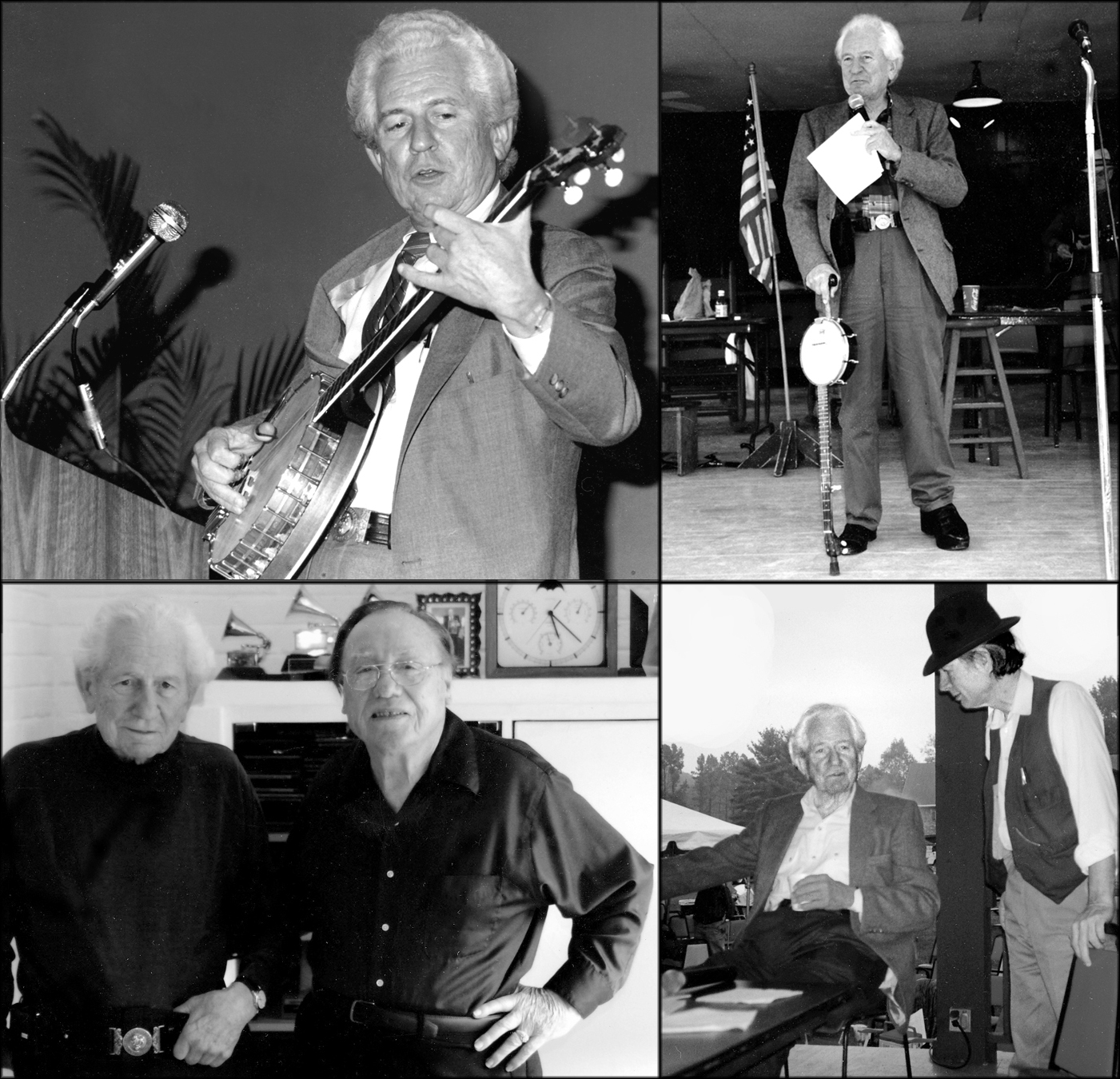
Dr. Nat Winston, Jr., former Johnson City resident, leading psychiatrist, healthcare pioneer, previous Commissioner of Mental Health and a past candidate for governor of Tennessee, passed away peacefully on December 31, 2013. Susan Taylor Carson, a close friend of the Winston family, forwarded me several notes of conversations she had with Nat's widow, Martha Winston. She also scanned and sent a number of photos obtained from Mrs. Winston.

Susan is from a well-known Johnson City family. Her parents were Sam and Betty Taylor who owned and operated Taylor Furniture Co. at Boone and King streets in downtown Johnson City. Nat and Sam grew up across the street from each other on Welbourne and E. 8th avenues, went through school together and joined the Army together during WWII. 

Older area residents will likely recall Dr. Winston, who operated as a psychiatrist out of his office at 404 N. Boone near Watauga, launched a highly successful crusade in the healthcare field and enjoyed a long and rewarding career of doing what he did best – helping people.

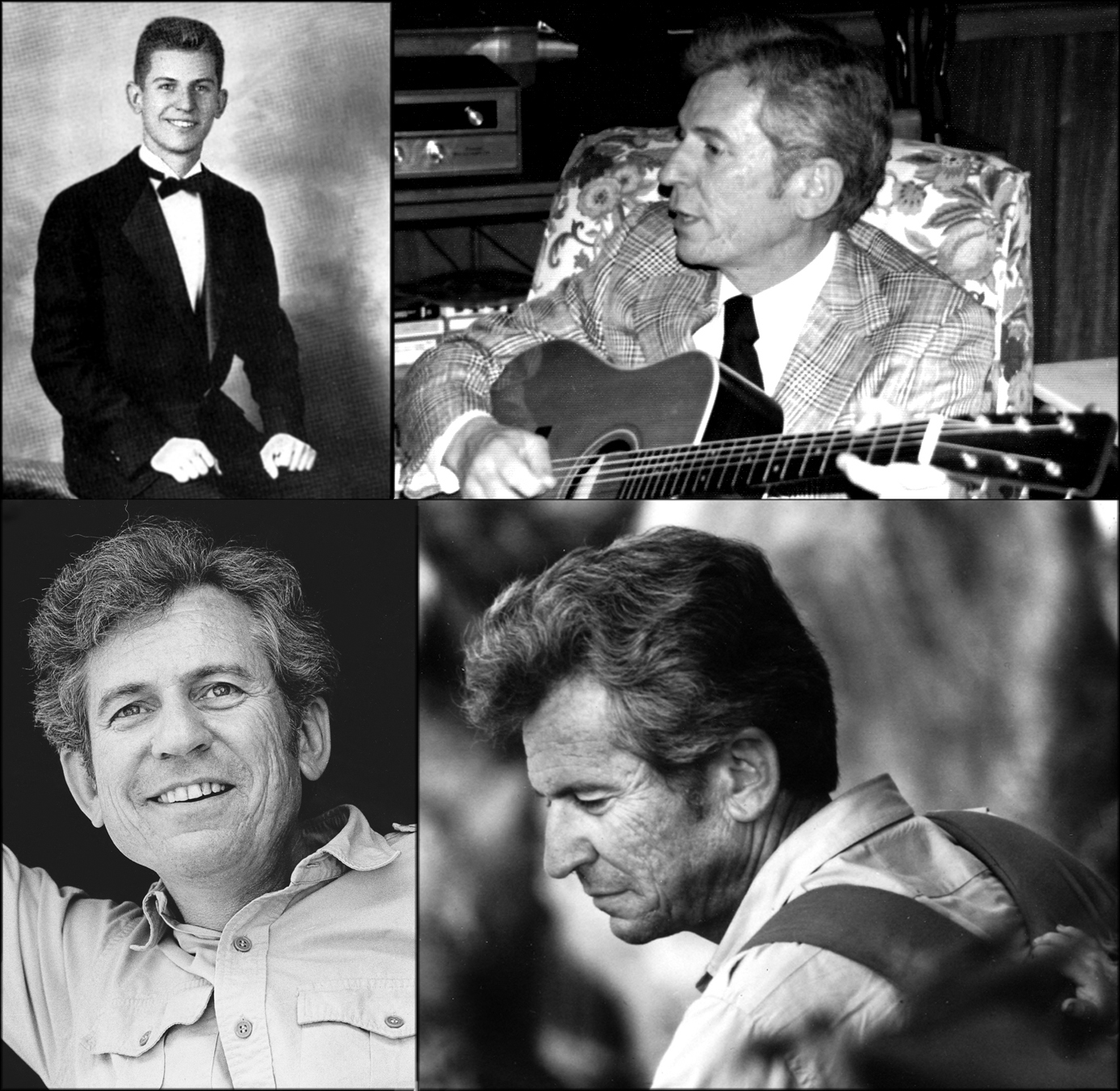
Dr. Nat Winston in His Younger Years

Nat's star was already beginning to rise as a student at Science Hill High School. The 1944 yearbook impressively said it all: “Worthy, Courage, Honor, these indeed your sustenance and birthright are. College Preparatory and State: Madrigal Club; Reporter, Prayer Group; President, Glee Club; President, National Honor Society; ROTC, Major; Student Council; ROTC Metal; President, 10-B Class; President, 10-A Class; Reporter, 11-B Class; Reporter; 11-A Class; Reporter, 12-B Class; President, 12-B Class; and President, 12-A Class.”

In addition, Nat was voted “Most Outstanding Senior,” “Best All Around Senior Boy,” “Most Popular Boy” and “Best Executive” and received more senior superlatives than any student in the school's history to that date. 

According to Susan, “Nat was Tennessee's Commissioner of Mental Health under two governors: Buford Ellington and Frank Clement. Nat was so popular that a large contingency of supporters begged him to run for governor, in the Republican primary, which he did in 1974.

“Nat's contributions to our city, state and country should not be overlooked or understated. After graduating from Vanderbilt medical school, he came back to Johnson City and set up the first mental health clinic. From here, he went to Chattanooga to establish and manage Moccasin Bend Mental Health Hospital. He changed the way the medical profession treated mentally ill patients and, in the mid 1960s, Reader's Digest wrote a feature article about him, recognizing that he spawned the birth of a quiet psychiatric revolution.”

“Nat was a very popular and highly sought after public speaker and storyteller throughout the nation and he used his banjo to tell stories of the mountain folks of Appalachia, for whom he had a deep love.

“Nat, Jr. was a son of Nat, Sr., who was once president of Home Federal Savings and Loan Association and president and director of the Johnson City Chamber of Commerce.

“Nat and his father together built a cabin deep on the side of Grandfather Mountain. It was there that he got to know and love the mountain people of rural North Carolina, deeply immersing himself in the study of Appalachian history. He made field recordings of the residents and recorded an album in 1966 entitled 'All the Good Times Are Past and Gone,' in which he included the recordings of the mountain-told stories of courtship, feuding, moonshining and others.”

In 1962, Nat wrote and recorded a banjo instructional record and course that was distributed through Sears, Roebuck & Co. It sold over a million recordings, for which he received a gold record. It was the first true how-to-play Scruggs style banjo instruction published.

Nat's mother, Mrs. Nat T. (Naomi) Winston, Jr. was a school teacher at Stratton and then Junior High School in the 1940s and 50s. Many students from that era may recall that she frequently talked about her son in class, usually discussing his love of old-time music and especially the banjo.

Susan indicated that Dr. Winston first met Earl Scruggs when he was a medical school resident at Vanderbilt University. Earl was in a serious automobile accident and was laid up in the hospital in Nashville. Nat and Earl quickly became best fiends, with the popular banjo picker becoming a frequent guest at Nat's cabin in North Carolina. When the doctor moved to Nashville in the mid 1960s, he was Earl's neighbor and became the go-to psychiatrist for the troubles of many country music stars.

In 1964, Winston made an 11-minute music video for a local television feature with Earl Scruggs at Nat's home. The video can be viewed at www.youtube.com/watch?v=xDxHws7r6qs. The jam session is quite entertaining, even though the quality deteriorates toward the end.

Dr. Nat Winston in His Older Years (others are Earl Scruggs (left) and John Hartford (right)) 

In 1971, Dr. Winston was called on to appear on Ralph Edwards “This Is Your Life” nationally syndicated television program. That night the producers shined the big spotlight on country music singer, Johnny Cash. The entertainer was surprised during a filming of his hit television program, “The Johnny Cash Show.” He had just finished welcoming the studio audience when his wife, June Carter Cash, walked onstage unannounced and abruptly introduced Ralph Edwards to the bafflement of her husband. Between moments of laughter and sadness, the singer was overcome with emotion several times.

Ralph Edwards introduced Nat as the president of the American Psychiatric Hospitals, Inc. His brief portion of the show can be viewed at 4:15 on YouTube (www.youtube.com/watch?v=WEdU8KhNGuA). Nat told the audience, “I gambled on John and we both won.” Johnny, knowing that Nat was instrumental in helping the singer overcome serious problems at the peak of his career, said to Nat as he was walking away, “You're a fine banjo player too.”  

Martha Winston recalled that Nat often talked about the time he received a call from June Carter Cash urging him to treat her husband. Although Johnny would not agree to enter a hospital for rehabilitation, he was perfectly willing for Nat to come to his Hendersonville, Tennessee home for private therapy. Nat did this over a period of one year, visiting Johnny every day after work without accepting compensation. He did it out of friendship and love for Johnny and members of the Carter family. Also, since he was serving as Commissioner of Mental Health, he felt it would be a conflict of interest to continue to treat patients for a fee while he was serving the state.

“Johnny Cash credited Nat,” said Susan, “both in his biography and publicly on the Larry King Show for his medical treatments that restored his life and career.

“On one visit, “Nat told him of James “Tiger” Whitehead, a colorful Carter County mountaineer, mill operator and bear hunter (reportedly killed 99 bears during his lifetime). On another trip to Nat's cabin, he took Johnny to visit Tiger's grave on Tiger Creek Road between Hampton and Roan Mountain. Johnny was so impressed by the story that he wrote “The Ballad of Tiger Whitehead,'” which he later recorded on an album. Nat had no idea that Johnny gave him credit as co-writer until one day when he received a royalty check. Listen to Johnny talk about Tiger Whitehead and sing the song at  http://www.youtube.com/watch?v=DjcegbdjH5g.

Nat had a quite interesting ancestry; the famous Taylor brothers, Governors, Alf and Bob were his kin. Locally, Harrison Taylor is also his relative and is a fine historian as well.

Carson further iterated : “Nat helped many people from all walks of life, not just the famous. In later years, he headed up a Nashville facility to treat at-risk teenage boys and then later specialized in the treatment of sexually abused women while he worked at a hospital in Jackson, Tennessee and then wrote a book on the subject.”

I asked Susan if she played the kind of music that Nat loved. “As for me,” she said, “I chair the ETSU Development Council for the Bluegrass, Old-Time, and Country Music Studies Program. It was Nat who started me playing the banjo and guitar in the mid 1960s. After my father's passing in 1974, Nat became somewhat of a surrogate father to me and I spent much time with him in recent years assisting Martha in the care of Nat's failing health. He was a great influence on my life, as well as upon the lives of many who knew him.

“Nat's family requested that memorials be given to the Council, which is a part of the ETSU's Department of Appalachian Studies. It is so fitting because he was passionate about the people and music history of Appalachia. In addition, he and his father have given many historically interesting documents and artifacts to the Reece Museum and Archives of Appalachia. It has been suggested that a room within the museum be named in his honor and legacy. We in the department would be very grateful.

“We are hoping to raise enough money through Nat's memorial to start a Winston scholarship. He would have been thrilled about that. He loved this music so much. I took one of our best fiddle students to his house and to visit him in the hospital where we entertained him. He was delighted and spoke of that often.”

In conclusion, Doris Cox Anderson, my aunt, who was in the same graduating class as Nat, recalled him by saying, “Not only was he a handsome man, he was also very friendly and highly intelligent. I am not surprised that he went on to have such a stellar career and life.”

Read more

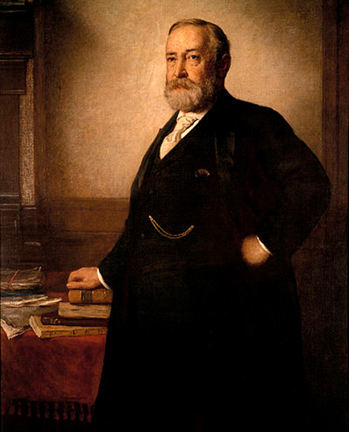
In April 1891, two years after being in office, President Benjamin Harrison (1833-1901), the 23rd President of the United States (grandson of William Henry Harrison, the 9th President) had begun what was widely regarded as a perilous 9,000-mile journey by train.  After the President rolled out of Washington Station, the next morning's newspapers were studded with quotes at each brief stop of well-expressed speeches for which he was known.

At Roanoke, Bristol, Johnson City, Jonesboro, Greeneville, Morristown and Knoxville, he was warmly received, not only by members of his own faction, but also by citizens of sundry opinions who wanted to get a peek at their leader. 

The president was recognized for his cleverness in making short, sudden, fugitive addresses, such as were well-suited for a hurried long railroad excursion across the vast country. In these addresses, he was not afraid of politics but talked unreservedly of thorny issues.

President Benjamin Harrison

Although his trip was deemed perilous, it was not assumed that anything might happen physically to the state-of-the-art vestibule vehicle that carried his entourage along the way. It was made of the best available rolling stock available and equipped with the most modern safeguards and luxurious components available. The chances were all together in favor of its carrying him comfortably over many miles without problems.

Although it was possible that the vehicle could encounter spread rails, which would cause it to leave the tracks, tumble through an open drawbridge, fall down a steep embankment or come upon a railway bridge too weak to support it, a transportation calamity of this magnitude was highly improbable.

What his supporters regarded as the real danger of the long trip was that the President might foolishly, by some careless words and actions, cause harm in his getting his party's future nomination at the Republican National Convention of 1892. In spite or his public speaking skills, he was especially vulnerable because his first term was anything but stellar. His detractors had a lot to talk about.

For those critics who said that the president, a brigadier general, was, figuratively speaking, riding along with full intention of acquiring the nomination, he was cautioned that even the ablest man was apt to make mistakes in circumstances far less trying than his. 

Then, assuming that the central figure avoided all blunders of his own, the unexpected was always likely to happen, events over which he had no control, but which could be embarrassing to him and hurtful to his political future. The rule which used to hold back the public appearance of an avowed candidate, one even whose name was already upon the ticket, was founded as much on good sense as on conventional correctness.

Mr. Harrison was a man of first-rate common sense, whatever might have been the measure of his other qualities. He was not usually at the mercy of his impulses. Perhaps he was not on his way to the next presidential convention as many suggested, but possibly the primary motive to his long journey was to see the vastness and beauty of the American countryside.

His critics would not accept such a theory, being convinced to the contrary. Yet there were those who believed that no other explanation could be found for the fact that a self-contained, cool, careful man seemed to fly flatly in the face of the old English axiom: “To stay at home is best.”

However, the President did not shy away from certain controversial subjects such as the McKinley Law that raised the average duty on imports to almost fifty percent, an act designed to shield domestic industries from foreign competition. He was equally explicit and emphatic in regard to the radical principles underlying the law.

No mention was made of where in Johnson City the train stopped, how long it remained there or the size of the crowd that assembled to hear their president. This was before the Southern Depot that many of us remember was located between W. Market  and N. Roan was built. 

Read more

The recent passing of W. Hanes Lancaster, Jr. evoked my recollections and fondness of early television comedians whom I eagerly looked forward to watching every week. The following is an brief exercise to see how many of the funnymen listed below you can match with their corresponding descriptors. If you do well on it, you are likely on Social Security. 

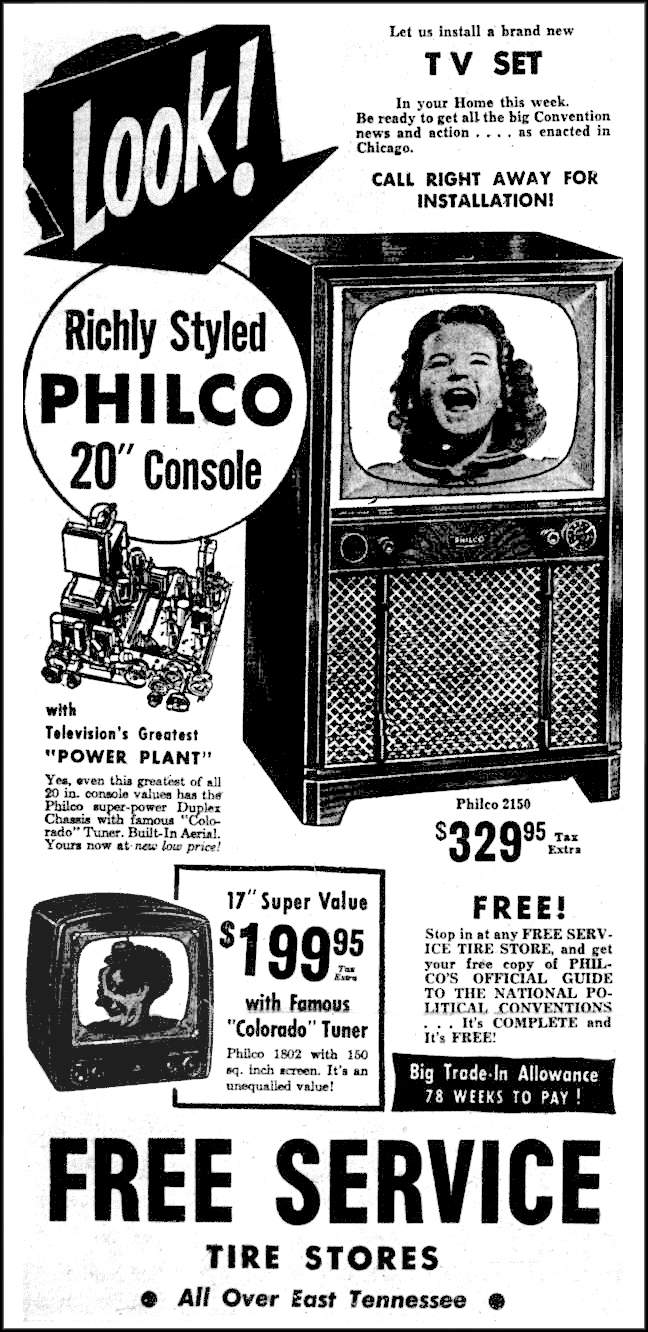
Free Service Tire Stores Philco TV Advertisement, 1954

Here are the names: 1. Milton Berle, 2. Jackie Gleason, 3. Sid Caesar, 4. Red Skelton, 5. Bob Hope, 6. Jack Benny, 7. Jimmy Durante, 8. Ed Wynn, 9. Eddie Cantor and 10 Ernie Kovacs.

Here is the information about each one. The answers are revealed at the end.

A: Known as “Mr. Television.” Credited with boosting television sales with his brash and raucous comedy and zany guests. Hosted “The Texaco Star” program that was broadcast every Tuesday night from 1948 until 1956. 

B: Hit the big screen in 1952. Favorite expression when he became exasperated, was “Well!” Owned a Maxwell automobile. Kept his money in a heavily guarded and fortified underground vault in his basement. Good violinist but purposely played his violin poorly to incite laughs. Reportedly made provisions to sent his wife a single red rose long after his passing.

C: Evolved from the stages of vaudeville. Appeared on 1950s television on such shows as “The Colgate Comedy Hour,” “All Star Revue” and “Four Star Revue.” Acquired the nickname, “The Schnoz” because of his particularly large snout. Played piano and sang. Theme song: “Inka Dinka Doo.” Concluded each show with the expression, “Good night, Mrs. Calabash, wherever you are.”

D: Had a long and illustrious career in all aspects of show business. First became known to television audiences in 1950 on “The Colgate Comedy Hour.” Trademarks were his banjo eyes and outstretched hands. Served as host of  a TV syndicated comedy theatre that bore his name.

E: Signed on to television in 1951. Performing in several series that originated in Philadelphia. Usually seen holding a cigar. Acquired his own series in 1955. Became especially creative using cameras and other technical equipment to produce visual deception. Portrayed an exaggerated character, the lisping, half-soused poet, Percy Dovetonsils. 

F: Made folks laugh with his distinctive facial expressions. Journey to stardom included a 90-minute program titled “Your Show of Shows.” An accomplished saxophonist. He and co-star, Imogene Coca acted out skits with realism. Talented at performing on a bare stage without elaborate props or embellished costumes.

G: Successfully transferred from radio to television. Became an American institution. After starring in several shows, began offering monthly specials. Brought much attention each year by taking his Christmas program overseas to cheer lonesome servicemen. Became a pro at generating laughter with barbed comments on social and political issues. Died soon after reaching the age of 100.

H: Heavyweight who once fractured his leg during a show skit that allowed him to convert reality into comedy. Was chosen to be the first season's Chester A. Riley in the hit TV show, “The Life of Riley” (replaced by William Bendix). Began a series of highly-popular sketches known as “The Honeymooners.” Co-stars: Art Carney, Audrey Meadows and Joyce Randolph.

I: Became a television favorite after acting in two dozen Hollywood comedy and musical movies. Achieved popularity by using an array of madcap characters on his show. Brand of comedy could be characterized as more physical than verbal. Often injected a note of melancholy into his portrayals, such as a character known as Freddie the Freeloader at Christmas time dancing with a doll that briefly came to life to befriend and console him. 

J: Acquired the names, “The Fire Chief” and “The Perfect Fool.” Hosted a variety show in 1949-50. Wore bizarre costumes and displayed a high-pitched cackle. Later, became a situation-comedy actor. Switched to being a dramatic actor after a successful portrayal in a “Playhouse 90” program titled, “Requiem for a Heavyweight.”    

Answers: 1A, 2H, 3F, 4I, 5G, 6B, 7C, 8J, 9D, 10E.

Read more

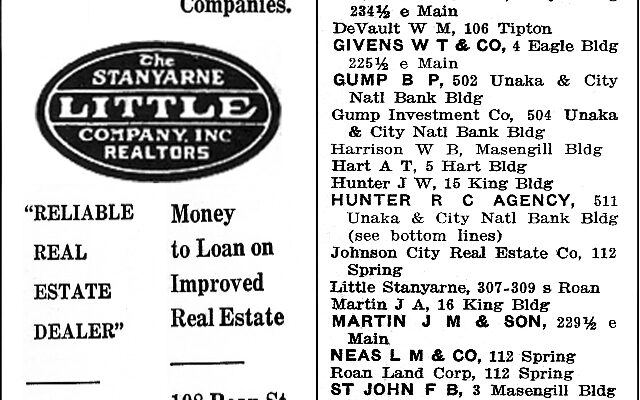
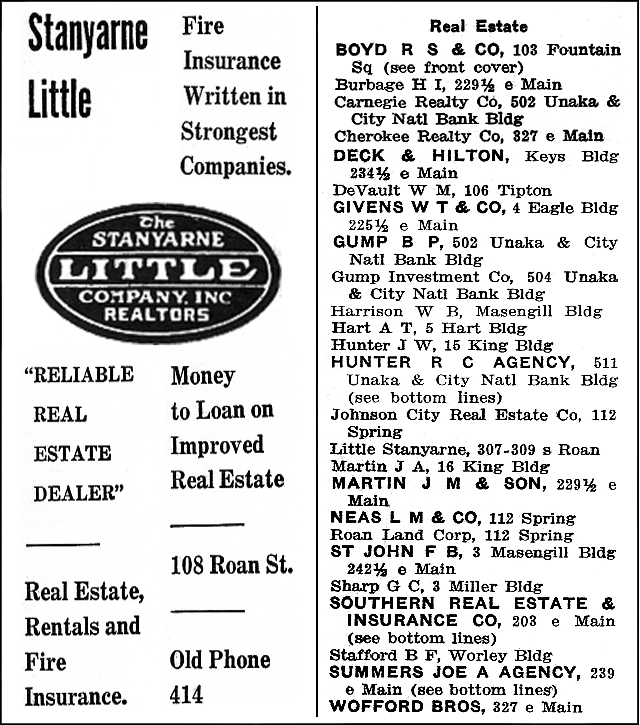
In 1921, an advertisement in a local Johnson City newspaper contained these words: “If  you are going to farm, why not sell out and buy where you can get every advantage for yourself and family?” The real estate ad was placed by Stanyarne Little of the Johnson City Development Company (later known as the Stanyarne Little Co.

The firm's office was at 108 N. Roan Street (later at 307-309 S. Roan). Little was president-treasurer; Thad Cox, vice-president; and H.M. Brown, secretary. Further research indicates that the company owned Cherokee Heights in Johnson City.

Interested parties were urged to write and inquire about the seven pieces of property listed in the ad. The farms, although not explicitly identified, were located close to Johnson City, “where the best of good roads had been built and where the best schools were to be found anywhere in Tennessee.”

Of particular note, mention was made that the new owners could educate their children from primary grades through the State Normal School. Another plus was that it was in the best market in the south for wheat, corn, oats, hay, cattle, hogs, sheep, poultry and vegetable products.

Mr. Little invited newspaper readers to visit Johnson City and let the company show them a highly industrious city where the $550,000 John Sevier Hotel was under construction, boasting that there was “nothing quite like it in the South.” Also, a new facility, Appalachian Hospital, was being built at a cost of $165,000; a $300,000 apartment house making it the sixth to be built; and other large improvements underway.

At that time, there were between 90 and 100 first class residences being built and a number of permits issued to others who were preparing to build. The estimated cost of total building in the city for 1921 had already reached the $2.5 million mark.

The announcement stated that there was no city in Tennessee twice its size that had half the business being conducted. The reader was urged to visit other nearby towns and compare what they saw there with what the people of Johnson City were doing. After duly endorsing the Johnson City area, the company invited the public to check out the seven farms they were selling in their ad:

“90 Acres/$10,500: Good farm four miles from Johnson City with first class improvements. House has six rooms with carbide lights, good cold storage house, good barn, rolling land and has large frontage on Southern Railway. About 30 acres in young poplar timber and worth half the price of the farm. Is in a high state of cultivation and well situated for trucking and the raising of poultry.

“71.5Acres/$8,500: Located 1.5 miles from railway station, churches, four year high school and county seat. 60 acres in cultivation. Balance is woodland. Spring branch running through farm. Five room house and suitable outbuildings. Attractive proposition for the price asked. Terms, one third cash, balance in one, two or three years with six percent  interest.

“57.5 Acres/$7,000: Good land, 20-acre creek bottom with fine stand of grass. Ten acres of timber. Large bold spring, good barn and granary. Located on good road, one-quarter mile from rock pike within a mile of the railway station, churches and 4-year high school.

“14.5 Acres/$3,750: Small farm of 14.5 acres just outside the corporate limits of Johnson City on old Watauga road and Southern Railway. Two story house, five rooms, convenient to market, stores, churches, schools. Land adapted to truck, fruit and poultry. Good terms.

“7 Acres/$5,500: In high state of cultivation with 7-room bungalow finished in no. 1 material, Has grates, mantels, porches, large concrete basement, metal roof. Good barn with 30-ton silo, six concrete stalls hay fork and metal roof. Other outbuildings include concrete spring house with smokehouse above, chicken house and wood house. Only seven minutes walk from car line. Has large grape arbor. Running water furnished by three springs.

“7 Acres/$4,000: Short distance from the city. Seven acres of good rich garden land with full equipment for poultry raising. Includes five room house, metal roof, with bored well under cover adjoining kitchen. On a graded road in a good community. Price is right, terms easy.

“5 Acres/$2,100: Located 2.5 miles from Johnson City on Elizabethton Pike midway between Johnson City and Milligan College. Excellent location for a suburban home. Good terms.”

What a treasure this represented – ample choice land available in East Tennessee in 1921.

Read more

I enjoy receiving correspondence from folks who once worked at long-deceased businesses. Such was the case for Ledford's Food Center, once located at 206 N. Roan, just down the street from The Gables, a popular confectionery.

The informant, who asked to remain anonymous, noted that the store once experienced a relatively large volume of business. John Doe's tenure there spanned more than six years. His comments are shown in quotes; my added notes are in brackets.

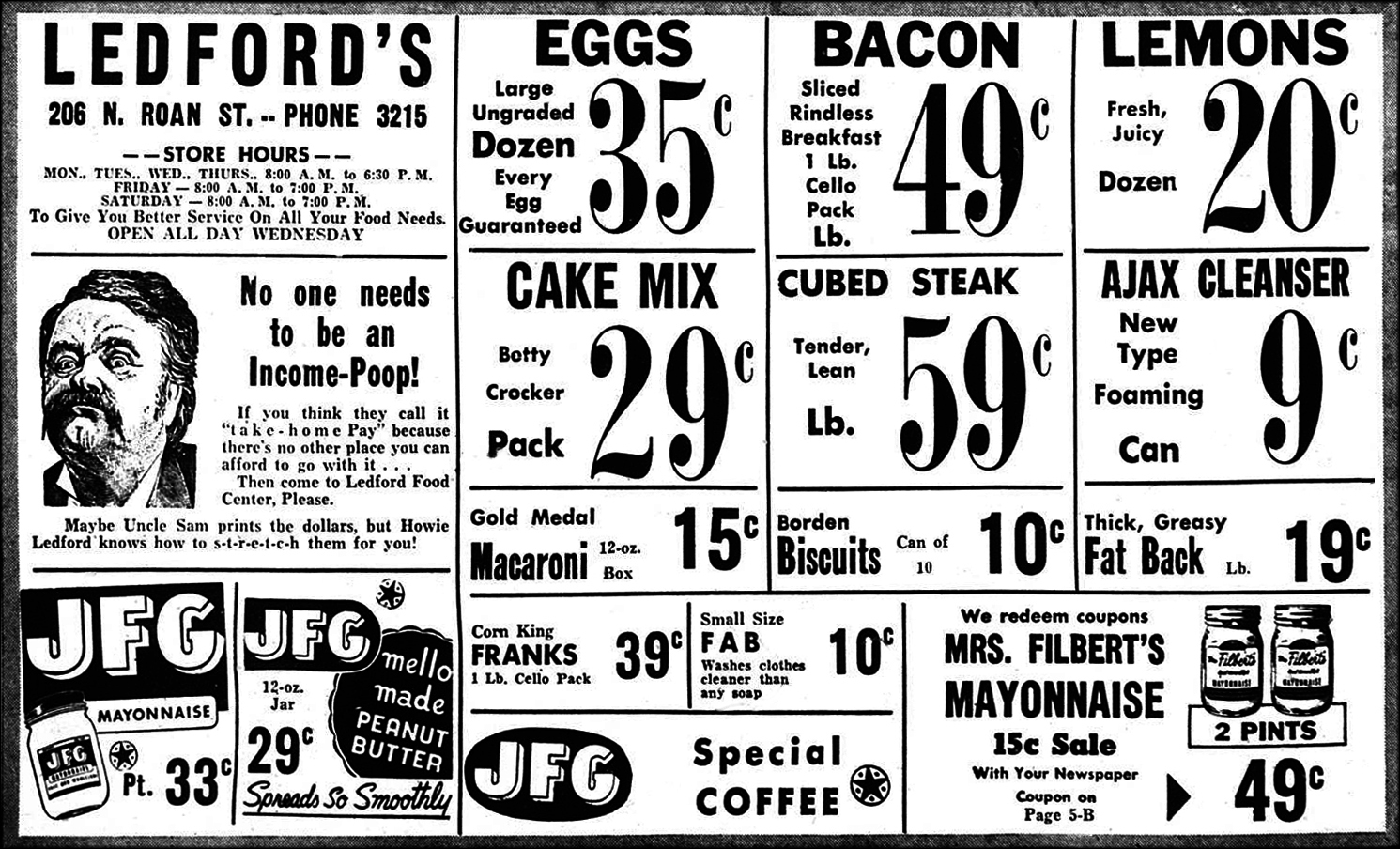
According to Doe, “The property was owned by area businessman, Robert London, but its contents comprised a retail grocery store leased by Howard V. Ledford. Howie, as he became known, acquired the reputation of being an affable person to customers and employees.

“Although lacking a suitable parking lot, air conditioning, fancy advertising, extended hours, flashy displays and background music, its various perks and clever practices set this store apart from most of its competitors.”

(Customers had to locate parking spaces on nearby streets or use one of the few located behind the store, which had a two-hour limit. Store hours were 8:00 a.m. until 6:30 p.m. on Monday through Thursday. It was open until 7:30 p.m. on Friday and Saturday. Unlike most downtown stores of that era, they did not close at noon on Wednesday. They were closed all day on Sunday.) 

“Several area restaurants and small grocery stores routinely bought meat, particularly ground beef, at wholesale prices from them. One eatery, Melody Lane Grill, managed by Jim Townsend, was the best commercial customer through the years, enjoying the greatest discount. 

“Johnson City Eye Hospital’s Ms. Patrick was provided free delivery of her institution’s orders as a reward for their business. Also to the delight of Billy Carpenter, the food center also stored refrigerated and frozen items free of charge for nearby Junior High when the school's own equipment could not accommodate its needed supply.” (Many folks will remember the colorful Billy at the school's cafeteria, working with his mother, Mary, who was the manager.)

“Meat cutters, who stayed busy most of their respective tenure, especially on Saturdays, included Earl Ledford, Dennis Miller, Roy Cannon, Sherman Cox, Claude Lilly, Gene McKee, Jimmy Bowman, and Geeter Sheets. 

“Ledford's obtained its meat from several wholesalers: Rath, Swift, Cudahy, Wilson, Valleydale, Hormel, Oscar Meyer, and Selecto (East Tennessee Packing Co. in Knoxville).  Choice beef was obtained from Kingan Co. in Indianapolis, while pork sausage was procured from local distributors such as Morton Brothers, Bulla and Payne. 

“Locally, the Sells Company sold fresh poultry to the small store. Occasionally, fresh rabbit as well as Will Cope’s home-made tamales could be found in the self-service case.” (Mr. Cope, as many of us seniors can testify, made absolutely the best hot tamales in town.)

“The produce department rivaled the meat market in attrition of employees. At various times, tending the fresh fruits and vegetables were Everett Hughes, Henry Arnold, Bobby Hoss, Joe Henley, Ray Bowman, Edwin Goines, and Bill Hughes.

“Fresh produce was delivered twice weekly and placed at the front door with no fear of theft or damage, despite being left unattended an hour or more before Ledford or assistant manager, Ralph Booth, opened the door around 7:30. Most of these high-quality foods had been bought from Hale Brothers, a premiere wholesaler of fruits and vegetables in Morristown.

“Bag-up boys never had to ask customers whether they preferred paper or plastic; the latter had not come into existence back then. Personnel included J.G. Peterson, Raymond Kilby, Tony Bowman and Marvin Gouge. Jim Evans had a brief stay there as chief shelf-stocker. Only two cashiers were employed at Ledford's: Booth and a worker named Wallace Bolding.”

My column photo shows a Ledford's store ad with a caricature of Mr. Ledford, who promoted his products using humorous comments, usually preceded with the words, “Howie Sez.” 

Thank you, John Doe, for escorting us back to yesteryear for a peek into Ledford's Food Center. Does anyone know additional facts about the operation or what years the store was in business? If so, please send me a note.

Read more