Johnson City once boasted of having two prominent and competing foundries. The Johnson City Foundry and Machine Works, Inc. (1883-1987) operated at 920 W. Walnut Street, the Inter-State Foundry and Machine Company (1924-early 1980s) at 343 Love Street. Ironically, the same two founders started both businesses.
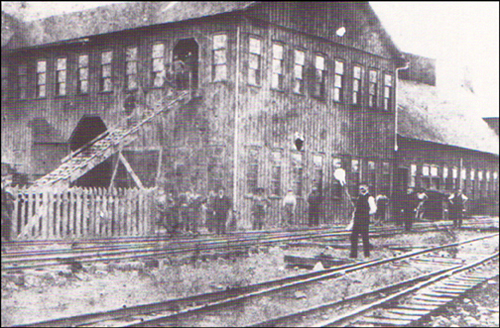
In 1963, JCF&MWI had the distinction of being the oldest industrial plant still operating in Johnson City. That year the company celebrated its 80thanniversary of the original company and the 17thanniversary of the new one. Its principal officers (and positions) were George H. McDowell (President-Treasurer), May A. Ross (later McDowell, Vice-President and Secretary), J. Frank Lamons (Sales Manager), R.O. Wood, Jr. (Chief Draftsman), Sabe W. Hawkins (Office Manager), Robert F. McNeil (Plant Superintendent), Willard McInturff (Foreman of Structural Steel Department), M. Guy Lane (Foreman of Ornamental and Light Steel Department), Vernon Eads (Foreman of the Foundry and Pattern Shop) and Gilbert Ingle (Foreman of the Machine Shop).

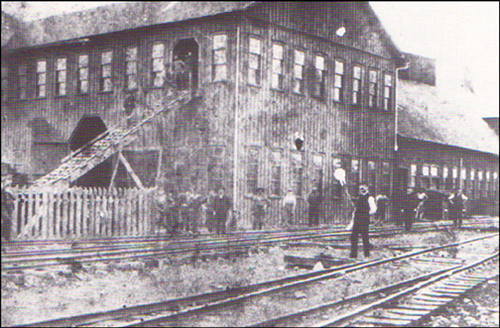
A foundry is defined as a business where metal is melted and poured into molds. The new venture formed in 1883 was initially known as the Miller and Crumley Foundry. It was situated on the tracks of the East Tennessee, Virginia and Georgia Railroad (later the Southern Railway). The Ash Street Courthouse would later occupy the site. Over years, the business would carry three names: Johnson City Foundry and Machine Works, Johnson City Foundry and Machine Company and Johnson City Foundry and Machine Works, Inc.

The next year, Colonel Thomas E. Matson purchased the Miller and Crumley Foundry and converted it into a large store and hollowware (hollow metal utensils) plant. Colonel Columbus Powell of Knoxville became a partner with Matson and the plant was incorporated with a capital of $20,000. Matson served as president.

The company erected two buildings at the junction of the ETV&G and ET&WNC railroads. One was a 5000 square foot two-story structure, the other a 12,500 one-story one. Matson acquired machinery for them from a firm in Philadelphia. Beginning in 1885, the Foundry repaired and rebuilt locomotives for the “Tweetsie” Railroad and specialized in custom ironwork.

 In 1907, the plant was rebuilt on the western half of its Walnut Street property in order to make room for the expansion of the Clinchfield Railroad. The plant consisted of a machine shop, a foundry and a blacksmith shop. They provided service and repairs for the “Tweetsie” Railroad, which had just completed construction of a railroad line from Cranberry, North Carolina to Johnson City, Tennessee.

In 1914, the company faced a foreclosure crisis. Glen Setzer, a former machinist who received his apprenticeship at the plant and completed his training on the Southern Railway in Bristol, became manager of the organization. He successfully ran the Foundry until his death in 1935, when the job befell his widow.

The Foundry was a jobbing plant, meaning its products were mostly made to specific customer orders. The one exception was the standard veneer slicing machine used in the lumber and furniture manufacturing industries. George Sitton, an early plant manager, developed the device that initially bore the name, the Sitton Slicer. It later became known as the Johnson City Slicer after several improvements were made to it.

 The business was always geared up to accepting new challenges to sustain or acquire new customers. That was never more important than when customers began asking for products fabricated from aluminum, a lighter metal. The company’s responsiveness to change helped keep the foundry in operation throughout its long history.  As early as 1943, the Aluminum Company of America became the Foundry's largest customer and continued to be so until the 1970s.

During World War II, the Johnson City Foundry became one of the nation's leading producers of military equipment and hardware. The company received the “Distinguished Army-Navy E Award” in 1943 as recognition for impressive production achievements.

In March 1946, Mr. George McDowell became the company’s president and treasurer. Mrs. McDowell was vice-president and general counsel. She was a sister of Mrs. Setzer and had worked at the company before becoming an attorney. George offered a concise explanation of the nature of their work by saying, “If it's made of iron or steel, draw a picture of it and we'll build it. As a matter of fact, you can now add brass or aluminum to that list.”

According to McDowell, the reason the plant was able to operate for such a long time without specific products was because of the diversification of its manufacturing facilities and its highly skilled workforce, which enabled the plant to continue even during hard times.

Fierce competition and a profit squeeze made it essential that each department become sufficient in its operations. The constant improvement of facilities was another important factor in its success. The Company increased its plate storage and added cranes to improve the handling of metal products. It enlarged the Ornamental Shop, added several new machines and rearranged all departments for better flow of raw materials and final products.

JCF&MWI continued to expand under the leadership of the McDowells, filling a wide range of regional business and construction needs. It fabricated steel for small building projects and large construction jobs, such as 750 tons of steel supplied to East Tennessee State College for the building of Memorial Gymnasium. With the advent of aluminum manufacturing, the Foundry began moving away from cast iron and steel production.

During the early 1980s, the company soon fell prey to declining demands for aluminum castings, inflation and a gradual shrinking of the coal industry to which the the company was a major supplier. In 1984, a Knoxville firm, Tenetek, bought the business, but it faced foreclosure in 1987. When the end finally came, approximately 133 employees from Tennessee, Virginia, and North Carolina were left without employment.

The Johnson City Foundry and Machine Works, Inc. had a 104-year successful reign in Johnson City. 
Read more

A few weeks ago, about 200 SHHS alumni from the classes of 1959-60-61 celebrated a milestone “50-year” reunion. The dinner meeting was held at the Johnson City Country Club. Tim Jones, moderator of the event, had me give a short history talk. Several classmates requested that I reproduce it in my column. This is the text from my talk:

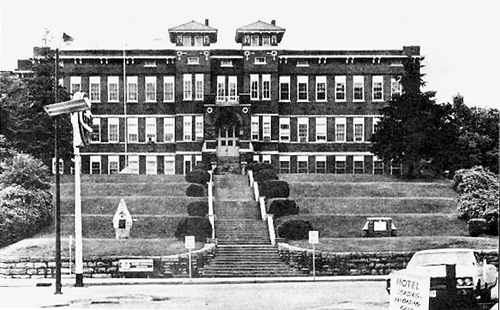
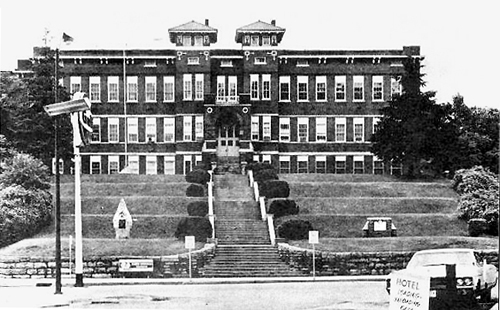
“We are about to embark on a sad yet nostalgic memory tour of the old downtown Science Hill High School. It is early 1979 and the big building on “The Hill” is just days from demolition. As we ascend the 88 steps between Roan Street and the front door, our minds drift back to 1960. We initially observe the Daniel Boone Trail Marker to our left and the school’s Tennessee Historical Marker on our right.

“Just before entering the school, we respectfully pause long enough to observe a group of ROTC students raising the American flag on the flagpole while the National Anthem is played over loud speakers. We enter the creaky front door and stroll down the quiet, chilly, musty, hallways.

“As we amble along the ground floor, we glance into the ROTC drill hall where we see Captain John Culpepper. He recently replaced Captain Charles East as PMS&T. One company is practicing drill formations. We recall the time when Willie Muston, the school’s jovial custodian, entered the drill hall just as a volley of M-1 rifle blanks were being fired. It took him ten minutes to recover from the blast. The students never let him forget it. Everybody loved Willie.

“Moving forward, we approach Thomas Boles’ classroom 18 and detect music being played. Then, we smell the aroma of food being prepared in home economics room 16 under the direction of Hattie Hunt. The next stop is Paul Slonaker’s room 10, which is used to teach industrial arts and mechanical drawing. Adjacent rooms, 12 and 13, are intended for English, languages and ROTC.

“We enter the cafeteria and find Mary DeGroat and her staff preparing lunch. We grab a tray of food. We can eat in the cafeteria, drill hall or gym. Maybe during lunch, we will hear Bill Sell bellow out his famous Tarzan yell to the delight of students and the chagrin of teachers.

“We go up the stairs to the second or main floor and immediately pass C. Howard McCorkle’s (Superintendent) and George Greenwell’s (Principal) offices. Across the hall are Dessie Payne’s Library, the auditorium and study hall. We peek in room 26 where Grace Bradshaw (world history) is attempting to make the subject palatable to her students. Room 25 reveals the presence of Howard Dyer (math, general business). Room 23, overlooking the grassy courtyard between the school and gym, belongs to petite Mary Crocker (English). Next, we see J.F. Copp (math) walking around assisting students. Who is that teacher standing beside his door looking in? It is Pauline Ritchie (English).

“Let’s mosey into the gym where we spot Sidney Smallwood (Athletic Director). Coaches are Bill Wilkins (basketball), Kermit Tipton (football) and John Broyles (baseball). Dick Ellis offers play-by-play broadcasts of many Topper games over WJHL radio. Before leaving the gym, let’s not forget the ROTC ball. It is a night of company rivalry, enjoyment for cadets and their dates and a time of promotions for selected cadets entering their senior year.

“Additional classrooms are located on the third floor: Earl Lane (geography, business arithmetic, boys’ gym), Cot Presnell (biology, football, golf), Dorothy Broyles (English), Juanita Jones (English), Ruth McPherson (biology, physics), Bill Wilkins (economics, sociology), Bob Evans (driver’s education), Nona Siler (History), Estelle Thompson (Spanish), Frank Tannewitz (typing), Zeb Presnell (chemistry), Louise Huddle (art) and Warren Weddle (band).

“Sadly, it is time for us to say goodbye to ‘The Hill’ one final time. The building we cherish so much is soon coming down. The city can raze our favorite school, but they cannot destroy our beloved memories of it. After 50 years, we still miss you, old Science Hill. You served us well.”  

Read more

Comparing an early 1940s modern kitchen with those of today reveals how far technology has advanced in 70 years. In that wartime era, someone speaking of a dishwasher was likely referring to a person, not an automated machine.

Back then, family members assisted with numerous household chores such as washing dishes. Most homes had a definite sequence to this ritual: cleaning glasses first, silverware second, dishes third and pots and pans fourth. Since water was often conserved at rural homes, it was necessary to avoid changing dishwater too often. Therefore, the least greasy items were generally washed first.

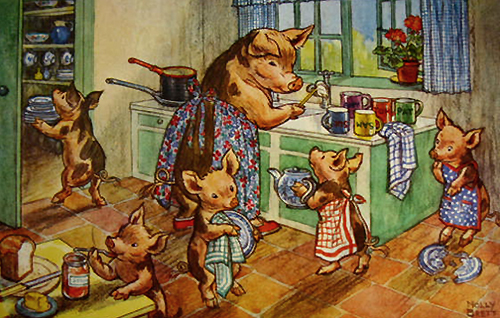
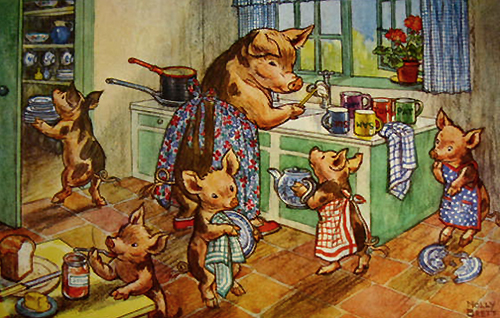
The Doe family members have just finished their evening meal. Mary and Jane are assigned the responsibility of cleaning up after supper. The girls bring dirty dishes, drinking glasses and eating utensils from the dining table to the kitchen. Initially, they fill a dishpan half full of water and add a small quantity of soap to it. They wash glasses and dry and polish them, making sure no lint is present. They then put the clean glasses in the kitchen closet.

Dirty silverware is next placed in the water that was used to clean the glasses. They add additional soap as needed. Each piece of silverware is thoroughly cleaned, rinsed, dried and put away.

The girls then remove food from plates and after that scrub them to get rid of any remaining particles stuck to them. Afterward, they take the accumulated slop to an outside covered garbage can for disposal.

Since the dishpan water is not too dirty, it can be used to wash the plates and saucers. The youngsters submerge each item in the water and clean it meticulously. As with most cleaning operations, a reasonable amount of “elbow grease” is required to get things completely sanitized. Once clean, they transfer each item to the metal drainer. After all plates have been cleaned and placed in the drainer, they empty the dishpan water and place the loaded drainer in it. Clean water is next poured over the dishes to remove any soap residue.

Now comes the most important step in the cleaning process. A couple pots of fresh water are heated on the stove and allowed to come to a boil. The scalding water is slowly and cautiously poured over everything in the drainer to destroy any remaining bacteria. Hot water quickly dries the plates, therefore eliminating the need for drying with a dishrag.

Now that the glasses, utensils and plates are clean, Mary and Jane take the dirty pots and pans to the kitchen where they are washed, dried and stored for the next meal. The young ladies conclude their routine chore by washing dishtowels, rinsing and drying the dishpan and dish drainer and putting everything in storage.

Research data from that era revealed that dishes washed only in cold water contained an abundance of bacteria; those washed in warm soapy water had fewer bacteria; the ones cleaned in hot soapy water and rinsed thoroughly with boiling water became essentially germ free. 

A helpful hint from the 1940s advised people to not wastefully dump in a large quantity of soap flakes or chips to the water in the dishpan. Instead, it recommended using a small amount of water in the pan and dissolving a modest quantity of soap in it. Another money saver was to accumulate small pieces of bar soap in a mesh strainer resembling a small corn popper and then dissolving them in the dishpan water.

Today, most homes have automated dishwashers that clean dishes in five easy steps: load the washer, add soap, close the door, push a button and unload it after it runs its full cycle. Oldsters can readily recall yesteryear when cleaning chores in the kitchen was long and laborious. 

Read more

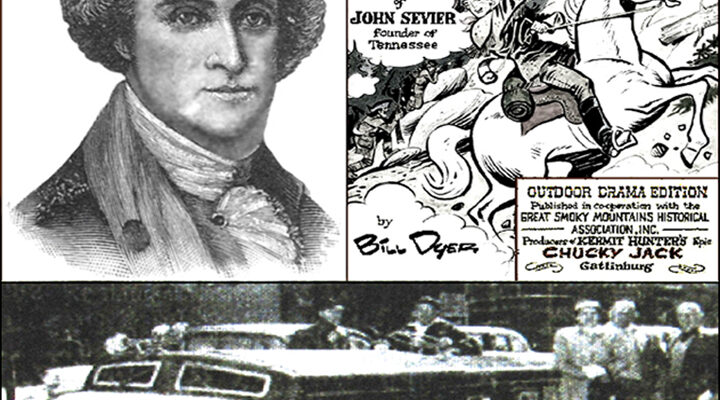
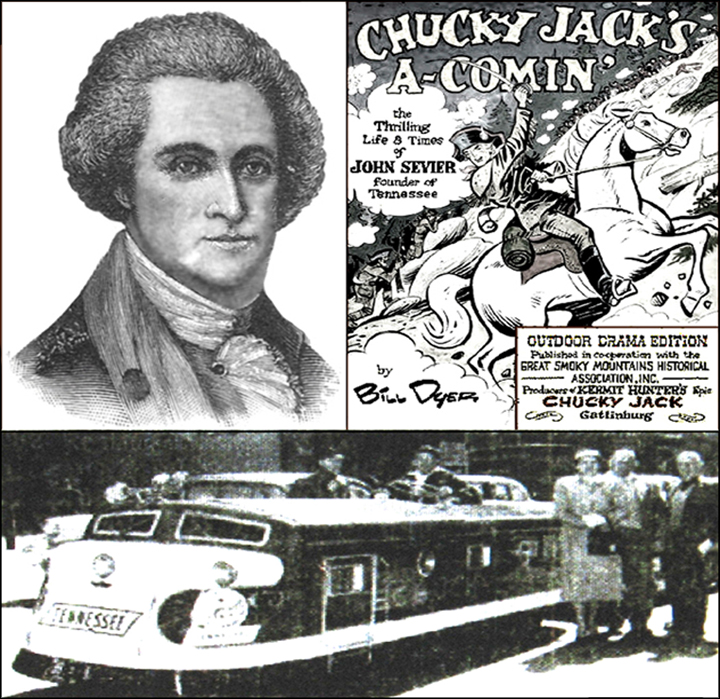
John Sevier (1745-1815), noted Tennessee history frontiersman, became known as “Chucky Jack.” His accolades were fearless Indian fighter, hero of the Battle of Kings Mountain and other Revolutionary War encounters, first governor of the short-lived State of Franklin and the new State of Tennessee and a U.S. Representative.

In 1955, the R.L. Maples family, Gatlinburg hotel owners, built Hunter Hills Theatre on 24.57 acres of land to feature an outdoor drama that accurately personified the life of Sevier. The 2500-seat facility was located about four miles outside the heart of Gatlinburg. It was named after Kermit Hunter, a successful drama writer who taught history on a stage under the stars. It was Hunter’s third drama, the other two being “Unto These Hills” (1949, Cherokee, NC) and “Horn in the West” (1951, Boone, NC). He later added several more productions.

The Maples’ aim was to attract tourists who routinely traveled 35 miles across a narrow, winding mountain road to see the popular drama in Cherokee. The play opened in 1956 with performances scheduled from late June to early September. Viewing “Chucky Jack” was described as a painless, pleasurable way to learn early Tennessee history in the coolness of pristine mountain air.

The play employed 92 actors, some of whom had previously worked on Broadway. Others were college drama students and local residents. The main stage was 55 feet wide and equipped with two 30-foot revolving stages that allowed speedy set changes.

Promoters of the event devised a clever attention-grabbing stunt to draw attention to the new enterprise. They purchased what appeared to be a train for $13,000 from an amusement Company in Dayton, Ohio. The vehicle, comprised of a Diesel-looking locomotive and two cars, ran on the road rather than a rail. The word “Tennessee” appeared across the front of it. The new owners drove it from Dayton to Gatlinburg to draw media attention along the 350-mile stretch of highway. Local newspapers and television stations were curious about them.

Accompanying the train on its overland trek were Mr. and Mrs. Maples; their son, Jack, who piloted the train; and Bart Leiper, a director of public relations for Gatlinburg and “Chucky Jack.” When the train finally arrived at its mountainous destination, it assumed a new role – providing sightseeing around the city for tourists and rides to and from the theatre. During the 1957 season, major script changes were made to the play. Also, an organ and a special trained chorus replaced tape recordings.

In 1958, a 24-page brightly illustrated comic book titled, “Chucky Jack’s A-Comin’” was published that was aimed primarily at youngsters. Bill Dyer, well-known cartoonist for the Knoxville News-Sentinel (famous for his “Dyergrams” of the Tennessee Volunteer football games), provided the artwork. Bill modestly commented that all he had to do was let history tell its own story. He simply supplied the pictures and released the imprints for it.

Over time, attendance at “Chucky Jack” performances began to wane in spite of efforts to publicize it. John Sevier, as impressive as he was in Tennessee history, was not as recognized to the general public as were other Volunteer State notables such as Davy Crockett, Daniel Boone, Andrew Jackson and Sam Houston. Another problem was the three-hours length of the play, but Hunter refused to shorten it by even one word.

In 1959 after a brief three-year run, “Chucky Jack” was chucked. The early pioneer left the open-air stage and returned to history books. In December 1965, the Maples’ family donated the theatre to the University of Tennessee.  

Read more

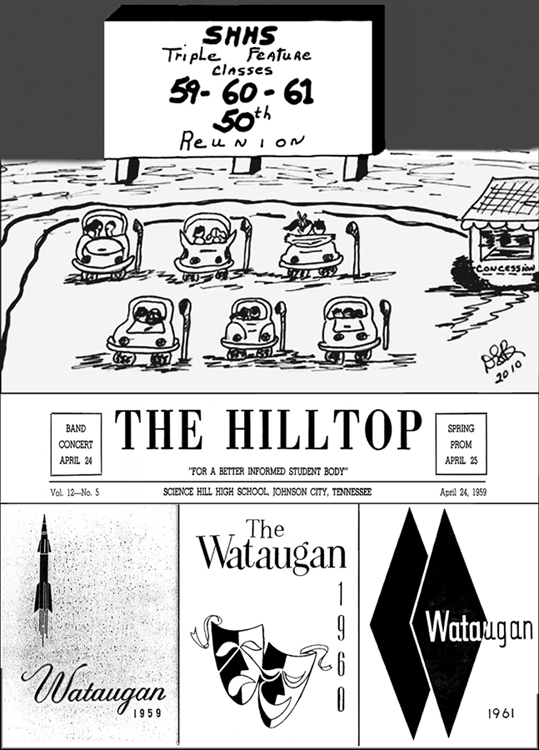
Science Hill High School’s classes of 1959-60-61 will celebrate a joint reunion on July 9-10. During the three senior years from a half-century ago, the city proposed, approved and constructed a new high school building along John Exum Parkway.

The old name was retained, although the new sprawling complex was not located on a hill. On June 2, the class of 1961 became the first to graduate from the new facility, having relocated there just three months prior. Three Hilltop newspapers from that era offer a nostalgic peek of school life. Sadly, several mentioned alumni are now deceased.

          1958-59: James White, Editor 

Through a school-wide election, seniors Roy Chatman and Carol Carr became the first “Mr. and Miss Science Hill High School.” He was chosen as the most athletic boy of the Senior Class and she was captain of the cheerleading squad and sweetheart of the Key Club.

The junior/senior prom held in the gym carried the theme, “Treasure Island,” with the local Joe Henley Band providing music. Guest dates had to be approved by a special board comprised of faculty and students. Mrs. Ruth McPherson was designated sponsor.

Under “Fads ‘n Fashions,” Lou Ann Siler reported seeing Jud Mast wearing bright orange pants and a shirt to match, Smitty Mast adorning a cinnamon colored shirt and pants, Betsy Harmon in a cute plaid vest and Nancy Gregg decked out in a Valentine’s Day red blouse. 

The Hilltop made several popular song dedications to students and staff: “Tragedy,” Brenda Greene; “Hurtin’ Inside,” Lana Sharp; “Alvin’s Harmonica,” Mr. Weddle and the SHHS Band; “South of the Border,” Jean Arthur Woods and her Girl Scout Troop; and “Please Love Me Forever,” Jimmy Snyder.

The “Boy and Girl of the Month” picks were Eddie Washburn and Joann Crowe: Eddie enjoyed sports especially football, while Joann favored basketball. Seniors on the baseball team were Sammy Broyles, Bob Bryan, Delbert Carroll, Bobby Little and Jim Phipps.

Larry Carroll penned a poignant four-stanza poem titled “Some Things Remembered.” The first one read, “Some things remembered, From childhood to old, The spring with its flowers, And Winters so Cold.”

Several T&I (Trade & Industrial) Education Club members extolled the organization: Gordon Jenkins, Brenda Greene, Pat Dempsey, Charlotte Bowers, Martha Richardson, Wayne Dyer, Carol Ann Whitlock, John Webb, Robert Johnson, Bonnie Hicks, Patsy Goode and Marie Morgan. 

1959-60: Ann Scott, Editor 

Senior class members and faculty chose Diane Burkhalter to receive the 1960 DAR award, based on her leadership, scholarship and citizenship qualities.

The seniors presented a talent show, “The Click Dart Show” that was derived from the hit television program, “The Dick Clark Show.” It was written by Brenda Greene and sponsored by Beechnut baby foods. David Newell and Mackey Therrell received honorable mention.

The Key Club had a banner year with regard to fund raising and social and service projects. The group celebrated at Betty Gayle Young’s cabin on Boone Lake for an evening capped off with stunning fireworks. The Jr. Civitan Club’s annual fruitcake sale was a huge success with 2500 pounds of the sweet delicacy sold.

ROTC sponsors were Lt. Colonel Judy McKinney; Major Janice Taylor; Captains Joan Haire, Ann Scott, Mary Charles Williams, Pat Muse and Carol Alexander; Lieutenants Harriet Baker, Carol Montgomery, Frances Wood and Betty Miles.

The Topper’s beat Kingsport in basketball by a score of 55 to 51, giving Coach Bill Wilkins his first win over the D.B. Indians in six years. Players mentioned were Steve Wilson, Graham Spurrier, Gary Scheuerman, Bob France, Finley Cook, Larry Miller and Al Ferguson.

A section titled, “Tonto Says” offered several clever musings: “Eddie no bakes, Eddie no fries, Eddie Broyles. Patsy no ancient, Patsy no old, Patsy Young. Walter no bear, Walter no rabbit, Walter Beaver. Calvin no snap, Calvin no pop, Calvin Click. Fulton no few, Fulton no less, Fulton Moore.”

Mrs. W. Shumate thoughtfully dedicated a book, “The Story Behind Popular Songs” by Elizabeth Montgomery, to the school library in memory of classmate Eddie Moore.  

1960-61: Monty Shoun, Editor

 Dr. William S. Steele, pastor of Munsey Memorial Church, conducted the Baccalaureate service on Sunday, May 28 at the new school gym. Graduation followed on Friday night, June 2.

Seniors receiving awards were Graham Norman, Manhood; Betsy Harmon, DAR; Carolyn Ledford, First Honors; Tommy Grogg, Second Honors; Booney Vance, Athletic; Lorna Hampton, Spanish; Kathy Golden, Business; Sharon Hite, T&I; Janice Loudy, Intramural; and Rosalie Berry, Latin.

The “Senior Alphabet” identified 26 students such as A-dorable, Jean Senter; C-ute, Carol Bolton; D-elightful, Mary Perkins; H-andsome, Kip Carr; I-deal, Buddy Talley; O-bedient, Dan Mahoney; and Z-estful, Judy Spiro.

The Roving Reporter asked students what they will miss about their high school years: “being in the senior play, Tom Wilkerson; fussing and fighting with my friends, Nancy Smalling; going to ballgames and yelling my head off, Carolyn Wishon; and getting up at the crack of dawn, Marianne Hale.”

Another section, “Lend an Ear” offered advice from seniors to juniors: “Study hard and don’t put off until the last minute, Marcia Lawson; Have fun and don’t study too hard, Sarah Hagood; Place the things of real importance first, Susan Shields; and keep cool but do not freeze, Booney Vance (quoting from a mayonnaise jar).

Five drill squads, one from each company, practiced from about 6:30 to 8:00 each weekday morning in preparation for competition at the ROTC Ball. Leaders (and squads) were Freddie Sharpe (Drum and Bugle Corps), David Allen (“A”), Jud Mast (“B”), Bill Wood (“C”) and John Price (“D”).

Several students shared their most exciting moments in high school: “named Key Club Sweetheart, Carol Ann Greene; first date with a Yankee, Nancy Lee Worley; tying Kingsport in football, Jerry Jones; graduation, Judy Leach; and running an intercepted pass back 75 yards for a touchdown against Bristol, Fred Deneen.”

Many students likely recall the friendly, jovial school custodian, affectionately known as “Willie.” Graham Spurrier identified his last name as Muston.

(Note: Bob Cox is an alumni of SHHS’s class of 1961.) 

Read more

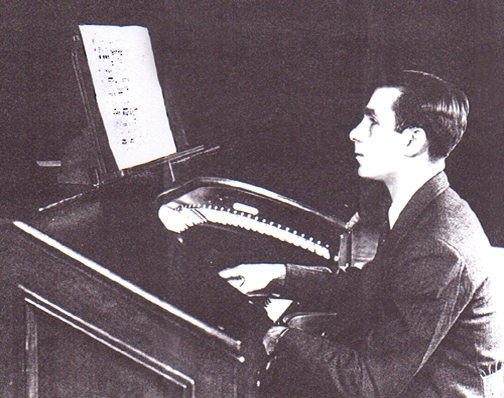
Recently I chatted with Mrs. Carsie Lodter about the time her late husband, Prof. Edward Lodter, played the Majestic Theatre’s Wurlitzer organ after it was relocated to Milligan College for a weekly WJHL radio broadcast.

Mrs. Lodter said the organ was constructed in 1926 in North Tonawanda, NY with two manual keyboards and 511 tubes (seven racks with each containing from 61 to 97 individual pipes). The unit arrived in the city from Cincinnati on a Southern Railway train. Company technicians placed the pipes in concrete lined chambers that were bored into the walls of the theatre. 

“The Majestic once provided a regular offering of silent films,” said Mrs. Lodter. “The new organ provided background music to supplement the action being shown on the screen. It produced numerous special effect sounds such as a train whistle, airplane, ocean surf, sirens, bells and horses hoofs. When ‘talkies’ began to appear in 1927, the need for the organ diminished. It was then used for patriotic sing-alongs, organ concerts and recitals.

“About that time, theatre owner, Mrs. George W. Keys, a faithful patron of Milligan College, became interested in cultural pursuits and sought to establish a memorial for her late husband. She donated the idle organ to the college where it was installed in Derthick Hall auditorium.”

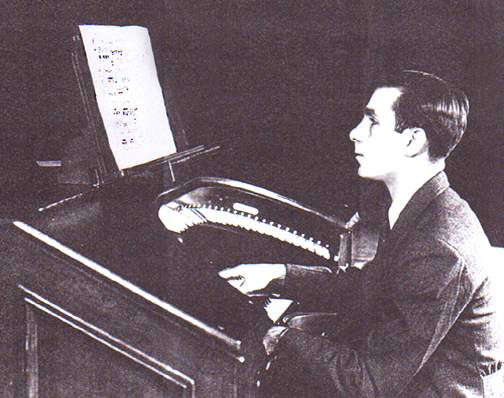
The “George W. Keys Memorial Organ” became a welcomed addition to the cultural dimension of the college community. Edward G. Lodter, professor of foreign languages and an accomplished organist, contributed his talents by playing the organ for daily chapel services, special recitals and as accompaniment for vocalists, musical groups and instrumentalists at the school.

When WJHL opened a radio station on S. Roan Street in 1938, Mrs. Lodter’s father, Sam Hyder, a math professor at Milligan, was instrumental in getting a live broadcast aired from the college as a gift to the community. “The Milligan College Hour of the Air” was likely the first regular on-site remote broadcast from the new station.

Each Sunday afternoon while school was in session, the auditorium became a makeshift broadcast studio. A WJHL technician and Professor Hyder worked jointly to ensure that the necessary equipment was in place before each live program. Hyder kept a notebook of the contents of the 72 programs broadcast from Dec. 18, 1938 until Dec. 8, 1940. No programs were aired during summer months.

Eddie Cowell, a young budding announcer, became the program’s master of ceremonies. He discussed current events that were taking place on the campus and occasionally turned the mike over to college president, Henry J. Derthick or other campus administrators. However, the main program was a vesper service of organ music rendered by Professor Lodter. He chose as his theme song the very beautiful “Traemerii, Opus 15, No. 7” by Robert Schumann.

Selections were primarily classical, but also included familiar hymns, popular songs and spirituals. The professor occasionally invited talented music students and alumni to join him on the air. WJHL offered listeners the opportunity to request a selection or ask for an encore.

After the program went off the air, the organ remained essentially idle until it was restored by the college and used in chapel. In 1972, it was sold to Roy Davis, owner of the Cumberland Caverns in McMinnville, Tennessee for home use. Sadly, his house and contents were destroyed by fire in 1998. 

Mrs. Lodter hopes that this column will bring back pleasant memories from some of the area’s oldest music lovers who remember “The Milligan College Hour of the Air.” 

Read more

Bob Tate sent me a clipping through Charles Marshall that was from a1967 Johnson City Press-Chronicle newspaper article, written by Paul Smith. It pertained to the early growth of industry in the city.

Information came from a Southern Railway promotional brochure titled, “Johnson City, Tennessee – Its Commerce, Finance and Industries, prepared by the company’s traffic department about 1909 and owned by J.E. Rumbley, retired employee of the company. 

The first business noted was Harris Manufacturing (Allen and W.P. Harris, proprietors). Established in 1898, the hardwood center became one of the most important factors in Johnson City’s growth and prosperity. Among its many diverse products were plow and cantilever handles, trunk slats and dimension stock. Sells Lumber and Manufacturing Company (Sam Sells, president) was a wholesale and retail dealer that employed 28 workers. It dealt in interior finish, sash and doors, mantels, grates, tile, plaster and cement. 

The brochure included scenic views of mountain railroad tracks, architects’ drawing of the projected $100,000 post office (later became Ash Street Courthouse), view of W. Watauga showing two streetcars at a passing point, the Bee-Hive Department Store, the first railroad station erected in the city that burned in 1891, the huge Cranberry Furnace in the Carnegie section, wholesale grocery of A.P. Henderson and Sons, a block structure in the 700 block of South Roan, the new Johnson City Laundry, Johnson City Foundry and Machine Works, Hotel Carnegie (large three-story structure on the site of the future Empire Furniture Company) and Soldiers Home that opened in 1903.

Also pictured was the reservoir of Watauga Water Company whose spring, owned by W.E. Burbage, supplied water to the city’s 75 fire hydrants. The old Watauga Electric Co., headed by W.P. Brownlow, served 525 customers charging 10 cents per kilowatt-hour for domestic use.

The city’s mercantile community boasted of “one of the largest, best equipped and most heavily stocked wholesale dry goods and notions houses between Knoxville and Lynchburg” known as Love-Thomas Co. Another photo in the brochure showed the three-story building opposite the courthouse, which once housed the general offices of Clinchfield Railroad before the headquarters was moved to Erwin.

The booklet also stated that Johnson City wanted more factories, became the gateway to the greatest attractions in the country, had acquired more important wholesale institutions and its manufacturing plants distributed their products to all parts of the world. Blue limestone was said to underline the surface of almost the whole of the community. It was used because it was especially adaptable, having been used for numerous building operations such as railway ballast and macadam.

The proximity of cheap fuel was a significant reason for local factories locating in the city. Johnson City was ideally situated adjacent to the great coalfields. Between 1902 and 1909, it experienced a 100% population growth. It also bragged of a thoroughly up-to-date electric street railway (streetcar) system with plans in the works to extend the present line for additional loops that included a terminus at Soldiers Home.

Another plus was the city’s telephone system with ample connections through long distance lines to almost any part of the United States.

The highly informative brochure concluded with the promise of new industries coming to Johnson City that included a $100,000 flourmill to be named Model Mill (later the Red Band unit of General Mills). 

Read more

In 2008, I wrote two columns about “The Adventures of Princess Pet,” an early Saturday morning children’s radio program that I listened to as a child. It aired on WJHL from 1951 to 1953. I received four responses from readers who also recalled the series.

Recently, Stephen Wright sent me a surprising note that said, “Lower the drawbridge; Pet Brown Bear is alive and well.” Wright played the role of Brown Bear on the show, which occurred when he was between the ages of 14 and 16. He was the youngest cast member.

Princess Pet was the brainchild of Jane Dalton, who became known as “the first lady of radio.” She produced the series at WSPA radio in Spartanburg, S.C. The syndicated adventure show garnered a radio distribution along the Eastern seaboard. It was taped on Wednesday nights and reproduced on long playing breakable discs, similar to 78-rpm records. The characters (and actors) on the show were Princess Pet (Roberta Snow), Pet Brown Mule (Fred Myers), Pet Brown Bear (Stephen Wright), Hagar the Witch (Jane Dalton), the Wicked Duke of the Black Forest (Ed McGrath), Alowadin the Sorcerer (Al Willis) and Vashti the Sorceress (Peg Stanton). 

Stephen recalled that a young man played the studio organ for the opening and closing themes as well as background music during action scenes. A station worker added appropriate sound effects throughout the taping. The studio used what was referred to as a filter mike that gave the illusion of the dialog being deep inside a dark cave. In spite of the short quarter-hour duration of the episodes, most ended with a completed story; very few were continued to the following week. At the end of each adventure, good guys always prevailed over evil ones. Princess Pet’s faithful youthful listeners demanded it. 

No studio audience was present at the taping, unlike some shows during that period of time. Everyone read previously rehearsed scripts that were written by Dalton. Wright said that his character was constantly getting lost or in trouble on the show. He had to be rescued numerous times. Radio producers, unlike those on television, were not concerned about the age or appearance of an actor as long as his or her voice was suitable for the part.

Stephen said the show had its share of slip-ups that created moments of merriment for the cast. Examples included reading a line incorrectly; getting out of sequence in the script; producing a sound effect at the wrong time; and sneezing, hiccupping, belching or similar distraction. When that happened, Jane abruptly shouted, “cut.” The tape was stopped and the scene re-recorded. Mr. Wright said they essentially had no knowledge of the sponsor and its products. He was unaware that Brown Mules and Brown Bears were frozen treats on a stick, the mule consisting of vanilla ice cream coated with chocolate and the bear being chocolate ice cream.

The show ended in 1953, a victim of emerging television. Today, recordings of “The Adventures of Princess Pet” are rare because, according to Stephen, a fire at the WSPA studio several years ago destroyed the master tapes. The now retired Manhattan resident went on to have a stellar acting career in Little Theatre, Broadway, off Broadway, national tours and numerous TV commercials.

After almost three years of wholesome fantasy on WJHL radio, the fair princess and her devoted imaginary radio gang drifted off the syndicated airways into the frozen confectionary haven known as the “Land of the Frozen Star,” where you can still magically buy a Brown Mule or a Brown Bear treat for a nickel. 

Read more

My August 14, 2006 column dealt with a vicious storm that smacked Johnson City around 1913, causing significant damage to the surrounding area including the Lee Hotel on Spring Street.

Quoting from the article: “The front door transom was blown out striking manager, Mr. W.I. Ray, in the head causing ‘an ugly wound, which though painful, is not serious.’”

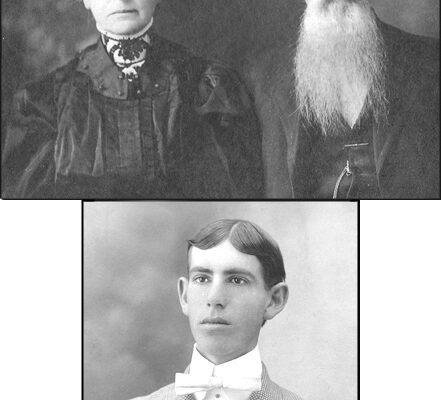
I received a note from John Doe (who asked not to be identified) sharing added information about the largely forgotten hostelry of yesteryear. We compared notes and pieced together today’s column. According to John: “Captain William C. Lee, CSA veteran for whom the hotel was named, married Unicoi native Mary Ellen Anderson Ray in 1889. She was previously married to Captain John Henry Ray, a USA Veteran. After John died in 1887, Mary Ellen wedded Captain Lee. Four years later, William, his wife and her one surviving son, William I. Ray, took up residency in Johnson City. Lee became owner of the Lee Hotel in 1894.”

Other businesses along Spring Street during the turn-of-the-century were Summers-Parrott Hardware, Johnson City Water Co., Congress Shaving Parlor, City Grocery & Feed Co., C.W. Seaver Harness Co. and The Staff (newspaper).

John indicated that, while he was never in the hotel, he acquired some little-known information about it from William Ray prior to his death in 1962: “The hotel was a two-story brick structure, which may have had a partial third story in the rear. The backside had a wooden porch covered with vines that also spread across the adjacent wall. The entrance was rather plain with a small porch over the door. Radiators heated the building with steam supplied from a coal-fired furnace. A sign on the second floor advertised ‘Steam Heat.’ In addition to about 20 hotel guest rooms, the building provided accommodations for the Lees and Rays. Later, the Ray family moved adjacent to the hotel at 204 W. Walnut and then to nearby 506 W. Pine.”  

Ray, who became hotel manager, met his wife-to-be, Mabel Essensa, when she and her father roomed at the inn. The couple married in 1910. Ray held the job until 1917 when he accepted employment with the ET&WNC Railroad.

When Captain Lee died on April 4, 1914, Mrs. Lee assumed ownership of the business. By then, she was receiving a $12 per month Union Army widow's pension resulting from her first husband. John did not believe that Ray at any time owned the hotel. He was fairly certain that Mrs. Lee possessed it during the three years between her husband’s death and her son’s departure. She possibly owned it until her death in 1924, perhaps hiring a new manager to replace William. Records show that Hugh L. Boring became the hotel’s new owner. The Lees were interred in Oak Hill Cemetery.

City directories confusingly list the Lee Hotel between 1909 and 1923 as being located at 113 Buffalo; Spring and Walnut; and 904, 310 and 704 Spring. The five addresses likely identify the same property since streets and house numbers were occasionally renamed. Frank Tannewitz once told me that he made deliveries to the Lee Hotel on numerous occasions and stated emphatically that it was located in the northwest intersection of Spring and Walnut.

Directories list the hotel between 1909 (the city’s first one) and 1937. No mention is made of it in 1939, but it reappears in 1941 as the Travellers Inn. It retains the name until 1950 when it disappears from the record. By 1953, the Salvation Army had occupied the former hotel site.

Mr. Doe and I hope readers will respond with ancillary information including photos and advertisements.  

Read more

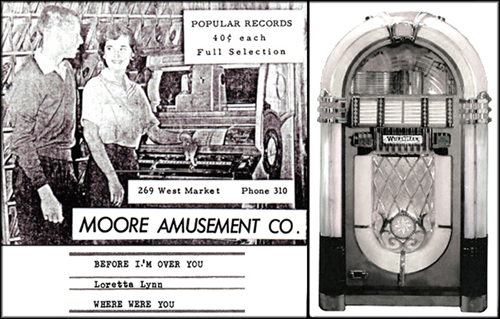
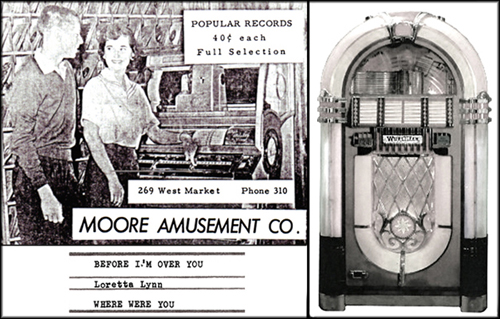
A vintage jukebox is a coin-operated phonograph, typically in a beautiful colorfully illuminated cabinet, having an assortment of records that are selected from numbered push buttons.

The music phenomenon that had its roots back to 1927 included major brands as Wurlitzer, Seeburg, Rock-Ola and Ami. Mrs. Evelyn Moore shared the story of Moore Amusement Company that was located at 269 W. Market: “Fred and I started the jukebox business in 1940 with four Model 700 Wurlitzer phonographs, each costing $295 and holding 24 records. They were not fancy but very pretty.”

The Moores’ first jukebox was placed in Roby Wagoner’s Frozen Custard Parlor on E. Main. Others soon jumped on the bandwagon: Spot #1, Spot #2, Patio Grill, Lucky Grill, Melody Lane, Rainbow Corner, Black Hawk, Sevier Café, Varsity Grill, The Par, Bar-B-Q-King, The Cottage and others. This was the era of breakable shellac 78s (78-rpm records). Some of the popular bandleaders were Sammy Kaye, Guy Lombardo, Glenn Miller, the Dorsey Brothers, Les Brown, Shep Fields, Benny Goodman and Artie Shaw.

“We purchased most of our records from salesmen representing major record companies such as Columbia, Decca and RCA,” said Moore. “Later, we bought them from a Cincinnati firm. Locally, we acquired some from The Music Mart and Smythe Electric. The first 78s cost us 18 cents. Customers paid a nickel for one selection or a quarter for six. Later, we upped the price to a dime per song or three for a quarter.”

Fred and Evelyn refreshed records in the jukeboxes once a week, which meant determining in advance which ones to replace. Fred carried his manual typewriter with him so as to change labels. Next, they removed coins from the machines, equally dividing the take with the businesses. Eventually, “route boys” handled the weekly chore.

Hit records removed from phonographs were stored for use in filling future requests to put them back on the players. Other discs were placed in small wooden bins at the store and sold to customers at a discount price. No 78s were sold because they were always too worn for resale.

 The war years were challenging for the couple because manufactures stopped producing records and phonographs. Also, trained repairmen were difficult to locate due to labor shortages. Records stayed on jukeboxes until they wore out. Small wall boxes were installed at tables at the Trailways Bus Station café, allowing convenient remote access to the centralized jukebox. This was done mainly to accommodate military travelers.

In 1950, the record industry switched to the smaller unbreakable vinyl 45s with the big hole in the center. They were priced at 35 cents, eventually escalating to 75. Fortunately, phonograph manufacturers provided conversion kits, allowing the new smaller records to be played on existing jukeboxes. By the mid 1950s, a change in musical tastes was ushered in by Bill Haley & the Comets and further popularized by Elvis Presley, The Platters, Little Richard, Fats Domino, Pat Boone, Jerry Lee Lewis, the Big Bopper, Bobby Darren, Ray Charles and many others.

Wurlitzer’s Model 1015 became its most popular jukebox, consisting of a mostly wooden body, dome top, multicolored normal screw-in light bulbs and neon bubbling tubes that spiraled around the top of the machine.

In 1965, the Moores sold their business, which by that time had grown to 200 jukeboxes, to IAM Co. in Greenville, Tennessee. It became known as ABC Amusement Company. Ironically, the jukebox craze peaked between 1940 and 1965, the identical 25-year span that Fred and Evelyn ran their successful amusement business. 

Read more