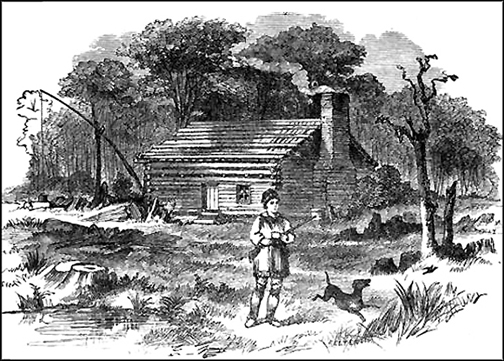
Andrew Jackson, the seventh president of the United States, once practiced law in Jonesborough and Greeneville, residing there for several months in the Christopher Taylor log cabin. He became a polarizing and dominating political figure in the 1820s and 30s who ultimately helped shape the modern Democratic Party.

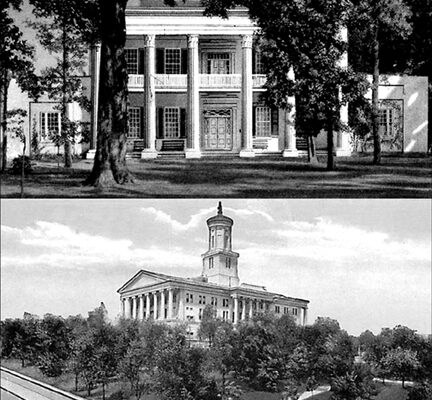
In January 1915, Andrew Jackson Day was celebrated in Nashville, Tennessee. The Andrew Jackson Memorial Association and the Ladies' Hermitage Association (LHA) were the primary movers in organizing a massive downtown celebration.

One significant portion of the event was to unveil a newly constructed statue as a memorial to “Old Hickory,” paid for from a vast network of local agencies and public contributions. The LHA was praised for their efforts in saving and preserving Jackson’s home place, thereby establishing a model for how preservation of antiquities should be handled.
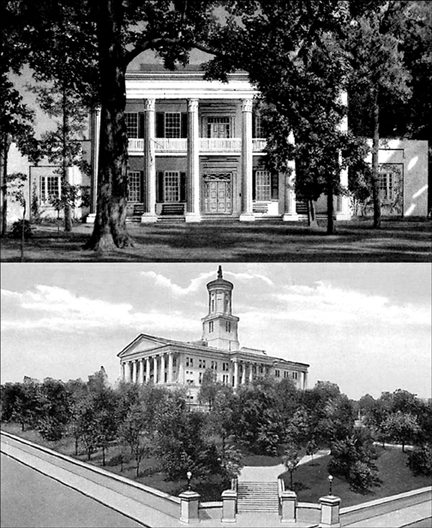
The day began with a festive parade that organized at Broadway and Eighth Avenue at 10 a.m., moved through the principal streets of the downtown business district to Capitol Boulevard and on to the State Capitol. In the procession were representatives of military, municipal, and patriotic organizations. Along the west side of the Capitol Boulevard behind many bales of cotton, two companies of Confederate soldiers engaged in a mock battle using personnel from two companies of the Tennessee National Guard.

At the conclusion of the reminiscence of the Battle of New Orleans, several young ladies, acting on behalf of the LHA, released several white doves as a token of peace. Upon the Capitol Boulevard, a great throng of spectators heard public addresses from Governor Ben W. Hooper, Major E. B. Stehlman, and Judge S. F. Wilson.

The most impressive ceremonies of the morning were held on the east side of the Capitol under the auspices of the LHA. Here the equestrian statue of General Jackson was decked with wreaths of flowers that had been placed upon it with appropriate remarks by ladies representing the various patriotic organizations. Judge Wilson, Regent of the LHA, delivered the principal address. On the same afternoon, a hickory tree was planted at Centennial Park in Jackson’s honor.

That evening, about 200 citizens attended a banquet at the historic Maxwell House. The toastmaster, Mr. Robert L. Burch, introduced seven prominent speakers. Later, a dazzling ball was held at the Hermitage Hotel.

The next morning, the Daughters and many invited guests made a pilgrimage to the tomb of Andrew Jackson at the Hermitage. The burial place had previously been appropriately decorated. Several speakers were introduced. One lady gave an interesting personal reminiscence of General Jackson and read an affectionate and treasured letter written by the general to her mother. Another person told some incidents of the attack on Baltimore by the British and the defense of Fort McHenry. The originator of the pilgrimage spoke to a group of school children from Old Hickory School, reminding them of Jackson's work in the Indian warfare of the southern country.

Finally, two wreaths of evergreen gathered from the old church that had been built in 1823 by Jackson for his wife, were placed upon the graves of General and Mrs. Jackson. After these exercises and a luncheon, the final speaker presented a paper dealing with Jackson’s storied career.

This brought to a close a day enjoyed to the fullest by a deeply interested and appreciative audience. It was a fitting tribute to a fitting man – Andrew Jackson. 
Read more

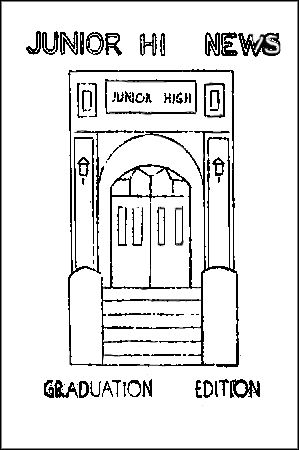
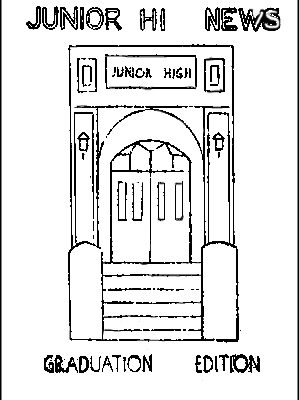
I acquired a May 24, 1940 edition of “Junior High News – Graduation Edition,” a 12-page student publication chocked full of names and facts. The item is in the Pat Watson (once owned Pat’s Trading Post) collection of the Archives of Appalachia. 

The newspaper staff consisted of Anna Marie Irish, Editor-in-Chief; Mary Ellen Gregg, News Editor; Dorothy Lynn Brown, Club Editor; Herschal Ottinger, Art Editor; Hoyle Chancellor, Boys Sports Editor; Marjorie Brumit, Girls Sports Editor; and Frank Martin, Business Manager.

The headline announced that 225 students were graduating from Junior High School, as being the largest class in the history of the school since its beginning in 1922. The periodical further stated that the second largest class had graduated the previous year when 200 students received diplomas. The commencement theme was titled, “And They Shall Read,” depicting 500 years of printing and its effect on history.

The annual Honor Banquet was scheduled for the following Friday evening at 6 o’clock in the school cafeteria for 250 specially invited guests. The invitees were students earning letters from the school, members of the Junior High P.T.A and faculty.

A popular feature of the paper was the joke page depicting funny stories that fictitiously occurred between students and teachers. For instance: A teacher by the name of Helen Jones, after being annoyed by a student’s constant interruptions during class said, “Frank Martin, are you teaching this class?” His response was “No madam.” The teacher followed with “Then don’t talk like an idiot.”

The graduating class presented a lively comedy, “Apple Blossom Time,” on Friday evening, May 3 at 7:45 with a capacity crowd filling the massive 1000-seat auditorium. A calendar showed the final events for May: “9A Play, May 3; Letter Awards in Assembly, May 23; Honor Banquet, May 24, 6 p.m.; Class Work Closes, May 27, 11:30 a.m.; Reorganization for Fall Term and Receive Report Cards, May 28, 8:30 a.m.; and Promotion Exercises with Exhibits from Various Departments, May 28, 2:30 p.m. The calendar indicated that school would begin again on Sept. 3, 1940.

One section in the paper was similar to superlatives found in high school annuals, each one containing a different letter of the alphabet: Athletic, Baritone, Cute, Dumb, Earnest, Flirt, Gardner, Hopeful, Inquisitive, Jealous, Kissable, Little, Meddler, Nimble, Odd, Pest, Quiet, Restless, Saucy, Tumbler, Useless, Vacant, Whimsical, X (indicating unknown quantity), Yawners and Zestful. One or two students were listed under each category.

Miss Mary Nelle Givens, 9A student, won the title of Milk Queen in a contest sponsored by the Johnson City Milk Producers Association by defeating a representative from Science Hill. The margin was 3000 votes. The school was awarded $50 as first prize, the money being used to purchase new library books. Mary Nelle won $10 and a free pass to the Majestic Theatre for a month. She was also chosen as the school’s most popular girl in a run-off contest with three other contestants – Betty Asquith, Anna Marie Irish and Rosemary Murray.

The publication concluded with several students commenting on the teachers they would soon be leaving behind at Junior High and beginning their daily trek up 88 steps to Science Hill High School. The list included Mr. McCorkle, Miss Bradshaw, Miss Candler, Miss Archer, Miss Hart, Miss Taylor, Miss Whitehead, Mr. Oakes, Mr. Boyd, Mr. Hall, Mr. Dyer, Miss Jeffries, Miss Mathes, Miss Barnes, Miss Van Gorder and Mr. Sherrod.   

Read more

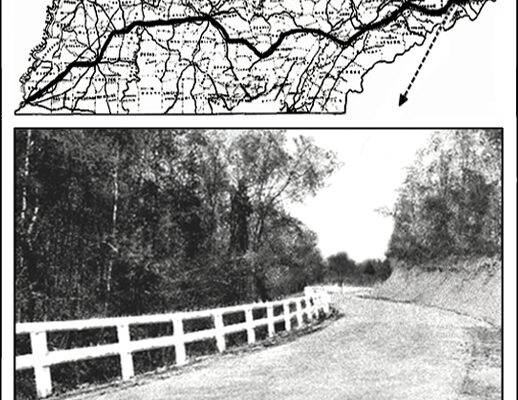
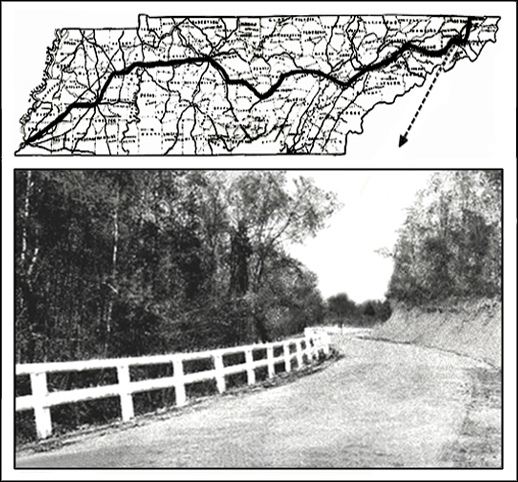
A 1928 Johnson City Chronicle headline proclaimed, “Plan to Spend $8 Million on Route 1, Tennessee’s “Broadway of America.” The article was referring to the proposed 538-mile Memphis-to-Bristol Highway.

Local businessmen initially formed the highway association in 1911 to promote the state’s development. Soon after its creation in 1915, the Highway Department designated the corridor as State Route 1 and made it the top road priority. In 1926, the state selected about two-thirds of Route 1 as U.S. 70, the major east-west corridor in the region.

By the late 1920s, the local artery became part of the 2,385-mile “Broadway of America” highway system that ran from California to New York. Route 1 remained the main east-west route through the Volunteer State until the completion of Interstate 40 in the late 1960s. The Tennessee portion of it was sometimes referred to as “The Broadway of Tennessee.”

The intent of the work was to make permanent road improvements to the Memphis-to-Bristol Highway. The cost estimate came from Highway Department figures. Construction and paving was already underway when the news hit the newspaper.

The new intra-highway afforded a wide diversity of people to travel across the state, thus helping unify the three main divisions of the state: East, Middle and West Tennessee. A movement to promote good roads arose in the 1890s from a wide variety of concerned citizens consisting of railroad owners, farm alliances, businessmen, vacation travelers and even bicyclists. Such efforts received widespread approval from the public. Timing was good for the new highway. The arrival of mass-produced motorized vehicles at the turn of the 19th century offered competition to railroads and steamboats, thereby creating the need for good thoroughfares. 

A Memphis-to-Bristol meeting being held in Nashville brought encouraging news from Highway Commissioner Harry S. Berry. Not only had a schedule been developed for covering roads with state-of-the-art paving, the department displayed a commitment to pave the entire stretch of highway between Memphis and Bristol.

The committee realized that the need for better intrastate roads was likewise critical to the overall efforts of other states working on the “Broadway of America.” A status report presented at the meeting revealed that the paving of Route 1 included 191 miles of cement concrete highway, 42 miles of rock asphalt highway, 10 miles of bituminous concrete and 177 miles of bituminous macadam. All were said to be high-type of pavement. The report further showed that, in addition, about 100 miles were of low-type pavement (surface treated), 12 miles graveled and 30 miles graded. This meant that 75% of Route 1 had high type pavement, a far cry from today’s interstate highways.

The building of the Memphis-to-Bristol Highway encouraged the undertaking of other state road-building projects and further persuaded Virginia and Mississippi to extend their highways.

An examination of my column photo appears to be that of a country road instead of a highway; however, the narrow barely-paved highway was a major improvement over other roadways of that era. In 1911, automobiles were just starting to give competition to passenger trains as the main source of intra-city travel.  

Read more

In 1958, a Junior High School classmate and I went to Tri-Cities Airport to research for a project about the operation of the facility as part of an assignment for Ms. Viola Mathes’ 9thgrade Civics class. We put together a poster that was later displayed during a PTA meeting.

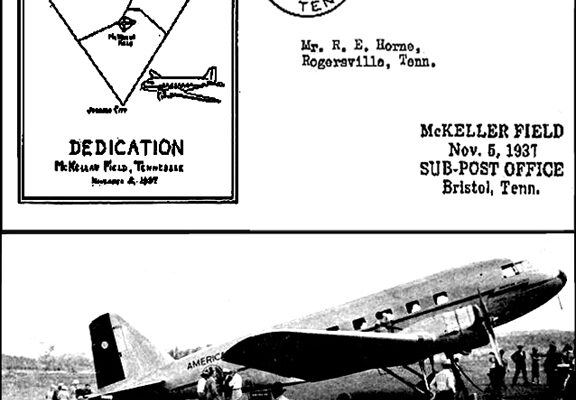
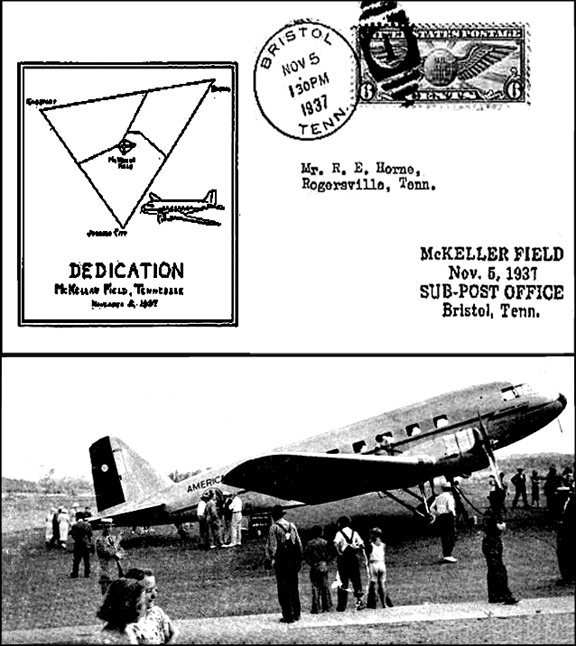
I was reminded of this event when I read the title of an article in the January 9, 1934 Johnson City Staff-News: “Engineers Busy Making Final Surveys of 125-Acre Airport.” The clipping stated that the dream of East Tennesseans had long been to possess an airport that adequately served the Tri-Cities area. That vision became a reality when engineers began surveying and moving in machinery to accelerate the building project on a chosen site located about halfway between Johnson City and Kingsport, just a short distance from a newly paved thoroughfare between the two cities.

The article stated that all but 10 acres of the desired land were in Washington County near the Sullivan County line. A committee chosen to purchase the property found all the landowners willing to sell their land at a reasonable price except for one family who held out for a higher price. Timing was favorable for the construction of a regional airport. As part of President Franklin D. Roosevelt’s New Deal, the CWA (Civil Works Administration) was approved on November 8, 1933 with a goal to create jobs for millions of unemployed workers. It was intended to run parallel with the CCC (Civilian Conservation Corps).

The CWA created construction jobs, aimed largely at improving or constructing buildings and bridges. However, CWA’s window of opportunity lasted only four and a half months, ending abruptly on March 31, 1934 after racking up a 200 million dollar monthly tab.

The newspaper article stated that engineers were making final surveys for the airport and workers would be selected equally from the four cooperating counties: Washington, Sullivan, Unicoi and Greene. This was in exchange for each party agreeing to pool its share of CWA funds to secure the airfield. A landing field was seen as a significant benefit for people residing across a wide area. The East Tennessee field was to be the largest in Tennessee with two runways 3,200 feet long and three others almost that length. One impressive fact about the new airport was that the largest planes built at that time would be able to land there regardless of the direction of the wind.

Mr. R.S. Boutelle, former Tennessee Director of Aeronautics who was in charge of 11 southern states in the building of airports with CWA money, telephoned officials and ordered work to get under way immediately. Local authorities, eager to comply with the director’s instruction, expedited every phase of the preliminary work.

The newspaper article further noted that after the airfield was completed, it would represent an expenditure of more than $200,000. It was believed that a sufficient amount of money from the CWA fund would be available for building necessary hangers, beacons along the runways and other lighting facilities.

The article concluded by bragging on Johnson City’s and Kingsport’s leaders for their cooperative efforts in securing the airport. Those from JC were Harry D. Gump, M.T. McArthur and J.W. Cummins. A.D. Brockman, Robert E. Peters, J. Fred Johnson and E.W. Palmer represented KP. Efforts from those humble beginnings in 1934 to establish local air travel can be seen today by visiting the modern and expansive Tri-Cities Regional Airport.

Does anyone recall the name or have a photo of the friendly little canine that for years hung around the runway side of the terminal and became a hit with passengers?  

Read more

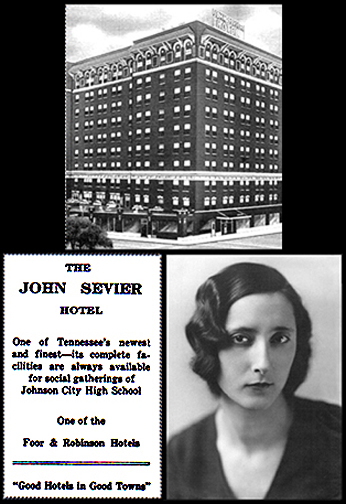
Local historian Alan Bridwell interviewed Stella Lent who fondly recalled the years she lived in Johnson City and her love for working at the John Sevier Hotel.

The 99-year-old resident was born in 1911, the same year as the Titanic tragedy. She and her family arrived in Johnson City in 1928 by train from Beckley, West Virginia and rented a furnished house on Whitney Street from Dr. Carroll Long. Ms. Lent later worked at People’s Drug on Main Street for several years.

Between 1943 and 1963, she was employed at the John Sevier Hotel. She spoke highly of Harry Lee Faw (on whose land the hotel was built) and his wife, Katherine. The old Faw home place later became a boarding house before being demolished to make room for the hotel.  

Initial plans were to construct the hotel in three phases beginning on the north (Southern Depot) side and finishing at the south (Market Street) end. The first phase containing 130 rooms was constructed in 1924. The second phase that added 100 additional rooms was under construction when the Lent family arrived in the city. The third addition was never built. Entrances to the long lobby were on Market Street (south), Roan Street (east) and Fonde Circle (north).

Initially, the hotel rooms were very basic with no frills such as radios, televisions or air conditioning. Stella recalled that room rates were varied: $2.50, $3.00, $5.00 and $8.50 per day. Each had a private bathroom with small tiles on the floor.

Guests had access to a separately owned 110-car parking garage along the west side of the hotel owned by a Mr. Fields. Although there were no covered walkways interconnecting the hotel, train station or garage, passengers could exit the train and be within a short walking distance of the hotel. Bellhops known as “red hats” patrolled the area between the hotel, garage and train station to assist travelers with their luggage.

Ms. Lent recalled that Eleanor Roosevelt lodged at the hotel on three separate occasions, always arriving by train. She conversed with the First Lady on each visit. During one trip, she and her sister went to Soldiers Home and chatted with the special guest about the subject of infantile paralysis, which had infected the president and Stella’s sister. 

When Stella was asked if she heard any stories about Al Capone staying at the hotel, she responded with a strong, “Oh yes!” She based her information on comments related to her from a reliable bellboy who was working there when the gangster and his entourage arrived in 1927. He told her that they rented the entire third floor. They were always very polite, caused no trouble during their stay and left the rooms in the same clean and orderly condition as when they arrived. Stella remembered when the city was called Little Chicago. Downtown merchants often utilized a “door shaker,” a police officer who walked the streets after hours checking each business establishment’s door to ensure it was properly secured.

The old Faw Spring, which had previously been a favorite resting stop for travelers and their horses in the early days of the city, became an aggravation for the hotel after it was built because water had to be continually pumped out of the basement sump. Occasionally, a pump malfunctioned, causing water to flood the basement. Stella said the water would sometimes be ankle-deep in her first floor office.

It was standard procedure for people to make reservations before arriving at the hotel. Sometimes, patrons would stop in for a room only to find that there were none available. The hotel stayed full throughout the war years. Rooms were held until 11 p.m. after which time they were removed from reservation, unless the arrival time was confirmed with the reservation desk clerk.

A humorous incident once occurred concerning room 1820, which had three single beds in it. A man showed up at the desk and requested a room. Since the people reserving it had not arrived yet and it was approaching 11 p.m., the man repeatedly demanded that he be given the room. When Stella refused, he threatened to call his good friend, Judge Samuel Cole Williams to influence her to give him a room. Stella responded, “When you call him, let me speak to him because he is deceased.” That abruptly ended the argument.

Ms. Lent said that the hotel strived to maintain a good reputation by strictly forbidding gambling, prostitution and drunkenness. If hotel management suspected questionable behavior in a room, they checked it out. Sometimes a fight broke out prompting a call for the police to restore order. The hotel maintained a “black list” of people who were not permitted to stay at the hotel because of previous problems She said some well-known residents were on the list. 

Stella loved to work on the hotel’s switchboard, which she deemed was a “great experience.” It consisted of a two position Kellogg board with two rows of jacks directly opposite each other. “When a signal came on,” she said, “the operator could answer on either set, but the rule of thumb was to use the back jack for all guests requesting an outside call. We stayed busy when we worked the switchboard. We had three telephone booths; one was the house phone and the other two were pay phones. Somebody would come up and ask me to ring someone’s room, but we were not permitted to pass along calls from people walking in off the street.”

Despite her age, Stella Lent’s sharp memory and quick wit provided added interesting facts about a once prominent “skyscraper” in downtown Johnson City. 

Read more

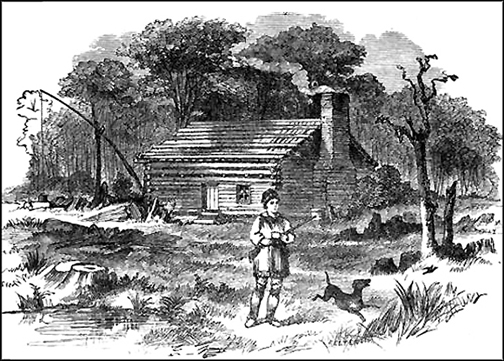
Life for early East Tennessee pioneers was comprised of chopping down trees, building log houses, clearing fields and sparring with Indians. This left little time for recreation and other leisure activities.

Their hardship caused them to take life too seriously with little time for frivolity. These Scotch-Irish inhabitants were initially comparable to the Puritans of New England who abstained from most forms of amusement.

However, after the settlements became more established and Indian conflicts became less of a threat, the settlers began interspersing a dose of leisure activities into their physical labor. They began engaging in a variety of amusements such as log rolling, corn husking and quilting bees, to which everybody in the community was invited to participate. Dinners and suppers on the ground became routine. In areas where fine horses were raised, the inhabitants participated in the sport of horse racing.

Not to be left out of the festivities were nightly dances that consisted of reels, minuets, jigs and breakdowns. The music was usually provided by a couple of backwoods fiddlers who played a variety of curious old tunes with unusual titles (“Bug in the Taters” and “Old Aunt Jenny with Her Night Cap On”). The musicians were rudimentary fiddlers, not refined violinists. Therefore, the selections were not found in any formal music book. A music stand containing sheet music was nowhere to be found.

The season of particular fulfillment to the settlers was Christmas. In celebrating this special holiday, our ancestors continued the traditions of the older Southern colonies. Everybody sought to generate some type of noise. Therefore long before the sun came over the hills, settlers were frequently aroused from peaceful slumber by neighbors firing volleys from their rifles. Children and occasionally older people dropped in on their neighbors to get or exchange Christmas gifts. It was a happy occasion.

Children did not receive beautiful toys and books for the season, as did those of later generations. There were no Christmas trees in the homes and little, if anything, was said about Santa Claus. Everyone enjoyed the holiday in his or her own simplistic way. The boys received board sleds, bows and arrows and blowguns, which their fathers had made for them. For amusement, young men of the neighborhood engaged in pranks such as carrying away gates. One popular trick was to disassemble a wagon into individual pieces, carry them to another location such as at the top of a barn or in the fork of a tree and then reassemble them to the visible consternation of the vehicle’s owner. 

Foxhunting was greatly enjoyed especially by those who owned packs of hounds. There were two species of foxes that roamed the area, red and gray. The hunters usually went out on the chase late at night after the fox had time to travel about the countryside. When the animal’s scent was finally detected, a chorus of baying dogs serenaded the countryside to the delight of their owners.  It might take until the next afternoon or later before the animal was caught. While in pursuit, the red fox ran a straight distance without changing direction, but the gray fox repeatedly circled around its den. 

At school, boys played “town ball,” “bull pen,” “cat,” “prisoner's base,” “marbles” and “tops.” Tops were hard to find so some boys “danced” small gourds for tops with the object of having the last top in the group spinning. Girls played such games as “My Chicken, My Crane, Or My Crow” and “Old Granny Melinda.”

Life on the frontier was certainly difficult, but our hardy East Tennessee ancestors managed to incorporate much needed merriment into their hard working lives. 

Read more

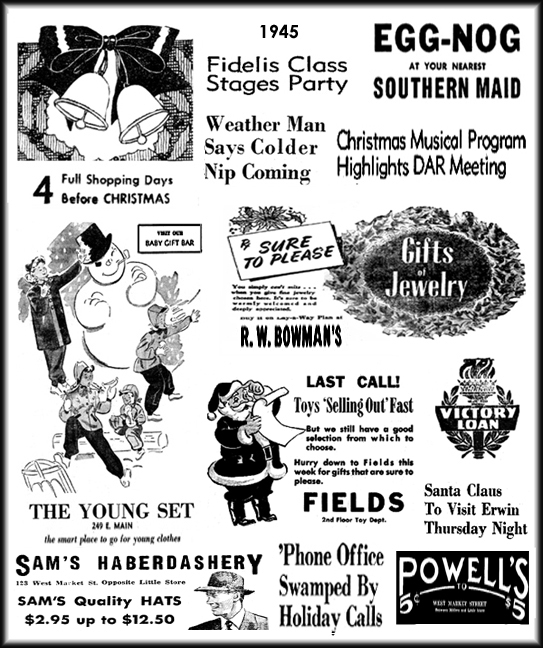
Margaret Hougland recently mailed me some old newspapers, including one dated Wednesday, December 19, 1945. My column today is a summary of local news from that holiday paper.

One dispiriting bit of news was that 82,000 homebound soldiers across the country faced the possibility of being stranded in West Coast ports during Christmas unless jammed rail facilities were cleared. Three Johnson City men were said to be heading home: Shipfitter Third Class Max Brandon (aboard the USS Rudyard Bay, USNR, husband of Mrs. Mary S. Brandon), Sgt. James Gillespie (traveling on the USS Celeno, husband of Mrs. Lacinia Gillespie) and Sgt. Gordon E. Kendall (on the USS Marine Adder).


“Much colder” was the weather prediction after a wintry artic blast blanketed the countryside with two inches of fresh snow. Washington County schools dismissed at the close of Tuesday’s classes. A large volume of telephone calls forced the Inter-Mountain Telephone Company to issue a plea to residents to use the phone sparingly and to limit calls to only those necessary. On Tuesday, the company handled 72,806 local and 1,400 long distance calls.

Captain Don Vendeville, commanding officer of the Salvation Army citadel, announced that lists for grocery orders and cards would be closed Wednesday evening for delivery to needy families on early Thursday morning. Each package, based on the number of family members, contained a complete holiday dinner. 

Representatives of various area churches of Johnson City participated in carol singing around the community Christmas tree on Fountain Square. Weather conditions on the previous night prevented choirs from the Church of God and the Salvation Army from participating.

The tenth annual children’s Christmas party given by Gloria Rayon Mills was held at the Municipal Auditorium (corner of W. Main and Boone). Several hundred employees and their families attended the event, which had become a Yuletide custom. Approximately 360 colorful gift shopping bags filled with fruit, candy and four different toys were presented to children who were 10 years of age or younger and whose parents worked at the plant. Also included were children whose fathers were on military leave from the mill. Children from Bernard School were invited to appear on the program. 

On Tuesday, Christmas music was presented to the Rotary Club by the music department of East Tennessee State College under the direction of Dr. M.E. “Montie” Butterfield. The newspaper also provided particulars of numerous organizations holding Christmas events: Central Baptist Church’s Fidelis Class, Monday Club Auxiliary, Thirty-Niner Club, Theta Alpha Chi (Elizabethton School of Business), John Sevier Chapter of the DAR, Juvenile Music Club, Young Farmers and Homemakers Club, Junior Music Club and several others.

Several businesses placed ads in the newspaper: Fuller-Fields Co. (office machines), Penney’s (quick tips for late shoppers), The Chocolate Bar (lunches at 30, 35 and 40 cents), Nelson’s Jewelry Stores (“Home of Blue White Diamonds”), Powell’s Dept. Store (popular W. Market Street firm), Feather’s Furniture Co. (new and used furniture), Fields (on Fountain Square), R.W. Bowman Jewelry (121 W. Market), U.S. Loan Office (“Pay Cash and Save Dollars”), King’s Dept. Store (five big floors of shopping), and The Little Stores (beef roast priced at 27 cents/lb.).

Actress Bette Davis and her husband spent Monday night in Kingsport for a Christmas shopping spree. “We wanted to stop here,” she told a reporter, “because we heard that Kingsport was a charming and progressive city.”

Thanks to Ms. Hougland for affording us a nostalgic glance back to Christmas 1945. 

Read more

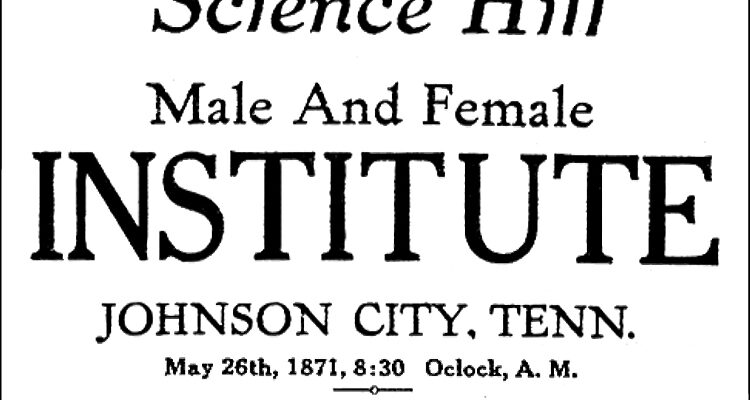
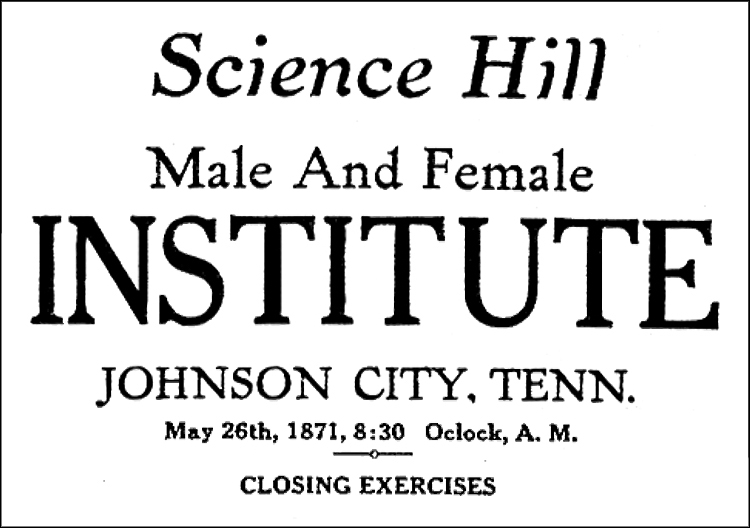
The Sunday, July 3, 1921 Johnson City Chronicle identified a Samuel DeBusk as being the founder of Science Hill High School when it opened on Aug. 24, 1868. While I have heard of this person, I never associated him in the context of their being the founder of my high school. 

The population of Johnson City in 1871 at the time of the first graduation was scarcely 400 inhabitants. Main Street was an open field playground and Roan Street was nowhere to be found. The surrounding landscape along Watauga and Unaka avenues as well as Southwest Addition were densely wooded areas without so much as a hint of a road.

The little village that would grow up to become the imposing city that we know today was centered on Market Street at the location of the railroad tracks on Fountain Square. It was at this same locale that city founder, Henry Johnson, built his first house, store and train depot.

According to the Chronicle, at that moment in history, Rev. Samuel W.J. DeBusk, a Methodist minister and graduate of Emory and Henry College, came here and with the help and support of Thomas A. Faw, Tipton Jobe and a few other leading citizens of the time reportedly founded Science Hill High School. The modest facility eventually became the mother of Johnson City’s educational institution.

Facts concerning the early clergyman come from Judge James W. Crumley who provided the Chronicle with the story and an 1871 graduating exercises program. I wrote a “Yesteryear” column detailing that document on 9-29-2008. The program makes no mention of Rev. DeBusk.

According to Crumley, the preacher, a quiet and unassuming lad with a great ambition for education, was the son of a poor family from southwest Virginia. His desire to enroll at Emory and Henry College was clouded by financial impossibility. However, through the guiding of his mother, he enrolled at the school. During his enrollment there, his mother was always in the shadows assisting her son by carrying food to him three times a week and giving him the few pennies that she had saved.

Upon completion of his college studies, DeBusk had achieved a superior scholastic record, but he lacked enough money to pay his diploma fee. He addressed the dilemma by entering an oratory contest and won top prize, which included the Robinson Prize metal. This allowed him to pay his debt with the school.

At E&H, it was customary for the victor to publicly hang the medal about the neck of his sweetheart. When DeBusk won, the crowd exploded with applause but became quiet when the prized medal was placed in his hand. Everyone wondered which fortunate lady would be chosen as the recipient. He walked down the platform to the rear of the room where he singled out a plain looking countrywoman with a checked sunbonnet tied to her arm. Taking the woman by the hand, he drew her to her feet, and proudly hung the gold emblem of distinction around her neck. His sweetheart fittingly was his hard-working mother. 

Later, DeBusk brought his mother with him to Johnson City where she became a teacher in the lower grades of his school. He also brought his brother-in-law, Wylie W Smith, and brother, William, with him. They attended Science Hill and later graduated from Emory and Henry College. In time, DeBusk married a Smith lady from Southwest Virginia.

If anyone can provide additional information to authenticate or refute the Chronicle’s claim that Samuel DeBusk was the founder of SHHS, I would like to hear from you. 

Read more

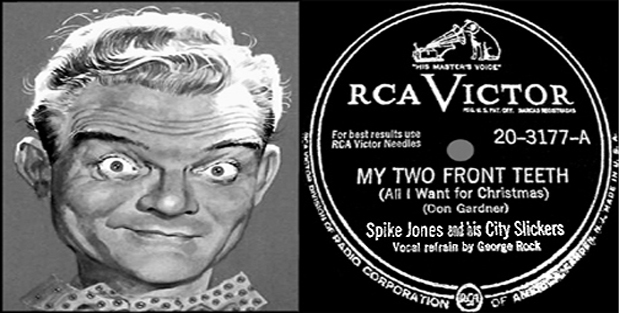
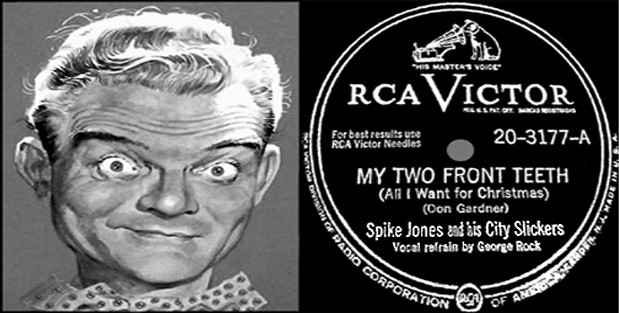
Area oldsters will likely recall the musical antics of Spike Jones and His City Slickers in the 1940s and 50s. My uncle, Glenn Cox, owned a collection of the comedic bandleader’s 78-rpm breakable records and introduced me to the group about 1950. 

About that same time, I recall hearing their songs being played over WJHL radio by popular deejay, Eddie Cowell, who incorporated their chaotic classics into his daily radio show. If you listened to Eddie Cowell, you heard Spike Jones.


Jones cleverly and humorously stereotyped his music as “dinner music for people who aren’t very hungry.” He acquired his nickname from his father, a Southern Pacific railroad agent, who thought his son was so thin he resembled a railroad spike.

The band’s typical format was to commence a song with normal melodic music and then, after about 30 seconds, transition into a wild no-holds-barred arrangement with a variety of sounds: cowbells, fireworks, foghorns, screams, horse laughs, shattered glass sounds, gunfire, car horns, screeching tires and clothes being ripped. There was also an unwholesome portion of human sounds: belching, snorting, gargling, whistling and hiccupping. Even their instruments appeared to be deranged, such as a “latrinophone,” a toilet seat with strings.

Over time, the ensemble included regulars Carl Grayson (straight vocalist and violinist), George Rock (high pitched child’s voice, trumpet), Mickey Katz (vocal sound effects), Sir Frederick Gas (played a leather reed known as a Sadivarious, Doodles Weaver (comedian, known for his Beetlebaum routine), Dr. Horatio Q. Birdbath, Red Ingle, Ed Metcalfe and Helen Grayco (Spike’s wife). As members of the band, they were frequently heard on records, radio shows and television programs.

Some of Spike’s best-known classics were “Cocktails for Two,” “Hawaiian War Chant,” “You Always Hurt the One You Love,” Rossini’s “William Tell Overture” (Beetlebaum, an unlikely horse wins a race), “Ponchielli's “Dance of the Hours,” “Der Fuehrer's Face” (reached #2 on the Hit Parade during the war years),” “Mairzy Doats” (“Mairzy doats and dozy doats and liddle lamzy divey,” and “The Hut Sut Song (‘Hut-Sut Rawlson on the rillerah and a brawla, brawla sooit’) and my favorite and seasonal favorite, “All I Want For Christmas Is My Two Front Teeth” (#1 on the Hit Parade in 1948).” 

The Slickers were anything but second-class; they could play harmonious music with the best of the big bands of the 1940s era. In 1941, they received a contract with RCA Victor and recorded extensively for the company until the mid 1950s when they moved to the Liberty label. It was then that they dropped their straight music intros in preference to comedic songs.

As a connoisseur and collector of programs from “The Golden Age of Radio,” I recently listened to several Spotlight Review programs that aired over CBS between 1947 and 1948. The show’s sponsor was Coca Cola and featured Spike as the show’s high-energy host. His program featured an assortment of special guests: The Mills Brothers, Vic Damone, Buddy Clark, Eddy Arnold, Francis Craig, Jack Smith, The Milt Hearth Trio, Nellie Lutcher, Jan August, Jack Owens, John Laurenz and Dorothy Shay (“The Park Avenue Hillbilly”).

The end came suddenly for the chaotic clowns when Spike died in 1965 at age 53. The big farcical curtain descended for both the bandleader and his band. Their unique offerings were immediately extinguished, leaving the Slickers as another fond memory of yesteryear. 

Read more